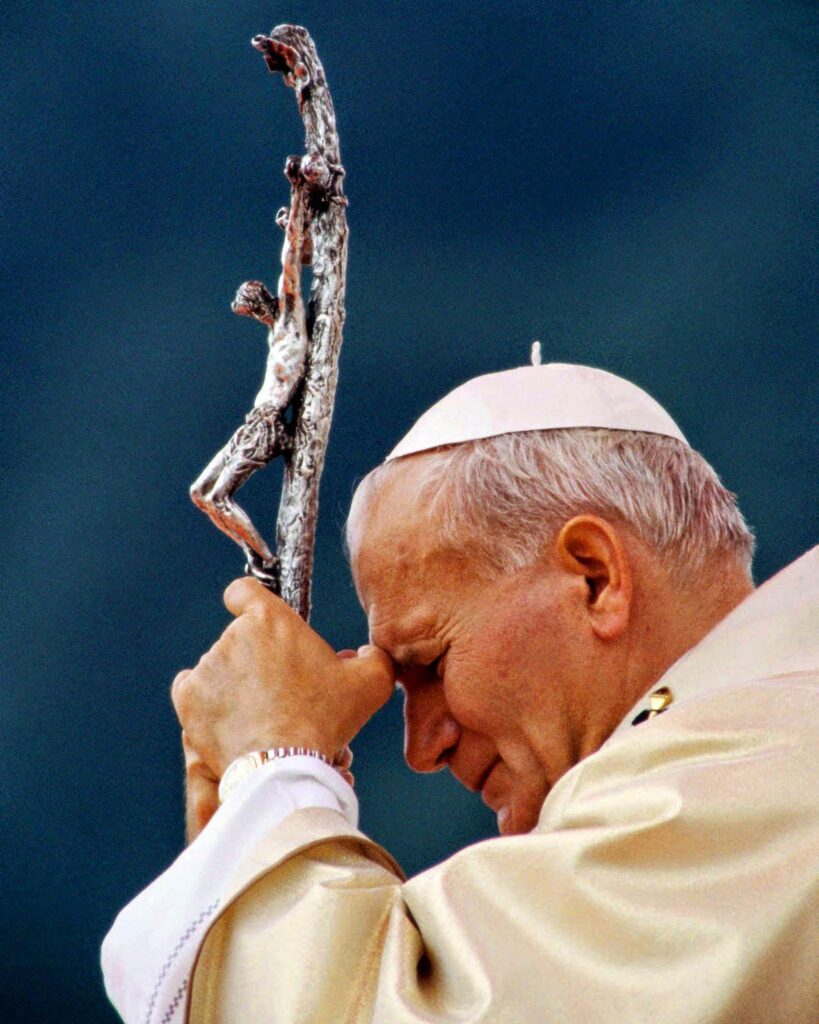
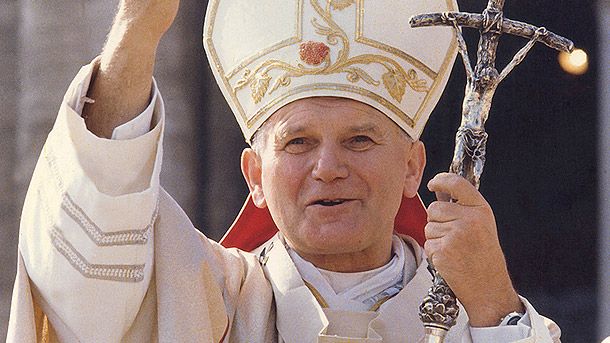
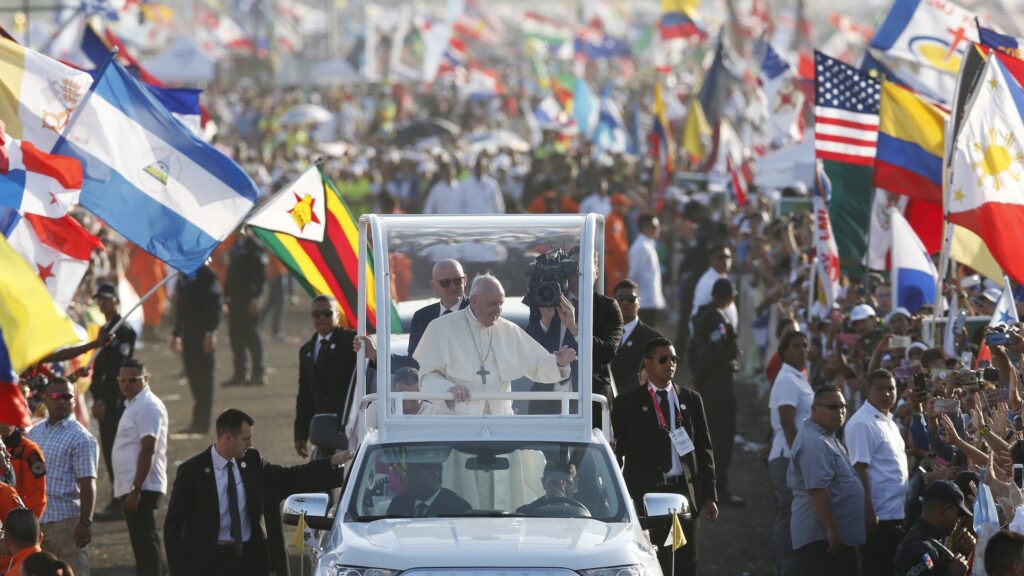
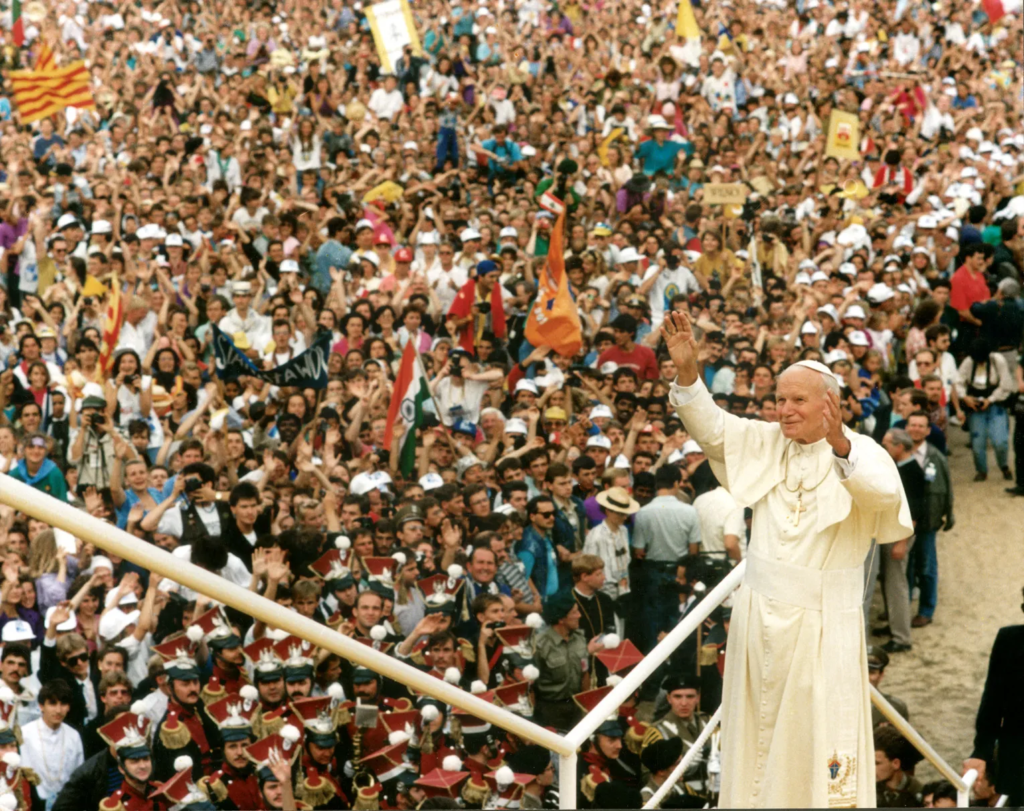
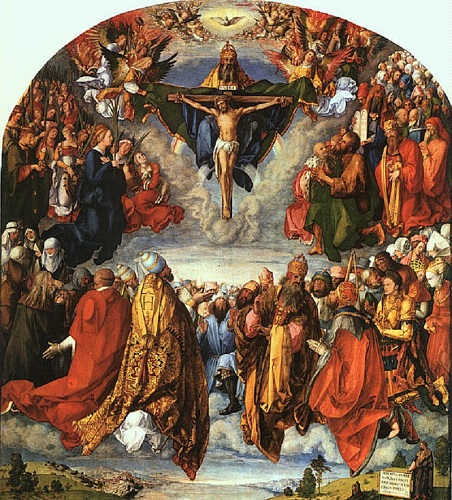
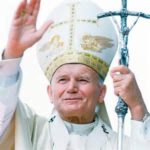
Karol Wojtyla was ordained a priest in Poland on All Saints Day 1946. On Divine Mercy Sunday 2014 the Church gave him the title of Saint John Paul the Great.
St. John Paul the Great was known as the patron of the youth. He began the tradition of having World Youth Days. The following quotes remind us of the powerful teachings of St. John Paul the Great.
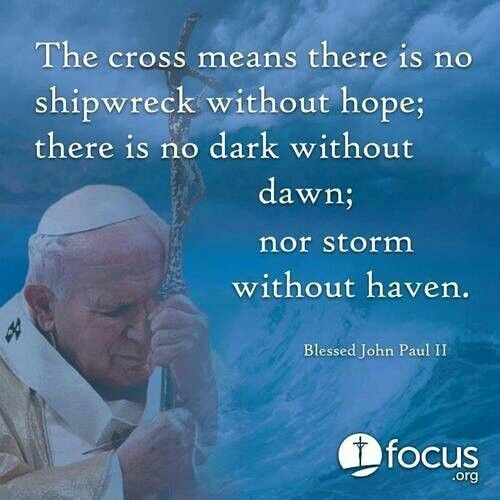
1. The cross means there is no shipwreck without hope; there is no dark without down, nor storm without haven.
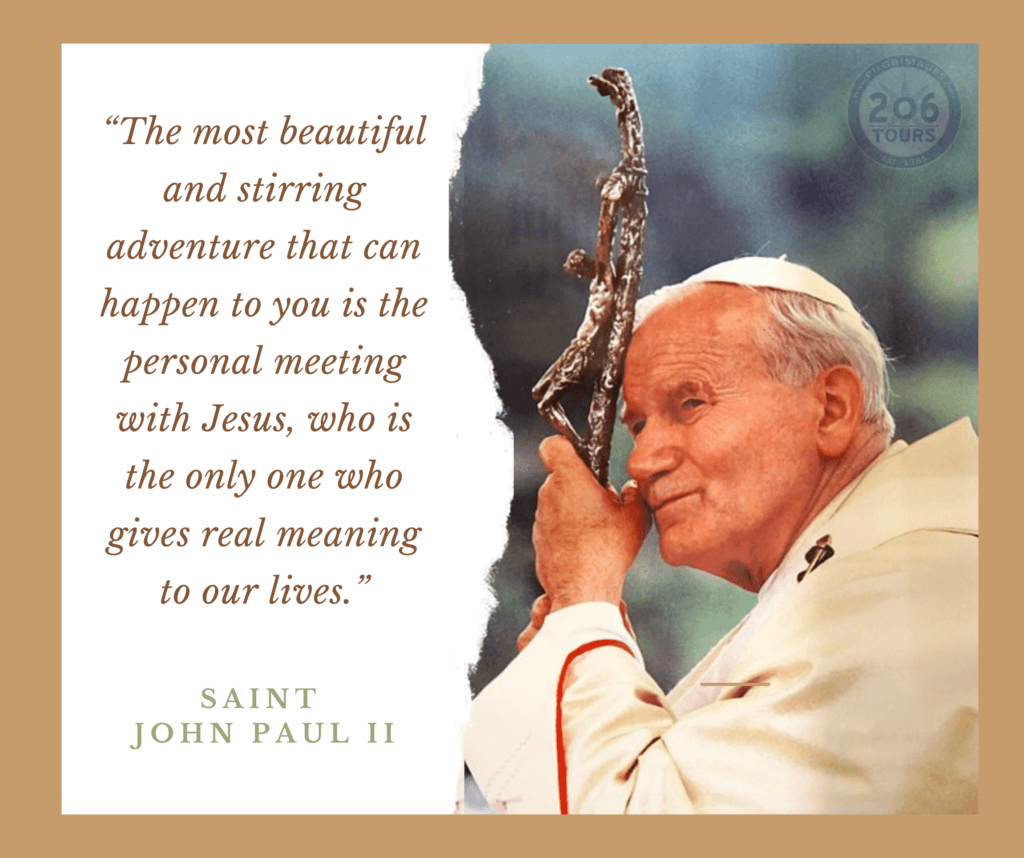
2. The most beautiful and stirring adventure that can happen to you is the personal meeting with Jesus, who is the only one who gives real meaning to our lives.
St. John Paul the Great
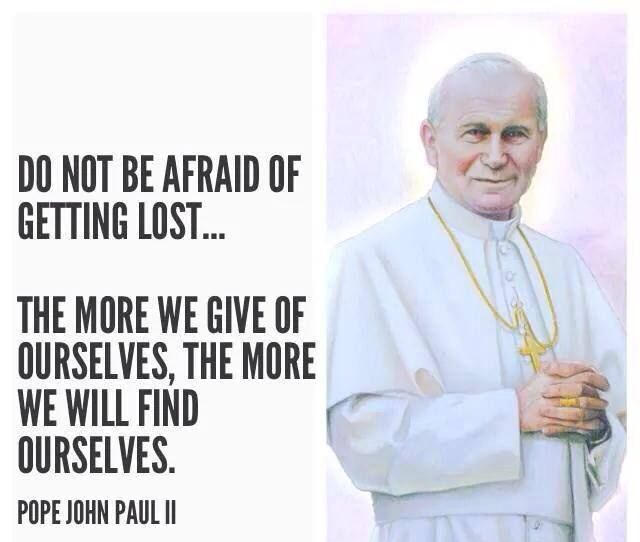
3. Do not be afraid of getting lost. The more we give of ourselves, the more we will find ourselves.
St. John Paul the Great
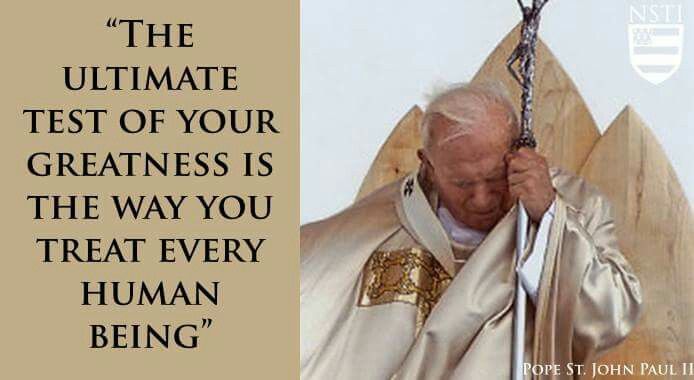
4. The ultimate test of your greatness is the way you treat every human being.
St. John Paul the Great
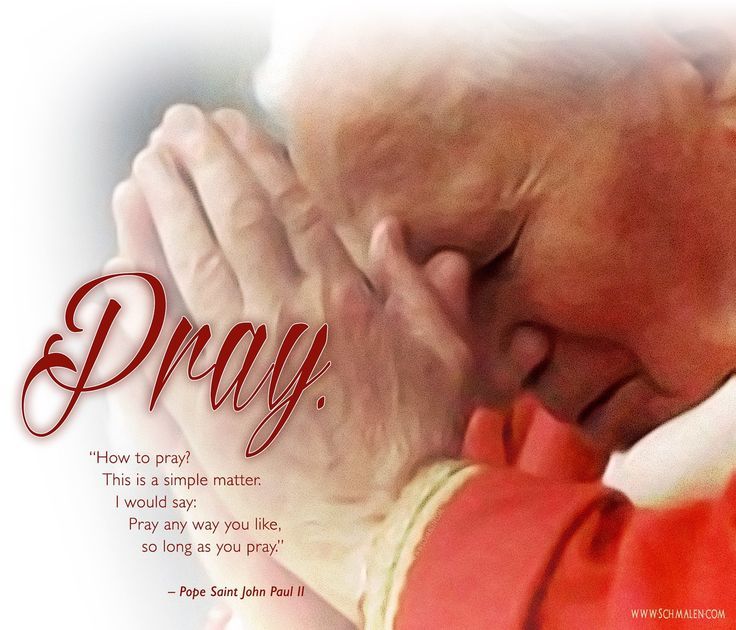
5. How to pray? This is a simple matter. I would say: Pray any way you like, so long as you do pray;
St. John Paul the Great
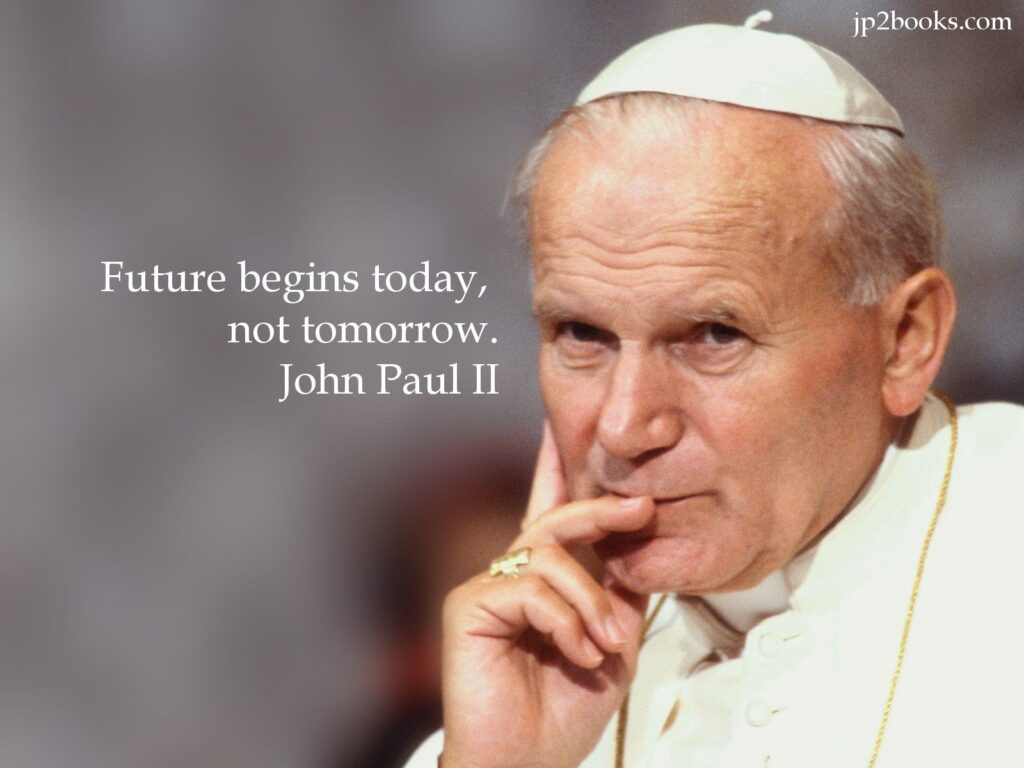
6. Future begins today, not tomorrow.
St. John Paul the Great
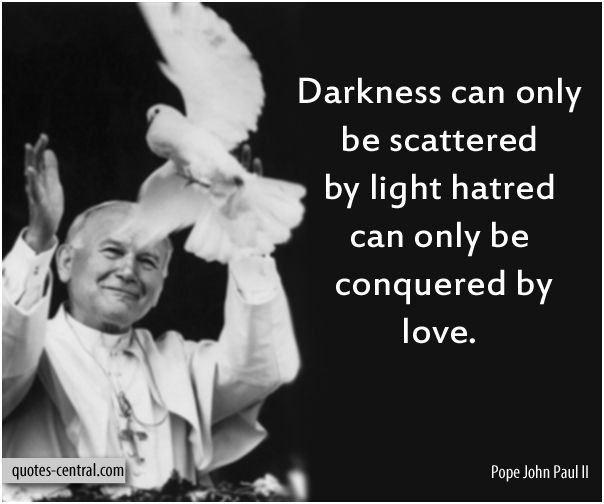
7. Darkness can only be scattered by light. Hatred can only be conquered by love.
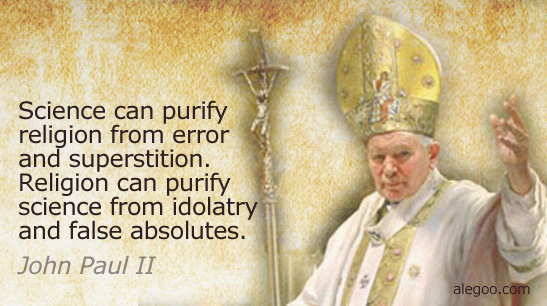
8. Science can purify religion from error and superstition. Religion can purify science from idolatry and false absolutes.
St. John Paul the Great
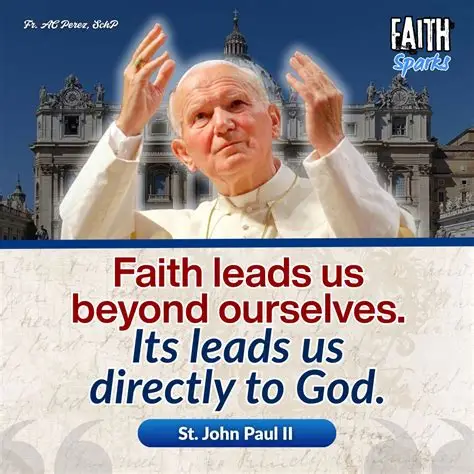
9. Faith leads us beyond ourselves. It leads us directly to God.
St. John Paul the Great
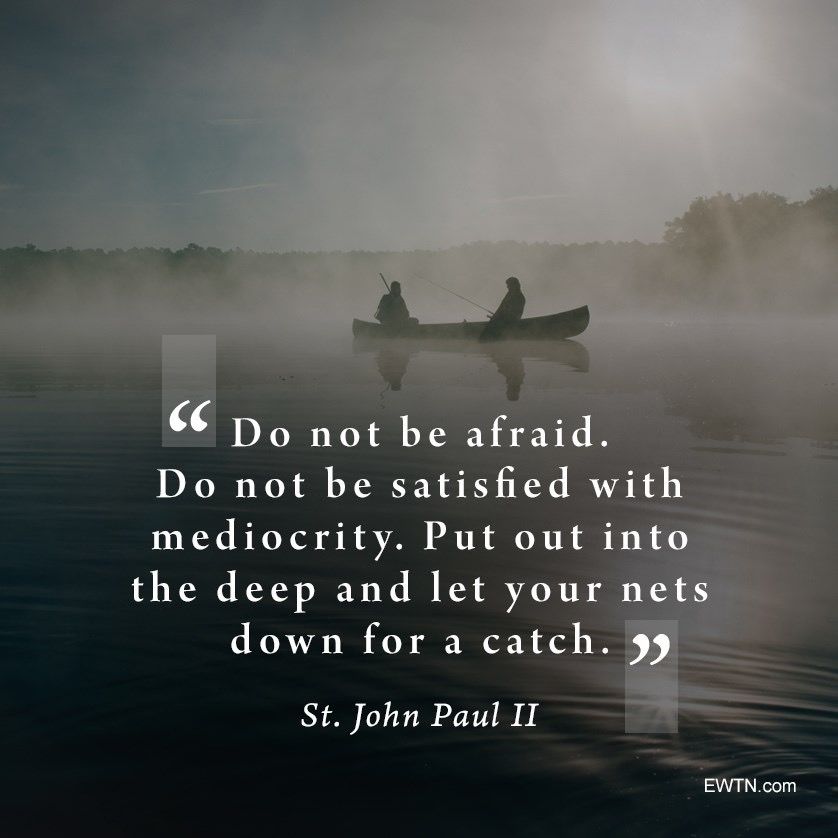
10. Do not be afraid. Do not be satisfied with mediocrity. Put out into the deep and let down your nets for a catch.
St. John Paul the Great
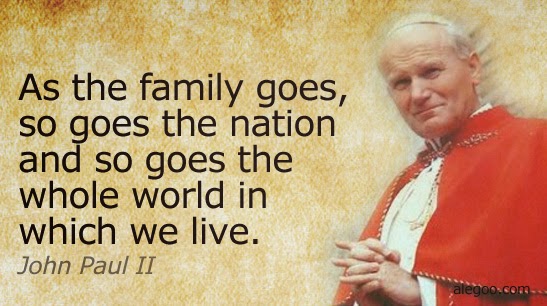
11. As the family goes, so goes the nation, and so goes the whole world in which we live.
St. John Paul the Great
12. Remember that you are never alone. Christ is with you on your journey every day of your lives.
St. John Paul the Great
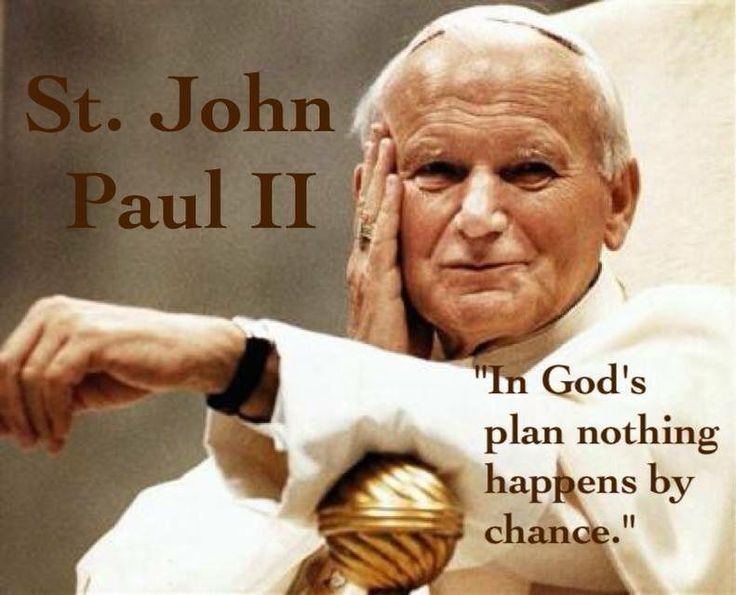
13. In God’s plan, nothing happens by chance.
St. John Paul the Great
14. Confession is an act of honesty and courage–an act of entrusting ourselves beyond sin, to a loving and forgiving God.
St. John Paul the Great
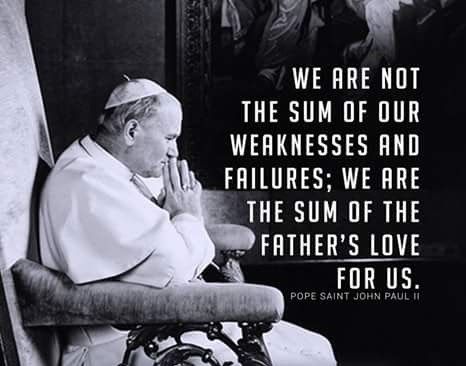
15. We are not the sum of our weaknesses and failures. We are the sum of the Father’s love for us.
St. John Paul the Great
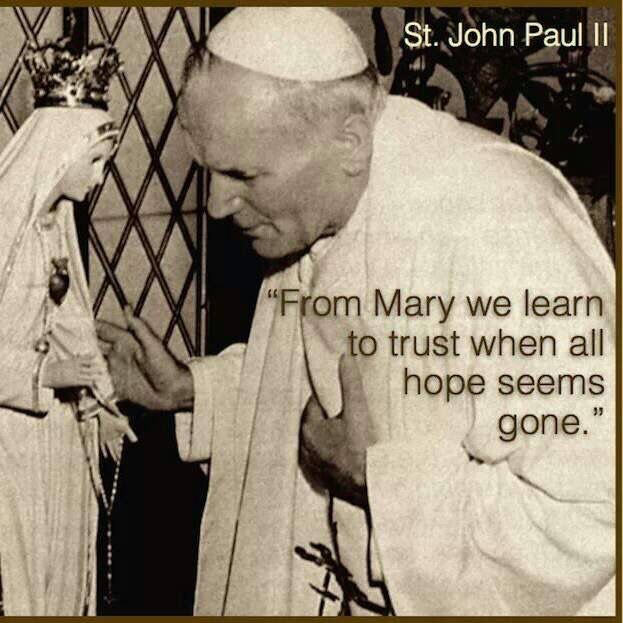
16. From Mary we learn to trust when all hope seems gone.
St. John Paul the Great
17. It is Jesus that you seek when you dream of happiness; He is waiting for you when nothing else you find satisfies you.
St. John Paul the Great
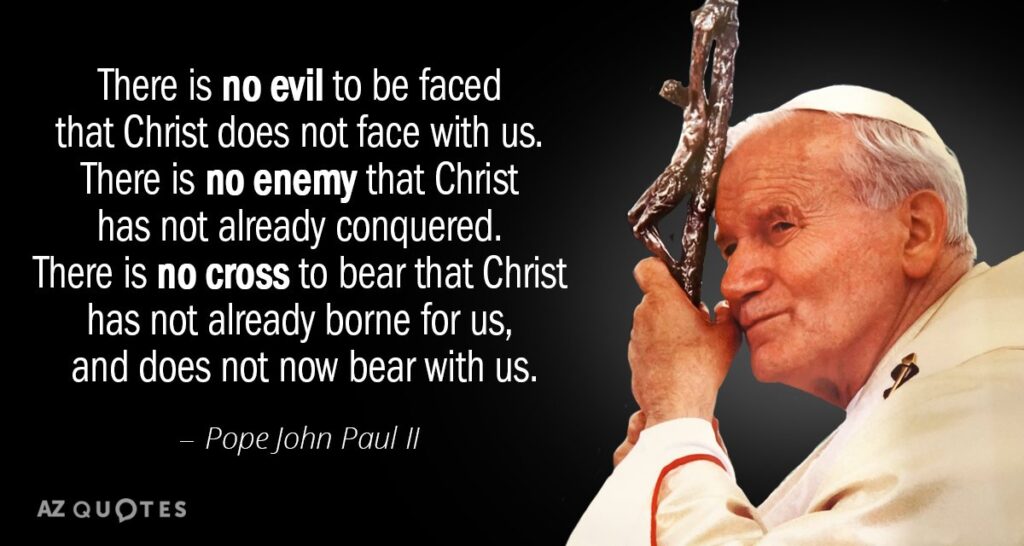
18. There is no evil to be to be faced that Christ does not face with us. There is no enemy that Christ has not already conquered. There is no cross to bear that Christ has not already borne for us and does not now bear with us.
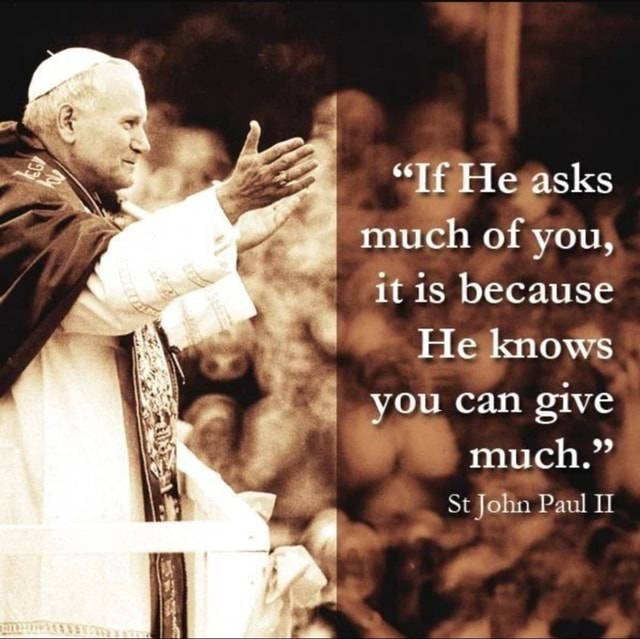
19. If He asks much of you, it is because He knows you can give much.
20. Let us remember the Past with Gratitude, Live the Present with Enthusiasm, and look forward to the Future with Confidence.
St. John Paul the Great
21. An excuse is worse and more terrible than a lie, for an excuse is a lie guarded.
St. John Paul the Great
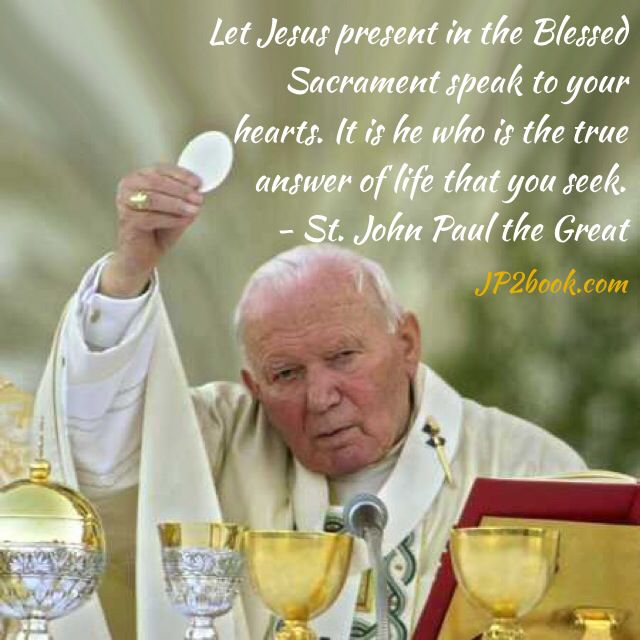
22. Let Jesus present in the Blessed Sacrament speak to your hearts. It is he who is the true answer of life that you seek.
23. Do not abandon yourselves to despair. We are the Easter people and halleluiah is our song.
St. John Paul the Great
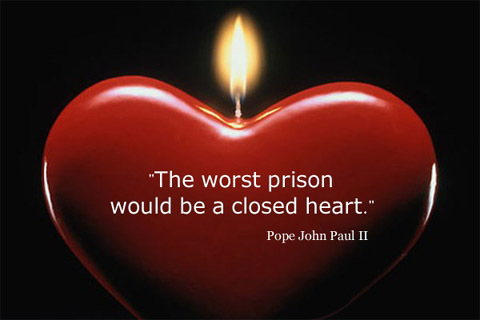
24. The worst prison would be a closed heart.
St. John Paul the Great
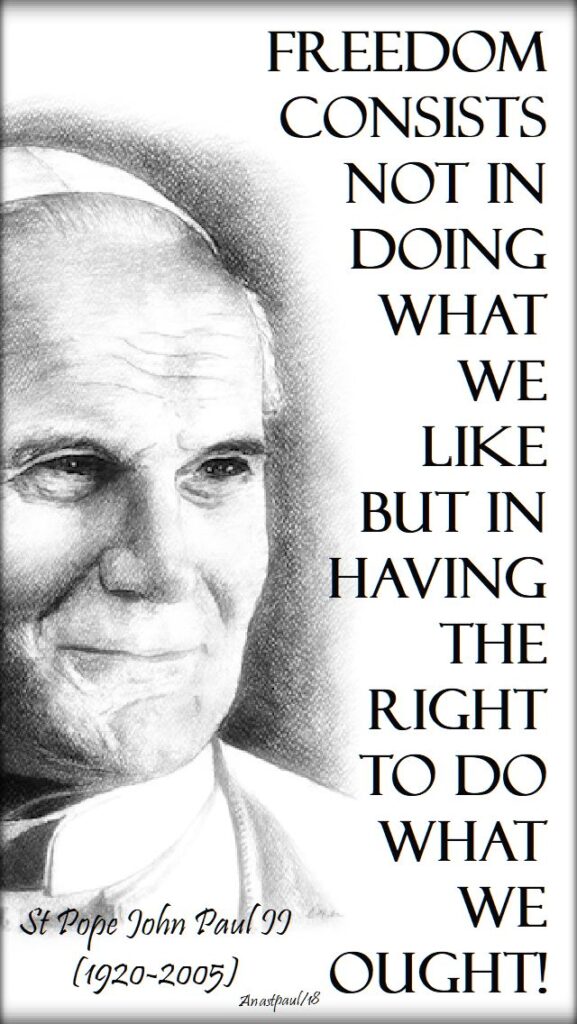
25. Freedom consist not in doing what we like, but in having the right to do what we ought.
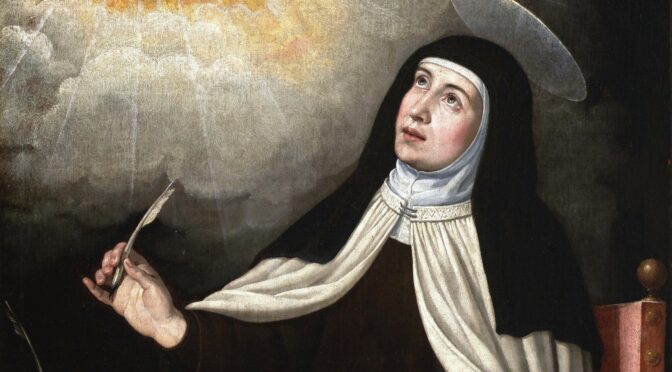
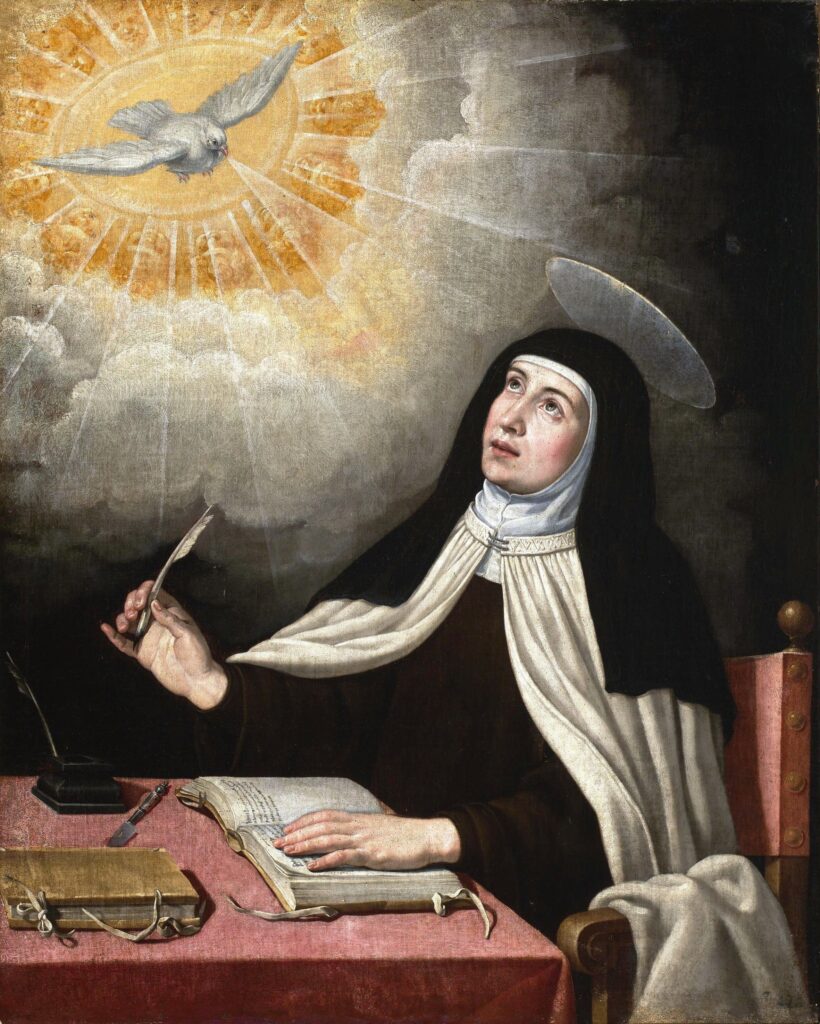
St. Teresa of Avila was a Spanish Carmelite nun and mystic. She was born in Avila Spain on March 28, 1515, one of ten children. Her mother died when Teresa was 15.
Invoked against bodily ills, headaches, and sickness, St. Teresa was canonized a Saint by Pope Gregory XV on March 12, 1622. The Feast Day of St. Teresa of Avila is celebrated on October 15.
Saint Teresa of Ávila was proclaimed Doctor of the Church by Pope Paul VI on 27 September 1970.
St. Teresa has written many books. These include: The Interior Castle, The Life of Teresa of Jesus, and The Way of Perfection. Her spirituality has led many to a much deeper prayer life.
Reflecting on the life of this Carmelite nun, let’s ponder her many quotes which reveal her spirituality.
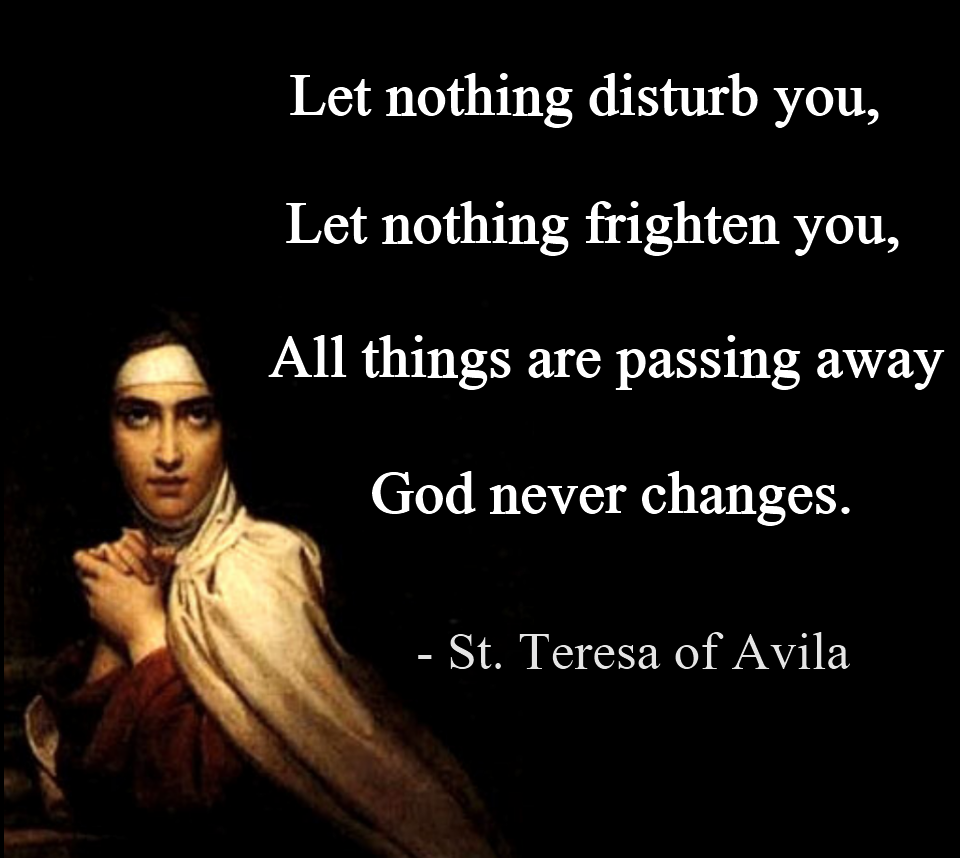
1. Let nothing disturb you. Let nothing frighten you. All things pass away. God never changes. Patience obtains all things. He who has God, finds he lacks nothing. God alone suffices.
St. Teresa of Avila
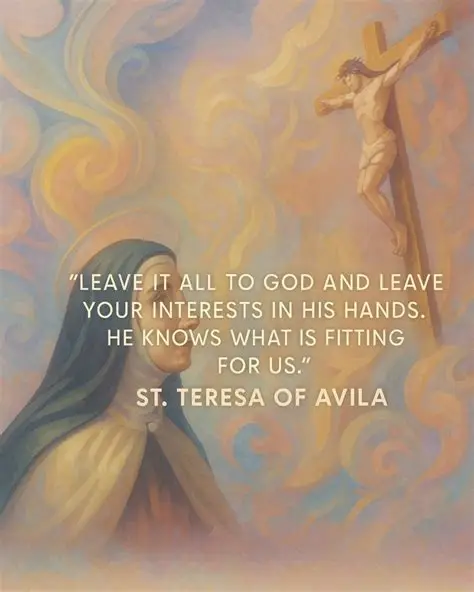
2. Leave it all to God and leave your interests in His hands. He knows what is fitting for us.
St. Teresa of Avila
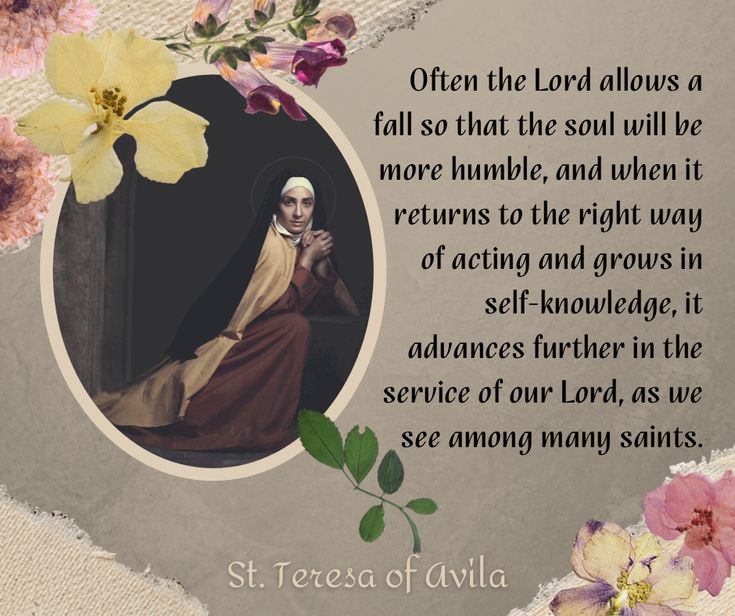
3. Often, the Lord allows a fall so that the soul will be more humble, and when it returns to the right way of acting and grows in self-knowledge, it advances further in the service of our Lord, as we see among many saints.
St. Teresa of Avila
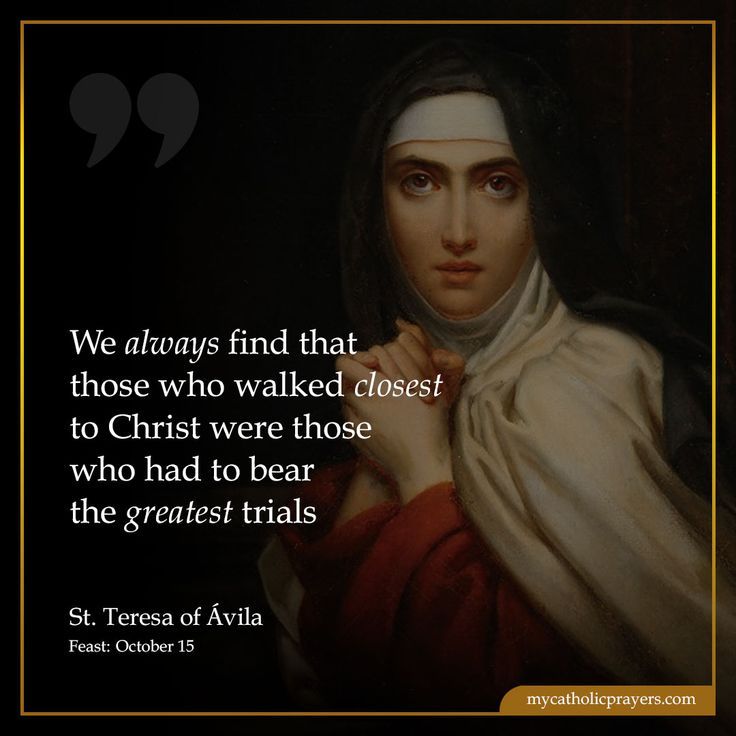
4. We always find that those who walked closest to Christ were those who had to bear the greatest trials.
St. Teresa of Avila
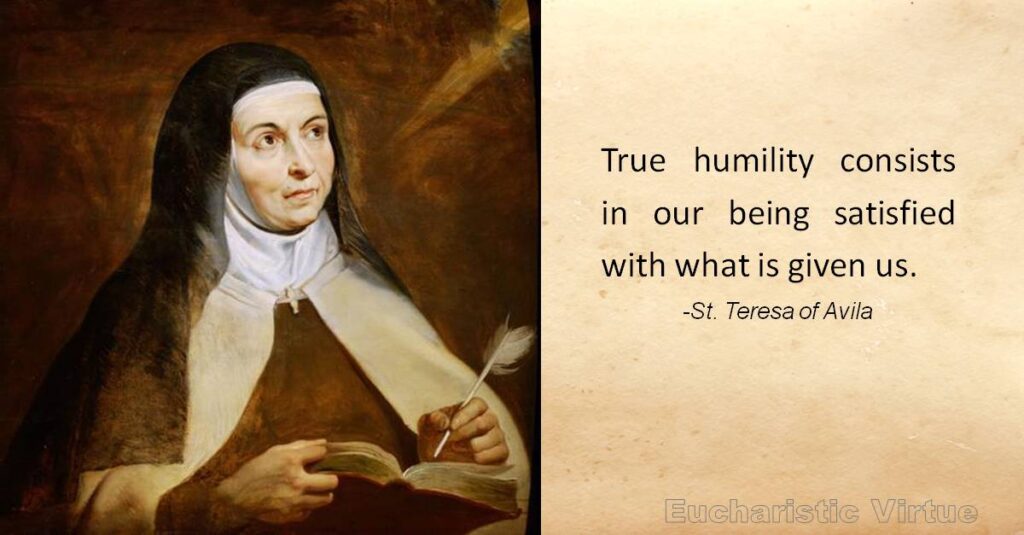
5. True humility consists in our being satisfied with what is given us.
St. Teresa of Avila
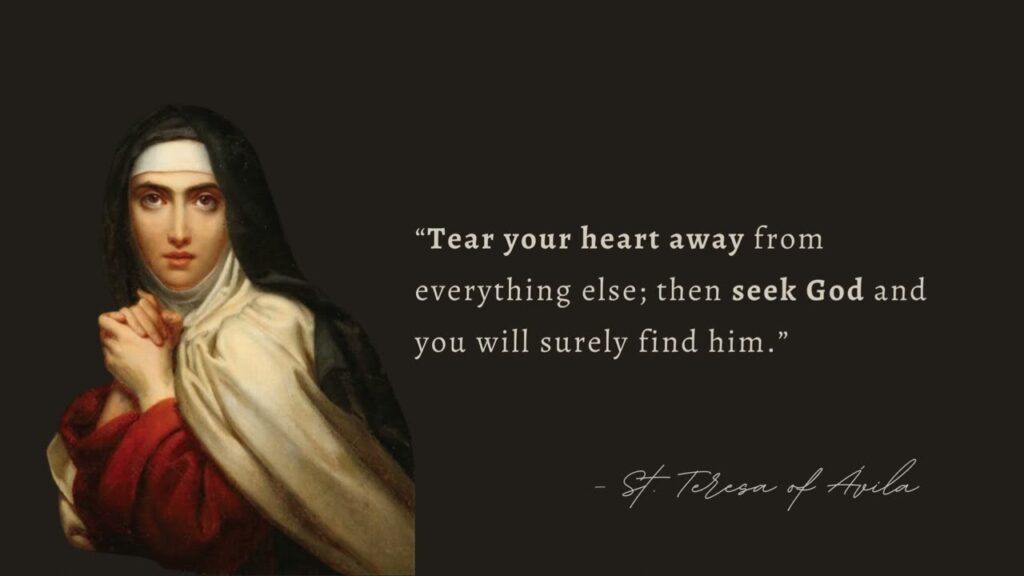
6. Tear your heart away from everything else, then seek God and you will surely find him.
St. Teresa of Avila
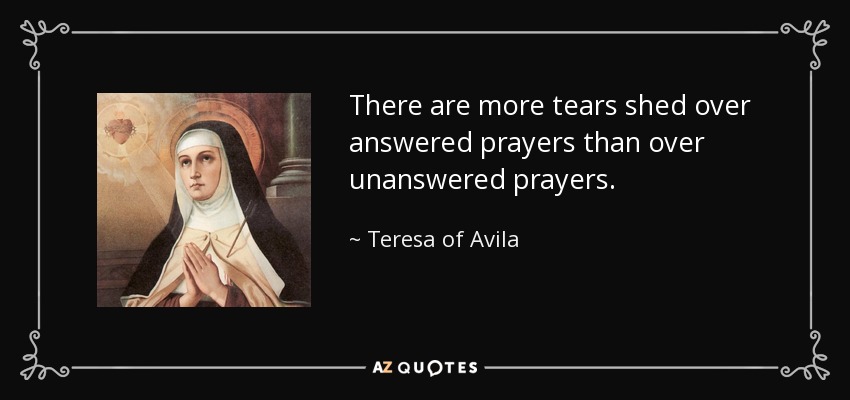
7. There are more tears shed over answered prayers than over unanswered prayers.
St. Teresa of Avila
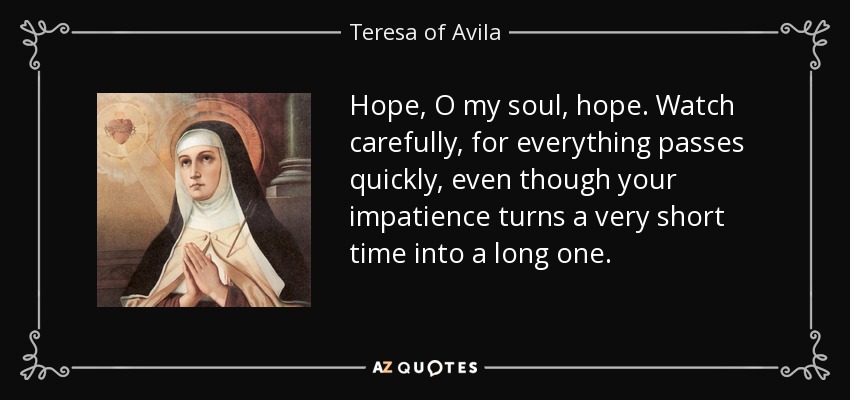
8. Hope, O my soul, Hope! You know neither the day, nor the hour. Watch carefully, for everything passes quickly, even though your impatience turns a very short time into a long one.
St. Teresa of Avila
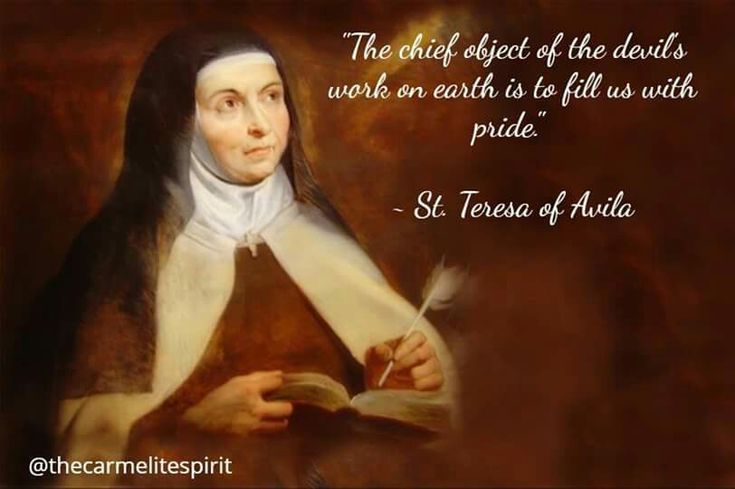
9. The chief object of the devil’s work on earth is to fill us with pride.
St. Teresa of Avila
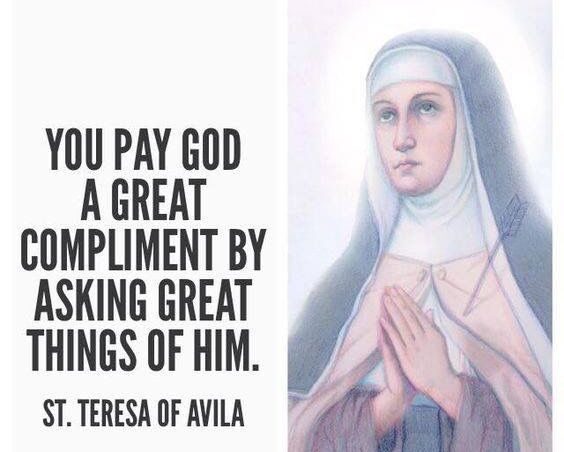
10. You pay God a great complement by asking great things of Him.
St. Teresa of Avila
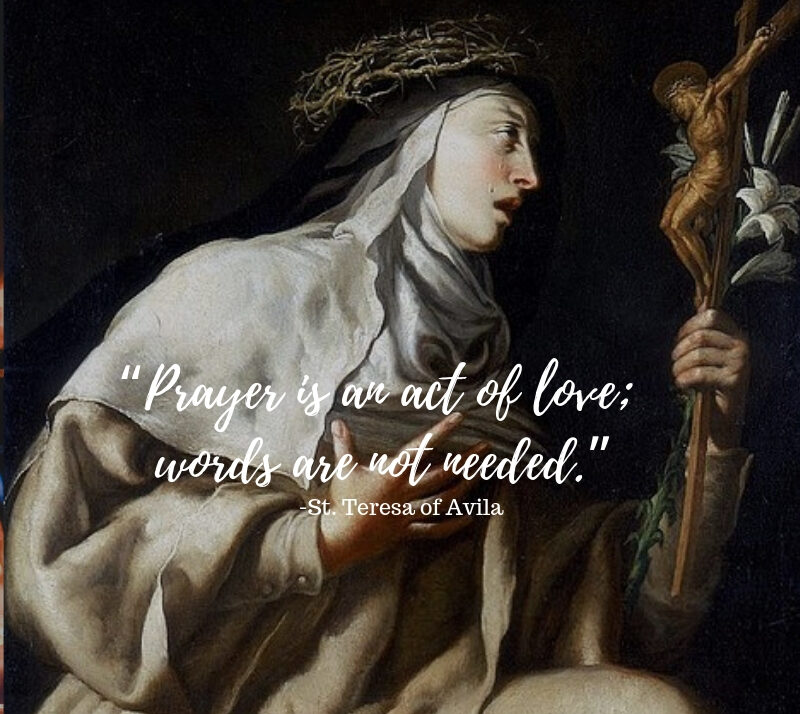
11. Prayer is an act of Love, words are not needed.
St. Teresa of Avila
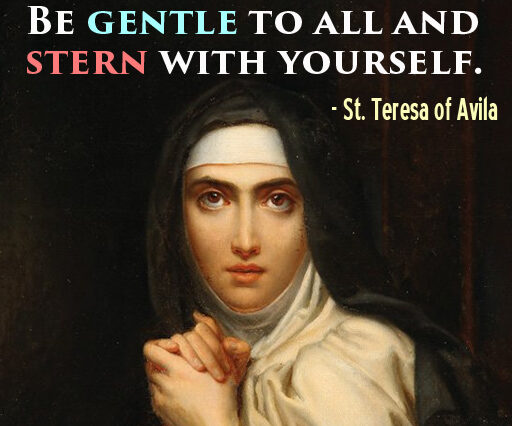
12. Be gentle to all and stern with yourself.
St. Teresa of Avila
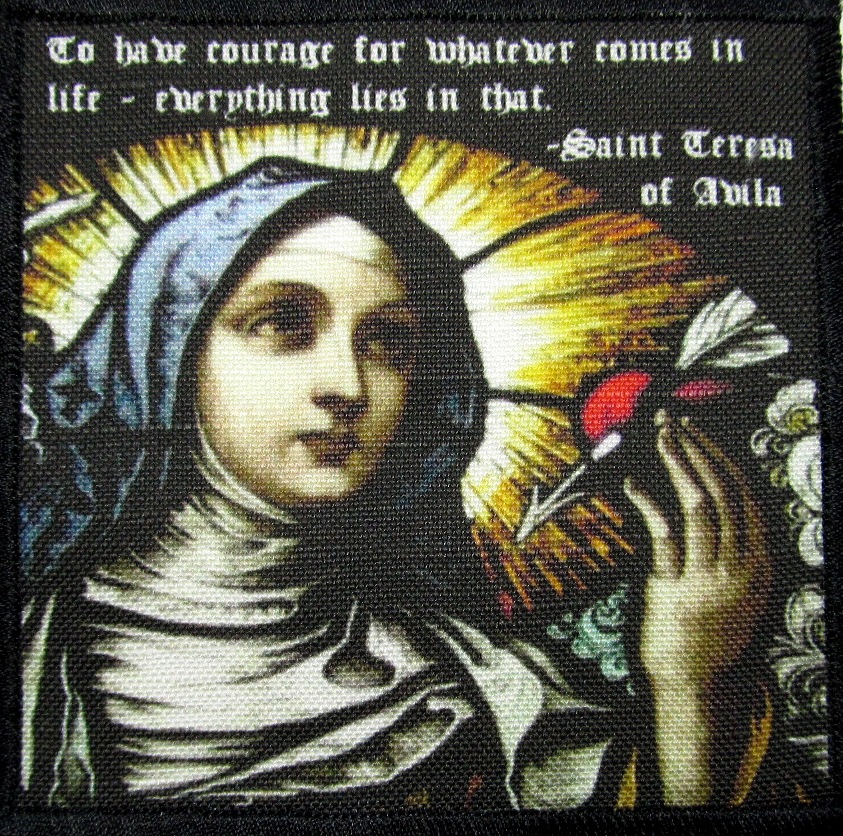
13. To have courage for whatever comes in life…everything lies in that.
St. Teresa of Avila
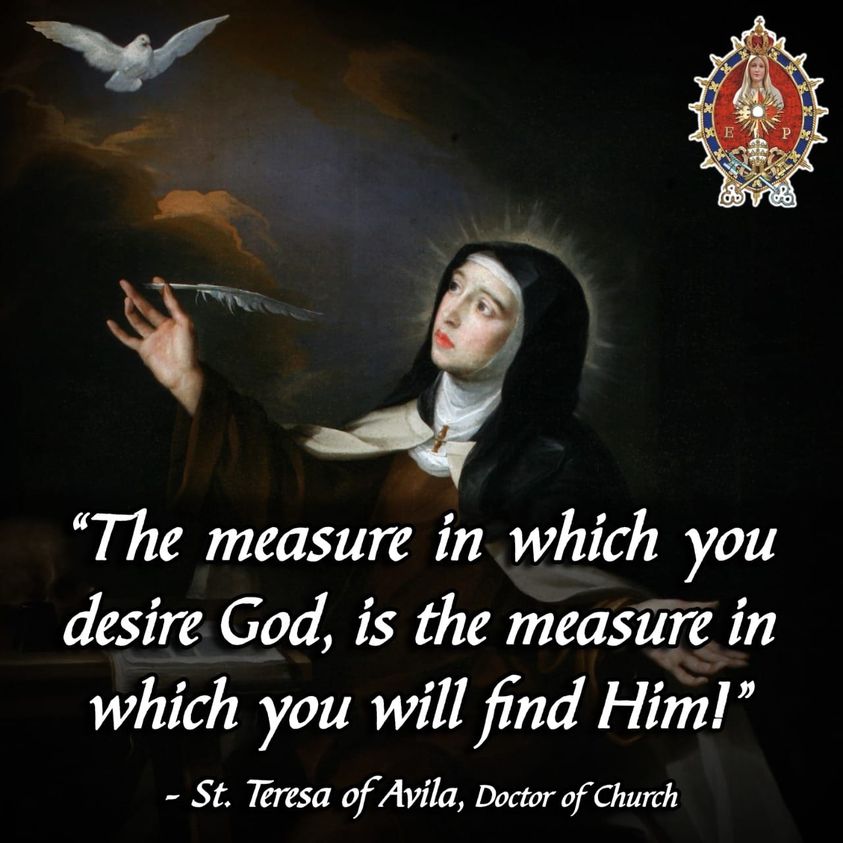
14. The measure in which you desire God, is the measure in which you will find Him!
St. Teresa of Avila
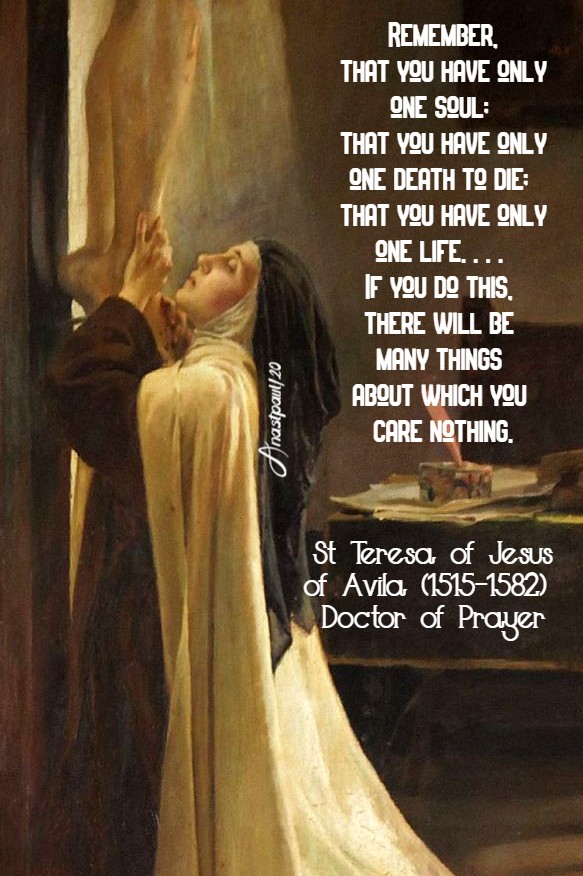
15. Remember, that you have only one soul: that you have only one death to die: that you have only one life…if you do this, there will be many things about which you care nothing.
St. Teresa of Avila
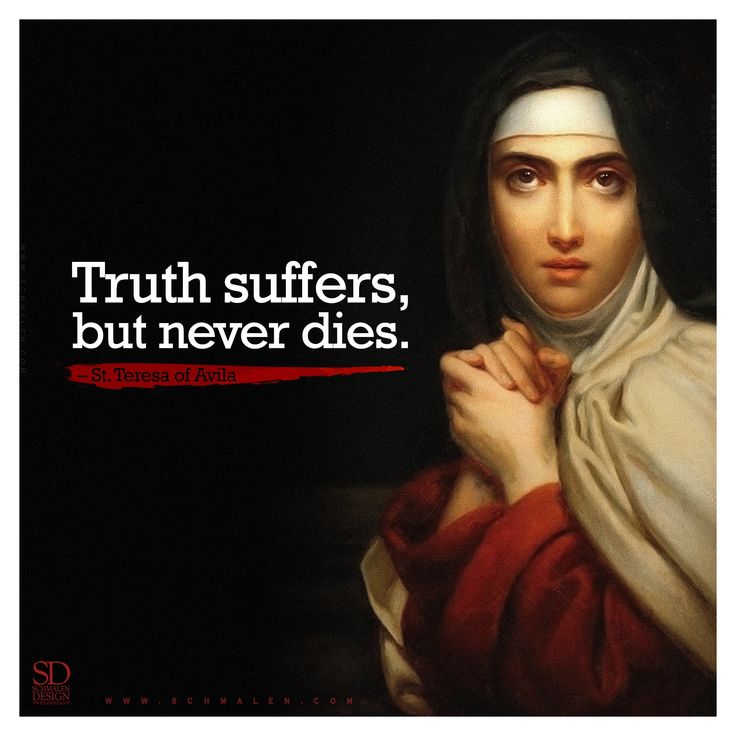
16. Truth suffers, but never dies.
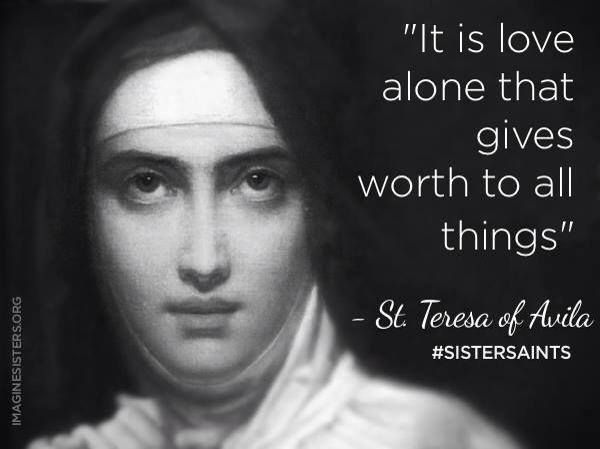
17. It is love alone that gives worth to all things.
St. Teresa of Avila
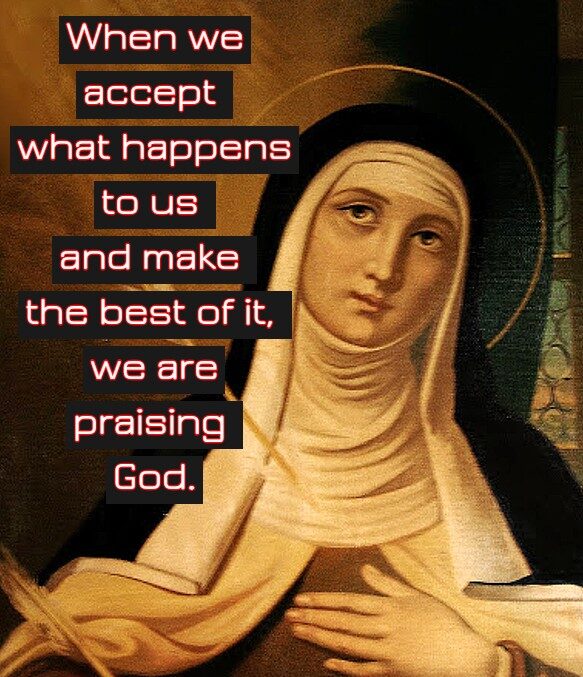
18. When we accept what happens to us and make the best of it, we are praising God.
St. Teresa of Avila
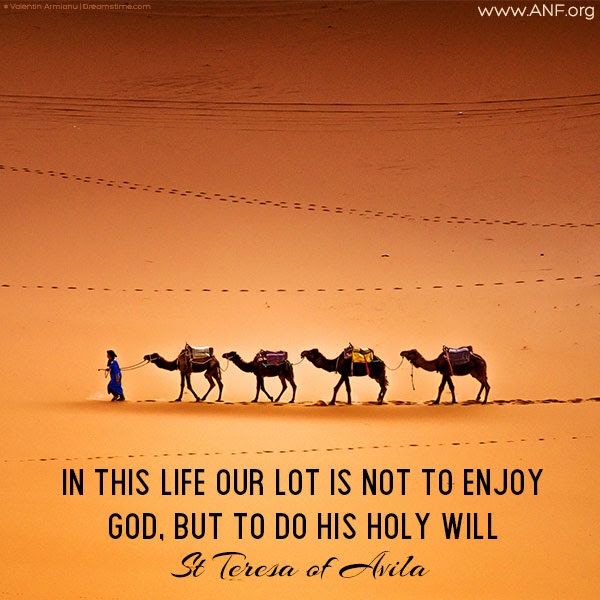
19. In this life our lot is not to enjoy God, but to do His Holy Will.
St. Teresa of Avila
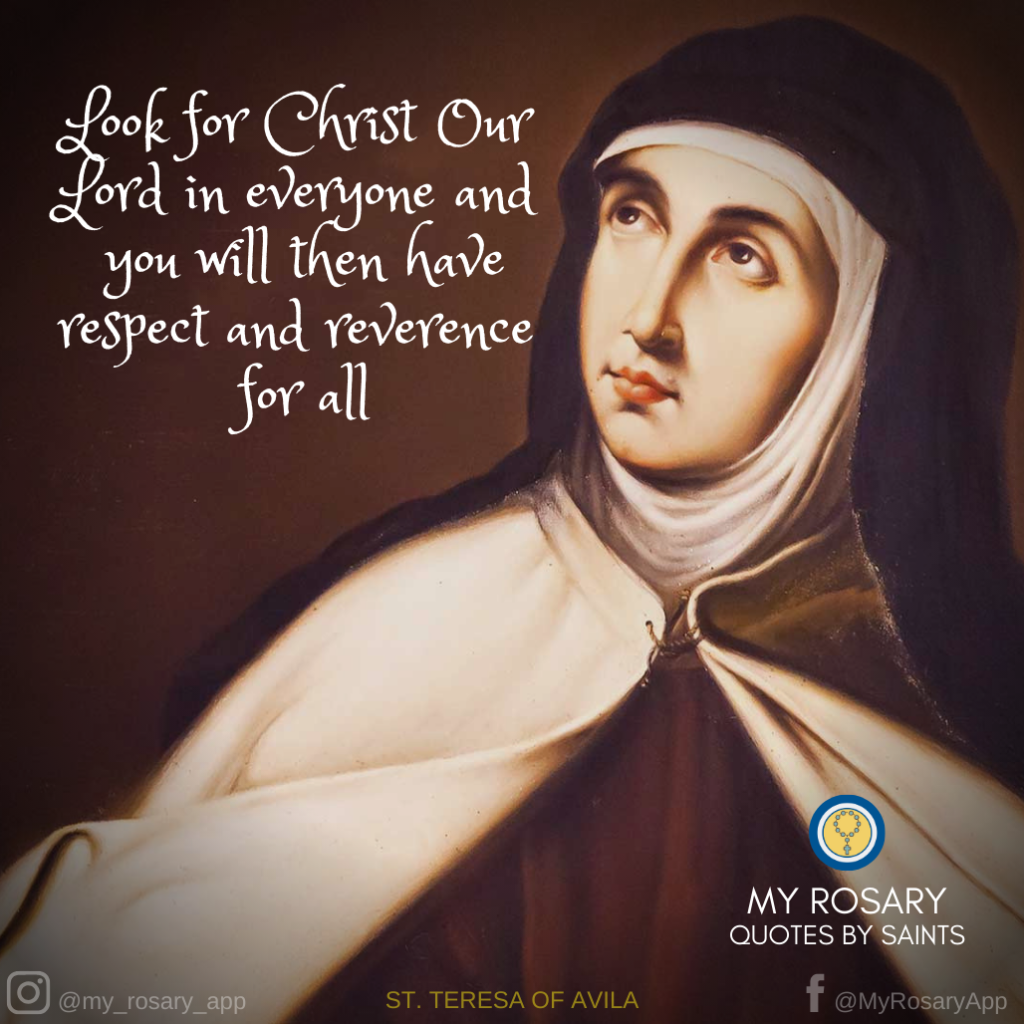
20. Look for Christ Our Lord in everyone and you will then have respect and reverence for all.
St. Teresa of Avila
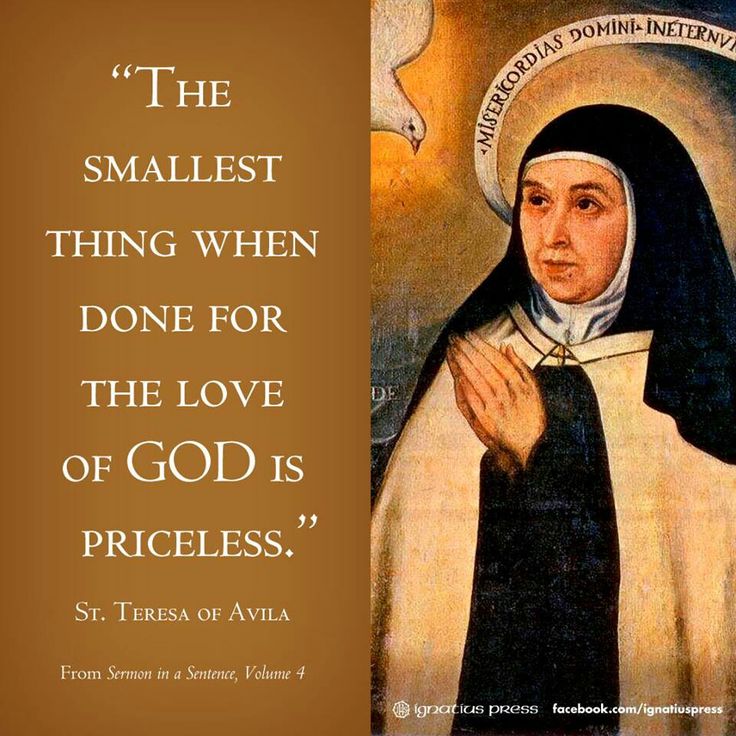
21. The smallest thing when done for the love of God is priceless.
St. Teresa of Avila
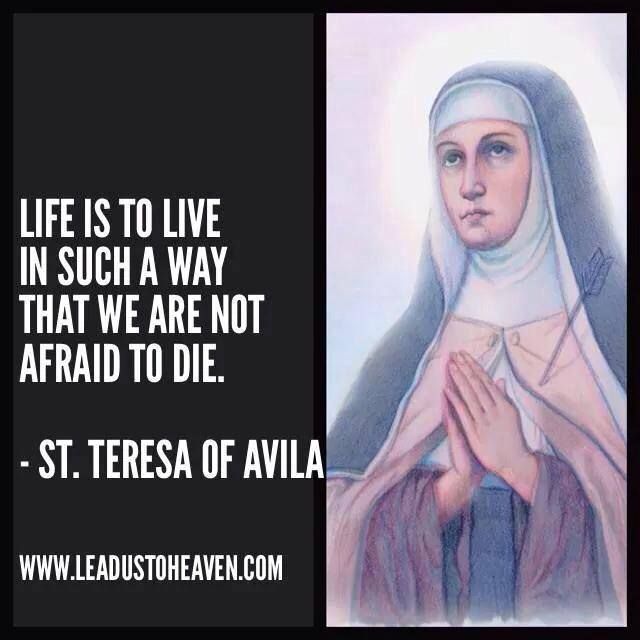
22. Life is to live in such a way that we arenot afraid to die.
St. Teresa of Avila
23. The feeling remains that God is on the journey too.
St. Teresa of Avila
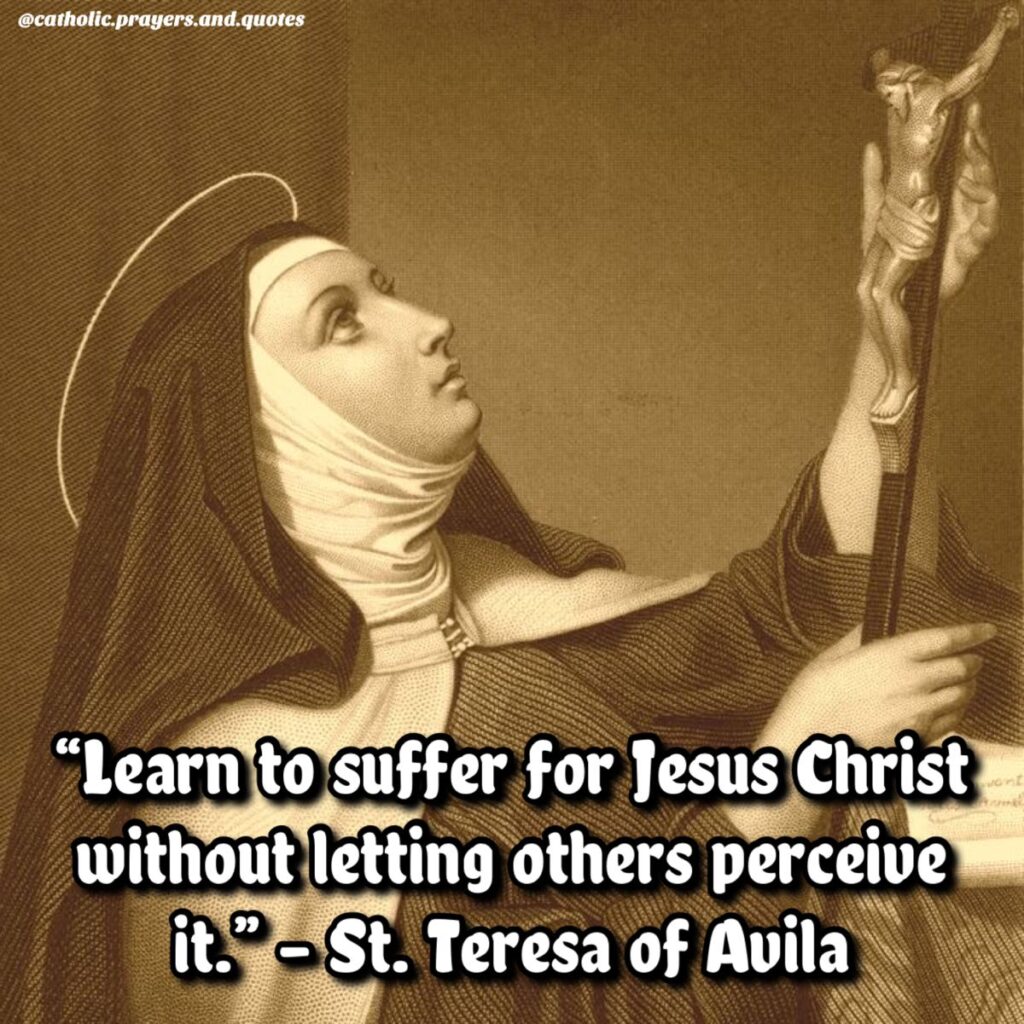
24. Learn to suffer for Jesus Christ without letting others perceive it.
St. Teresa of Avila
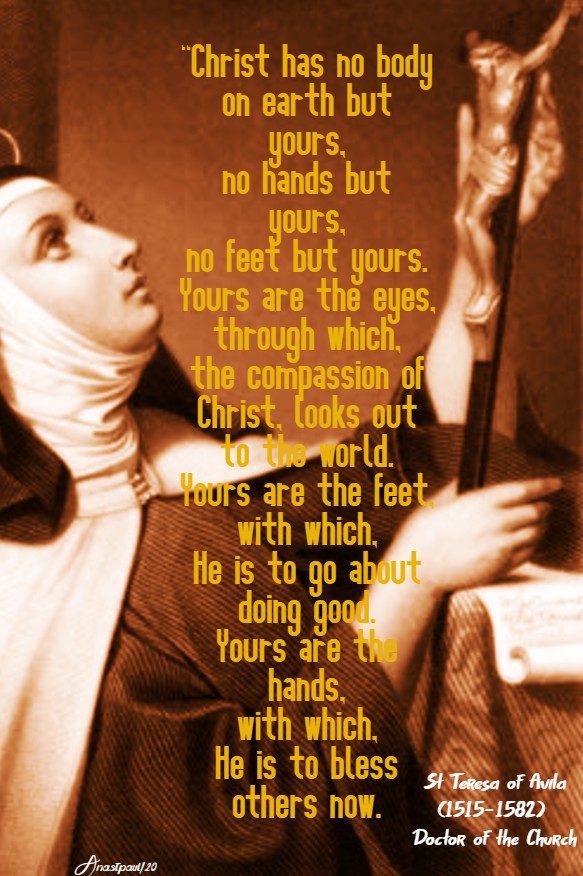
25. Christ has no body on earth but yours. no hands but yours, no feet but yours. Yours are the eyes through which the compassion of Christ looks out to the world. Yours are the feet with which He is to go about doing good. Yours are the hands with which He is to bless others.
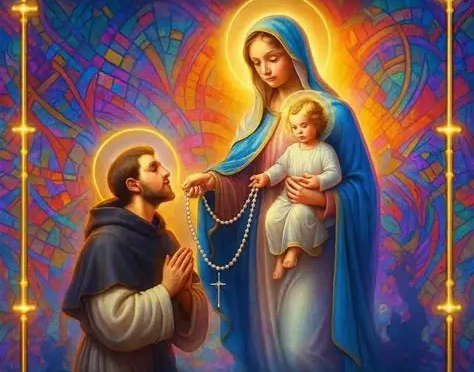
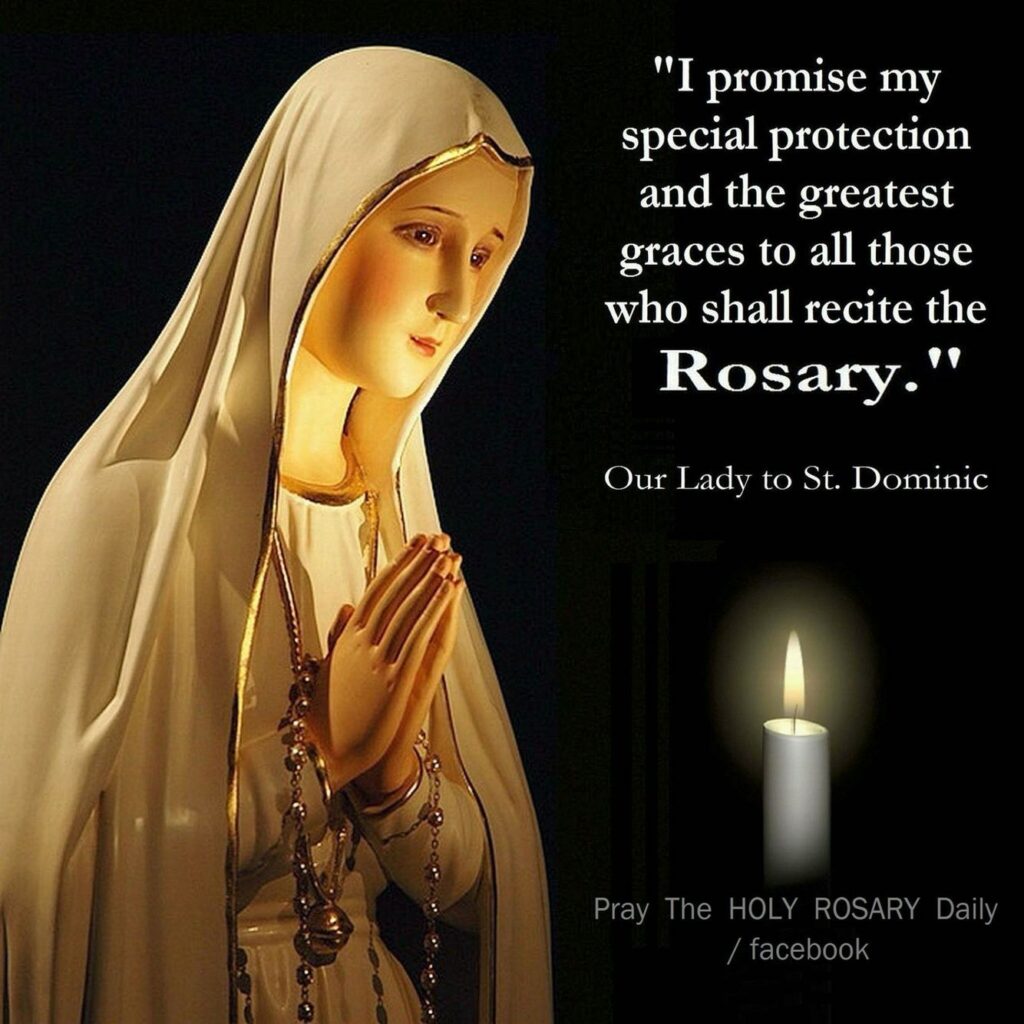
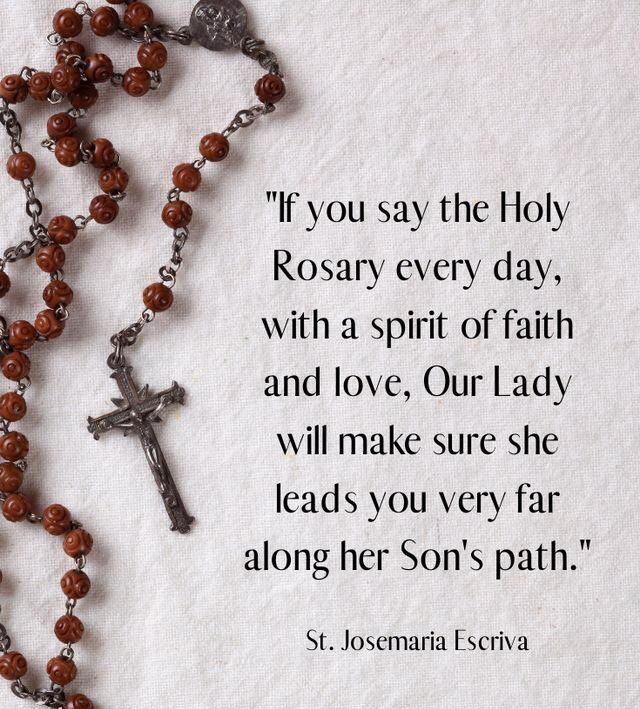
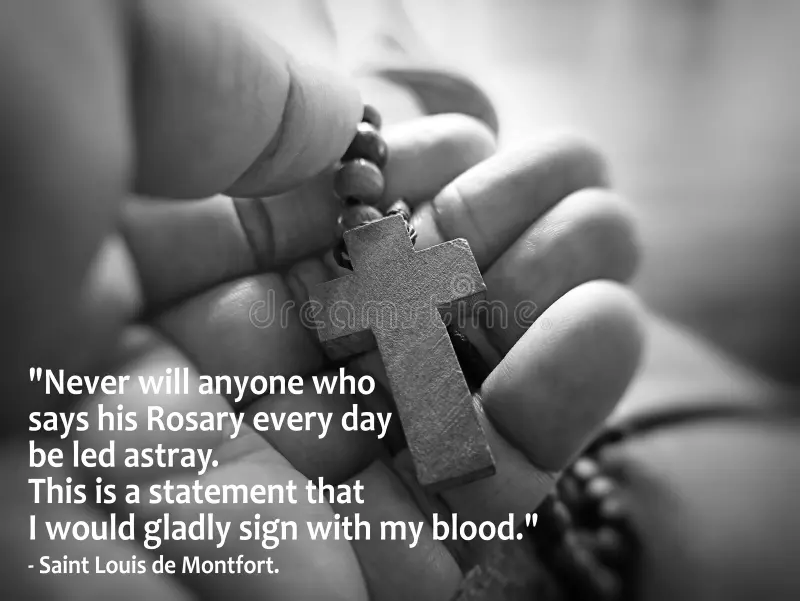
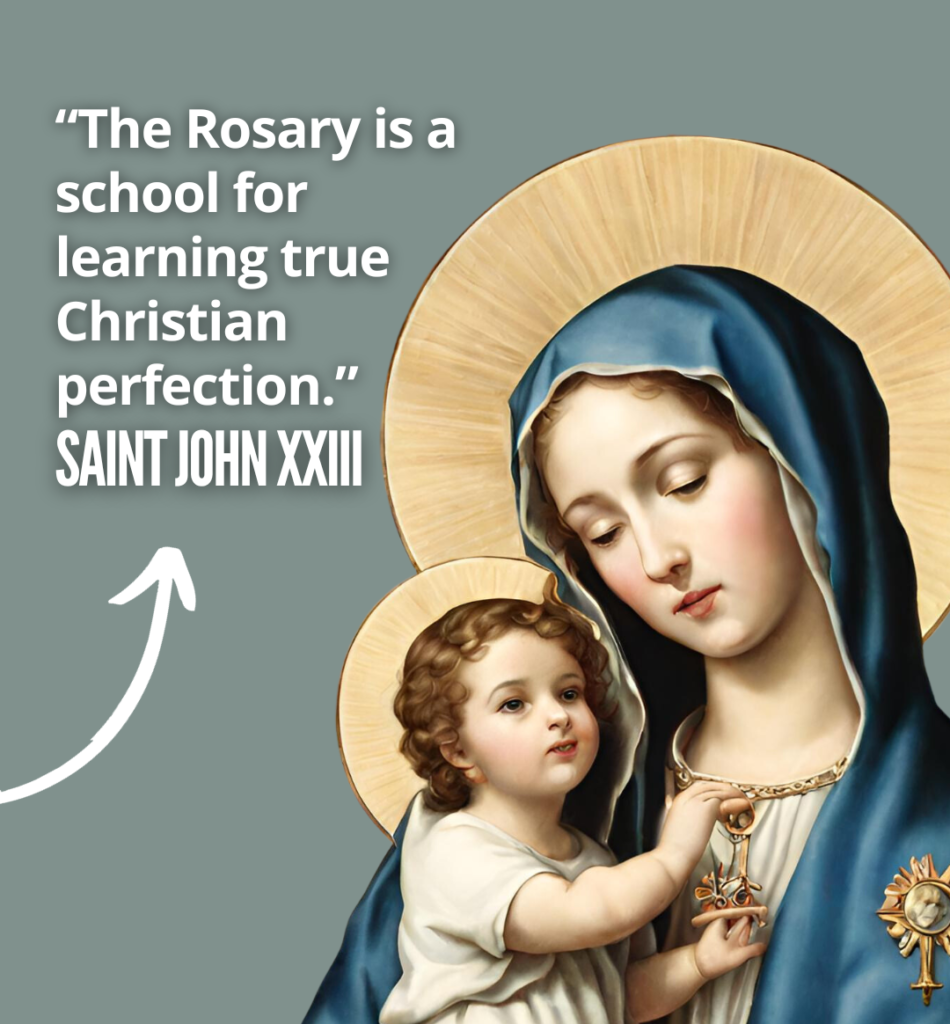
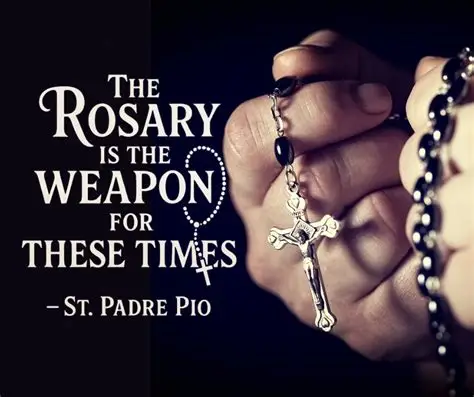
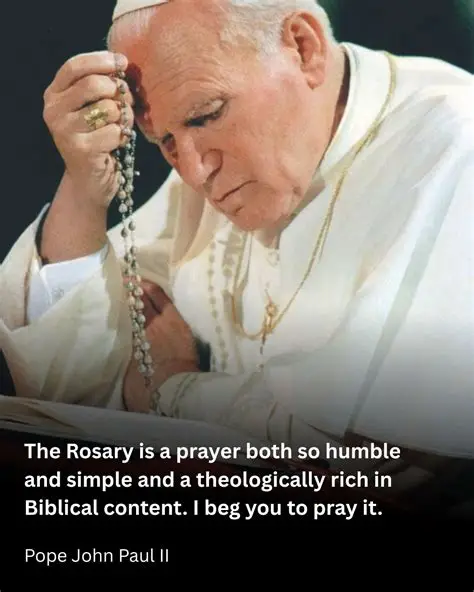
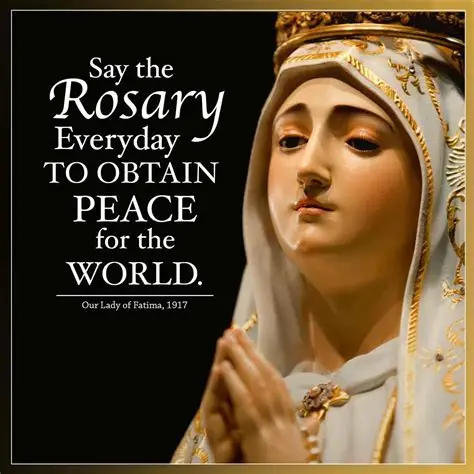
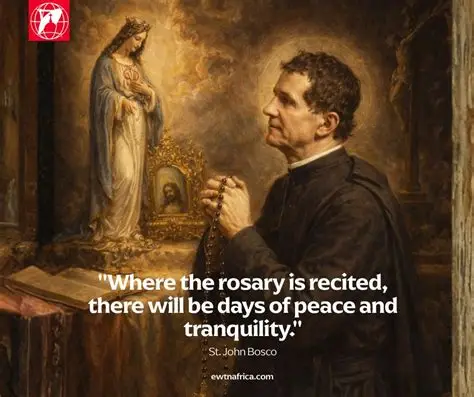
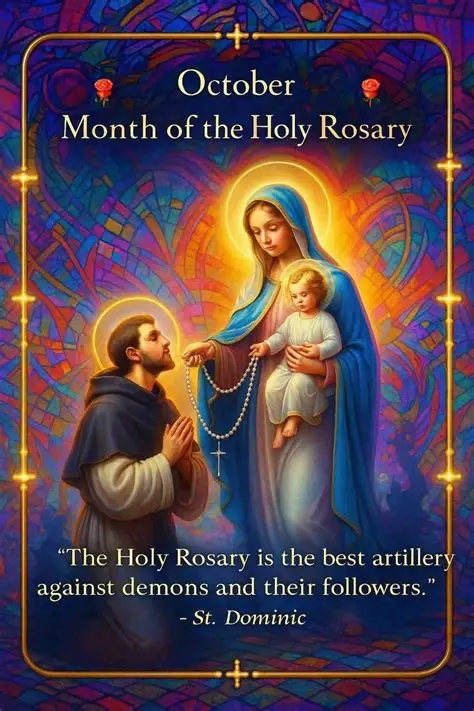
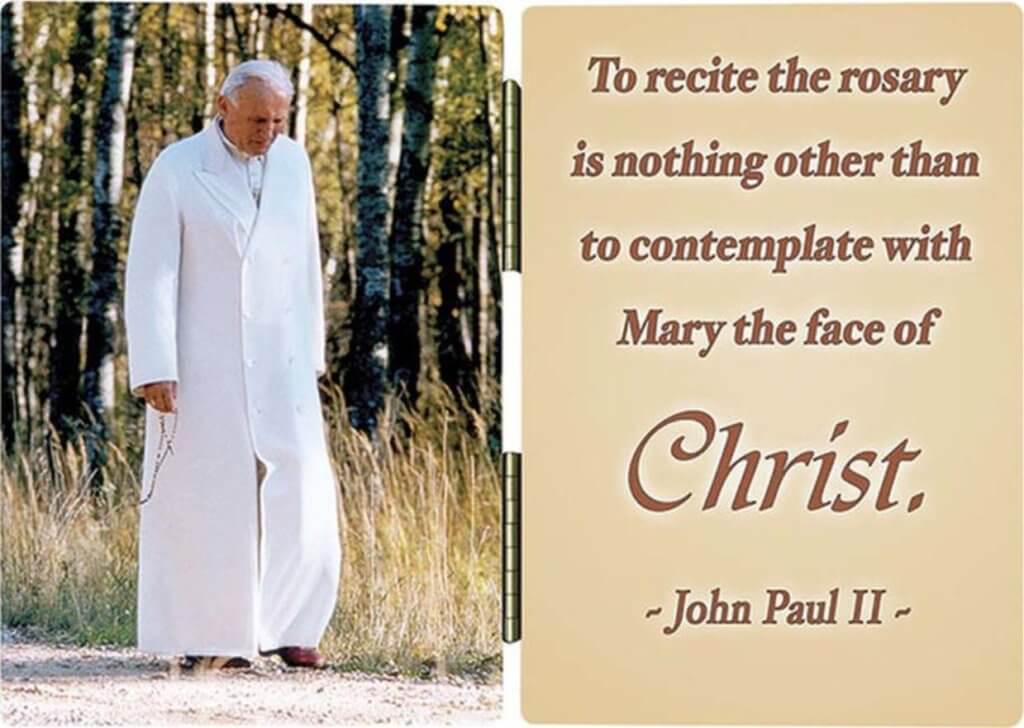
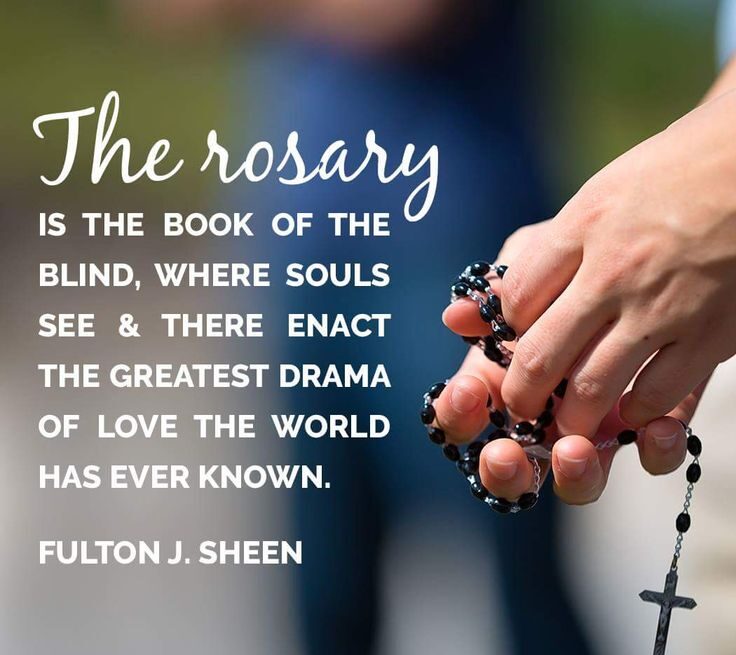
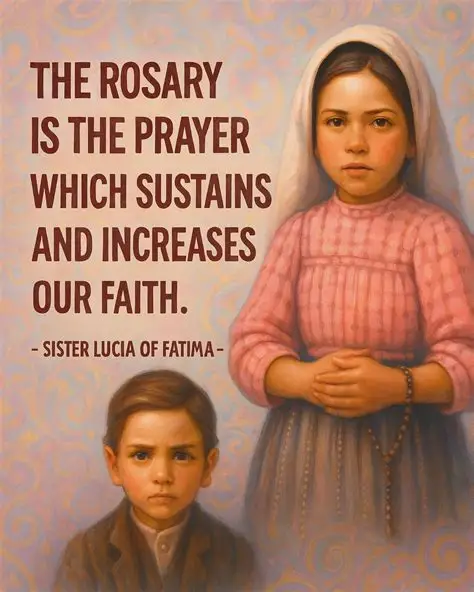
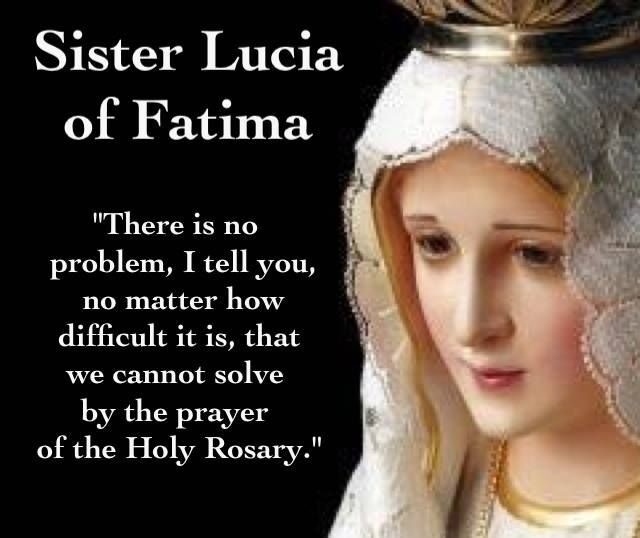
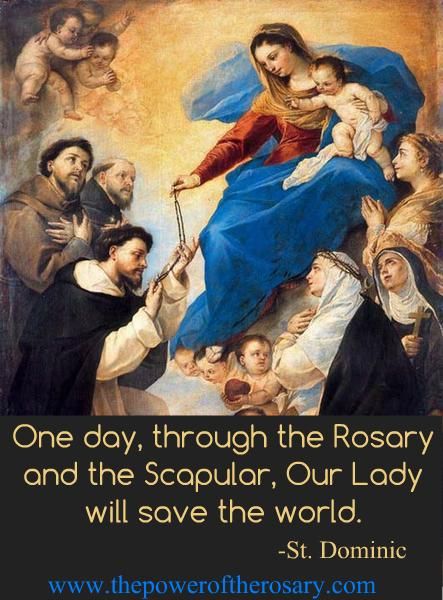
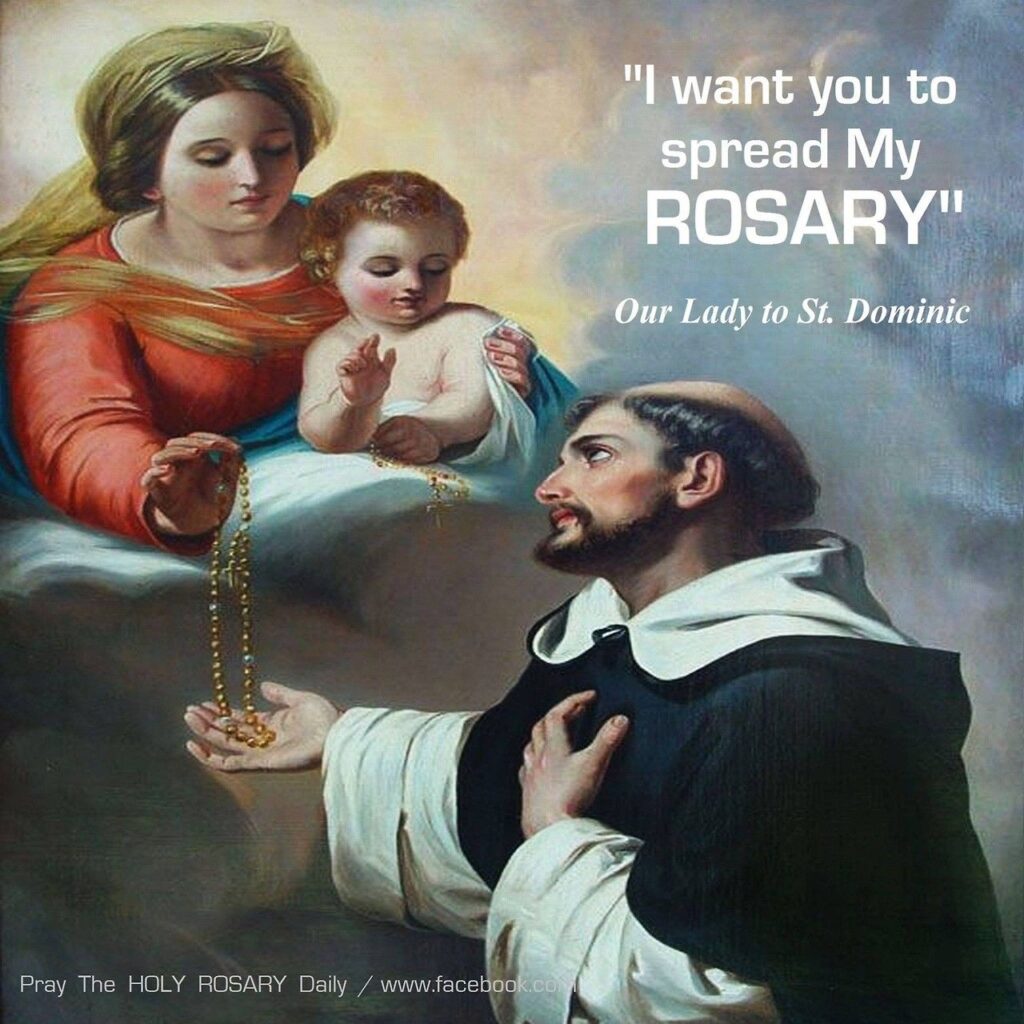
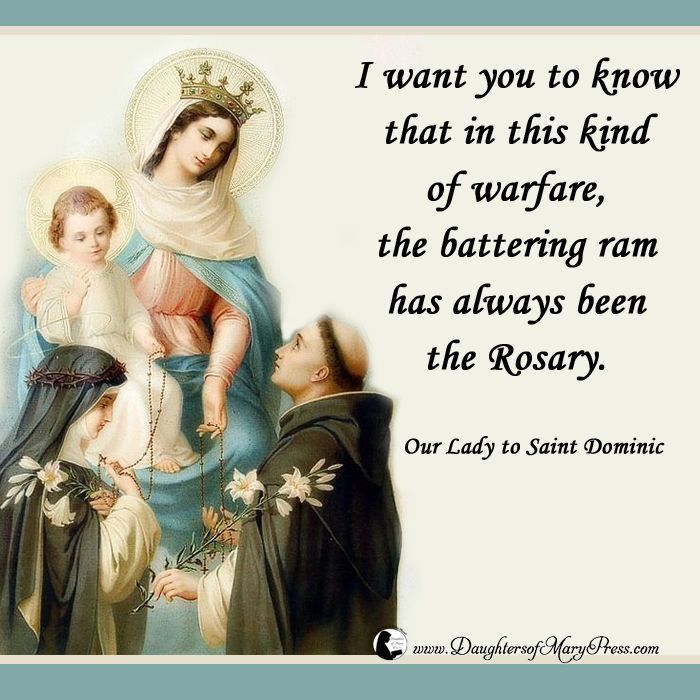
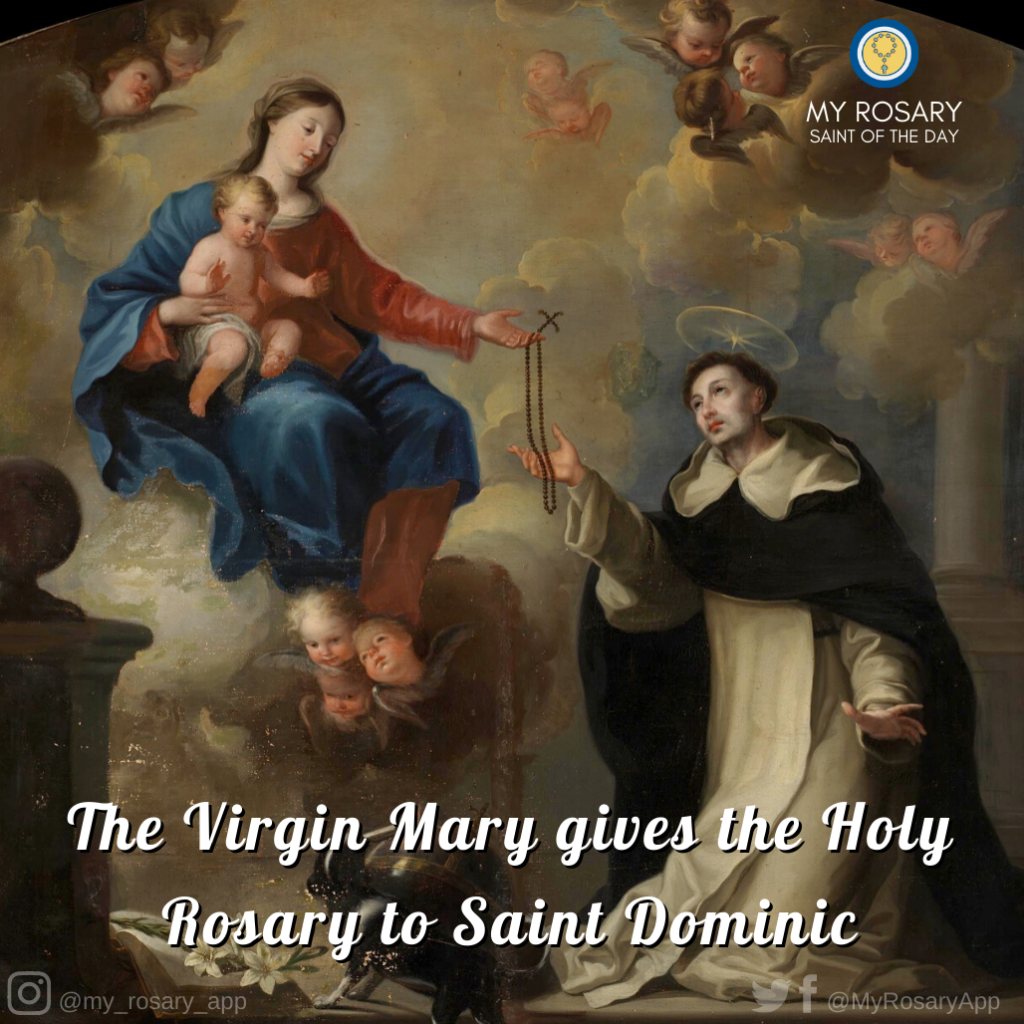
The Feast Day of the Rosary is celebrated on October 7th. The Rosary was a devotion begun by St. Dominic after experiencing a vision. The following quotes reveal the power the rosary had on the lives of the saints.
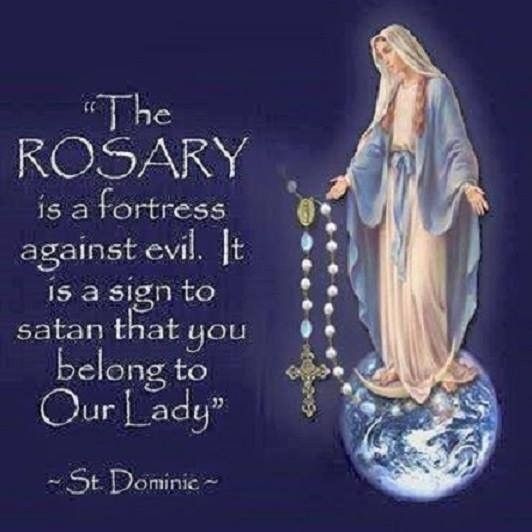
1. The Rosary is a fortress against evil. It is a sign to satan that you belong to Our Lady.
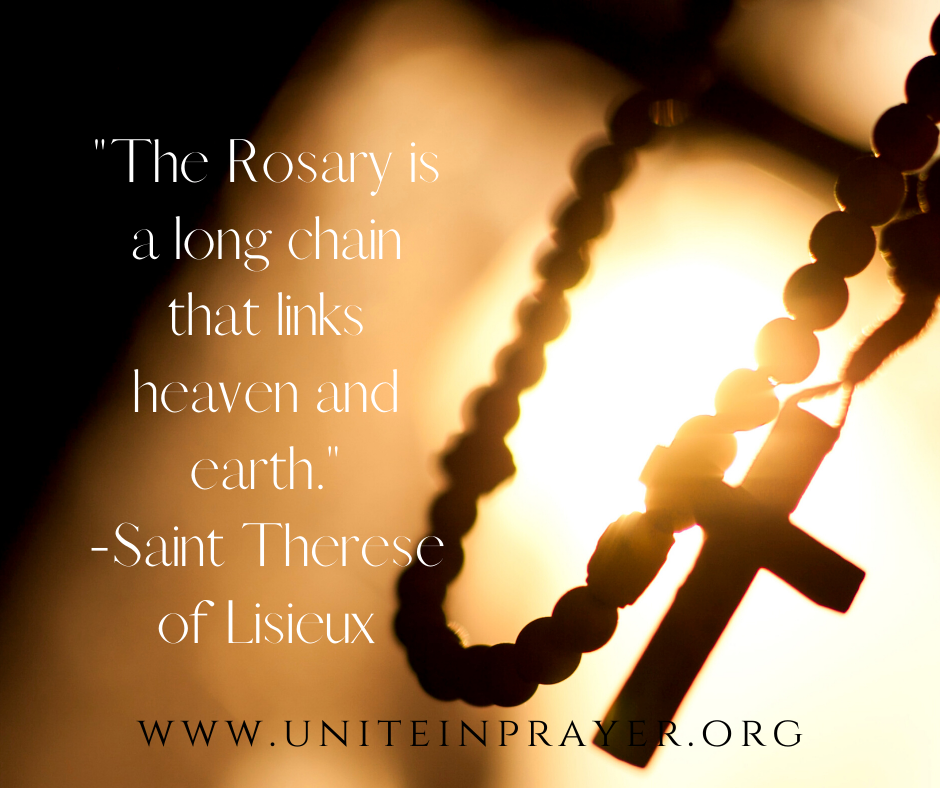
8. The Rosary is a long chain that links heaven and earth. One end of it is in our hands and the other end is in the hands of the Holy Virgin. The Rosary prayer rises like incense to the feet of the Almighty.
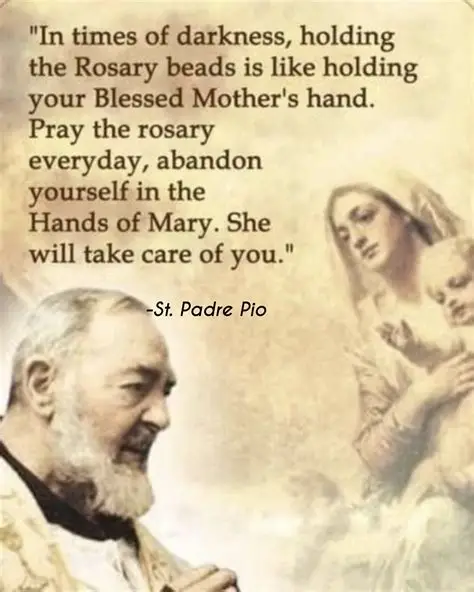
17. In times of darkness, holding the Rosary beads is like holding your Blessed Mother’s hand. Pray the rosary everday, abandon yourself in the hands of Mary. She will take care of you.
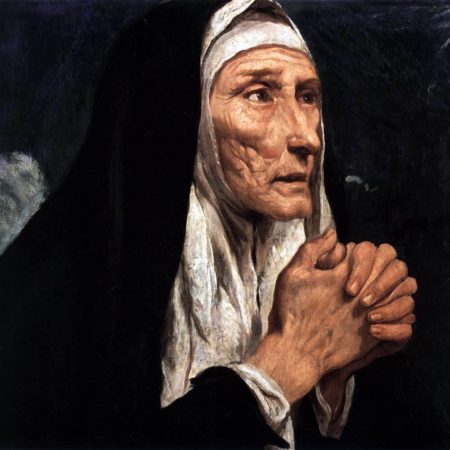
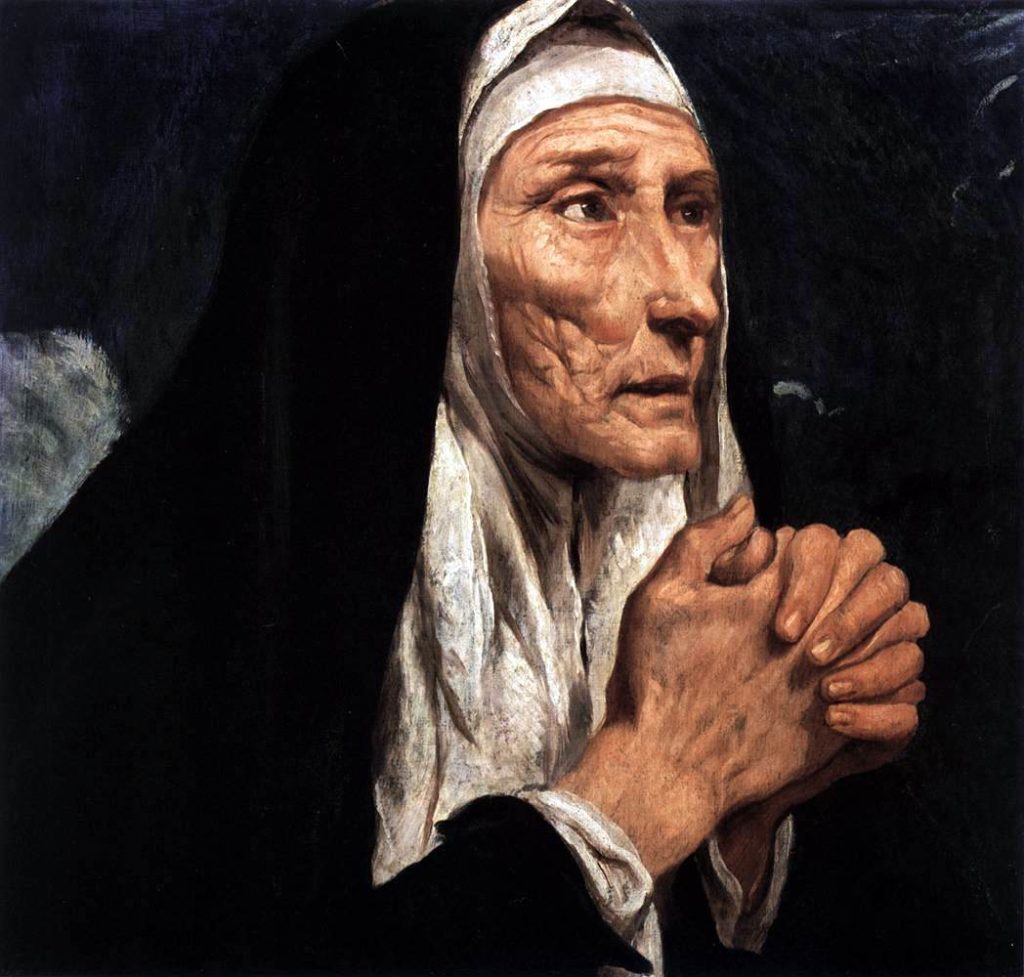
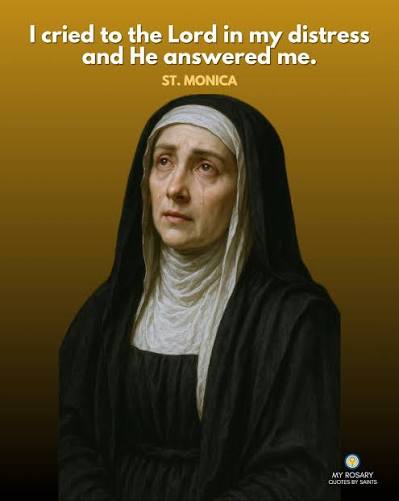
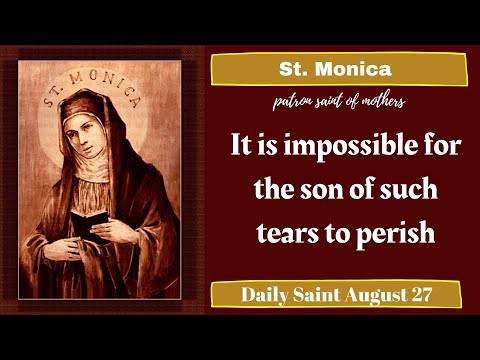
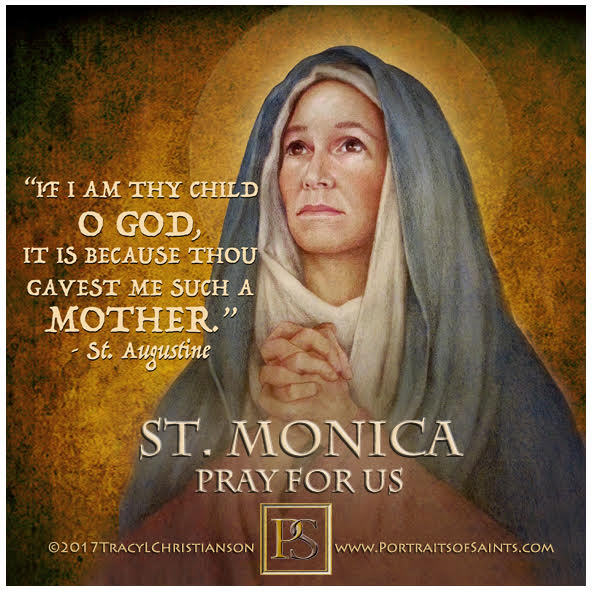
The Feast Day of St. Monica is celebrated on August 27. She is the patron saint of mothers, alcoholism and difficult marriages.
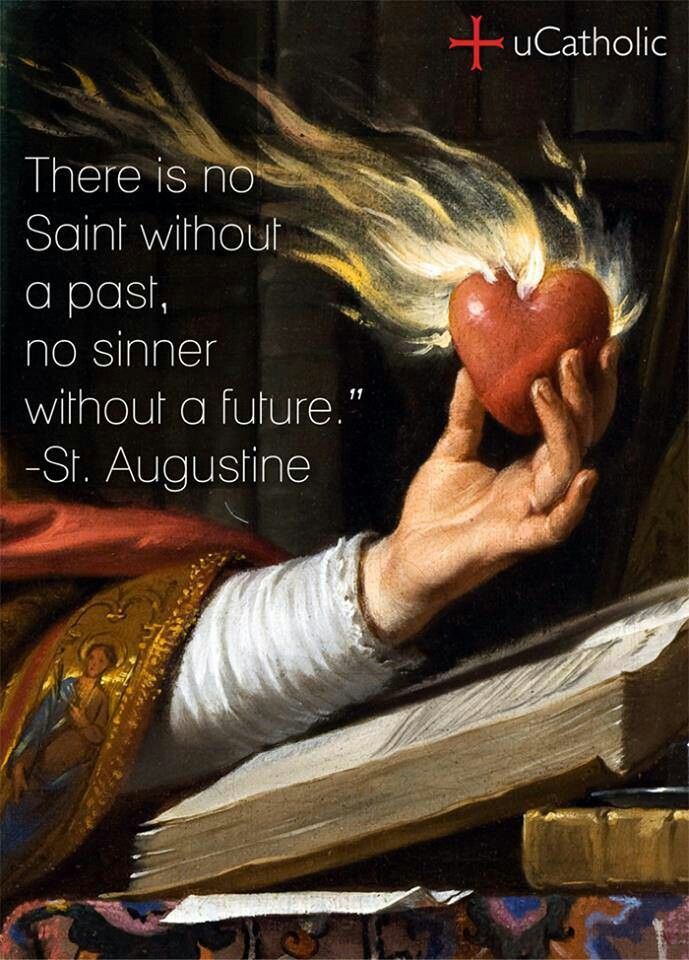
St. Monica was born of a Christian family in Tagaste in Africa in 331. She was given in marriage by her parents to a non-Christian named Patricius. He was known to have a a bad temper and alcoholism. They had three children who survived infancy. One of them was Augustine.
Monica was known for her pious nature. She prayed without ceasing for her family. A year before his death Patricius converted to Catholicism and was baptized. Augustine was 17 at the time of his father’s death. He left the faith and led an immoral life. By eighteen he had a mistress and a son. He joined a group called the Manichees. Manicheeism teaches that the material world is part of the realm of evil. There are two gods one good and one evil.
Monica never ceased praying for the return of her son to the Catholic faith. After more than 15 years of prayer, Augustine heard St. Ambrose, the bishop of Milan, preach. He decided to study the faith, and eventually returned, being baptized in 387. Eventually Augustine became a priest and then a bishop. St. Augustine is now considered a Doctor of the Church.
Monica is the patron of mothers due to her persistence in prayer.
“Nothing is far from God.”
Quote of St. Monica
August is the Month of the Immaculate Heart of Mary
Easter is just around the corner! Students of Catholicism are preparing for the Sacrament of Confirmation. At the Easter vigil adults coming into the Catholic faith will be baptized, receive their first communion and be confirmed.
The list below is twenty five male patron saints which men might be interested in as they choose their patron saint for confirmation.
Young Catholics will receive the sacrament during the Easter season, when the Bishop of their diocese visits their parish. The sacrament of confirmation is one of the three sacraments of initiation. First is baptism which is often received shortly after birth. Second is Communion or Eucharist, which received at age of reason, usually seven or eight years of age. The third is confirmation. The age for confirmation is decided upon by the Bishop of the Diocese and can range from age of reason to high school.
When confirmed, the person is “sealed with the Holy Spirit”. The sacrament makes the person a full member of the Catholic Church. It’s history goes back to Pentecost, the birthday of the Church. On Pentecost the Apostles were filled with the Holy Spirit and their confusion was lifted. The Apostles received gifts from the Holy Spirit. The gifts of the Holy Spiritare the following: 1.Wisdom, 2.Understanding, 3. Counsel, 4. Courage 5.Knowledge 6. Reverence, 7. Wonder and awe. Not everyone receives the same gifts.
The Fruits of the Holy Spirit come when we make use of the gifts given to us by the Holy Spirit. The fruits of the Holy Spirit are the following: 1. Charity 2. Joy 3. Peace 4. Patience 5. Kindness 6. Goodness 7. Generosity 8. Gentleness 9. Faithfulness 10. Modesty 11. Self-control 12 Chastity
The person being confirmed chooses a patron saint. The name of the saint is the name the bishop will use when he anoints him/her and lays hands in prayeron them. The saint is to be a role model and guide for the person throughout their life. In good times and bad, we ask our patron saint to pray with us and for us.
Are you searching for a patron saint?
The following twenty five saints should be considered as you choose your patron saint.
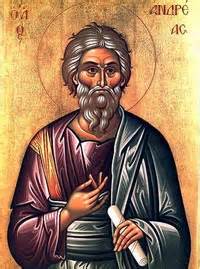
St. Andrew the Apostle
1. St. Andrew the Apostle Feast Day: Nov. 30Patron of fishermen Apostle and Martyr
St. Andrew was the brother to Simon Peter. They were both fishermen. Andrew was a disciple of John the Baptist and the first apostle to be called by Jesus. When Andrew asked Jesus where he lived Jesus responded “Come and See.” Andrew then told Simon Peter about Jesus saying “We have found the Messiah!”
After the resurrection, St. Andrew preached in Greece.
St. Andrew was martyred by crucifixion.
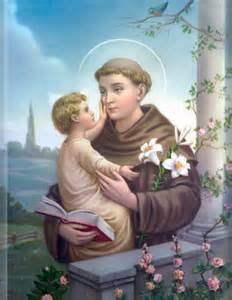
St. Anthony of Padua
2. St. Anthony of Padua Feast Day: June 13 Patron of lost items and missing persons Doctor of the Church
St. Anthony was born in Portugal in 1195. He joined the Augustinian Order. Later he joined the Franciscan Order at age 26. He is called “The hammer of the Heretics.” His preaching was simple and easy to understand. The Infant child Jesus miraculously appeared to him.
St. Anthony was canonized less than one year after his death in 1231.
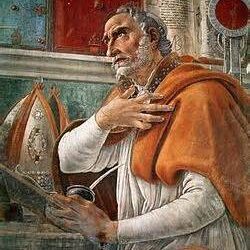
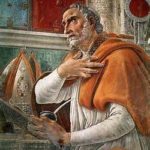
St. Augustine
3. St. Augustine of Hippo Feast Day: Aug. 2. Patron of Brewers Father of the Church
St. Augustine was the patron of brewers because of his lifestyle which included loose living and parties. His mother was St. Monica, who prayed for him for many years. He finally converted after reading a passage of scripture which said, “put away all impurity and live in imitation of Jesus.” This passage helped him to decide to return to the faith.
He was baptized by St. Ambrose. Eventually, he became the Bishop of Hippo. He is know for the poem “Too late have I loved You.”
In the year 430, he fell ill. He spent his last days in prayer, dying on Aug. 28.
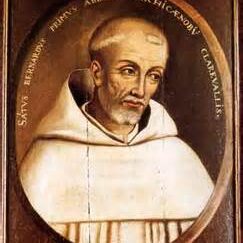
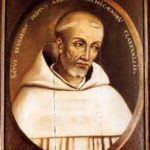
St. Bernard Clairvaux
4. St. Bernard of Clairvaux
Feast Day Aug. 22 Doctor of the Church
Patron Saint of mountaineers and The Alps
St. Bernard was born in Burgundy, France. After his mother’s death he entered the Cistercian Order. He founded a monastery known as the Abbey of Clairvaux. He was the Abbot. He refused offers to become a bishop. In 1128, he participated in the Council of Troyes. He was known for fighting against heresies.
In 1139, he assisted in the Second Council of the Lateran. He encouraged Lectio Divina and contemplation on scripture.
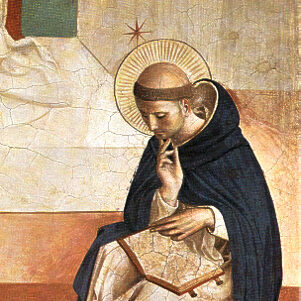
St. Dominic
St. Dominic
Feast Day: Aug 8
Patron of Astronomers
Founder of the Order of Preachers (Dominicans)
St. Dominic was born in 1170 into a wealthy family at Calaruega, Spain. As a priest he preached against the Albigensianism heresy. He also helped to reform the Cistercians.
He organized the Order of Preachers, known as the Dominican Order. They were traveling preachers who practiced a life of prayer and penance.
St. Dominic spread the Marian devotion of praying the Rosary.
St. Dominic died on Aug. 6
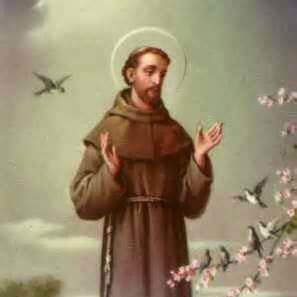
St. Francis of Assisi
6. St. Francis of Assisi Feast Day: Oct. 4 Patron of environment and animals Founder of The Franciscan Order
St. Francis was born in Assisi, Italy in 1181 into a wealthy family. He lived a wild life when young, becoming a soldier. However, God appeared to him in a dream telling him to go home.
Later, in prayer, God said “Francis, repair my church.” Francis took this literally, and began to repair the church buildings which were falling down. Eventually, it led Francis to leave his family, founding the Franciscan Order. Franciscans took a vow of poverty and served the sick and poor.
St. Francis loved animals and nature. Birds and wild animals had no fear of him. He also composed music.
St. Francis died in 1226.
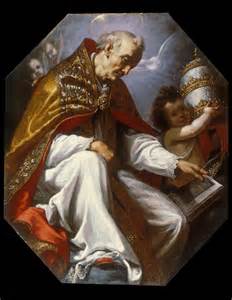
St. Gregory the Great
7. St. Gregory the Great Feast Day: Sept. 3 Patron saint of students, teachers, musicians Doctor of the Church
St. Gregorybecame a prefect of Rome before the age of 30. The pope chose him to be one of his seven deacons. At age 50 he was elected pope. He is know for reforming the liturgy. The Gregorian chant is attributed to St. Gregory.
Pope Gregory became a Benedictine monk living in his own home. He founded six monasteries after five years in office. He also re-energized the missionary work of the church.
Pope Gregory died in 604. He was declared a saint by popular acclamation.
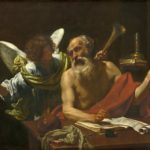
St. Jerome
8. St. Jerome
Feast Day: Sept. 30
Patron of librarians, students, and orphans
Doctor of the Church
St. Jerome was born in 342 in Aquileia. He is the most educated of the Church Fathers. He was baptized by Pope Liberius in 360.
Wanting a religious library, he copied St. Hilary’s books. He is most famous for his translation of the Bible from Hebrew into Latin (the vulgate). He also wrote many commentaries on scripture. He was a priest, confessor, theologian and historian.
St. Jerome died near Bethlehem on Sept. 30, 420.
In art he is shown as one of the four church fathers (Augustine of Hippo, Ambrose, Pope Gregory the Great and Jerome).
St. John the Baptist
9. St. John the Baptist
Feast Day: June 24
Patron of prosperity, baptism and conversion
Cousin to Jesus
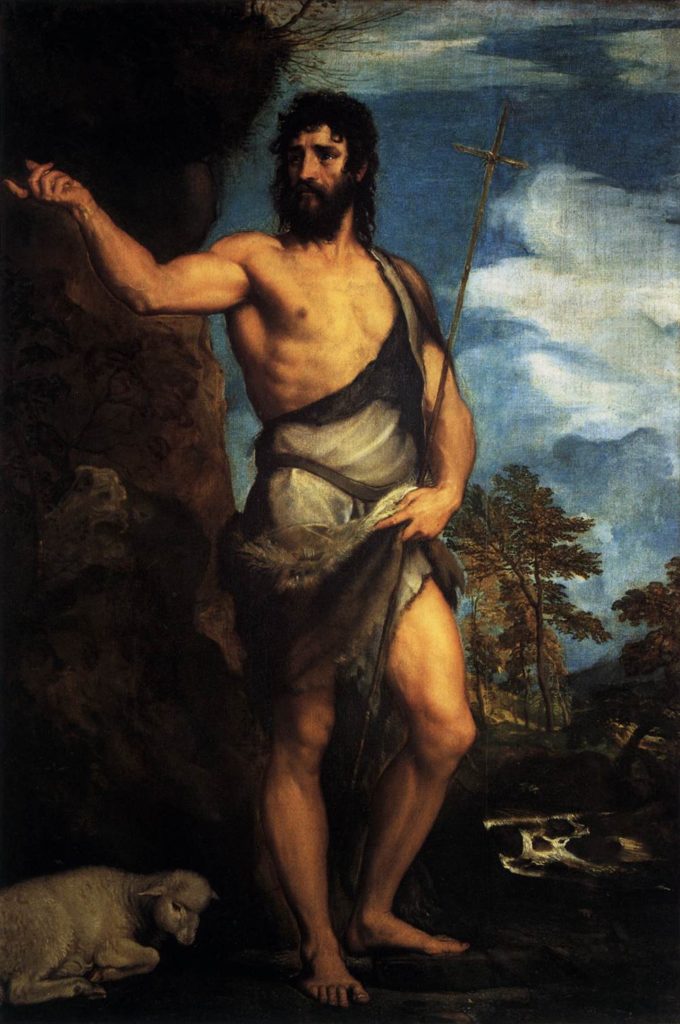
John the Baptist was the cousin to Jesus. He was the son of Elizabeth, who miraculously conceived in her old age. Zechariah was his father.
At age 30 John began to preach in Jordan against evil behavior. He called everyone to penance and baptism, saying the Kingdom of Heaven is close at hand. He baptized large crowds of people. Eventually, he baptized Jesus, saying. “It is I who need baptism from You.”
It is John who identified Jesus as “The Lamb of God”.
John the Baptist is considered the last of the Old Testament prophets.
St. John the Evangelist
10. St. John the Evangelist
Feast day: Dec. 27
Patron of Book sellers, printers, art dealers
Apostle
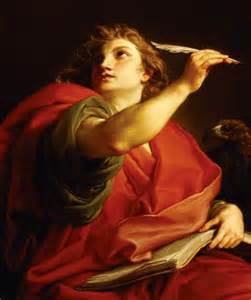
St. John was a Galilean, born to Zebedee. His mother was Salome. He was the brother to St. James the Greater. John and James were known as “the sons of thunder.” St. John is also known as “The beloved disciple” and “The Apostle of Charity”.
John was with Jesus at the marriage feast of Cana. He was given the honor of sitting next to Jesus at the Last Supper. He was also with Jesus during all of his suffering in the Garden of Gethsemane and at the crucifixion. He was the only Apostle who stood with the holy women at the foot of the cross.
Jesus spoke about him from the cross, saying “Woman, behold thy son”. John took Mary the mother of Jesus into his home after Jesus’ death and cared for her.
St. John was the first Apostle to recognize Jesus when he appeared to them on the shore.
St. John worked in Jerusalem and at Ephesus after the death of Jesus, living in Asia Minor. He wrote the fourth Gospel, three Epistles, and possibly the Book of Revelation.
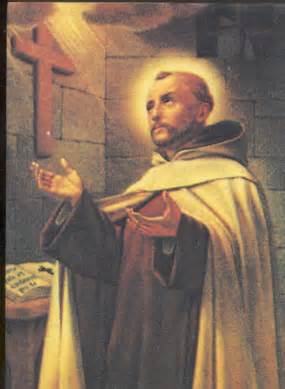
St. John of the Cross
11. St. John of the Cross Feast day: Dec. 14 Patron saint of poets, mystics, and contemplatives Doctor of the Church
John of the Cross was born in Spain in 1542. After the death of his father he attended a school for orphans. His mother kept the family together inspite of being homeless. At the age of 14 he took a job caring for hospital patients who suffered mental and terminal illnesses. From poverty and suffering John found beauty and happiness not in the world but in God.
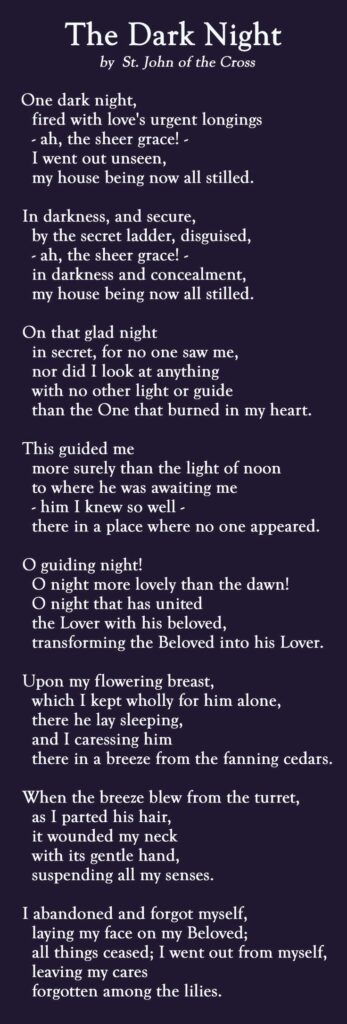
St. John joined the Carmelite Order. He met and became a friend to St. Teresa of Avila. She asked him to help him reform the order. Threatened by the change John envisioned, he was captured and imprisoned by members of his own order, being locked in a small room and beaten regularly. After nine months he escaped, taking only his mystical poetry with him. This poetry includes The Dark Night of the Soul.
St. John of the Cross died in 1591.
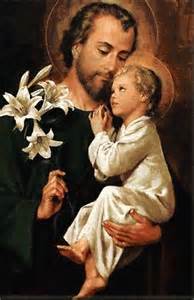
St. Joseph
12. St. Joseph Feast Day March 19, May 1 Patron of fathers, a happy death, workers, foster children Foster father of Jesus Husband to the Blessed Virgin
Joseph was engaged to be married to Mary, when she was found with child. He was going to divorce her quietly to avoid scandal, however an angel appeared to him in a dream, saying, “Joseph, son of David, do no be afraid to take Mary as your wife, for the child conceived in her is from the Holy Spirit. She will bear a son, and you are to name him Jesus, for he will save his people from their sins. Mat: 1: 20-21
Joseph immediately took Mary as his wife.
The angel appeared to Joseph a second time. This time he was told his family was in danger. They fled to Egypt where they stayed until the angel told him it was safe to return.
Joseph worked as a carpenter. He was the foster father of Jesus, loving him and providing for him and Mary. Jesus, Mary and Joseph are referred to as “The Holy Family”.
We celebrate two feast days for St. Joseph. The first is on March 19; Feast day of St. Joseph, husband of Mary. The second feast day is May 1; Feast day of St. Joseph the worker.
St. Josephis the patron for a happy death because tradition tells us that he died with Jesus and Mary at his side.
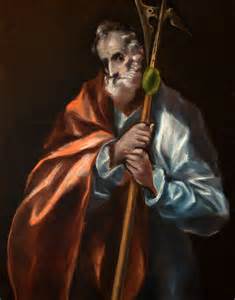
St. Jude Thaddius
13. St. Jude Thaddius
Feast Day: Oct. 28
Patron of desperate causes
Apostle and Martyr
St. Jude was an apostle of Jesus. He was brother to St. James the Less. He is not the same person as Judas who betrayed our Lord.
St. Jude is the author of an epistle in the Bible. Because he stressed the need to persevere during difficult times, he is considered the patron of desperate causes.
Tradition tells us that he suffered martyrdom along with the apostle Simon the Zealot in Beirut, a province of Syria. In art he is shown with an ax which was used in his execution.
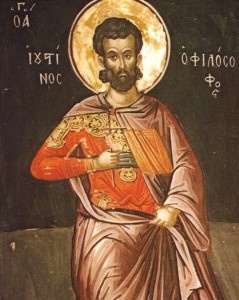
St. Justin Marty by Theophanes the Cretan
14. St. Justin Martyr Feast day: June 1 Patron of philosophers Martyr andFather of the Church
St. Justin Martyr lived from 100-165. He was born a Gentile at Flavia, Neapolis. He converted to Christianity and defended the faith in Asia Minor and Rome. He wrote two “Apologies”. These were attempts to explain the faith. His first Apology is one of the earliest records teaching the meaning of the Eucharist.
St. Justin was a student of philosophy. After his conversion, he continued to debate philosophy publicly with his fellow students. A rival philosopher turned Justin in to authorities because of his faith. He was put on trial and then executed. He was beheaded in the year 165.
St. Justin Martyr is considered a Father of the Church.
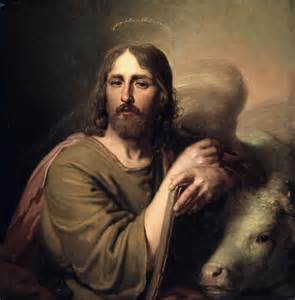
St. Luke uke
15. St. Luke
Feast Day October 18
Patron of physicians and surgeons Author of the Gospel of Luke and The Acts of the Apostles.
St. Luke was a gentile who spoke Greek. He followed Paul after the Resurrection of Jesus. He accompanied Paul to Macedonia. When Paul was imprisoned, St. Luke stayed near him.
St. Luke was born at Antioch in Spain. He is referred to as a physician by St. Paul, St. Jerome and St. Irenaeus. He is referred to as “the beloved physician” by Paul in Col. 4:14.
The Gospel of Luke focuses on God’s mercy and forgiveness of sinners. Only in the Gospel of Luke does the story of the Prodigal Son appear.
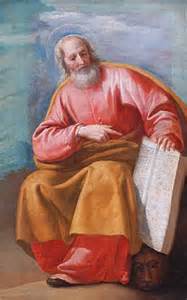
St. Mark the Evangelist
16. St. Mark the Evangelist Feast Day: April 25 Patron of attorneys, prisoners, notaries Martyr
St. Mark was a disciple of Jesus who traveled with St. Paul. He accompanied Paul and Barnabus on their missionary journey.
St. Mark wrote the second gospel when Romans requested that he write down the teachings of St. Peter. Tradition says that he was present at the Miracle of Cana when Jesus turned the water into wine.
Tradition also tells us he was martyred in the year 68 by being dragged through the street with a rope around his neck.
He is portrayed as a lion because his Gospel begins with John the Baptist crying “Make ready the way of the Lord”.
The relics of St. Mark are in Venice.
St. Matthew
17. St. Matthewthe Apostle Feast day: Sept. 21 Patron saint of bankers and accountants Martyr
St. Matthewwas one of the twelve called to be an Apostle. He was a tax collector before Jesus called him to follow him. He is also known as ‘Levi”.
The Gospel of Mathew was written in Aramaic which the Hebrew tongue. The Gospel of Mathew has the most parables of the Gospels. It also has the Beatitudes which are in the Sermon on the Mount. Tradition tells us that he worked in Ethiopia.
Tradition tells us that St. Matthew died a martyrs death, being killed with an ax.
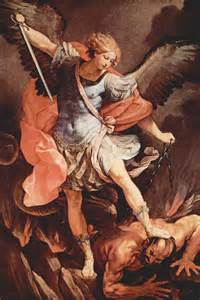
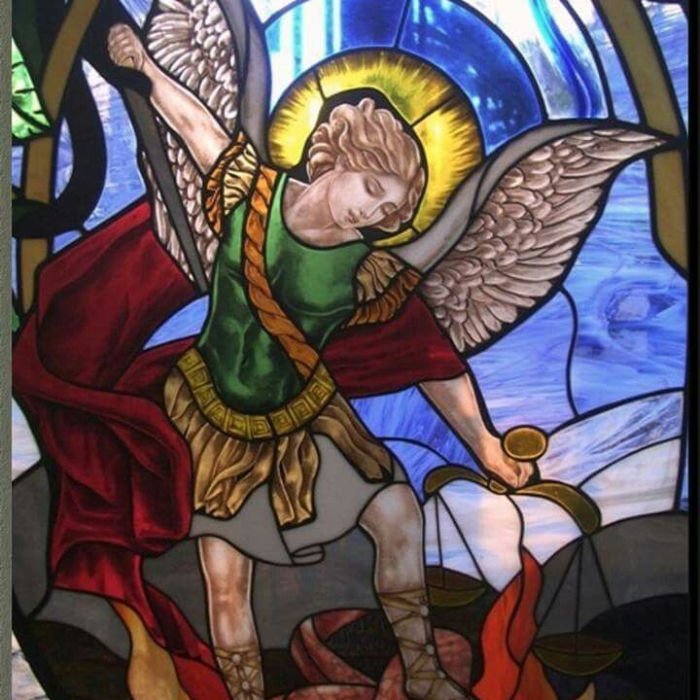
St. Michael the Archangel
18. St. Michael the Archangel
Feast day: Sept. 29
Patron of police, paratroopers, mariners, sickness
The name Michael means “Who is like God.” St. Michael is the leader of the good angels. He is considered a warrior angel. In the Book of Revelations it is St. Michael who is the leader during the final battle between good and evil at the end of time.
St. Michael the Archangel is the patron of police because of his battle against evil. St. Michael defend me in battle is a popular Catholic prayer.
St. Michael has appeared in three places: the cave of St. Michael in Italy, Mont St. Michel in France and The Grotto of St. Michael in Mexico.
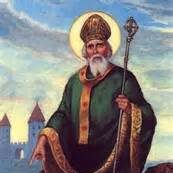
St. Patrick
19. St. Patrick Feast day: March 17 Patron of slaves and Ireland
St. Patrick was born in Kilpatrick, Scotland, in 387. At age 14 he was captured by a raiding party and taken to Ireland as a slave. As a slave, he tended to the sheep. He turned to God in prayer. His prayer “The Breastplate of St. Patrick” is well known.
Patrick was a slave until the age of 20. He received guidance in a dream. He was led to sailors who took him to Britain. In another dream, the people of Ireland asked him to return.
He became a priest, then a Bishop. As Bishop he was sent back to Ireland. Many people converted under his guidance. He is known for using the shamrock to explain the Trinity.
He died in Saul, where he built his first church, on March 17, 461.
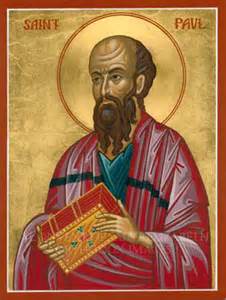
St. Paul the Apostle
20. St. Paulthe Apostle
Feast day: June 29 Apostleand Martyr Author of 14 Epistles Patron of converts, authors, writers, publishers
St. Paul is known as the Apostle of the Gentiles. He is also known as Saul of Tarsus. Before his conversion, he was persecuting Christians. In the Book of Acts his conversion story is told. Paul hears a voice saying “Saul, Saul, why do you persecute me?” Paul replies, “Who are you, Lord?” “I am Jesus, whom you are persecuting. But get up enter the city and you will be told what to do.” Acts 9: 4-6
After this experience Paul was baptized, and he began preaching that Jesus is the Christ, the Son of God. He fled Damascus returning to see Peter. Paul traveled on several missionary journeys, accompanied by Barnabus.
He was imprisoned in Caesarea and then in Rome, being kept in chains. After his release he went to Spain. He was imprisoned again and beheaded in the year 67.
St. Paul wrote 14 Epistles which have greatly influenced the Christian faith.
St. Peregrine
21. St. Peregrine Laziosi
Feast day: May 1 Patron of cancer victims
St. Peregrine was born to wealthy parents in Forli, Italy in 1260. He was active in politics when he was young, being a member of the anti-papal party. After striking St. Philip Benizi in the face at an uprising he repented and converted to Catholicism. St. Peregrine received a vision of the Virgin Mary, after which he followed her instructions to join the Servites, observing silence and solitude.
St. Peregrine was afflicted with a tumor on his leg which the doctors wanted to amputate. He spent the night before the operation in prayer. The following morning he was completely cured and the tumor was gone. The miracle became well known.
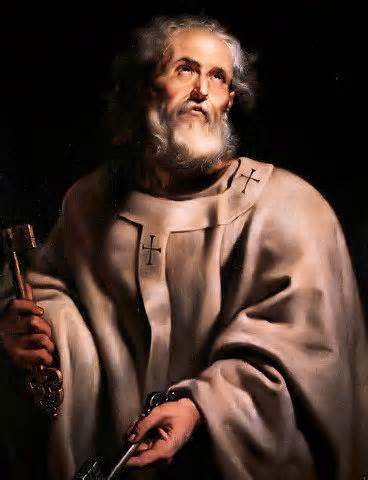
Feast day: June 29 Patron. of fishermen Apostle and martyr
Peter’s name at birth was Simon. He was from Bethsaida and the brother to St. Andrew. Both Simon and Peter were fishermen. It was Andrew who told Simon that he had found the Messiah. Jesus then called Simon to follow him.
Jesus gave Simon the name of Peter which means “rock”. When Peter acknowledged that Jesus was the Messiah, the son of the living God, Jesus said to him, “You are Peter and upon this rock I will build my church. I will give you the keys of the kingdom of heaven. Whatever you bind on earth shall be bound in heaven and whatever you loose on earth shall be loosed in heaven.
St. Peteris always listed as the first of the Apostles in all of the New Testament accounts. Peter, along with James and John were present at the transfiguration, the raising of Jairus’ daughhter and the Agony in the Garden.
At the crucifixion Peter denied Jesus three times.
When Jesus appeared to Peter after the Resurrection, he told Peter three times “feed my sheep”.
After the Resurrection, Peter appointed the replacement of Judas. He preached to the Gentiles.
Peter died in Rome during the reign of Nero. He was crucified upside down because he declared himself unworthy to die in the same manner as. the Lord.
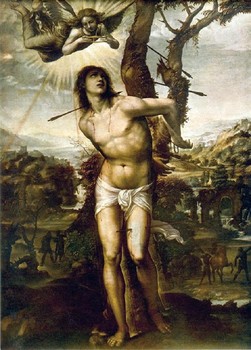
St. Sebastian
23. St. Sebastian
Feast Day January 20
Patron of archers, athletes and soldiers
St. Sebastian was born in Gaul. He became a soldier in the Roman army. Sebastian converted many people to the christian faith. He is also known for curing a deaf mute.
St. Sebastian was named captain of the guards. When they learned he was Christian, he was ordered executed. He was shot with arrows and left to die. The widow of St. Castulas found him still alive and nursed him back to health. Soon after, he was beaten to death on the Emperors orders.
St. Sebastian is considered the patron saint of athletes because of his physical endurance and energetic way of defending the faith.
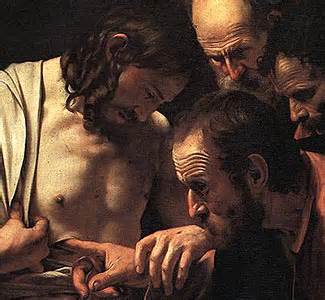
Doubting Thomas by Caravaggio Apostle and Martyr
24. St. Thomas the Apostle
Feast Day: July 3
Patron of architects
Apostle and Martyr
St. Thomas was born into a Jewish family. Jesus called him to be one of the twelve disciples.
He is most remembered for not believing that Jesus had risen from the dead, saying “Unless I see the mark of the nails in his hands and put my finger in his side I will not believe. John 20: 25
Jesus appeared to Thomas a week later saying “Peace be with you. Put your finger here and see my side. Do not doubt but believe.” Thomas answered “My Lord and my God!”
St. Thomas is remembered as Doubting Thomas.
After Pentecost, Thomas was sent to evangelize the Parthians, Medes, Persians, and India.
St. Thomas was speared to death at Calamine.
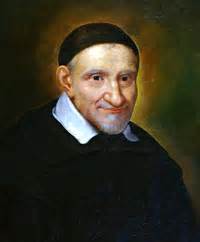
St. Vincent de Paul
25. St. Vincent de Paul
Feast Day : September 27
Patron of Charitable Societies
St. Vincent was born in 1581 to poor parents in Gascony, France. His first school was led by Franciscans. He was ordained a priest in 1600 after studying at the University of Toulouse.
St. Vincent was captured by pirates while he was at sea. They held him prisoner for two years. He escaped, going to Rome and then returning to France.
St. Vincent founded the Sister of Charity who served the poor through corporal and spiritual works of mercy. He then founded the Vincentians. Their mission was to serve the poor in smaller towns and villages. He also conducted retreats for clergy and established seminaries.
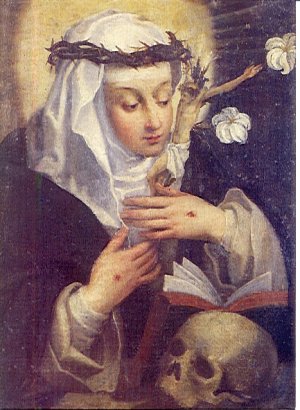
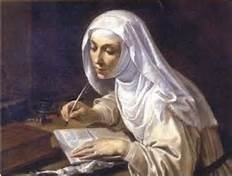
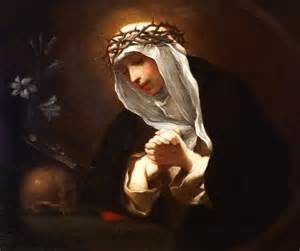
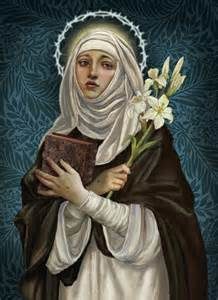
The Feast Day of St. Catherine of Siena is celebrated by the Catholic Church on April 29. St. Catherine is the patron saint against fire, illness and miscarriage.
St. Catherine was the 25th child to Giacomo and Lapa Benincase. She was born in 1347. Her father was a wealthy wool dyer in Northern Italy. She began having mystical experiences at the age of six, seeing guardian angels clearly. She also had visions of Heaven, helland purgatory. She consecrated herself to Christ at the age of seven.
At the age of 16, Catherine became a Dominican tertiary (lay Dominican), continuing to have visions of Christ, Mary and the saints. In many of her ecstasies, Catherine fell into fire; however, she was untouched by the flames. This is why she is the patron saint against fire.
St. Catherine received a divine call to enter the public life. She began writing letters to princes and republics of Italy. She was consulted by papal legates. She persuaded Pope Gregory XI to return to Rome from Avignon and reform the clergy and the Papal States. She referred to the pope as “sweet Christ on earth”. St. Catherine also cared for the sick (working among lepers), served the poor and worked tirelessly to convert sinners. St. Catherine’s reputation for holiness grew.
On the 4th Sunday of Lent, 1375, she received the Stigmata, (the wounds of Christ). They were only visible after her death.
At the age of 33, on April 29, 1380, Catherine died of a mysterious and painful illness which came on without notice. It was not diagnosed. Her body was discovered to be in-corrupt in the year 1430. In 1970, Pope Paul VI declared St. Catherine of Siena to be a Doctor of the Church.
Enough of all this soft soap! All it does is cause the members of Christ’s Spouse to stink!
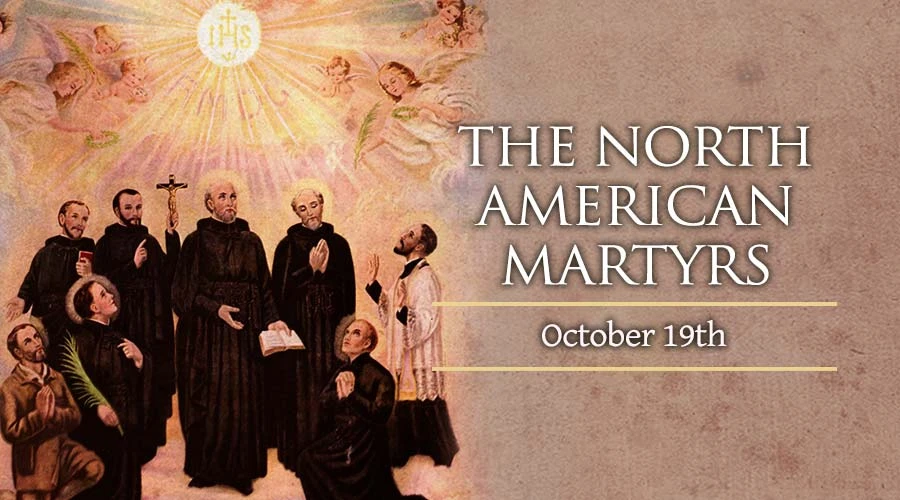
The Feast Day of the North American Martyrs is celebrated on October 19 in the United States. In Canada it is celebrated on September26th.
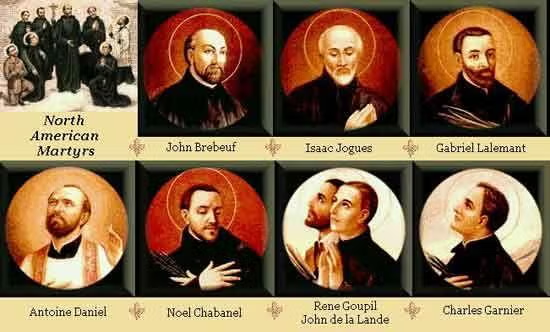
In the 1600’s, eight French Jesuit missionaries lost their lives while trying to spread the news of the gospel to the Huron, Iroquois, and Mohawk Indians. Three of them died in what is now New York State, five of them died in what is now Canada.
Isaac Jogues, René Goupil and Jean La Laude died in New York.
John DeBrebeuf, Gabriel Lalemant, Charles Garnier, Anthony Daniel, and Noel Chabanel died in Canada.
St. René Goupit was a Jesuit Lay brother. He was the first to be martyred. He was killed by tomahawk at Osermenon, (Auriesville, NY)) in 1942.
Father Isaac Jogues, a Jesuit priest, was held captive by the Mohawks for thirteen months. He had several fingers cut off his hand. He escaped and returned to France. He later returned to the mission. He was killed by tomahawk by a Mohawk brave in 1946.
St. Jean de La Lande, a Jesuit donné (not a member of the Society, but at their service) tried to retrieve Father Isaac Jogues’ body, but was killed also.
These martyrs were the first saints of North America.
The martyrs were canonized by Pope Pius XI on June 29, 1930.
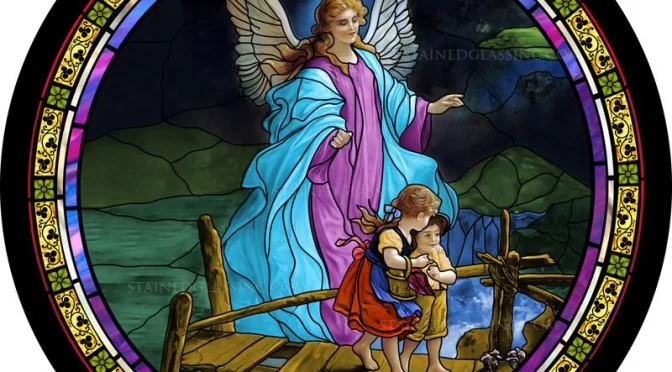
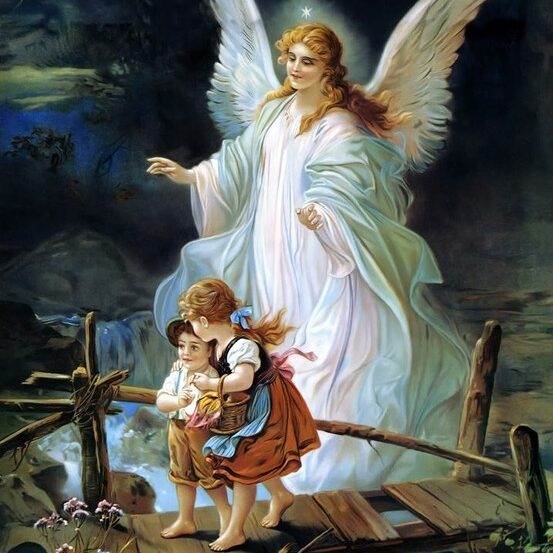
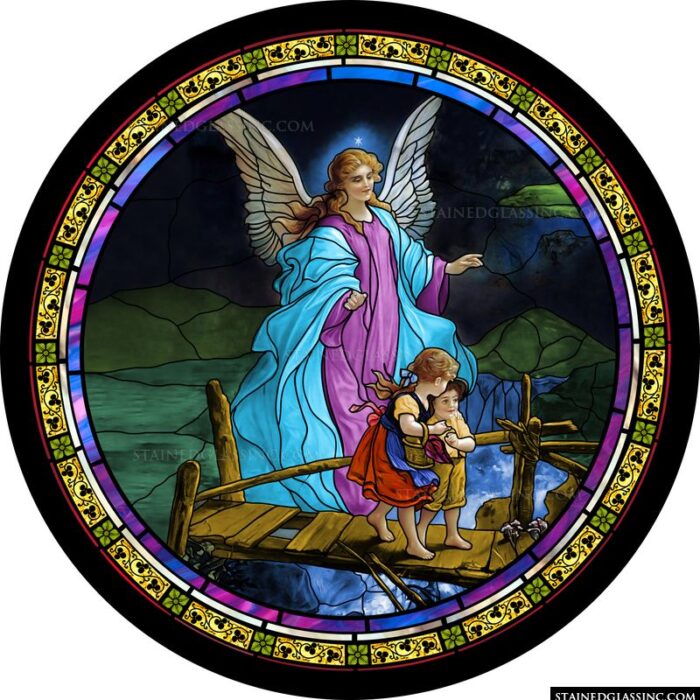
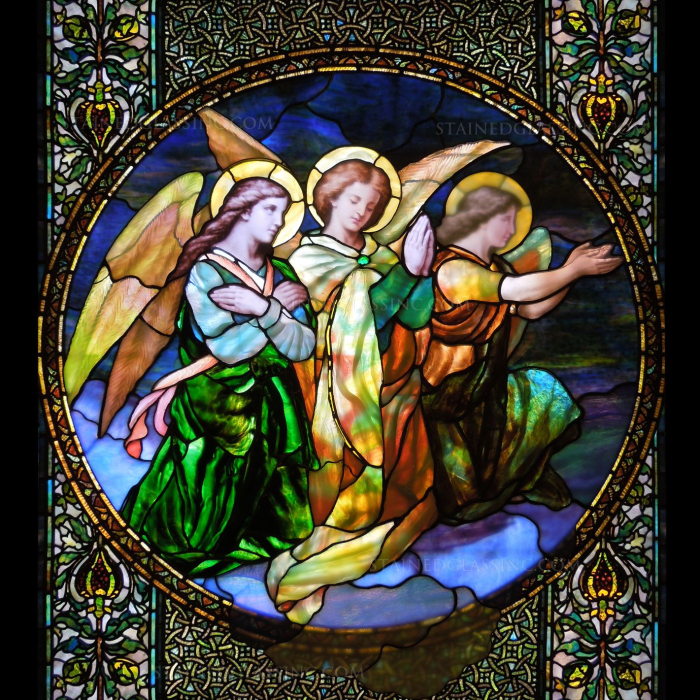
September 29th we will be celebrating the Feast of the Archangels. October 2nd is the Feast of the Guardian Angels.
The following quotes help us to understand the beliefs of the believers long ago. Faith is a mystery. We can’t see the angels, but we can read about them in the bible and learn about them from the Saints.
1. Our Guardian Angels are our most faithful friends, because they are with us day and night, always and everywhere. We ought to invoke therm.
3. Pride and nothing else caused an angel to fall from heaven. And so, one may reasonably ask whether one may reach heaven by humility alone without the help of any other virtue.
10. The battle against the Devil, which is the principal task of St. Michael the Archangel, is still being fought today, because the Devil is still alive and active in the world.
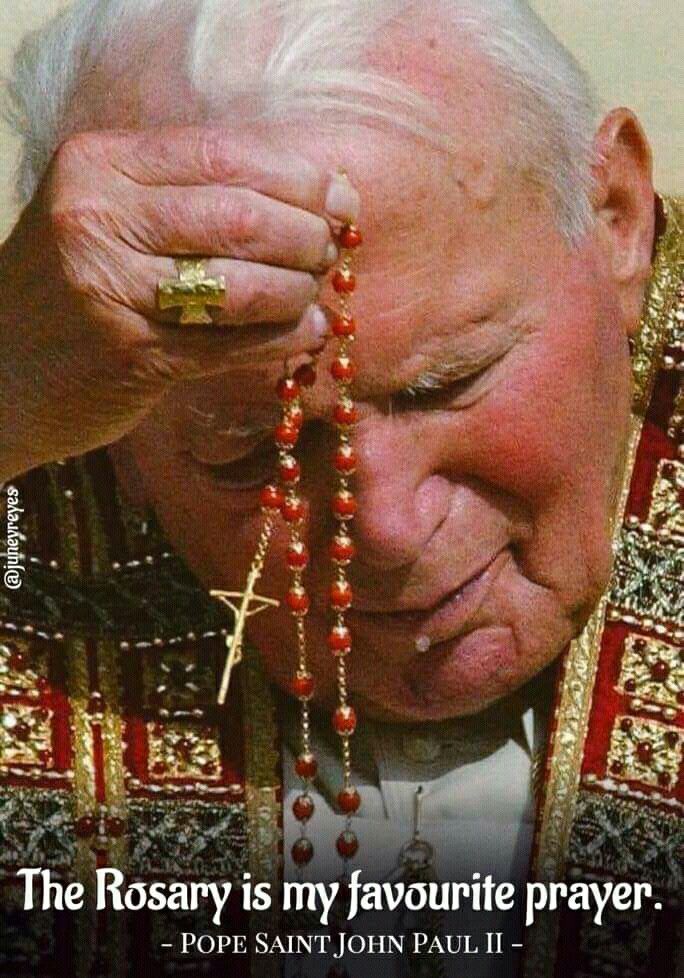
12. The rosary is my favorite prayer. A marvelous prayer! Marvelous in its simplicity and its depth. In the prayer, we repeat many times the words that the Virgin Mary heard from the Archangel and from her kinswoman Elizabeth.
15. Angels are intelligent reflections of light. that original light, which has no beginning. They can illuminate. they do not need tongues or ears for they can communicate without speech…in thought.
16. Watch, O Lord, with those who wake, or watch or weep tonight, and give your angels charge over those who sleep. Tend your sick ones, O Lord Jesus Christ, rest your weary ones, bless your dying ones, sooth your suffering ones, pity your afflicted one, shield your joyous ones and all for your love’s sake. Amen
17. Let us affectionately love His angels as counselors and defenders appointed by the Father and placed over us. They are faithful; they are prudent; they are powerful; Let us only follow them, and in the protection of the God of heaven, let us abide.
18. Do not be surprised that you fall every day; do not give up but stand your ground courageously. And assuredly, the angel who guards you will honor your patience.
19. We are like children, who stand in need of masters to enlighten and direct us. God has provided for this, by appointing his angels to be our teachers and guides.
20. Angels are spirits, but it is not because they are spirits that they are angels. They become angels when they are sent. For the word angel refers to their office, not their nature. You ask the name of this nature, it is spirit; you ask its office, it is that of an Angel, which is a messenger.
23. Whenever some act of wondrous power must be performed, Michael the Archangel is sent, so that his action and his name bake it clear that no one can do what God does by his superior power.
24. Oh, my Holy Guardian Angel, care for my soul and my body. Enlighten my mind that I may better know the Lord my God and love Him with all my heart. Watch over me when I pray, so I won’t give in to life’s distractions. Sustain me with your counsel to live as a righteous Christian and help me to do good works with a generous heart. Protect me from the cunning of the advisary and lift me up when I am being tempted so I may win the fight against evil. Stay with me at all times, never stop watching over me until I am called back to the Father’s house, where we will praise our great God together for all eternity. Amen
25. How consoling it is to know that we have a spirit who, from the womb to the tomb, never leaves us even for an instant not even when we dare to sin. And this heavenly spirit guides and protects us like a friend or a brother.
Who are the Doctors of the Church? The title of Doctor was given to a person known for their holiness and knowledge of the faith. They were teachers of the faith through their writing. The title was bestowed on them after death by the Pope at en ecumenical council.
Three requirements were needed to earn the title.
Holiness that was outstanding
Knowledge of doctrine
Extensive writings which express Catholic Tradition
There are currently 37 Doctors of the Church. The original eight doctors included four from the Eastern Church and four from the Western Church.
The Doctors from the Eastern Church are St. Athanasius, St. Basil the Great, St. John Chrysostom and St. Gregory Nazimek.
The Doctors from the Western Church were: St. Ambrose, St. Augustine of Hippo, St. Gregory the Great and St. Jerome. They were proclaimed Doctors by Pope Boniface VIII in the 13th century.
Four women were added in the 20th century. They were St. Teresa of Avila, St. Catherine of Siena, St. Therese of Lisieux and St. Hildegard of Bingen.
The following is a list of all the doctors of the church in the order of when they were designated.
Saint Ambrose (c. 340-397), bishop of Milan, Italy, a major opponent of Arianism, [named a Doctor of the church, 1298].
Saint Augustine of Hippo (c. 354-430), North African bishop, author of Confessions, City of God, and numerous treatises, countered heretical movements, one of the most influential theologians of the Western church, called “Doctor of Grace” [1298].
St. Jerome c. 343-420), translated Old Testament from Hebrew into Latin and revised Latin translation of New Testament to produce Vulgate version of Bible, called “Father of Biblical Science” [1298].
Saint Gregory the Great (c. 540-604), pope, strengthened papacy and worked for clerical and monastic reform [1298].
Saint Athanasius (c. 297-373), bishop of Alexandria, dominant opponent of Arians, called “Father of Orthodoxy” [1298]
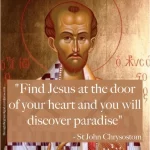
Saint John Chrysostom(“Golden-Mouthed”) (c. 347-407), archbishop of Constantinople, homilist, writer of scripture commentaries and letters, patron of preachers [1568].
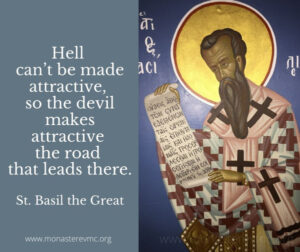
Saint Basil the Great(c. 329-379), bishop of Caesarea in Asia Minor, refuted Arian errors, wrote treatises, homilies, and monastic rules, called “Father of Monasticism of the East” [1568].
Saint Gregory of Nazianzus (c. 330-390), bishop of Constantinople, opponent of Arianism, wrote major theological treatises as well as letters and poetry, called the “Christian Demosthenes” and, in the East, “The Theologian” [1568].
Saint Thomas Aquinas(1225-1274), Italian Dominican, wrote systematically on philosophy, theology, and Catholic doctrine, patron of Catholic schools and education, one of the most influential theologians in the West [1568].
Saint Bonaventure (c. 1217-1274), Franciscan, bishop of Albano, Italy, cardinal [1588].
Saint Anselm of Canterbury (1033-1109), archbishop, called “Father of Scholasticism” [1720].
Saint Isidore of Seville (c. 560-636), Spanish bishop, encylopedist, and preeminent scholar of his day [1722].
Saint Peter Chrysologus(c. 400-450), archbishop of Ravenna, Italy, homilist and writer, counteracted Monophysite heresy [1729].
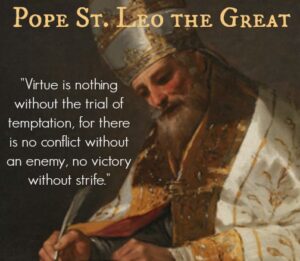
Saint Leo I, the Great(c. 400-461), pope, wrote christological and other works against the heresies of his day [1754].
Saint Peter Damian (1007-1072), Italian Benedictine and cardinal, ecclesiastical and clerical reformer [1828].
Saint Bernard of Clairvaux (c. 1090-1153), French Cistercian abbot and monastic reformer, called “Mellifluous Doctor” [1830].
Saint Hilary of Poitiers (c. 315-368), one of first Latin doctrinal writers, opposed Arianism [1851].
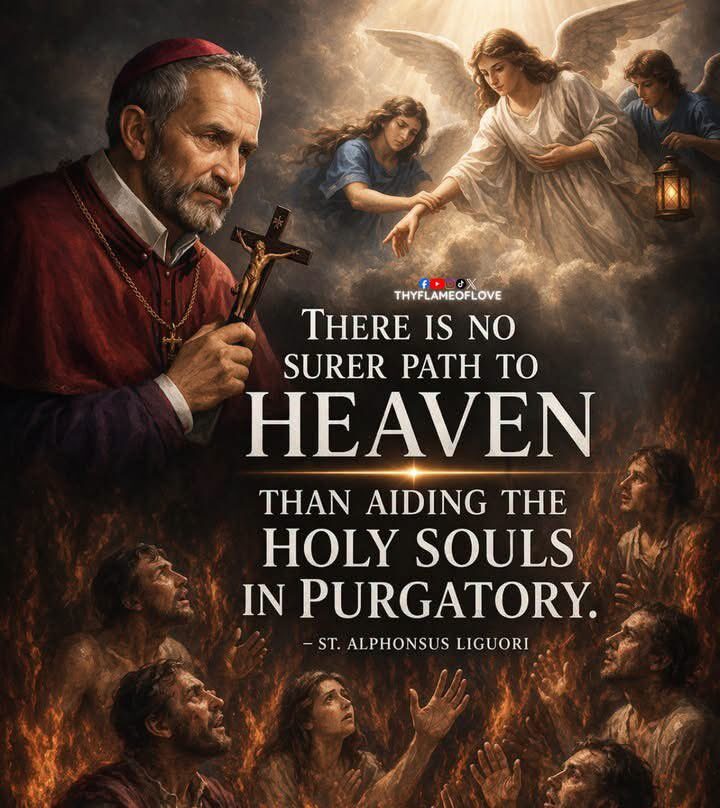
Saint Alphonsus Liguori(1696-1787), founder of Redemptorists, preeminent moral theologian and apologist, patron of confessors and moralists [1871].
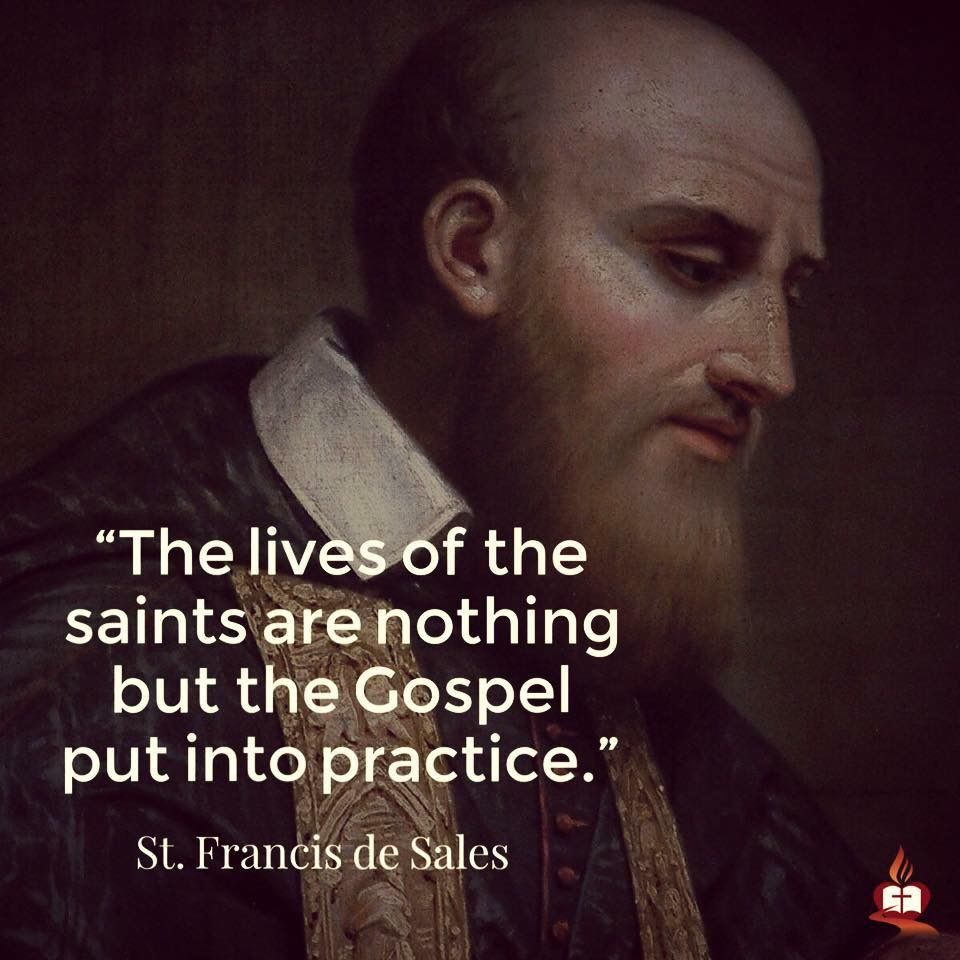
Saint Francis de Sales(1567-1622), bishop of Geneva, spiritual writer, patron of Catholic writers and press [1877].
Saint Cyril of Alexandria (c. 376-444), bishop, authored doctrinal treatises against Nestorian heresy [1882].
Saint John Damascene (c. 675-749), Syrian monk, doctrinal writer, called “Golden Speaker” [1890].
Saint Bede the Venerable (c. 673-735), English Benedictine, called “Father of English History” [1899].
Saint Ephrem the Syrian (c. 306-373), counteracted Gnosticism and Arianism with his poems, hymns, and other writings [1920].
Saint Peter Canisius (1521-1597), Dutch Jesuit, catechist, important figure in Counter-Reformation in Germany [1925].
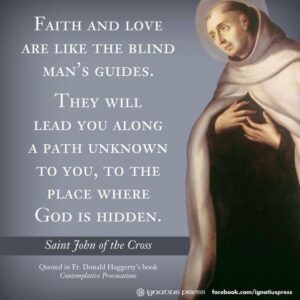
Saint John of the Cross(1542-1591), founder of Discalced Carmelites, called “Doctor of Mystical Theology” [1926].
Saint Robert Bellarmine (1542-1621), Italian Jesuit, archbishop of Capua, wrote Reformation-era doctrinal defenses, catechisms, and works on ecclesiology and church-state relations [1931].
Saint Albert the Great(c. 1200-1280), German Dominican, bishop of Regensburg, teacher of Saint Thomas Aquinas, patron of scientists, called “Universal Doctor” and “Expert Doctor” [1932].
Saint Anthony of Padua (1195-1231), first theologian of Franciscans, preacher, called “Evangelical Doctor” [1946].
Saint Lawrence of Brindisi(1559-1619), Italian Capuchin Franciscan, influential post-Reformation preacher [1959].
Saint Teresa of Ávila(1515-1582), Spanish Carmelite, initiated discalced Carmelite movement, prolific spiritual and mystical writer, first woman Doctor of the church [1970].
Saint Catherine of Siena(c. 1347-1380), Italian Third Order Dominican, mystical author, also active in support of Crusades and in papal politics [1970].
Saint Thérèse of Lisieux(1873-1897), French Carmelite, wrote spiritual autobiography describing her “little way” of spiritual perfection [1997].
Saint John of Ávila (1499 or 1500-1569), Spanish priest, preacher, and mystic, was influential in spreading the faith in Andalusia and reforming the church in Spain [2012]
Saint Hildegard of Bingen (1098-1179), German Benedictine abbess and mystic, recorded her visions in writing, also wrote lyric poems, letters of advice and prophecy, and treatises on medicine and physiology [2012]
Saint Gregory of Narek (950-c. 1005), Armenian monk and poet, also recognized as a saint in the Armenian Apostolic Church [2015]
Pope Leo XIV has released the following prayer to the Sacred Heart of Jesus. June is considered to be month of the Sacred Heart.
Prayer to the Sacred Heart of Jesus.
Pope Leo XIV
Lord, I come to your tender heart today, to you who have words that set my heart ablaze, to you who pour out compassion on the little ones and the poor, on those who suffer and on all human miseries.
I desire to know you more, to contemplate you in the Gospel, to be with you and learn from you and from the charity with which you allowed yourself to be touched by all forms of poverty.
You showed us the Father’s love by loving us without measure with your divine and human heart.
Grant all your children the grace of encountering you. Change, shape, and transform our plans, so that we seek only you in every circumstance, in prayer, in work, in encounters, and in our daily routine.
From this encounter send us out on mission, a mission of compassion for the world in which you are the source from which all consolation flows.
Amen
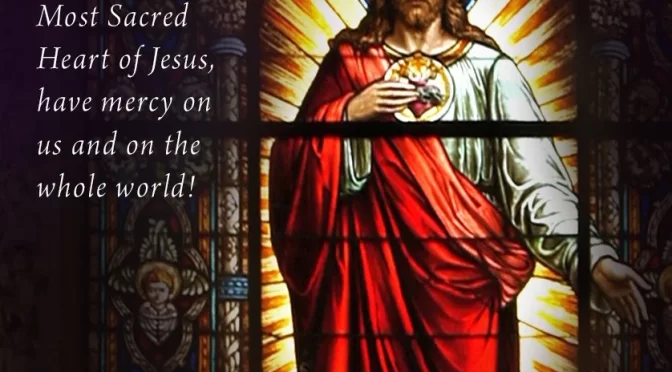
Sacred Heart of Jesus have mercy on us!
Pope Leo XIV during the Regina Caeli prayer on the balcony of Saint Peter’s Basilica in Vatican on May 11, 2025. (Photo by Jakub Porzycki/NurPhoto via Getty Images)
The Feast Day of the Sacred Heart of Jesus is a moveable Feast day. It is held on the second Friday after Pentecost.
In 2025, this day falls on Friday, June 27th.
This feast reminds us of the mystery of the love of God for the people of all times.
Quote of St. John Paul II
The history of this Feast Day is attributed to St. Margaret Mary.. The Feast Day of the Immaculate Heart of Mary is always the day following the Feast Day of the Sacred Heart of Jesus.
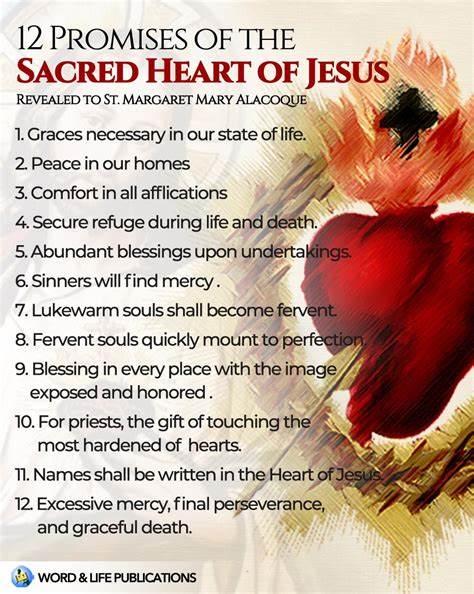
17the Century: St. Margaret Mary Alacoquewas instrumental in beginning devotion to the Sacred Heart of Jesus after having visions. This devotion involves receiving communion on the first Friday of each month for mine consecutive months to honor the Sacred Heart. Jesus revealed His heart to her and emphasized the need for people to return His love through prayer and devotion.
In 1899 Pope Leo XIII consecrated the world to the Sacred Heart of Jesus.
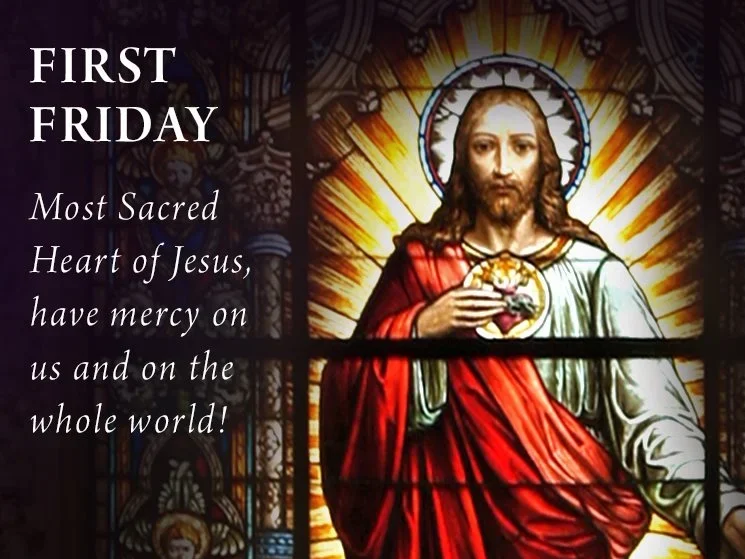
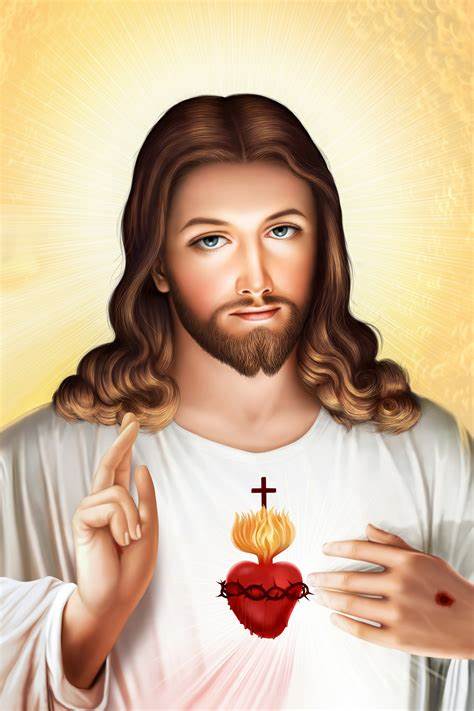
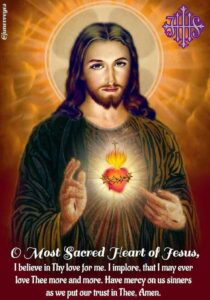
The image of the Sacred Heart of Jesus is often shown with a crown of thorns and a flame. This symbolizes Jesus’s infinite love, compassion and suffering for humanity.
.
The following prayer is from St. Leo XIII when he consecrated the world to the Sacred Heart.
Issued with the Encyclical Letter Annum Sacrum, 25 May 1899
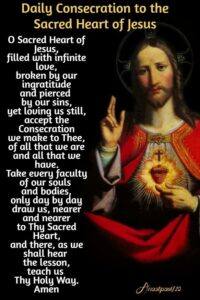
Most sweet Jesus, redeemer of the human race, look down upon us, humbly prostrate before your altar. We are yours and yours we wish to be; but to be more surely united with you, behold each one of us freely consecrates himself today to your most sacred heart. Many, indeed, have never known you, many too, despising your precepts, have rejected you. Have mercy on them all, most merciful Jesus, and draw them to your sacred heart. Be you king, O Lord, not only of the faithful who have never forsaken you, but also of the prodigal children who have abandoned you; grant that they may quickly return to their father’s house, lest they die of wretchedness and hunger. Be you king of those who are deceived by erroneous opinions, or whom discord keeps aloof, and call them back to the harbor of truth and unity of faith, so that soon there may be but one flock and one shepherd. Be you king also of all those who sit in the ancient superstition of the Gentiles and refuse not you to deliver them out of darkness into the light and kingdom of God. Grant, O Lord, to your Church, assurance of freedom and immunity from harm; give peace and order to all nations, and make the earth resound from pole to pole with one cry: Praise to the divine heart that wrought our salvation; to it be glory and honor forever. Amen
Immaculate Heart! Help us to conquer the menace of evil, which so easily takes root in the hearts of the people of today, and whose immeasurable effects already weigh down upon our modern world and seem to block the paths towards the future!
From famine and war, deliver us.
From nuclear war, from incalculable self-destruction, from every kind of war, deliver us.
From sins against the life of man from its very beginning, deliver us.
From hatred and from the demeaning of the dignity of the children of God, deliver us.
From every kind of injustice in the life of society, both national and international, deliver us.
From readiness to trample on the commandments of God, deliver us.
From attempts to stifle in human hearts the very truth of God, deliver us.
From the loss of awareness of good and evil, deliver us.
From sins against the Holy Spirit, deliver us, deliver us.
Accept, O Mother of Christ, this cry laden with the sufferings of all individual human beings, laden with the sufferings of whole societies.
Let there be revealed, once more, in the history of the world the infinite saving power of the Redemption: the power of merciful Love!
May it put a stop to evil! May it transform consciences!
May your Immaculate Heart reveal for all the light of Hope!
This prayer is from the consecration of all individuals and peoples of the world to the Immaculate Heart of Mary in 1984 by Saint John Paul II. It took place in St. Peter’s Square on March 25, 1984.








 .
.