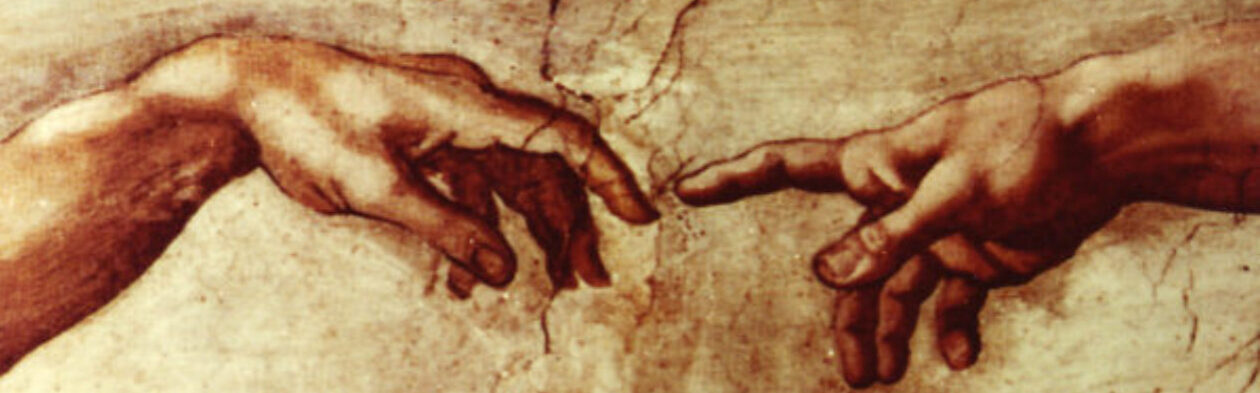
Pope’s message: Christian Joy is a Gift from the Holy Spirit


Pope Francis
Face Book Image

Prayers, Quips and Quotes: The Feast of the Visitation, Feast Day May 31


The Visitation Public Domain Image
The Visitation

The Feast of the Visitation of the Blessed Virgin is celebrated on May 31.

We celebrate Mary visiting her cousin Elizabeth while she was pregnant with Jesus. Elizabeth was six months pregnant with St. John the Baptist. When they met, the baby lept for joy in Elizabeth’s womb.

Not only the baby, but Mary and Elizabeth were filled with joy. Elizabeth tells Mary:

“Blessed art thou among women, and blessed is the fruit of thy womb.”

Mary responds with the Magnificat which has become a beautiful hymn of praise and thanksgiving.


Magnificat

My soul does magnify the Lord:
And my spirit has rejoiced in God my Savior
Because He has regarded the lowliness of His handmaid:  for, behold, from henceforth all generations shall call me blessed.
For He that is mighty has done great things to me: and holy is His Name.
And His mercy is from generation until generations, to them that fear Him.
He has showed might with His arm: He hath scattered the proud in the conceit of their heart.
He has put down the mighty from their seat, and hath exalted the lowly.
He has filled the hungry with good things: and the rich he hath sent empty away.
He has received Israel His servant, being mindful of His mercy:
As He spoke to our fathers, to Abraham and to his seed for ever.


The Visitation Public Domain Image
The Visitation

As we celebrate the Feast of the Visitation let us reflect on how important our families are to us. Imagine the joy Elizabeth and Mary shared together as they anticipated the birth of their babies! It is important that we too, give thanks to God for the many blessings he has bestowed on us and our families.


God hugs you.

Quote of St. Hildegarde of Bingen; Feast day Sept. 17


May is the Month of Our Lady


Prayers, Quips and Quotes: St. Joan of Arc, Feast Day May 30


St. Joan of Arc Burning at Stake Public Domain Image
St. Joan of Arc
Burning at Stake
Public Domain Image

St. Joan of Arc was born  in Domremy, Francs in 1412 on the Feast of the Epiphany on  Jan. 6.  Her parents, Jacques and Isabelle were peasants. She was the youngest of four children, having three older brothers. She helped her mother with spinning and helped shepherd the animals. She was very devout as a child enjoying her religious faith and spending her free time in church.

St. Joan grew up during the “Hundred Years War”, which never seemed to end. The French were losing the war while she was young. England was invading the country of France causing much suffering.  Joan prayed with great devotion and fervor for the suffering people.

At the age of thirteen, Joan began to have visions and hear voices which counseled her. She claimed to hear the Voice of God, Michael the Archangel, St. Catherine of Alexandria and St. Margaret of Antioch.    In 1428, the voices told her to go tho the King of France and help him reconquer his kingdom. She was told to accompany Prince Charles to his coronation. St. Joan went to the town of Vaucouleurs seeking help from the military commander. After three trips he decided to listen to her.

She was given an escort of six which included two knights. They left on Feb. 23, 1429. The journey was 400 miles, taking eleven days in the winter to travel. She was given permission to meet with Prince Charles VII.  However, he concealed himself in the crowd to test Joan. Joan, however, recognized him. St. Joan spoke to him, saying:

“I am Joan the Maid and to you is sent word by me from the King of Heaven that you will be anointed and crowned in Reims and you will be Lieutenant to the King of Heaven who is King of France.”

After being questioned by clerics who asked for a sign Joan was eventually given a sword, armor and a banner with the names of Jesus and Maria to lead the French Army to Tours in 1429. She was only 17 years old.

St. Joan led French troops against the English and recaptured the cities of Orleans and Troyes. Prince Charles was then anointed King with St. Joan at his side holding the banner in 1429.

St. Joan of Arc Burning at Stake Public Domain Image
St. Joan of Arc
Burning at Stake
Public Domain Image

St. Joan was later captured and then sold to the English. Joan spent six months in prison before she was put on trial for heresy and witchcraft. After being found guilty she was burned at the stake in 1431. Her ashes were scattered in the Seine River. A second trial was held 25 years later which overturned the first verdict because it was politically motivated. Joan was declared a martyr.

St. Joan was beatified by Pope Pius X and canonize by Pope Benedict XV in 1920 who said that she is a “most brilliantly shining light of God.”

I know this now,
Every man gives his life for what he believes.
Every woman gives her life for what she believes.
Sometimes people believe in little or nothing.
One life is all we have and we live it as we believe in living it and then it’s gone.
But to surrender what you are and to live without belief
is more terrible than dying…even more terrible than dying young.

Quote of St. Joan of Arc

May is the Month of Our Lady.

Save

Save

Prayers, Quips and Quotes: St. Bona of Pisa, Feast Day May 29


St. Bona of Pisa
St. Bona of Pisa

The feast day of St. Bona of Pisa is celebrated on May 29. She is the patron saint of flight attendants, travelers, pilgrims and travel guides.

St. Bona of Pisa was born in 1156 in Pisa, Italy. She was the child of a single mother. She was told that her father had vanished during a pilgrimage to the Holy Land. As a child she was very pious. In a vision while praying before the crucifix, Jesus reached out his hand and touched her. By the age of ten she had become an Augustinian tertiary. (A tertiary is a lay member of a monastic order).

In another vision she learned that her father was still alive and fighting in the Crusades in Jerusalem. St. Bona decided to make a trip to Jerusalem to find her father. After finding him she returned home, only to be captured by pirates on the Mediterranean Sea!  Countrymen came to her rescue and she eventually arrived home safely.

St. Bona was appointed the official pilgrimage guide by the Knights of St. James.  She made nine trips to Spain and Santiago de Compostella, always leading a group of pilgrims. On her final trip she became very ill. She died at the age of 51 after returning home from the pilgrimage.

Pope John XXIII named her the patron saint of flight attendants, travel guides, couriers and travelers.

The greatest method of prayer is to have none.

If in going to prayer one can form in oneself a pure capacity

for receiving the spirit of God, that will suffice all method.

Quote of St. Jane Francis de Chantal; Feast day December 12


May is the Month of Our Lady.

Save

Save

Catholics Nourished by Living Bread


Monstrance Body and Blood of Jesus Christ
Monstrance
Body and Blood of Jesus Christ

At the center of the Catholic faith is its’ belief in the Eucharist. Jesus Himself said:

“I am the bread of life, whoever comes to me will never be hungry, and whoever believes in me will never be thirsty.” (John 6, 35).

In John 6.53 He states,

“Very truly, I tell you, unless you eat the flesh of the Son of Man and drink his blood, you have no life in you. Those who eat my flesh and drink my blood have eternal life, and I will raise them up on the last day, for my flesh is true food and my blood is true drink.”

The church has always interpreted this statement to be literally true. How is this possible? All things are possible with God!!

In the Old Testament, God rained down manna from the sky to feed the Israelites in the desert for forty years. The Eucharist is modern day manna. Our faith is nourished and kept alive by living bread… the body and blood of Jesus Christ. St. Paul teaches us that the church is the Body of Christ. In I Corinthians 12-13 St. Paul states:

“For in the one Spirit we were all baptized into one body-Jews or Greeks, slaves or free-and we were all made to drink of one Spirit.”

The Saints in the early church all professed a belief in the Real Presence of Christ in the Eucharist.   Justyn Martyr (100-165) was one of the first to try to explain this belief.

Next Sunday, we celebrate Corpus Christi (The Body of Christ). It is important for us to reflect on how Jesus came to nourish us, not only by scripture but by being true food for us.

Through God all things are possible. When we read the bread of life discourse (John 6), we need to ask ourselves, do we truly believe what Jesus tells us, or like the disciples who turn away do we pick and choose the teachings of Jesus we want to believe.

To quote St. Augustine ((354-430),

“If you believe what you like in the gospel, and reject what you don’t like, it’s not the gospel you believe, but yourself.”

To be true disciples of Jesus, we must get to know Him, to love Him and let ourselves be fed by Him.


Monstrance Body and Blood of Jesus Christ
Monstrance
Body and Blood of Jesus Christ

At the center of the Catholic faith is its’ belief in the Eucharist. Jesus Himself said:

“I am the bread of life, whoever comes to me will never be hungry, and whoever believes in me will never be thirsty.” (John 6, 35).

In John 6.53 He states,

“Very truly, I tell you, unless you eat the flesh of the Son of Man and drink his blood, you have no life in you. Those who eat my flesh and drink my blood have eternal life, and I will raise them up on the last day, for my flesh is true food and my blood is true drink.”

The church has always interpreted this statement to be literally true. How is this possible? All things are possible with God!!

In the Old Testament, God rained down manna from the sky to feed the Israelites in the desert for forty years. The Eucharist is modern day manna. Our faith is nourished and kept alive by living bread… the body and blood of Jesus Christ. St. Paul teaches us that the church is the Body of Christ. In I Corinthians 12-13 St. Paul states:

“For in the one Spirit we were all baptized into one body-Jews or Greeks, slaves or free-and we were all made to drink of one Spirit.”

The Saints in the early church all professed a belief in the Real Presence of Christ in the Eucharist.   Justyn Martyr (100-165) was one of the first to try to explain this belief.

Next Sunday, we celebrate Corpus Christi (The Body of Christ). It is important for us to reflect on how Jesus came to nourish us, not only by scripture but by being true food for us.

Through God all things are possible. When we read the bread of life discourse (John 6), we need to ask ourselves, do we truly believe what Jesus tells us, or like the disciples who turn away do we pick and choose the teachings of Jesus we want to believe.

To quote St. Augustine ((354-430),

“If you believe what you like in the gospel, and reject what you don’t like, it’s not the gospel you believe, but yourself.”

To be true disciples of Jesus, we must get to know Him, to love Him and let ourselves be fed by Him.


Monstrance Body and Blood of Jesus Christ
Monstrance
Body and Blood of Jesus Christ

At the center of the Catholic faith is its’ belief in the Eucharist. Jesus Himself said:

“I am the bread of life, whoever comes to me will never be hungry, and whoever believes in me will never be thirsty.” (John 6, 35).

In John 6.53 He states,

“Very truly, I tell you, unless you eat the flesh of the Son of Man and drink his blood, you have no life in you. Those who eat my flesh and drink my blood have eternal life, and I will raise them up on the last day, for my flesh is true food and my blood is true drink.”

The church has always interpreted this statement to be literally true. How is this possible? All things are possible with God!!

In the Old Testament, God rained down manna from the sky to feed the Israelites in the desert for forty years. The Eucharist is modern day manna. Our faith is nourished and kept alive by living bread… the body and blood of Jesus Christ. St. Paul teaches us that the church is the Body of Christ. In I Corinthians 12-13 St. Paul states:

“For in the one Spirit we were all baptized into one body-Jews or Greeks, slaves or free-and we were all made to drink of one Spirit.”

The Saints in the early church all professed a belief in the Real Presence of Christ in the Eucharist.   Justyn Martyr (100-165) was one of the first to try to explain this belief.

Next Sunday, we celebrate Corpus Christi (The Body of Christ). It is important for us to reflect on how Jesus came to nourish us, not only by scripture but by being true food for us.

Through God all things are possible. When we read the bread of life discourse (John 6), we need to ask ourselves, do we truly believe what Jesus tells us, or like the disciples who turn away do we pick and choose the teachings of Jesus we want to believe.

To quote St. Augustine ((354-430),

“If you believe what you like in the gospel, and reject what you don’t like, it’s not the gospel you believe, but yourself.”

To be true disciples of Jesus, we must get to know Him, to love Him and let ourselves be fed by Him.


Prayers, Quips and Quotes: St. Germanus, Feast Day May 28


St. Germanus
St. Germanus

The feast day of St. Germanus of Auxerre is celebrated on May 28. He served as the Bishop of Paris.

St. Germanus of Auxerre was born in 496 near Autun, France. He was ordained by St. Agippinus the Bishop of his diocese. He became the Abbot and administrator of St. Symphorianus, a suburb of Autun. Although at first he declined the position, he was named Bishop of Paris in 566. He was known as an eloquent preacher who brought conversion and the Christian faith to many people. Under his influence the lifestyle in the city became less worldly and vain. He tried to end civil strife and the licentiousness of the kings and nobles.

St. Germanus was known to have received the gift of miracles and prophecy. After his death on May 28, 576, King Chilperic wrote his epitaph praising his virtues, miracles and the zeal he displayed in working for the salvation of souls.


For the Christian there is no such thing as a “stranger.” There is only the neighbor…..the person near us and needing us.

Quote of St. Edith Stein; Feast day August 9


May is the Month of Our Lady

Prayers, Quips and Quotes: St. Augustine of Canterbury, Feast Day May 27


St. Augustine of Canterbury Public Domain Image
St. Augustine of Canterbury

The feast day of St. Augustine of Canterbury is celebrated on May 27.

St. Augustine was the prior of the Benedictine Monastery of St. Andrew in Rome. Pope Gregory decided he needed to send missionaries to England. Augustine and 30 monks were who he chose to send. The mission was to unite the Christians after the Saxon conquest of England.

The King of England listened with curiosity to what the missionaries had to say. On Pentecost Sunday in 597, King Ethelbert was baptized. He believed in religious freedom and did not make his new religion mandatory however many followed his example and were baptized. St. Augustine was not successful in uniting the Anglo-Saxon Christians with the original Briton Christians (Celtics). He followed Pope Gregory’s advice to purify rather than destroy pagan temples and customs. As much as possible pagan rites and festivals were changed into Christian feasts.

St. Augustine died eight years after arriving in England. He died on May 26.

God’s works are not regulated by our plans and wishes.

Quote of St. Vincent de Paul; Feast day September 27


May is the Month of Our Lady

Prayers, Quips and Quotes; St. Philip Neri, Feast Day May 26


St. Philip Neri
St. Philip Neri


Save

Prayers, Quips and Quotes: St. Bede the Venerable, Feast Day May 25


St. Bede Public Domain Image
St. Bede

The feast day of St. Bede the Venerable is celebrated on May 25.

St. Bede was born  in Sunderland, England in 672 or 673 near the Monastery of St. Peter and St. Paul.  At an early age he was sent there to be educated.  His entire life became a life of study and prayer.

At the age of 19, he ordained a deacon.  He became a priest at the age of 30.  After declining  a request to be abbot of his monastery he chose to instead focus on writing.  He wrote over 60 books, which have not survived.  He also translated writings of the early church Fathers from Latin and Greek into English.

St. Bede died on Ascension Thursday, May 26, 735 while singing to God.   Pope Leo XIII proclaimed him a Doctor of the Church in 1899.


Christ is the morning star, who, when the night of this world is past, brings to His saints the promise of the light of life and opens everlasting day.

Quote of St. Bede

May is the Month of Our Lady

Prayers, Quips and Quotes: St. Joanna, Feast Day May 24


St. Joanna

The feast day of St. Joanna is celebrated on May 24.

St. Joanna was a devoted follower of Jesus. We learn about her in Luke’s Gospel, Chapter 8. She was the wife of Chuza who was a steward for Herod. She, along with Mary Magdalene, Susanna, and other women, provided for Jesus out of their personal resources as he traveled from town to town preaching and healing.

St. Joanna was one of the three women who arrived at the tomb to prepare the body for burial on the first Easter morning. She is also referred to as the myrrh bearer. The women discovered the stone moved and the body gone. Two men appeared to them in dazzling clothes, telling them He had risen and reminding them that Jesus had said he would be crucified and rise again. The women reported to the Apostles all that they had seen and heard.

It is hard to imagine being such a close friend of Jesus. The disciples who followed and supported Jesus knew Him in a way we can only wish to know him. But St. Joanna shows us what a true disciple is. She supported Jesus and His ministry on a daily basis in any way possible. She heard the words he spoke and saw the miracles he worked. True friendship is what all of us should be seeking from Jesus. True friends are always there for each other. As disciples we should be serving Jesus in any way we can. We should also be turning to Him in all our needs weather they be small or large. We should never be afraid to be honest with Jesus, because He is our friend.

The instruments of God are always humble.

Quote of St. John Chrysostom; Feast day September 13


May is the Month of Our Lady

Prayers, Quips and Quotes: St. John Baptist Rossi, Feast Day May 23


St. John Baptist Rossi


The feast day of St. John Baptist Rossi is celebrated on May 23.

St. John Baptist Rossi was born in Voltaggio, Italy in 1698. He was one of four children. He studied in Rome. Suffering from epilepsy, he was forced to leave college. However, he eventually finished his studies. He was ordained a priest at the age of 23.

St. John Baptist Rossi worked in Rome for 40 years. He served the sick, homeless and prisoners. He earned a reputation for being a good confessor. He especially supported the hospice of Saint Gala which gave overnight shelter to the poor. It was founded by Pope Celestine III.

In 1764, St. John died from a stroke. The papal choir sang at his choir and 260 priests attended his funeral. He was canonized by Pope Leo XII in 1881.


From silly devotions and sour faced saints, good Lord, deliver us!

St. Teresa of Avila; Feast day October 15


May is the Month of Our Lady

Prayers, Quips and Quotes: St. Rita of Cascia, Feast Day May 22

St. Rita De Cascia Public Domain Image
St. Rita De Cascia


The feast day of St. Rita of Cascia is celebrated on May 22. She is the patron saint of impossible causes, abuse victims and widows.

St. Rita was born in 1386 in Cascia, Italy. She was known to be very spiritual even as a young child. She enjoyed visiting shrines and wished to become a nun. Her parents were opposed to the idea and arranged for her to be married. Her husband turned out to have a bad temper and was very difficult for her to live with. She dealt with his abuse with prayer, patience and kindness. They had twin sons. Their difficult marriage lasted 22 years. St. Rita De Cascia public domain image

One day while returning home from work her husband was ambushed and killed. St. Rita’s sons were now teenagers and began to talk of revenging their father’s death. St. Rita turned to prayer. She prayed that her sons would not be able to go through with the revenge. Her prayer was soon answered. Both her sons died from a deadly illness soon after without taking revenge on their father’s killer.

After the death of her husband and sons, Rita applied to enter the Augustinian Convent. Her first attempt was denied because of the ongoing feud. Rita persisted however. She convinced her husband’s family to put aside their hostility. The two rival families embraced peace. Rita turned to St. John the Baptist, St. Nicholas of Tolentino and St. Augustine, requesting their intercession. The convent changed their decision and allowed her entry. She was 36 when she entered the monastery.

St. Rita had a great devotion for the passion of Christ. She meditated often on the crucifix. On Good Friday, 1442, St. Rita meditated on the suffering of Jesus on the crucifix. She offered to relieve Christ’s suffering by sharing even the smallest part of his pain. As she was meditating, a small wound on her forehead appeared. It appeared to be a thorn from the crown that Jesus wore. St. Rita had this stigmata for 15 years.'Saint_Rita_of_Cascia'_by_Antonio_de_Torres,_c._1720

St. Rita was confined to bed for the last four years of her life. She ate very little. The Eucharist sustained her and she remained joyful during her suffering. Before her death St. Rita requested a rose be brought to her from her parents’ garden even though it was January. Surprisingly, a rose was discovered to be blooming on the rosebush and it was presented to her. St. Rita gave thanks to God for this sign of God’s love.

Because this impossible request of St. Rita for a rose in January was answered she became the patron of impossible causes. It was also known that her prayers were known to obtain remarkable cures.

St. Rita died on May 29, 1456. Many miracles were recorded after her death . She was canonized by Pope Leo XIII in 1900.

St. Rita’s incorrupt body is venerated today in the Nation Shrine of Cascia.

St. Rita public domain image

Be at peace with your own soul, then heaven and earth will be at peace with you.

Quote of St. Jerome; Feast day September 30

May is the Month of Our Lady