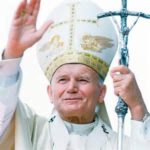
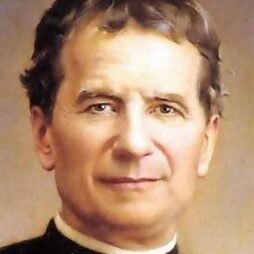
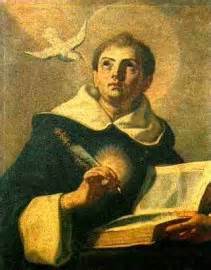
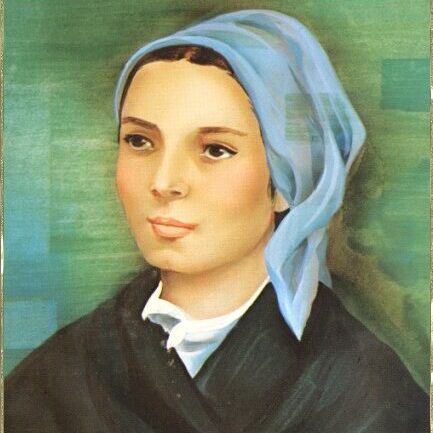
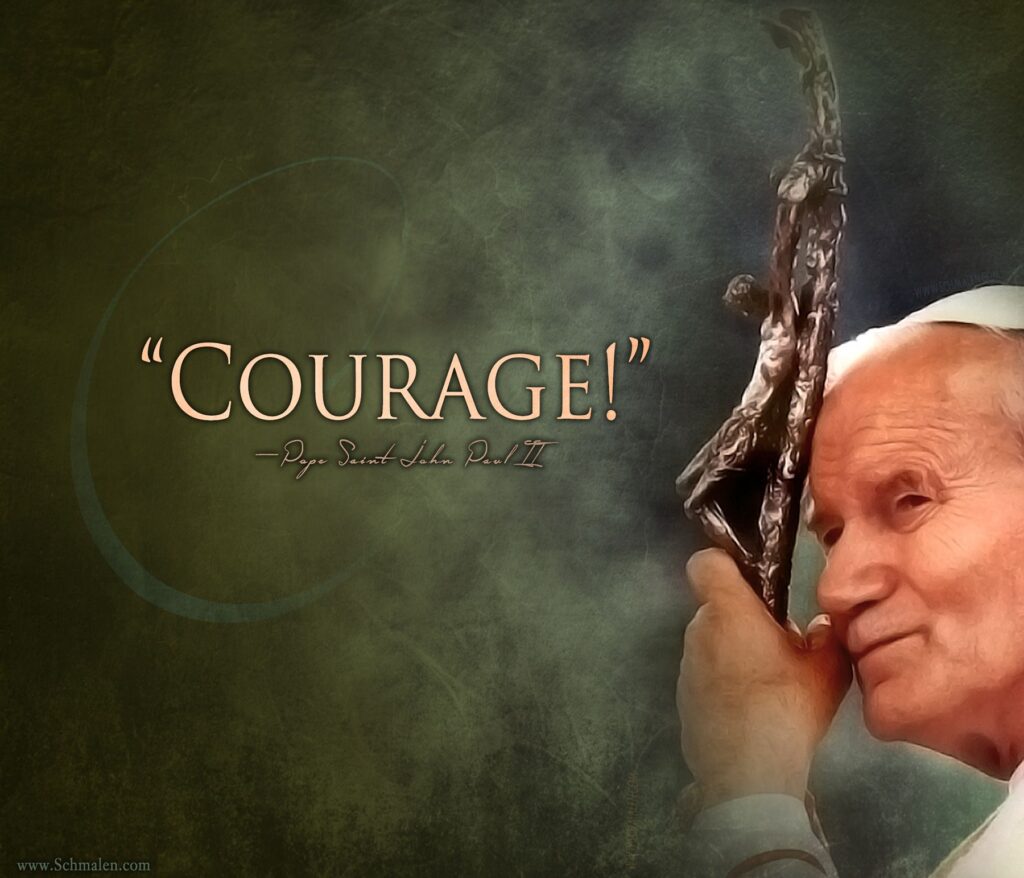
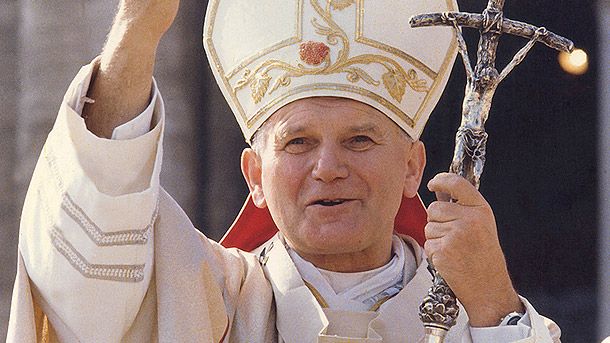
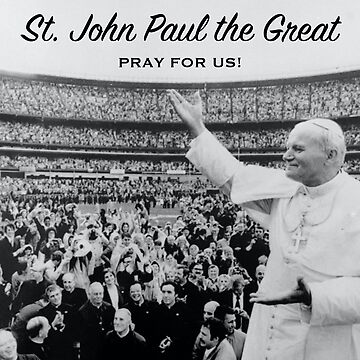
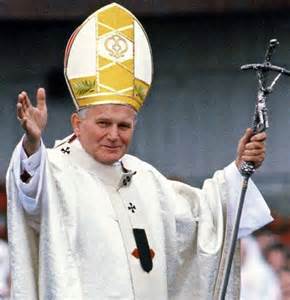
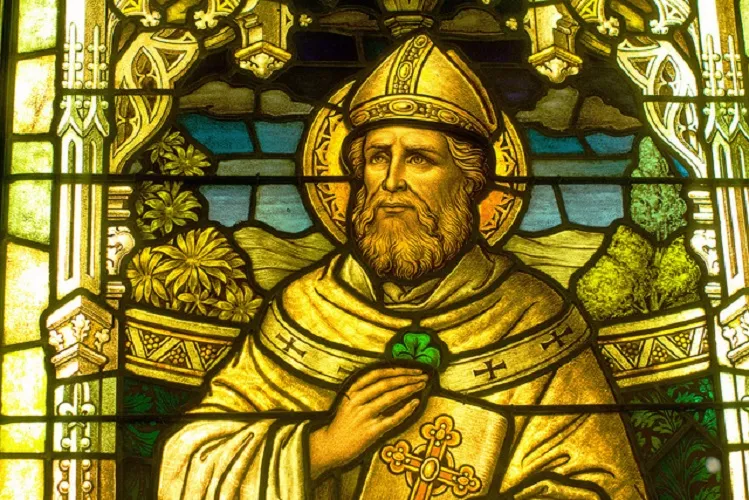
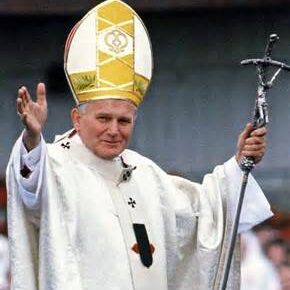
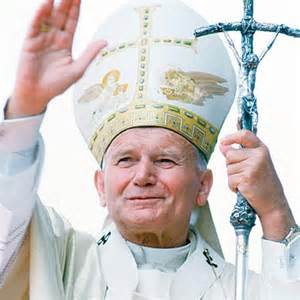
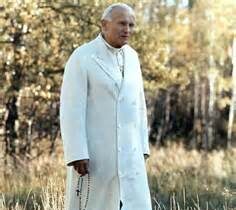
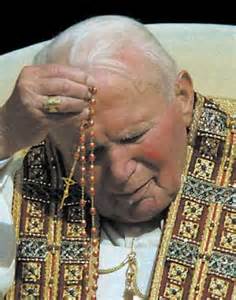
Karol Wojtyla was ordained a priest in Poland on All Saints Day 1946. On Divine Mercy Sunday 2014 the Church gave him the title of Saint John Paul the Great.
St. John Paul the Great was known as the patron of the youth. He began the tradition of having World Youth Days. The following quotes remind us of the powerful teachings of St. John Paul the Great.
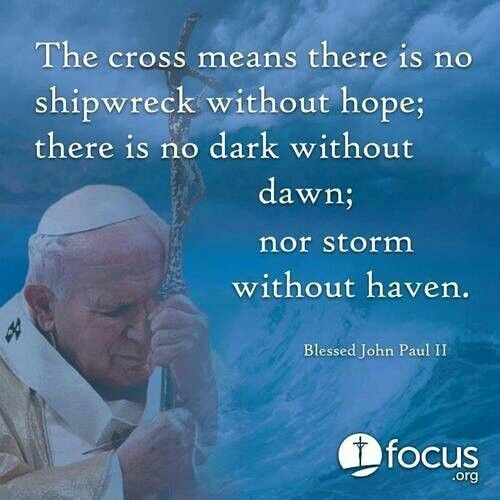
1. The cross means there is no shipwreck without hope; there is no dark without down, nor storm without haven.
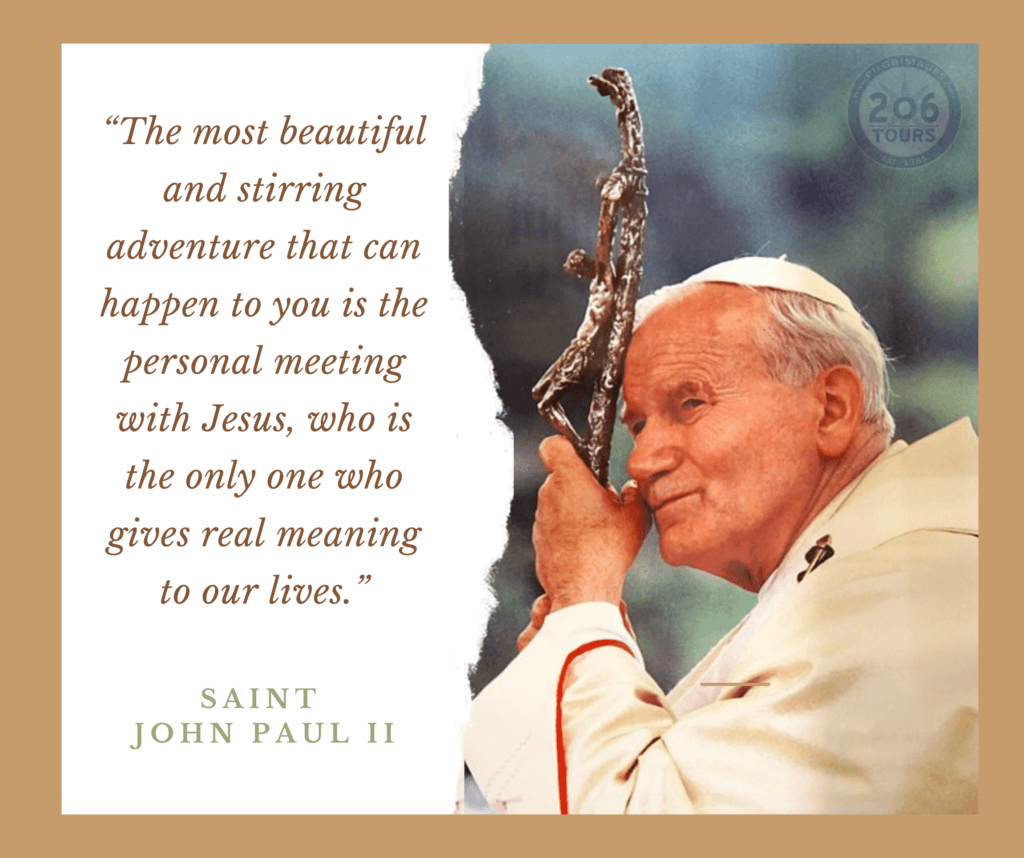
2. The most beautiful and stirring adventure that can happen to you is the personal meeting with Jesus, who is the only one who gives real meaning to our lives.
St. John Paul the Great
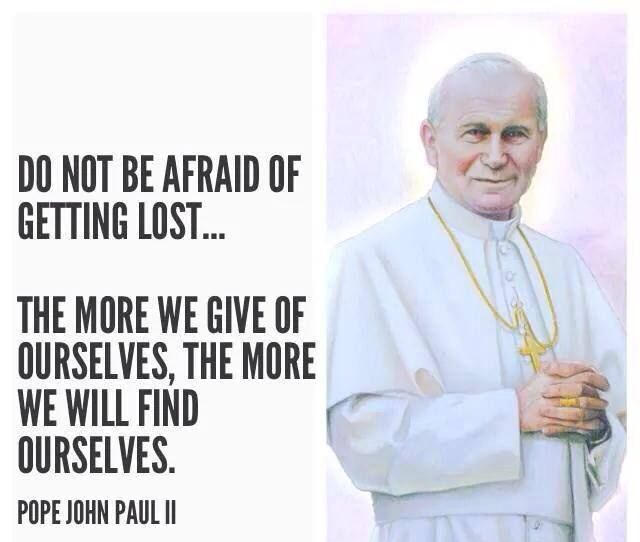
3. Do not be afraid of getting lost. The more we give of ourselves, the more we will find ourselves.
St. John Paul the Great
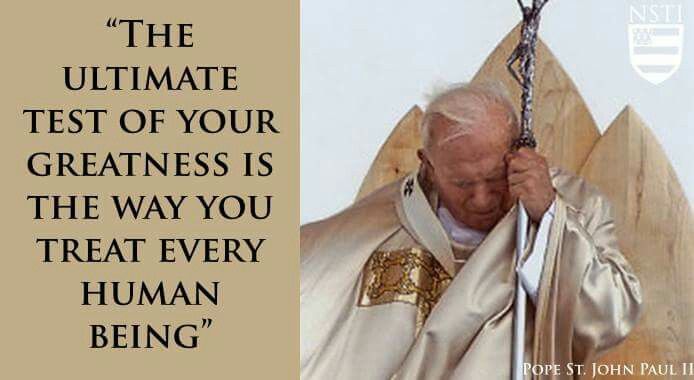
4. The ultimate test of your greatness is the way you treat every human being.
St. John Paul the Great
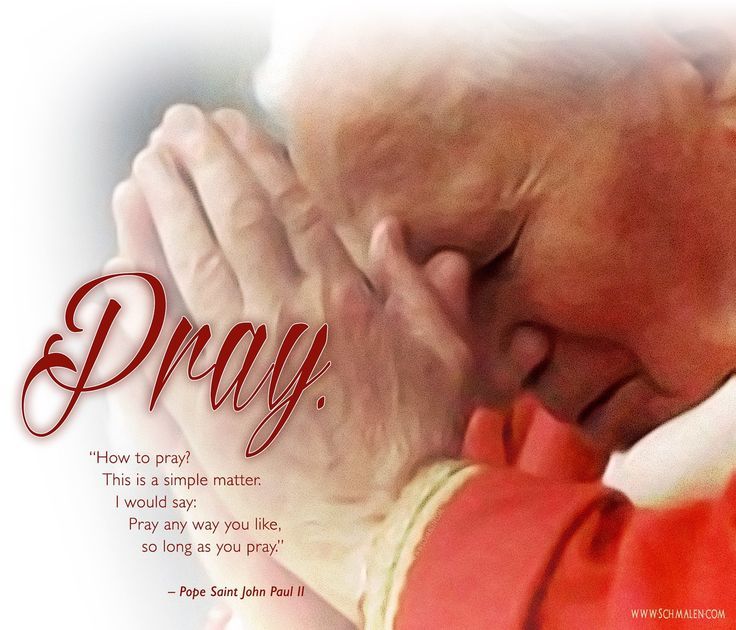
5. How to pray? This is a simple matter. I would say: Pray any way you like, so long as you do pray;
St. John Paul the Great
6. Future begins today, not tomorrow.
St. John Paul the Great
7. Darkness can only be scattered by light. Hatred can only be conquered by love.
8. Science can purify religion from error and superstition. Religion can purify science from idolatry and false absolutes.
St. John Paul the Great
9. Faith leads us beyond ourselves. It leads us directly to God.
St. John Paul the Great
10. Do not be afraid. Do not be satisfied with mediocrity. Put out into the deep and let down your nets for a catch.
St. John Paul the Great
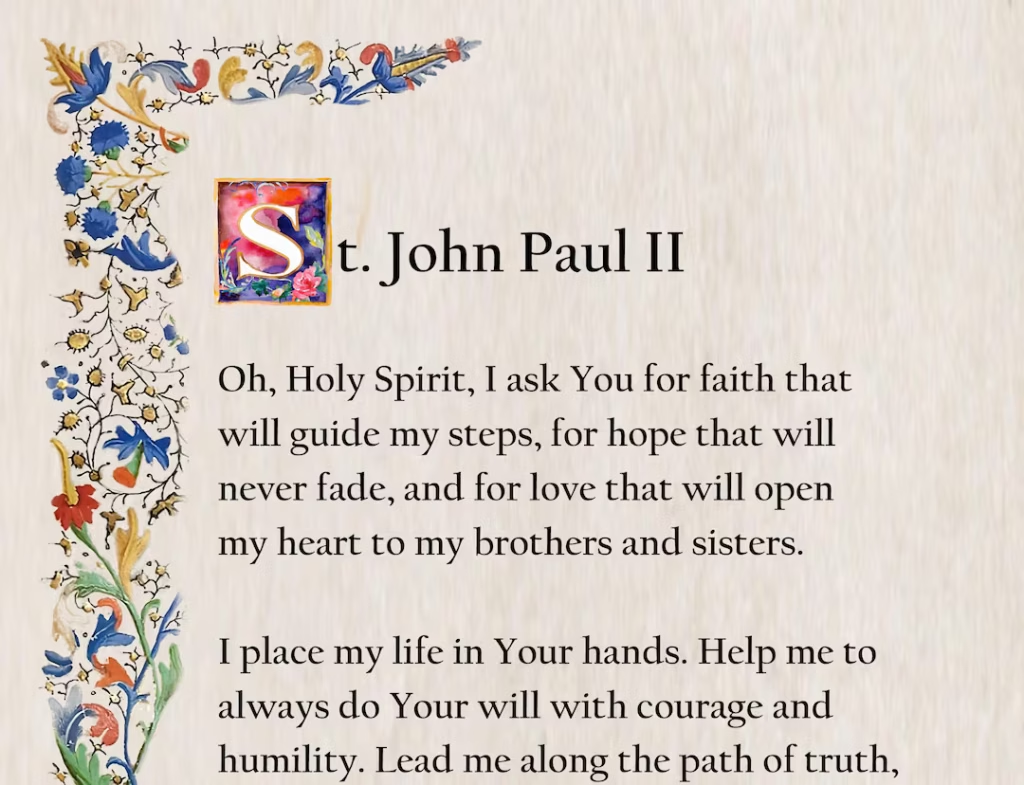
11. As the family goes, so goes the nation, and so goes the whole world in which we live.
St. John Paul the Great
12. Remember that you are never alone. Christ is with you on your journey every day of your lives.
St. John Paul the Great
13. In God’s plan, nothing happens by chance.
St. John Paul the Great
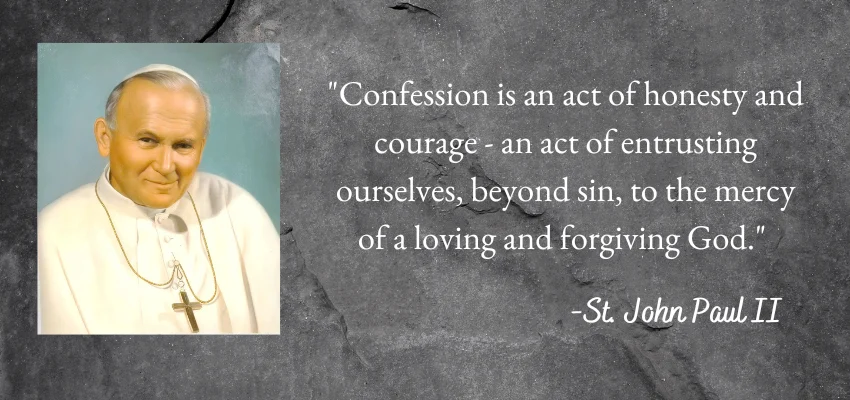
14. Confession is an act of honesty and courage–an act of entrusting ourselves beyond sin, to a loving and forgiving God.
St. John Paul the Great
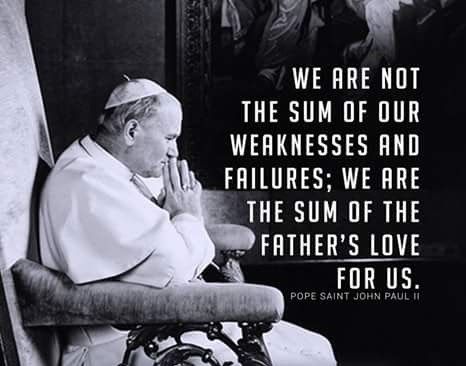
15. We are not the sum of our weaknesses and failures. We are the sum of the Father’s love for us.
St. John Paul the Great
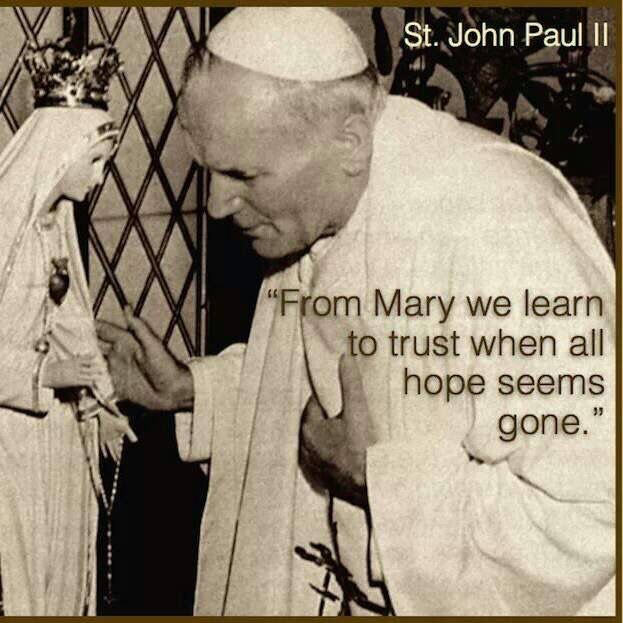
16. From Mary we learn to trust when all hope seems gone.
St. John Paul the Great
17. It is Jesus that you seek when you dream of happiness; He is waiting for you when nothing else you find satisfies you.
St. John Paul the Great
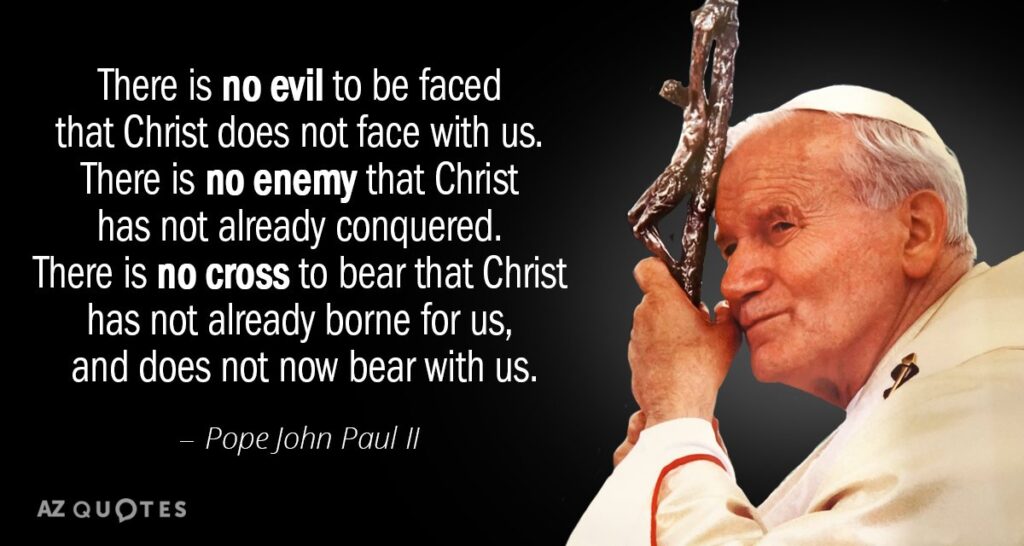
18. There is no evil to be to be faced that Christ does not face with us. There is no enemy that Christ has not already conquered. There is no cross to bear that Christ has not already borne for us and does not now bear with us.
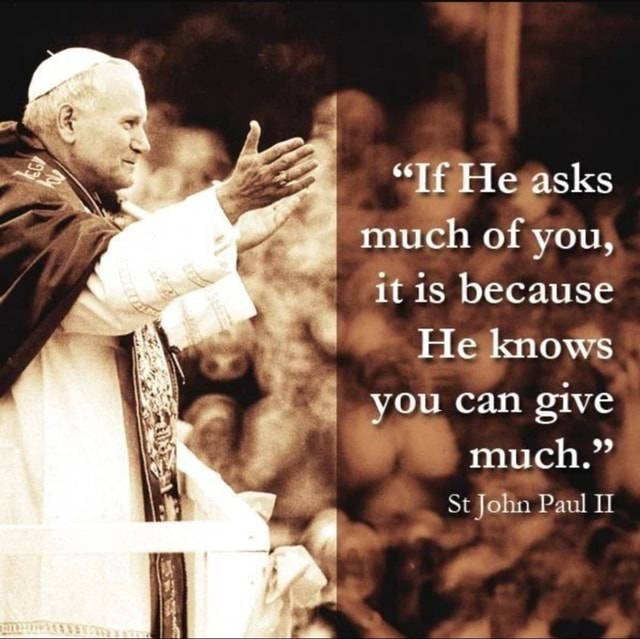
19. If He asks much of you, it is because He knows you can give much.
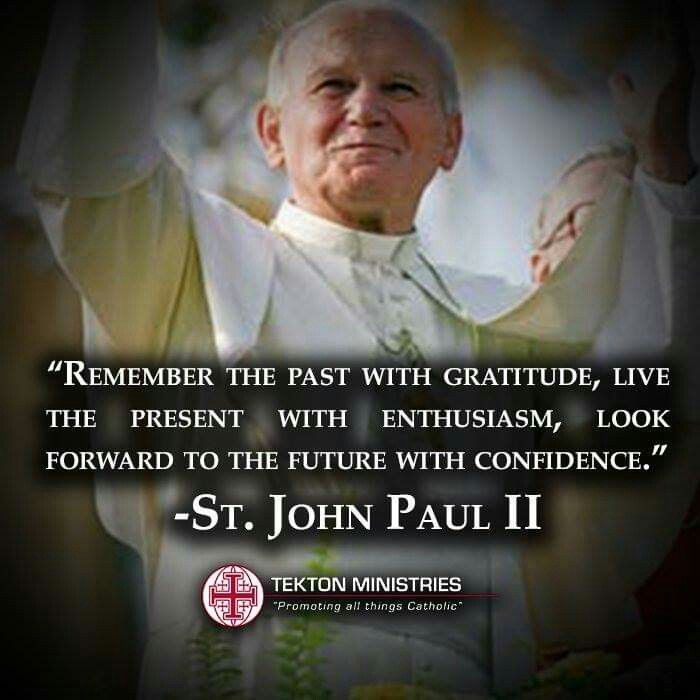
20. Let us remember the Past with Gratitude, Live the Present with Enthusiasm, and look forward to the Future with Confidence.
St. John Paul the Great
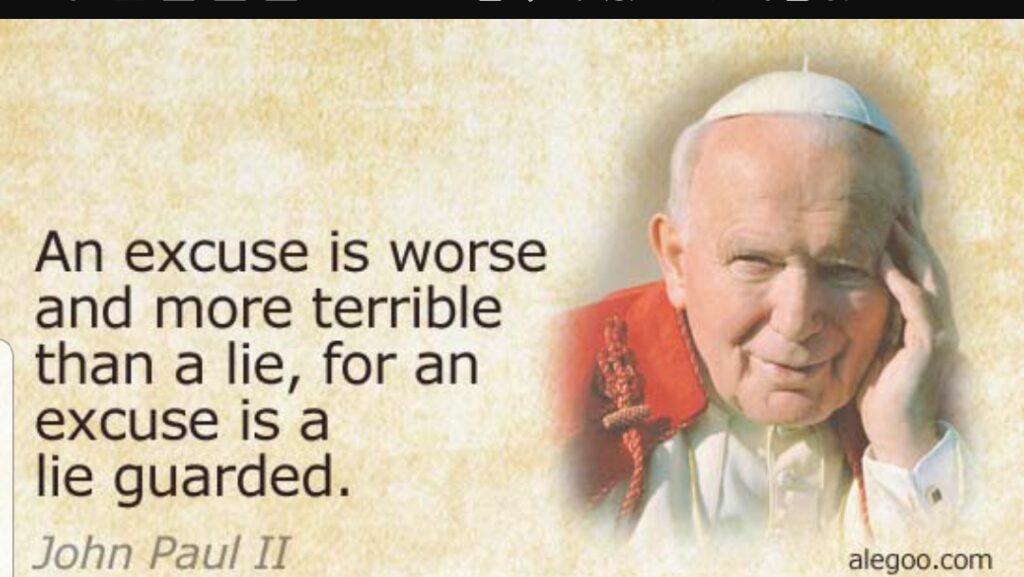
21. An excuse is worse and more terrible than a lie, for an excuse is a lie guarded.
St. John Paul the Great
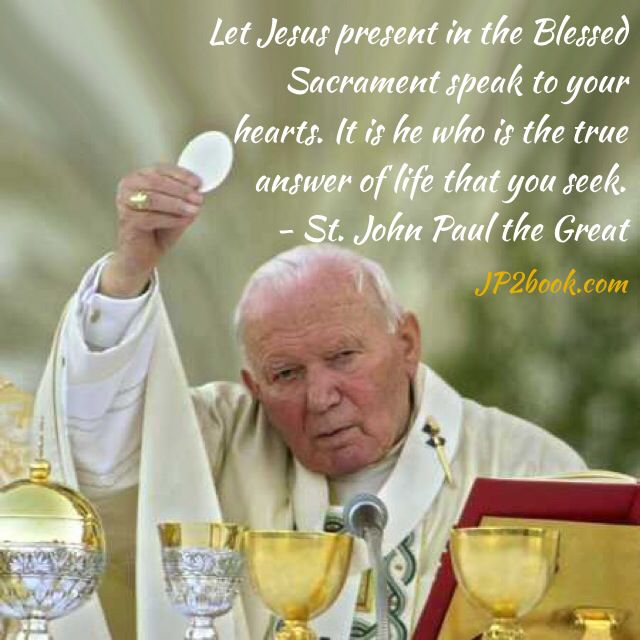
22. Let Jesus present in the Blessed Sacrament speak to your hearts. It is he who is the true answer of life that you seek.
23. Do not abandon yourselves to despair. We are the Easter people and halleluiah is our song.
St. John Paul the Great
24. The worst prison would be a closed heart.
St. John Paul the Great
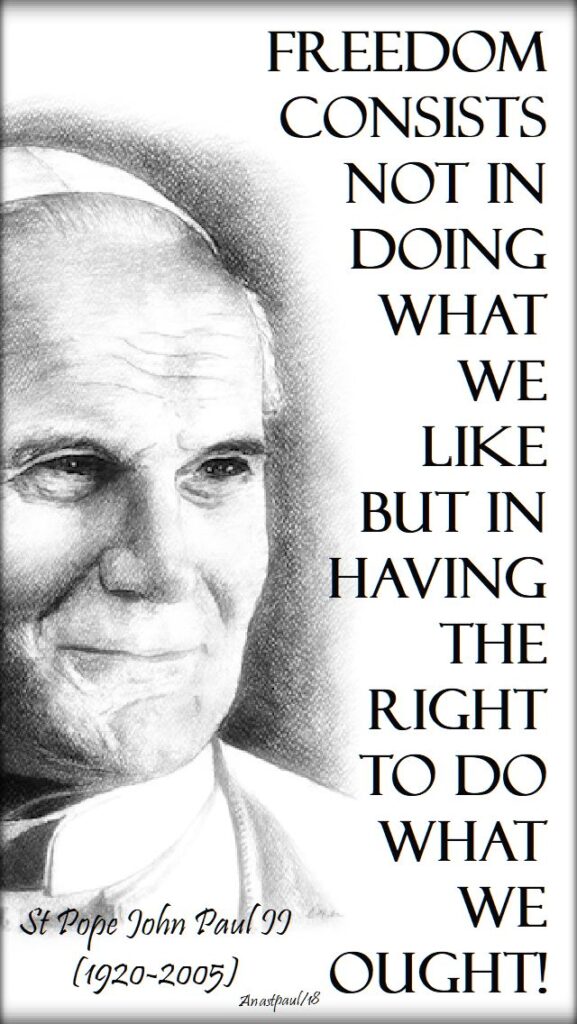
25. Freedom consist not in doing what we like, but in having the right to do what we ought.
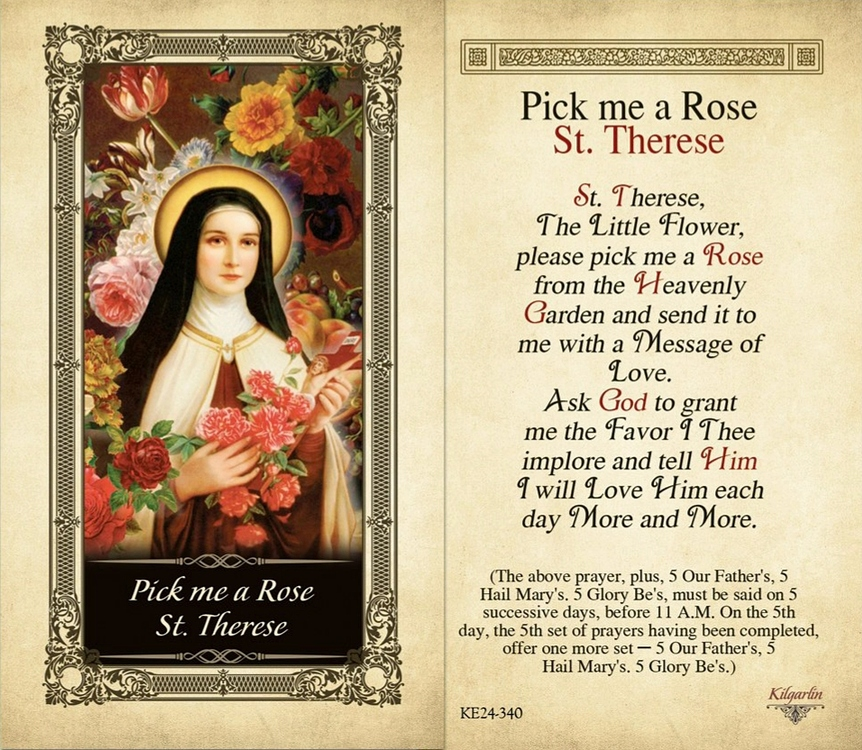
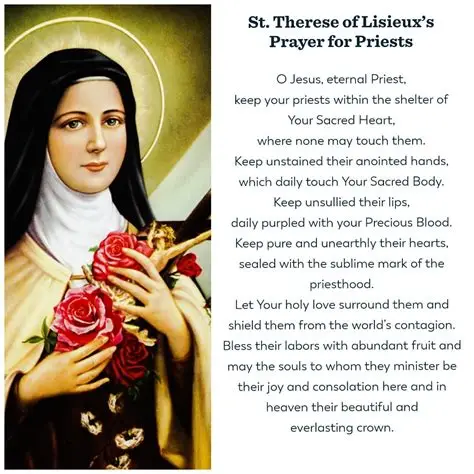
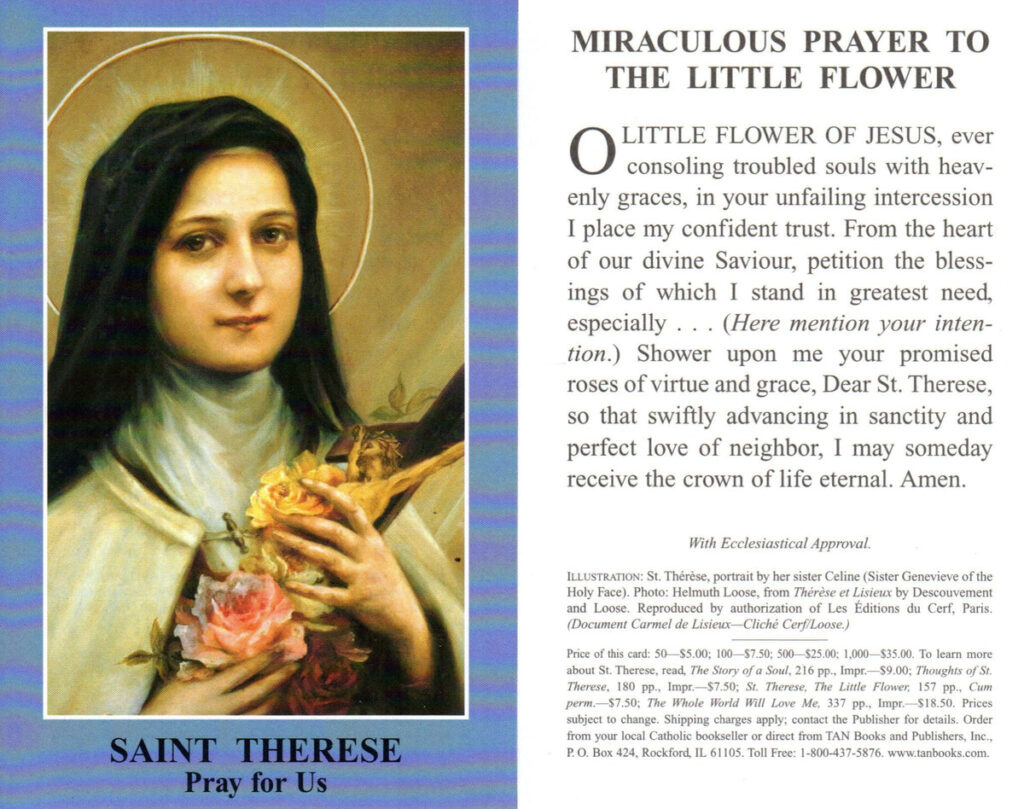
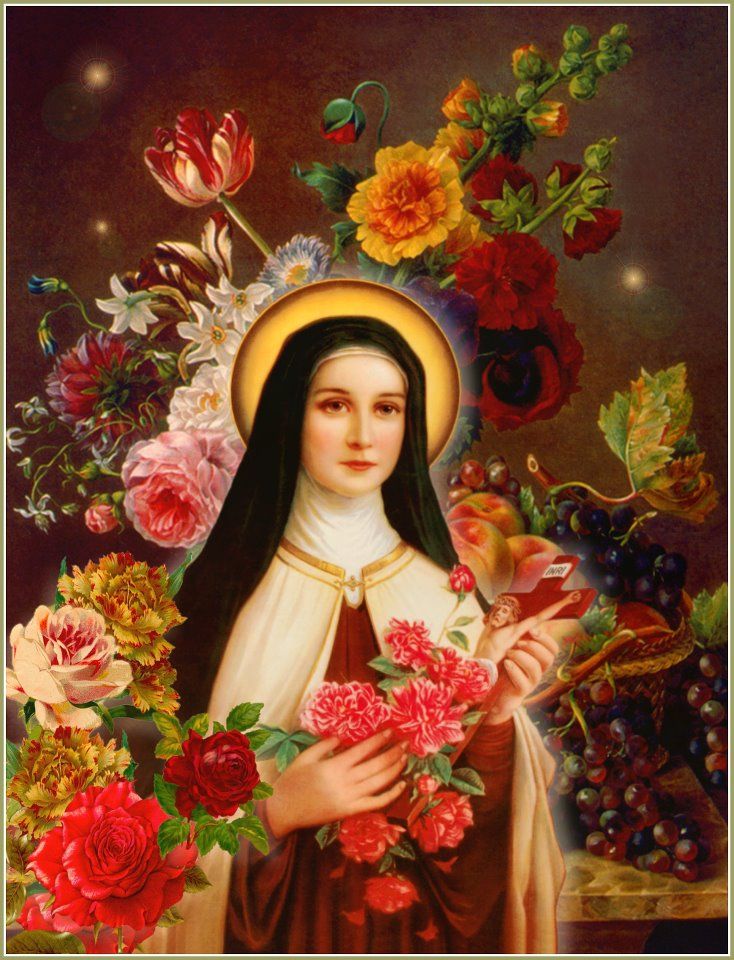
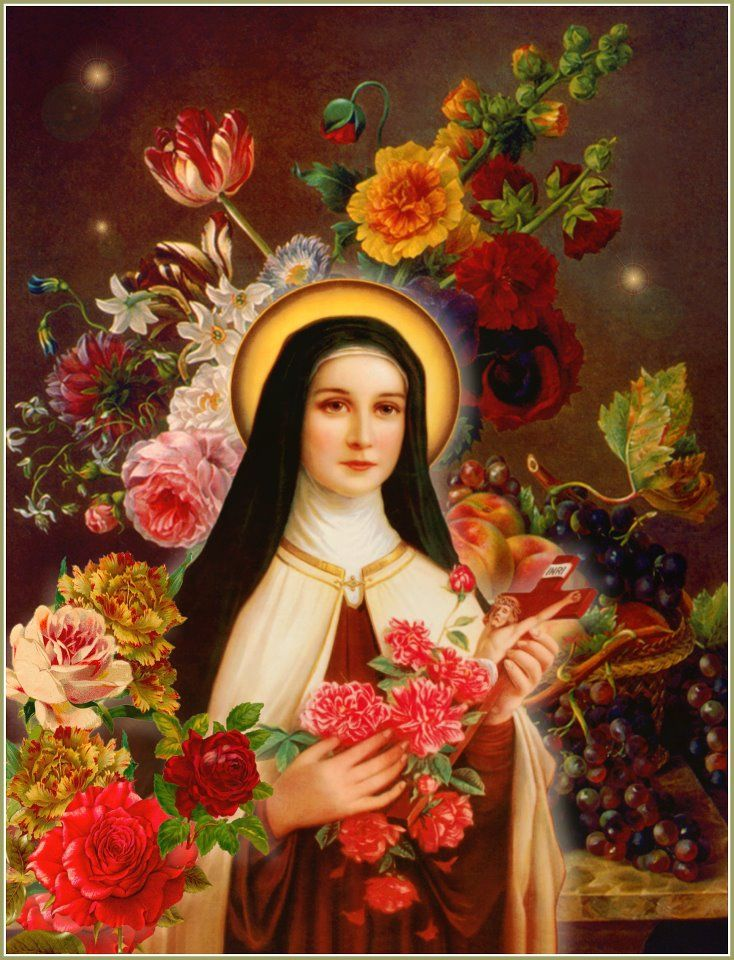
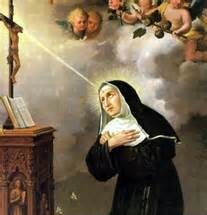
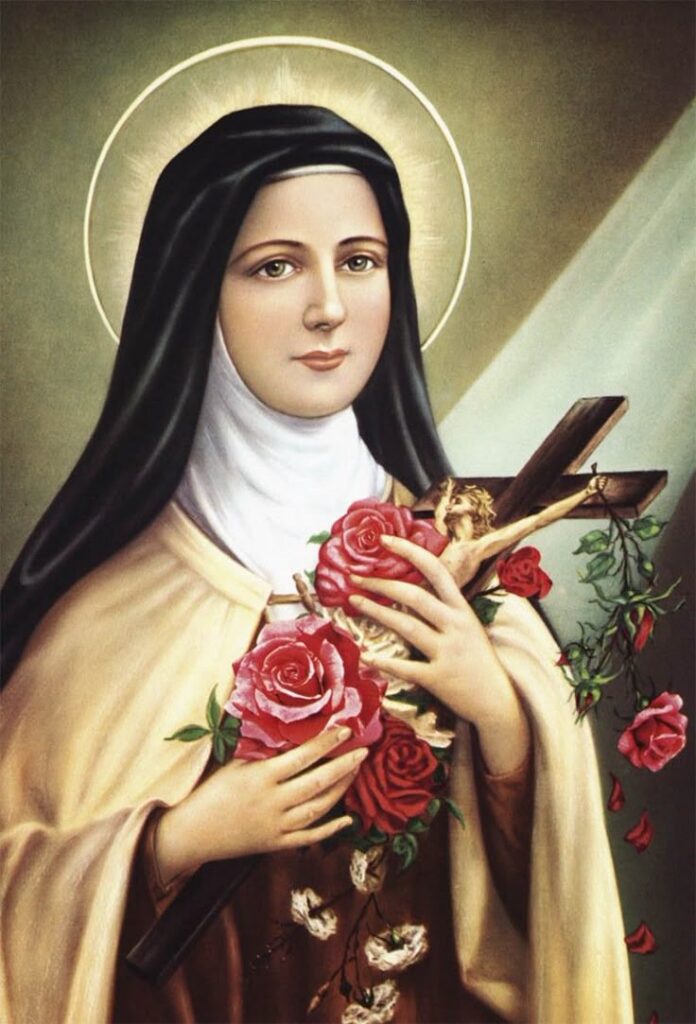
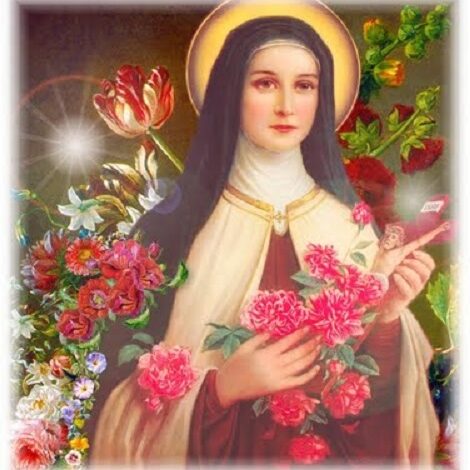
Marie Thérèse Martin was born at Alencon, France on Jan. 2, 1873. St Thérèse of Lisieux is the patron saint of florists, missionaries, pilots and against tuberculosis.
St. Thérèse felt called into the religious life at the age of 15. She asked permission to enter the Carmel of Lisieux a Carmelite convent. She took the name of St. Thérèse of the Child Jesus and the Holy Face.
St. Thérèse came down with tuberculosis and died after several years of suffering at the age of 24 on Sept. 30, 1897. She was canonized in 1925. Her Feast Day is celebrated on October 1.
Popularly known as the Little Flower, Thérèse of Lisieux was canonized in 1925. On October 19, 1997, Pope John Paul II bestowed on her the title of Doctor of the Church.
The following quotes can inspire us to follow her “Little Way”.
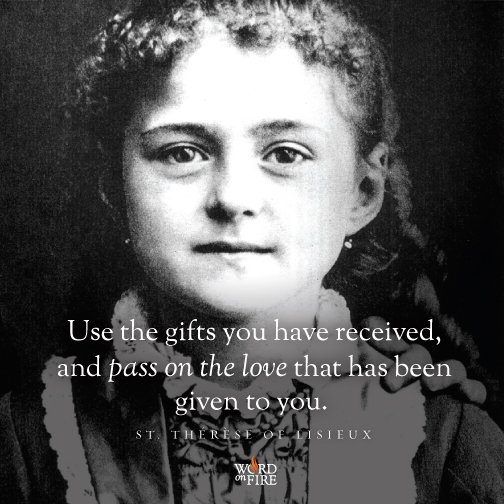
1. Use the gifts you have received, and pass on the love that has been given to you.
St. Thérèseof Lisieux
2. When you are angry with someone, the way to find peace is to pray for that person and ask God to reward him or her for making you suffer.
St. Thérèse of Lisieux
3. Let us not grow tired of prayer: Confidence works miarcles.
St. Thérèse of Lisieux
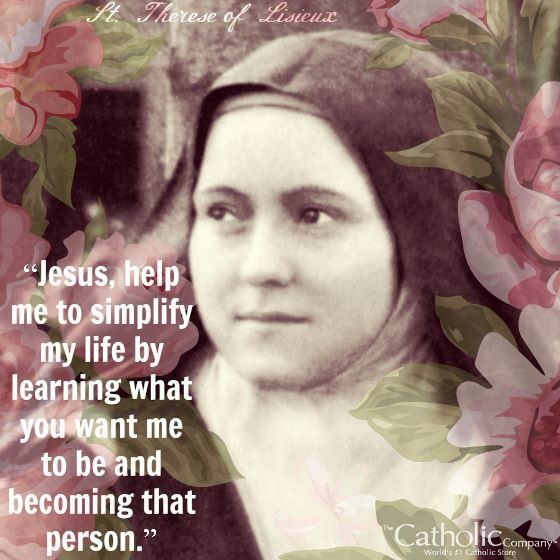
4. Jesus help me to simplify my life by learning what You want me to be and becoming that person.
St. Thérèse of Lisieux
5. He guides and inspires me every moment of the day. Just when I need it, a new light shines on my problem.
St. Thérèse of Lisieux
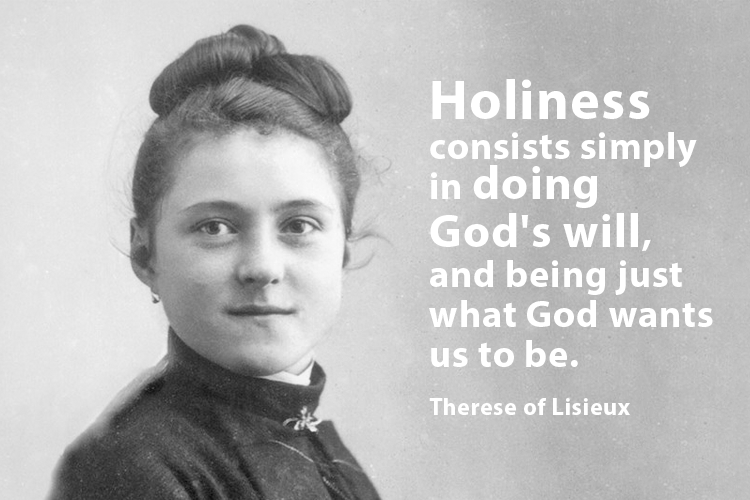
6. Hoiness consists simply in doing God’s will, and being just what God wants us to be.
St. Thérèse of Lisieux
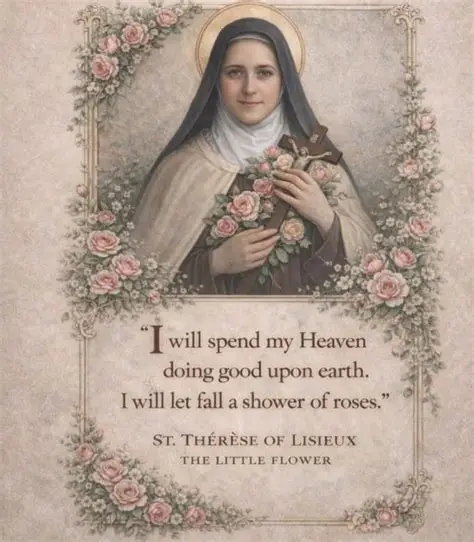
7. I will spend my Heaven ding good upon earth. I will let fall a shower of roses.
St. Thérèse of Lisieux
8. What pleases the good God in my little soul is to see me love my littleness and my poverty, it is seeing the blind trust that I have in His Mercy.
St. Thérèse of Lisieux
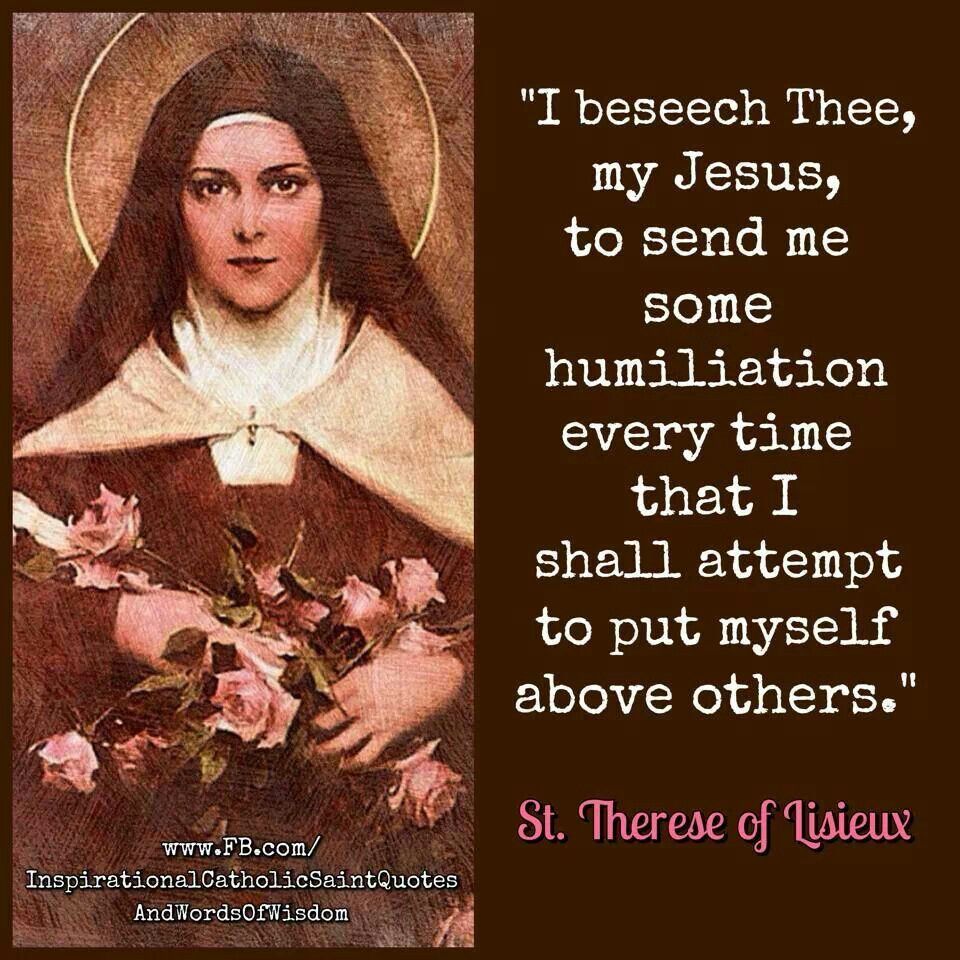
9. I beseech Thee, my Jesus, to send me some humiliation every time that I shall attempt to put myself above others.
St. Thérèse of Lisieux
10. Remember that nothing is small in the eyes of God. Do all that you do with love.
St. Thérèse of Lisieux
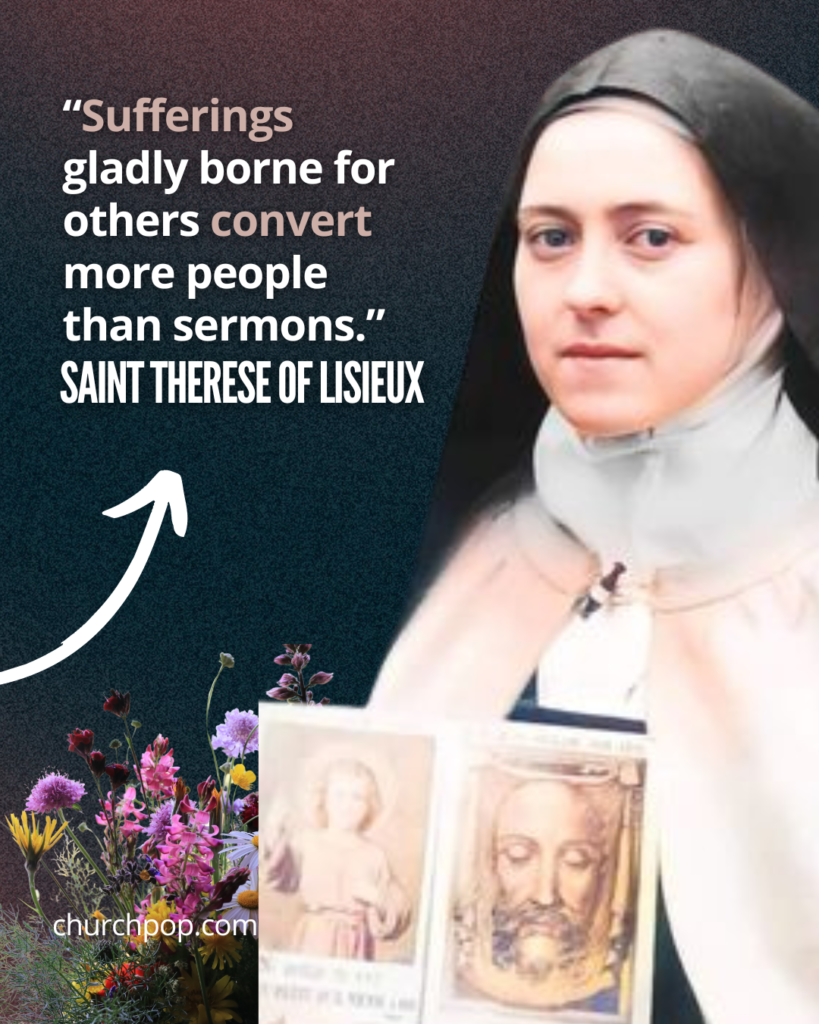
11. Sufferings gladly borne for others convert more people than sermons.
St. Thérèse of Lisieux
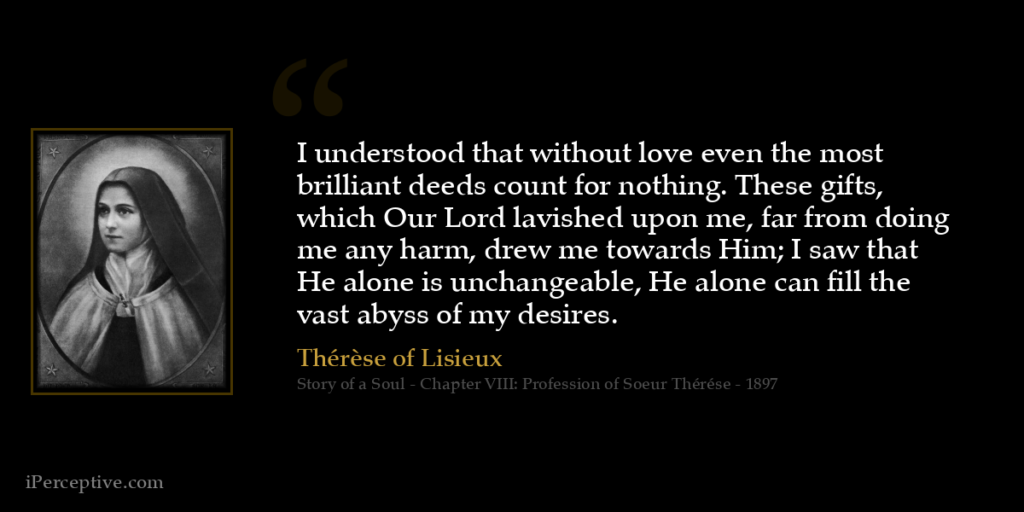
12. I understand that without LOVE even the most brilliant deeds count as nothing. These gifts, which Our Lord lavished upon me, far from doing me any harm, drew me towards Him; I saw that He alone is unchangeable. He alone can fill the vast abyss of my desires.
St. Thérèse of Lisieux
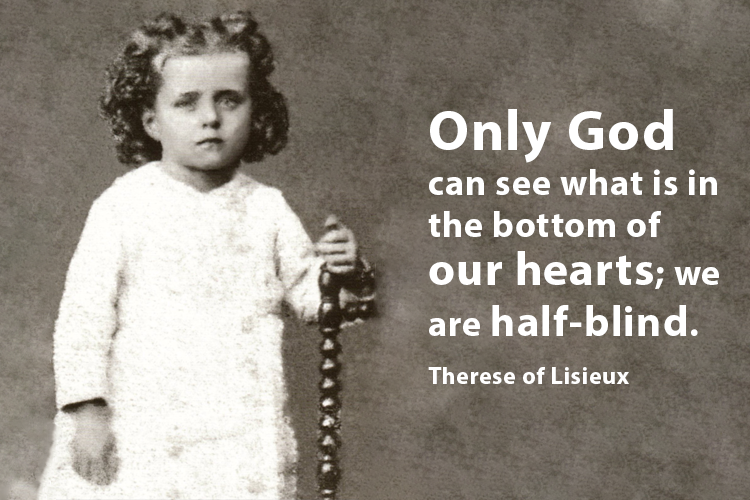
13. Only God can see what is in the bottom of our hearts; we are half-blind.
St. Thérèse of Lisieux
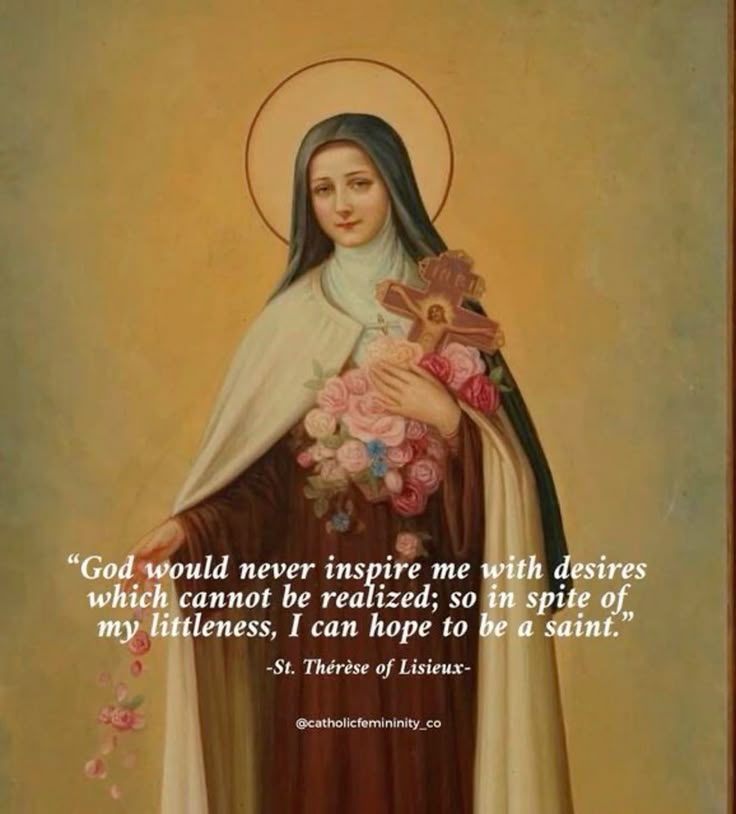
14. God would never inspire me with desires which cannot be realized; so, in spite of my littleness, I can hope to be a saint.
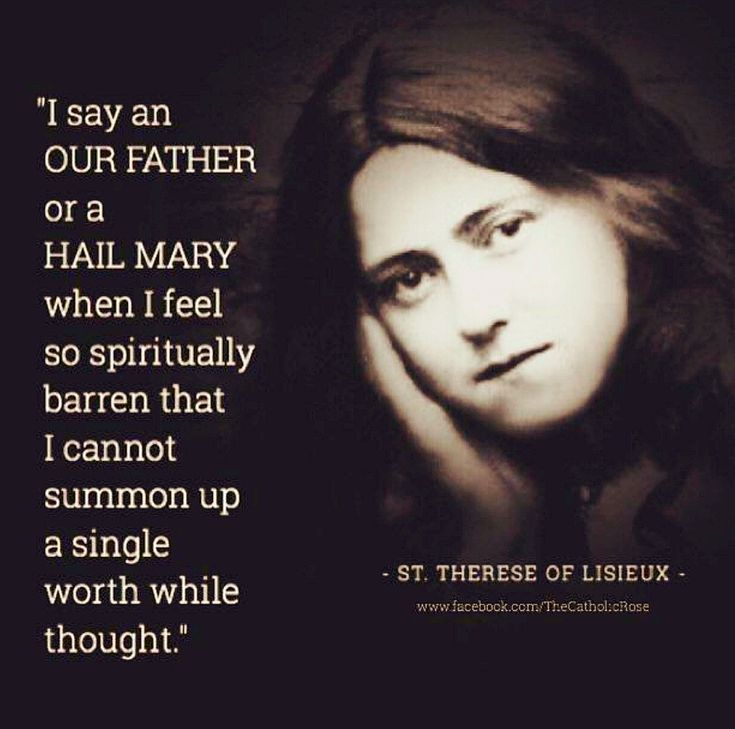
15. I say an ‘Our Father’ or a ‘Halil Mary’ when I feel so spiritually barren that I cannot summon up a single worthwhie thought.
St. Thérèse of Lisieux
16. Jesus has chosen to show me the only way which leads to the Divine Furnace of love; it is the way of childlike self-surrender, the way of a child who sleeps, afraid of nothing, in its father’s arms.
St. Thérèse of Lisieux
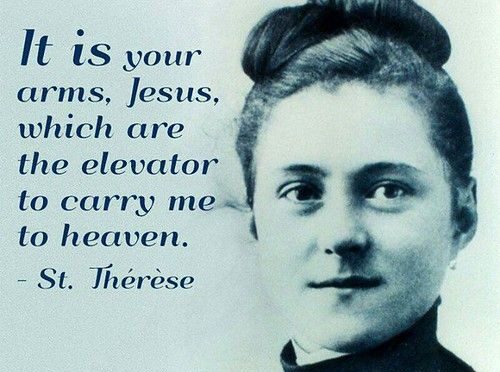
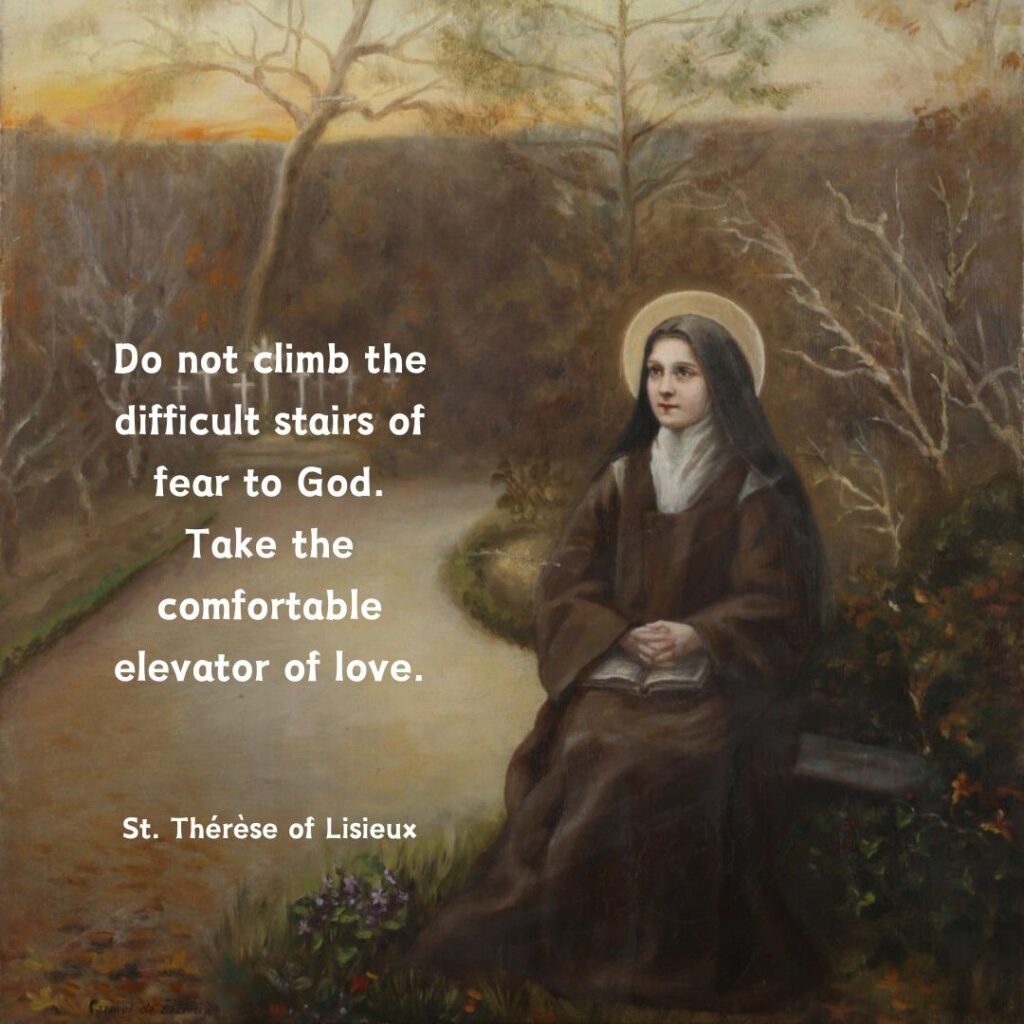
17. Do not climb the difficult stairs of fear to God. Take the comfortable elevator of love.
St. Thérèse of Lisieux
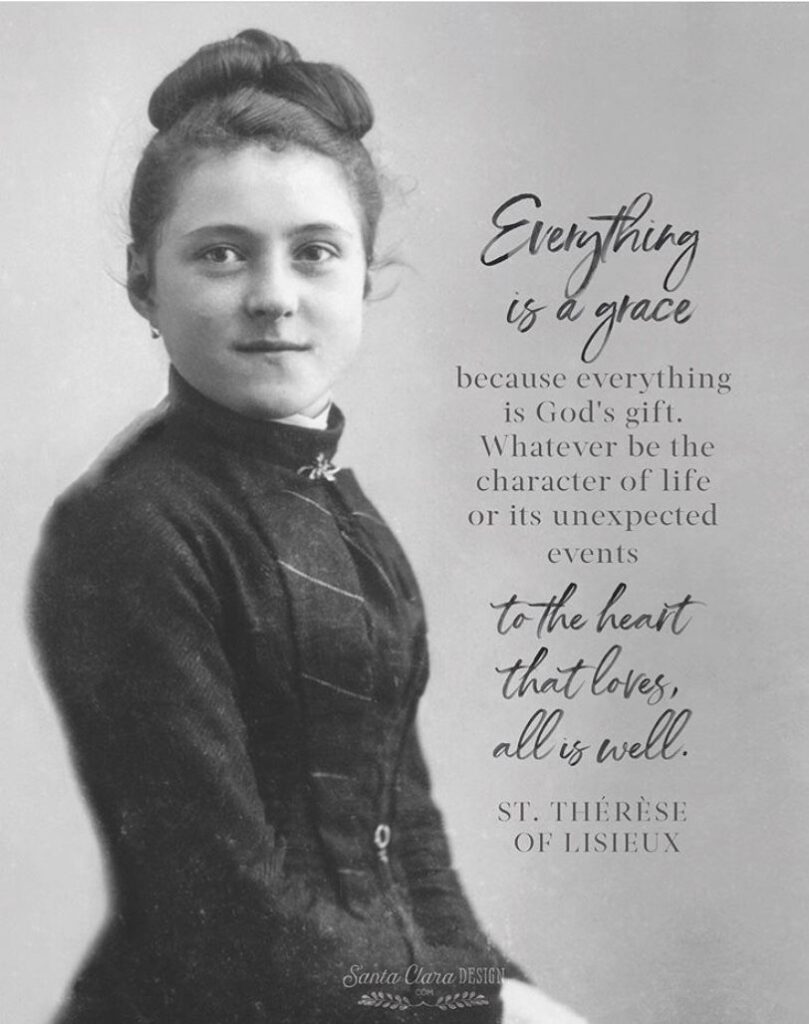
18. Everything is grace; everything is the direct effect of our Father’s love. Everything is grace because everything is God’s gift. Whatever be the character of life or its unexpected events-to the heart that loves, all is well.
St. Thérèse of Lisieux
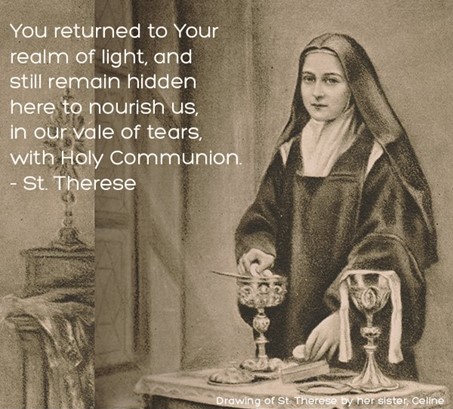
19. You returned to Your realm of light and still remain hidden here to nourish us, in our vale of tears, with Holy Communion.
St. Thérèse of Lisieux
20. It isn’t enough to love: We must prove it.
St. Thérèse of Lisieux
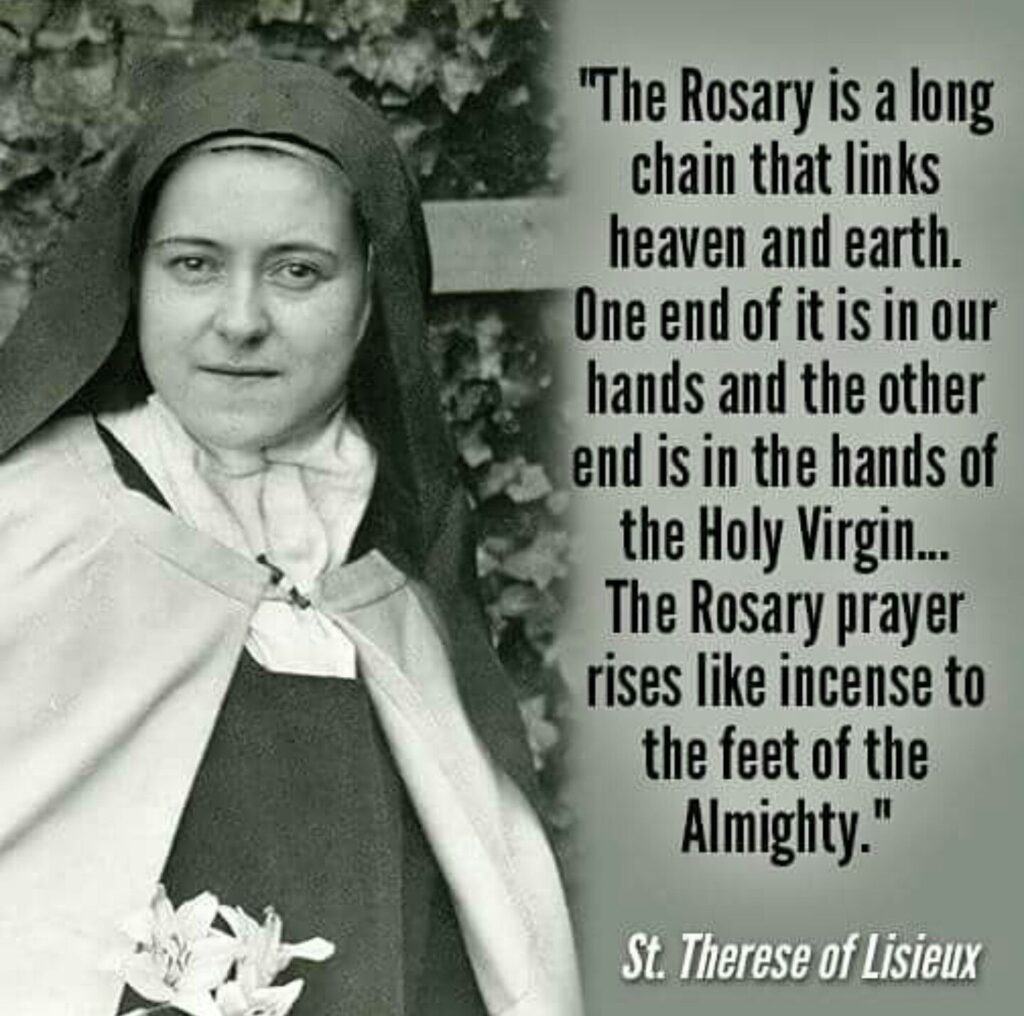
21. The Rosary is a long chain that links heaven and earth. One end of it is in our hand and the other end is in the hands of the Holy Virgin. The Rosary prayer rises like incense to the feet of the Almighty.
St. Therese of Lisieux
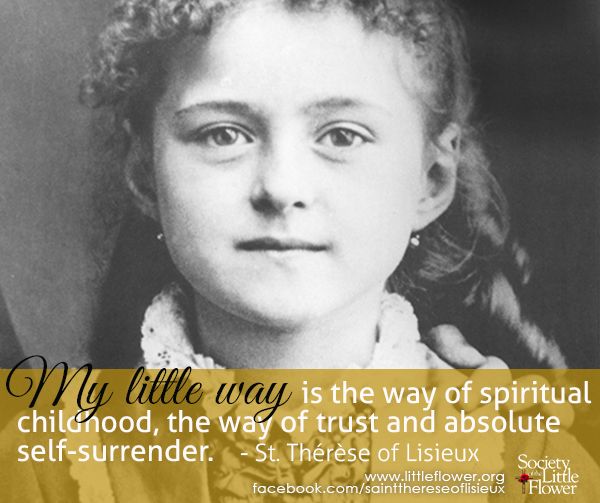
22. My little way is the way of spiritual childhood, the way of trust and absolute self-surrender.
St. Thérèse of Lisieux
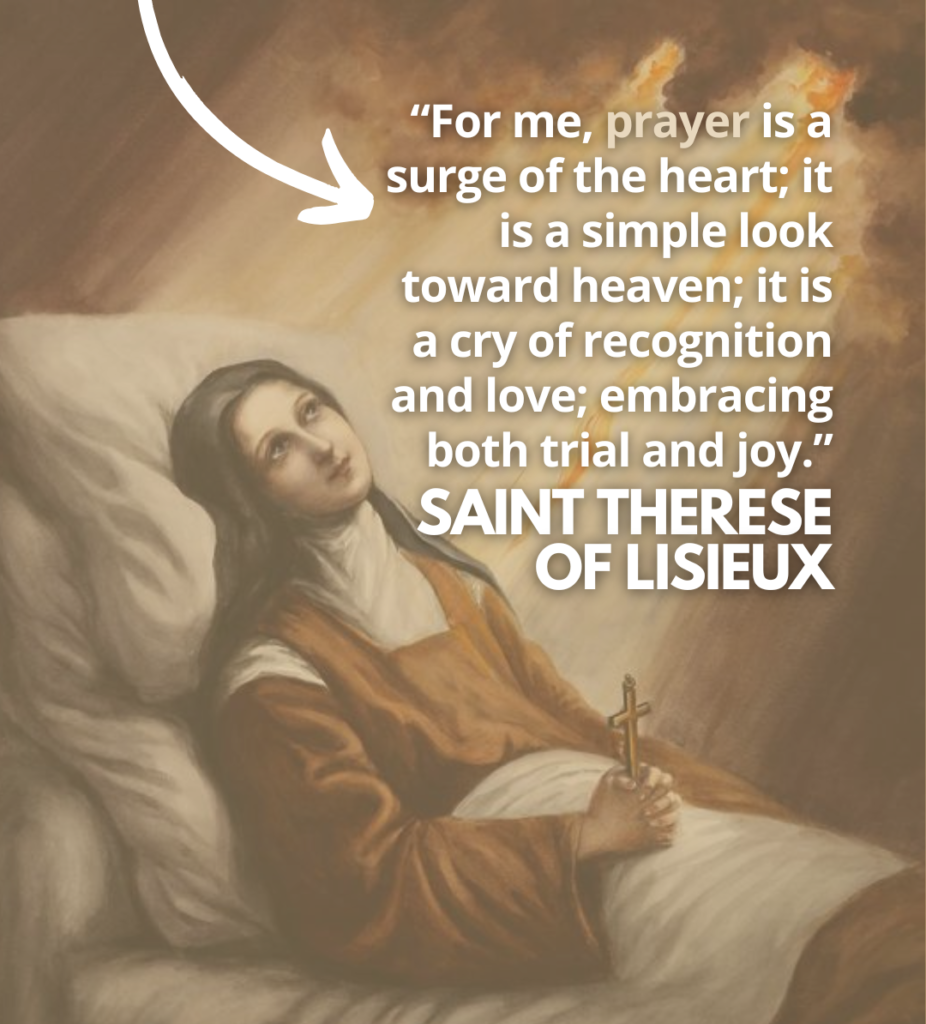
23. For me, prayer is a surge of the heart; it is a simple look toward heaven; it is a cry of recognition and love; embracing both trial and joy.
St. Thérèse of Lisieux
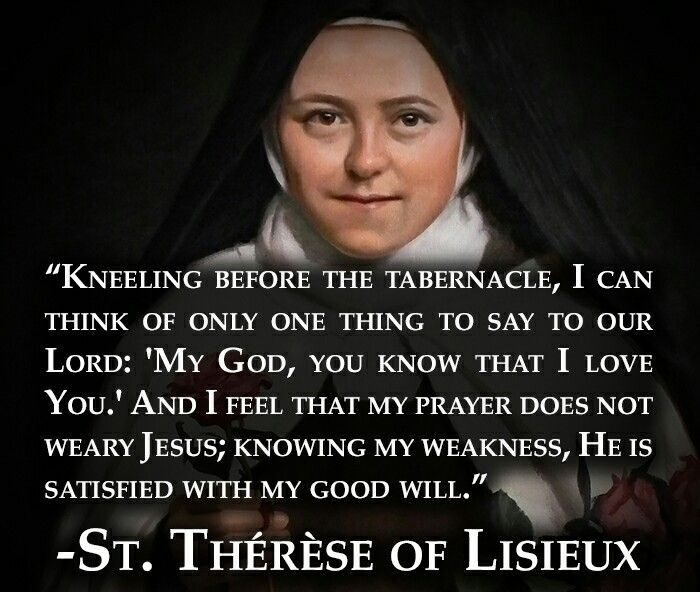
24. Kneeling before the tabernacle, I can think of only one thing to say to Our Lord: My God, You know that I love You! And I feel that my prayer does not weary Jesus; knowing my weakness He is satisfied with my Good Will.
St. Thérèse of Lisieux
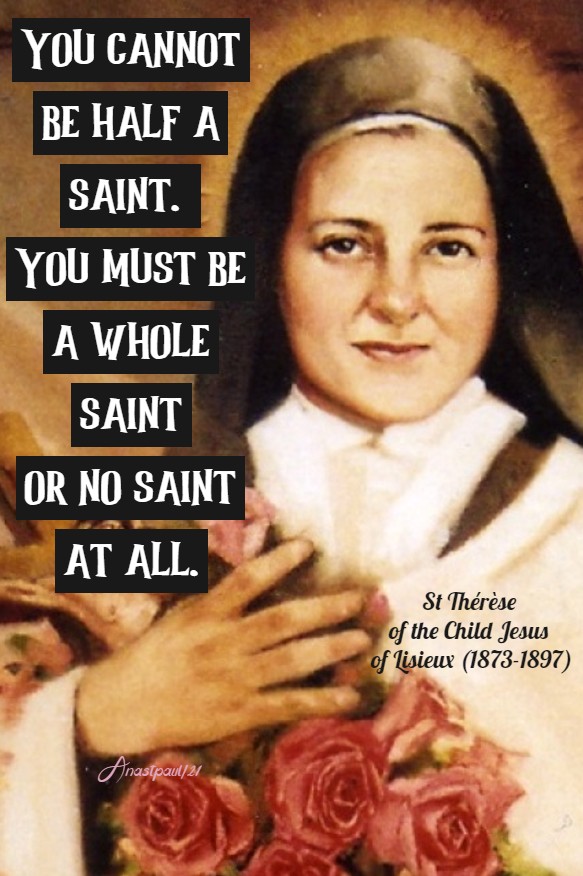
25. You cannot be Half a Saint; You must be a whole saint or no saint at all.
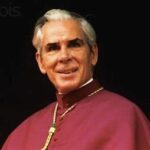
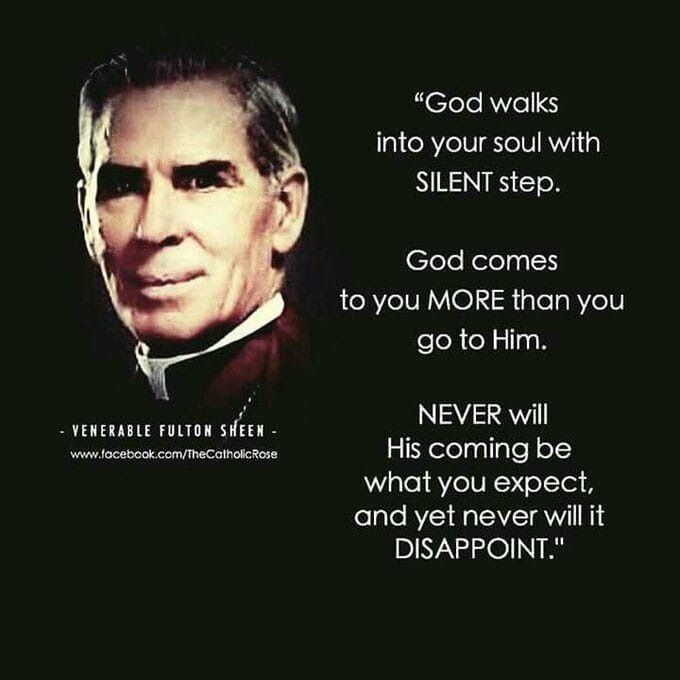
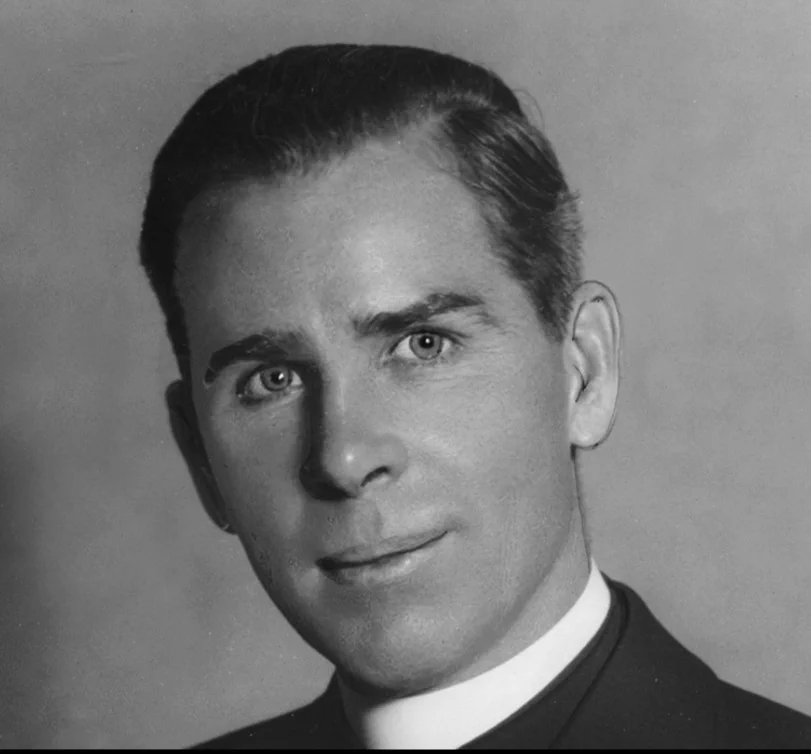
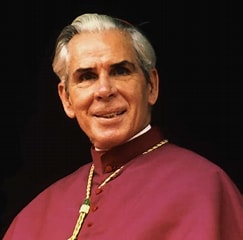
Soon, Archbishop Fulton Sheen will be given the title of Blessed. On September 24, 2026. he will be beatified at 2 pm Central time at The Dome at America’s Center in St. Louis. This means there is only one more step until he is officially a Saint.
Fulton John Sheen (born Peter John Sheen, May 8, 1895 – December 9, 1979) was an American archbishop of the Roman Catholic Church known for his preaching and especially his work on television and radio.
He became known as a trailblazer for television evangelization with his Emmy-winning show “Life Is Worth Living.” The show aired on television from 1952 until 1957, discussing morality and Catholicism.
Patron of missions and Media
As we celebrate the event of his beatification, let’s reflect on his many quotes which made him loved by many.
1. You must remember to love people and use things, rather than to love things and use people.
Archbishop Fulton Sheen
2. Before the sin, Satan assures us that it is of no consequence; after the sin, he persuades us that it is unforgiveable.
Archbishop Fulton Sheen
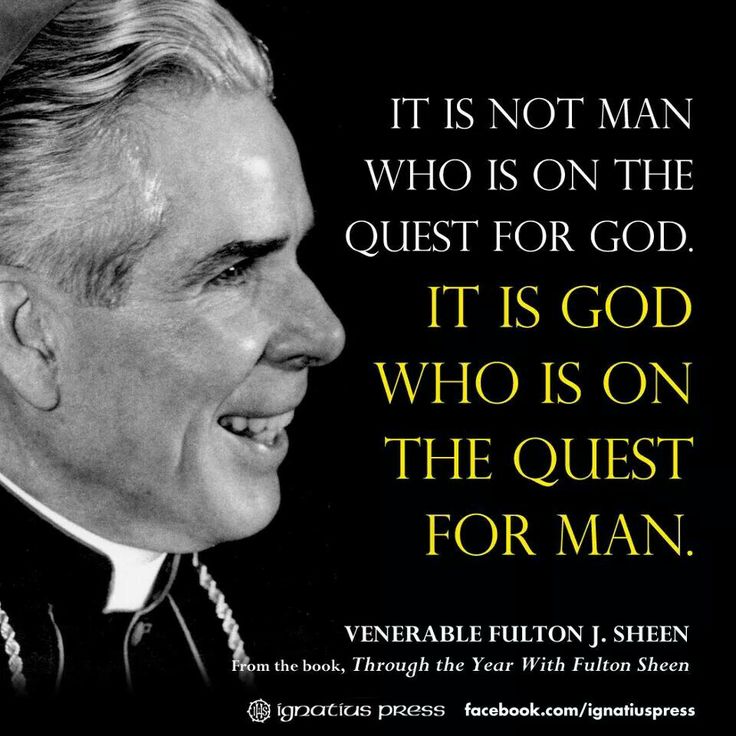
3. It is not man who is on the quest for God. It is God who is on the quest for man.
Archbishop Fulton Sheen
4. God does not love us because we are valuable. We are valuable because God loves us.
Archbishop Fulton Sheen
5. It’s impossible to lose your footing when you’re on your knees.
Archbishop Fulton Sheen
6. When you are getting kicked from the rear it means you are in front.
Archbishop Fulton Sheen
7. Very few people believe in the devil these days, which suits the devil very well. He is always helping to circulate the news of his own death. The essence of God is existence, and He defines Himself as ‘I am Who am’. The essence of the devil is the lie, and he defines himself as: ‘I am who am not.’ Satan has very little trouble with those who do not believe in him; they are already on his side.
Archbishop Fulton Sheen
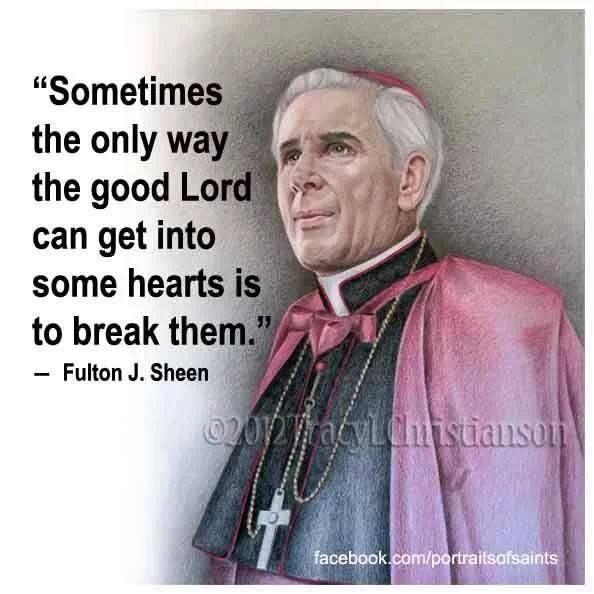
8. Sometimes the only way the good Lord can get into some hearts is to break them.
Archbishop Fulton Sheen
9. A Catholic may sin, and sin as badly as anyone else, but no genuine Catholic ever denies he is a sinner. A Catholic wants his sins forgiven – not excused or sublimated.
Archbishop Fulton Sheen
10. Ever since the days of Adam, man has been hiding from God and saying, ‘God is hard to find’.
Archbishop Fulton Sheen
11. Satan always tempts the pure – the others are already his.
Archbishop Fulton Sheen
12. There are two ways of waking up in the morning. One is to say, ‘Good morning, God!’ and the other is to say, ‘Good God, morning!’
Archbishop Fulton Sheen
13. Humility is dependence on God as pride is independence of Him. The humble soul is always the thankful soul.
Archbishop Fulton Sheen
14. When we die to something…something comes alive within us. If we die to self, charity come alive; if we die to pride, service comes alive; if we die to lust, reverence for personality comes alive; if we die to anger, love comes alive.
Archbishop Fulton Sheen
15. Most of us do not like to look inside ourselves for the same reason we don’t like to open a letter that has bad news.
Archbishop Fulton Sheen
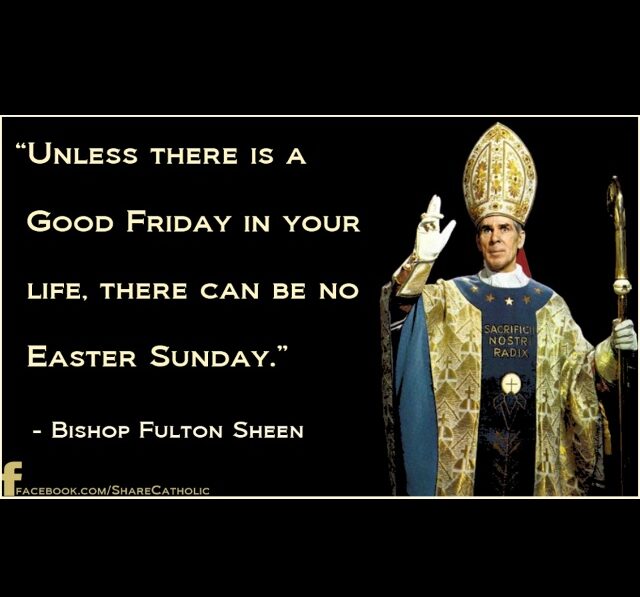
16. Unless there is a Good Friday in your life, there can be no Easter Sunday.
Archbishop Fulton Sheen
17. Skeptics always want miracles such as stepping down from the Cross, but never the greater miracle of forgiveness.
Archbishop Fulton Sheen
18. Souls generally do not fall away from Christ because of the Creed; they first have difficulty with the commandments.
Archbishop Fulton Sheen
19. In vocal prayer we go to God on foot. In meditation we go to God on horseback. In contemplation we go to God in a jet.
Archbishop Fulton Sheen
Archbishop Fulton Sheen
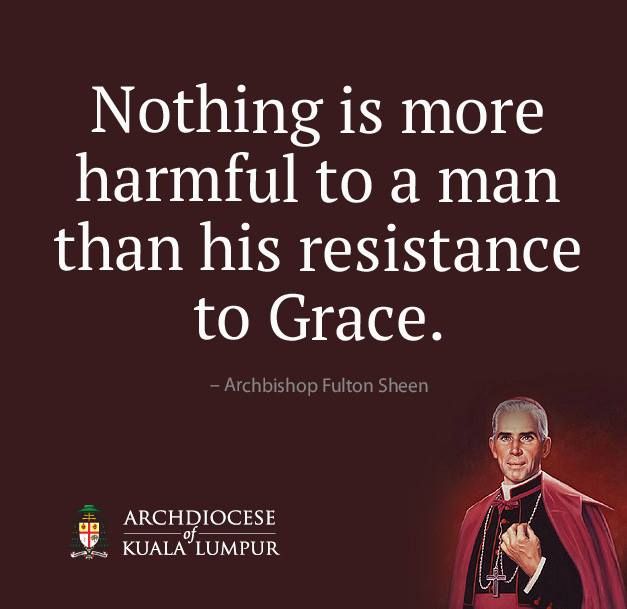
20. Grace does not work like a penny in a slot machine. Grace will move you only when you want it to move you, and only when you let it move you. The supernatural order supposes the freedom of the natural order, but it does not destroy it.
Archbishop Fulton Sheen
21. God, who made the sun, also made the moon. The moon does not take away from the brilliance of the sun. All its light is reflected from the sun. So Mary reflects her Divine Son; without Him she is nothing. With Him, she is the mother of men.
Archbishop Fulton Sheen
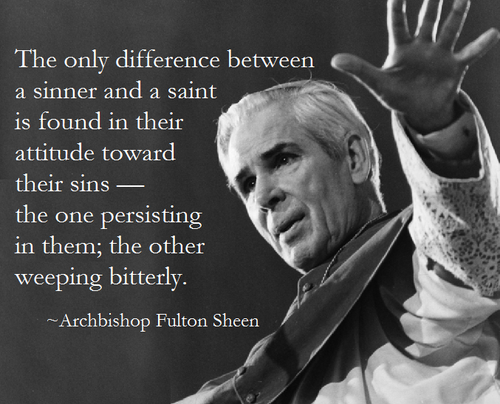
22. The only difference between a sinner and a saint is found in their attitude toward their sins-the one persisting in them; the other weeping bitterly.
Archbishop Fulton Sheen
23. Heaven is a city on a hill; hence, we cannot coast into it, we have to climb.
Archbishop Fulton Sheen
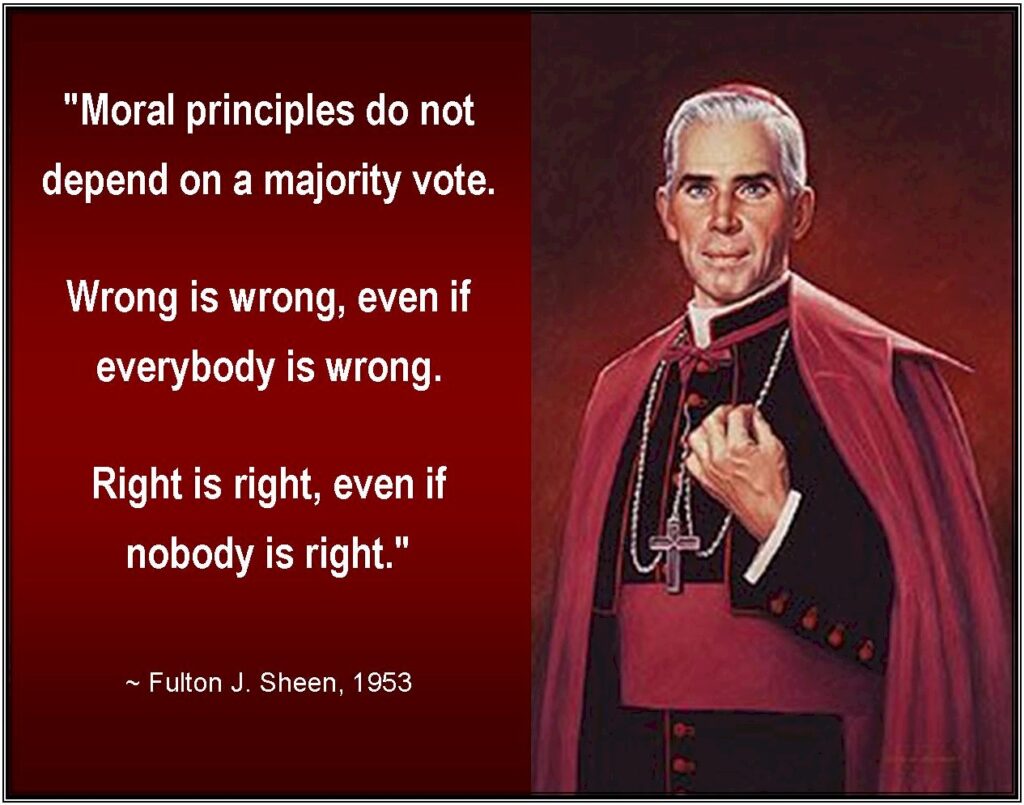
24. Moral principles do not depend on a majority vote. Wrong is wrong, even if everybody is wrong. Right is right, even if nobody is right.
Archbishop Fulton Sheen
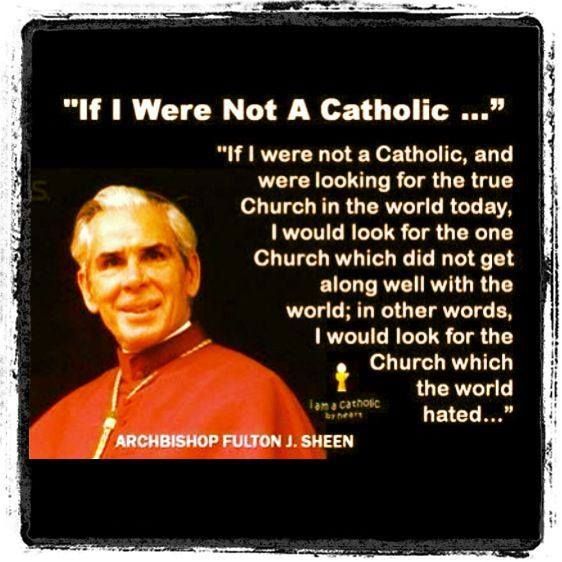
25. If I were not a Catholic…and were looking for the true Church in the world today, I would look for the one Church which did not get along well with the world; in other words, I would look for the Church which the world hated.
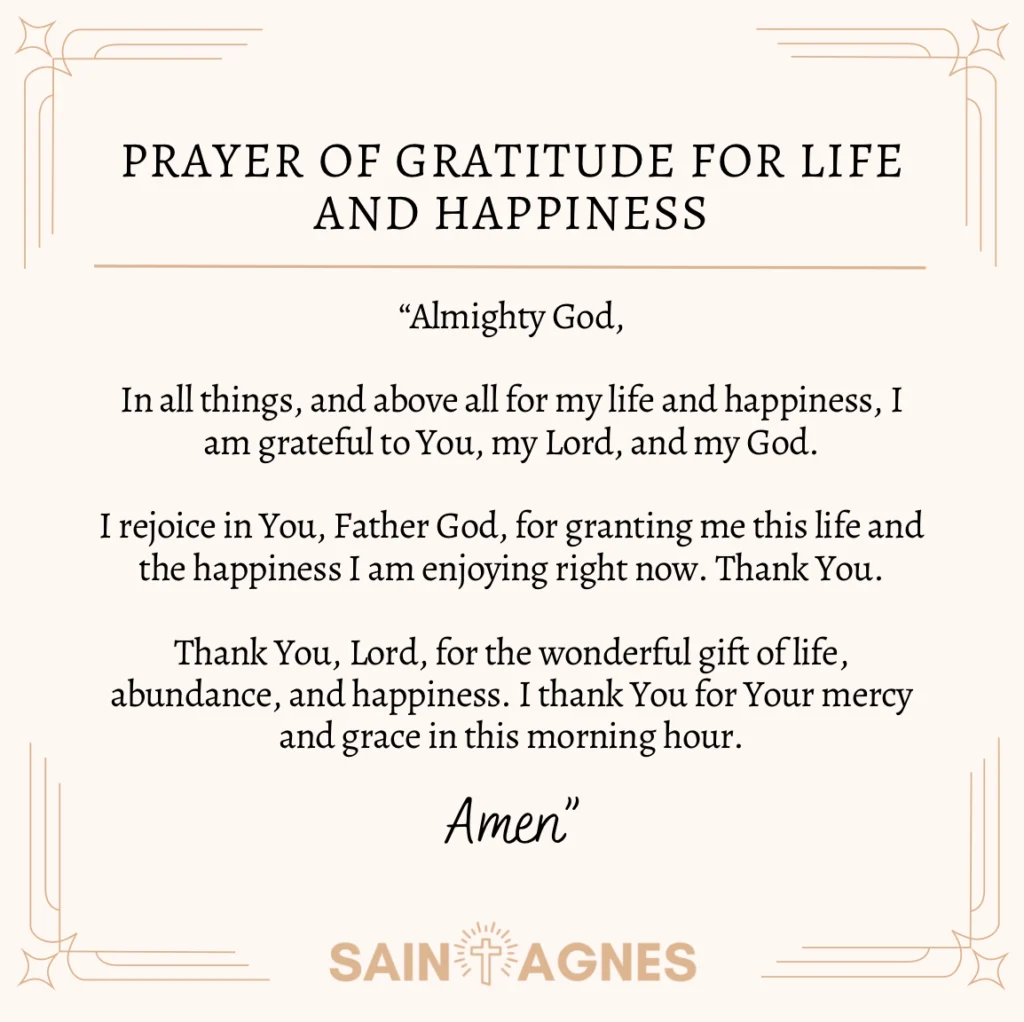
As Thanksgiving approaches, we reflect on our blessings and give thanks to God for all He has done for us. Even during times of tribulation, sorrow and stress, if we look for the silver lining…we will find it!
The Saints were always grateful to God. Even during suffering they gave God glory and praise.
The following quotes help us on our journey of faith to always turn to God in gratitude and trust…asking God to lead us.
1. Remember the past with gratitude. Live the present with enthusiasm. Look forward to the future with confidence.
3. A single “Blessed be God” in adversity is worth more than a thousand acts of thanksgiving in prosperity.
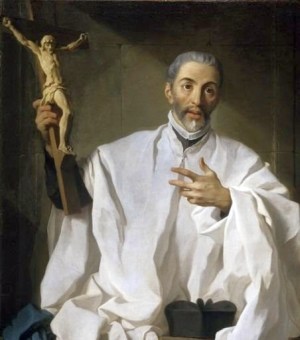
St. John of Avila
St. John of Avila
4. Prayer is an aspiration of the heart. It is a simple glance directed to heaven. It is a way of gratitude and love in the midst of trial as well as joy.
7. “Make it a habit to raise your heart to God, in acts of thanksgiving, many times a day. Because He gives you this and that… Because someone has despised you… Because you don’t have what you need, or because you do have it. And because He made His Mother, who is also your Mother, so beautiful. Because He created the sun and the moon and this animal or that plant. Because He made that man eloquent and you He left slow of speech… Thank Him for everything, because everything is good.”
8. Joy is prayer; joy is strength, joy is love. God loves a cheerful giver. The best way we can show gratitude to God and the people is to accept everything with joy.
14. Gratitude for suffering is a precious jewel for our heavenly crown. Man, should always firmly believe, that God sends just that trial which is most beneficial for him.
15. For me, prayer means launching out of the heart toward God; a cry of grateful love from the crest of joy or the trough of despair; it is a vast supernatural force that opens out my heart, and binds me close to Jesus.
16. My prayers are just an outpouring of gratitude for the assurance of that most completely desired Will of God, which will seem all the more desireable in all that is ahead.
19. Believe and adore. Believe that Jesus Christ is in this sacrament as truly as He was nine months in the womb of Mary, as real as He was nailed to the Cross. Adore in humility and gratitude.
22. Would that I exhaust myself in acts of thanksgiving and gratitude toward this Divine Heart, for the great favor He shows us, in deining to accept our help to make Him known, loved and honored. He reserves innfinite blessings for all those who devote themselves to this work.
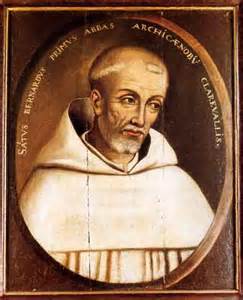
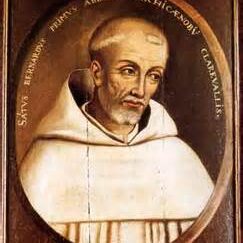
23. Ingratitude is the soul’s enemy… Ingratitude is a burning wind that dries up the source of love, the dew of mercy, the streams of grace. St.Bernard of Clairvaux
St. Bernard Clairvaux
24. O my God, let me remember with gratitude and confess to thee thy mercies toward me.
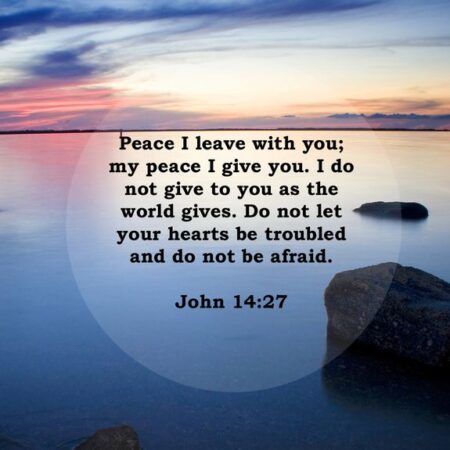
“Peace I leave with you, My peace I give to you; I do not give to you as the world gives. Do not let not your heart be troubled, and do not be afraid.” John 14:27.
Quote of Jesus
Peace and serenity of heart are difficult to acquire. The world is a chaotic place to live. Our emotions can make us feel quite helpless. How do we find peace? How do we live in peace? Faith is a gift. With faith, we can pray for peace
The following 25 quotes of the saints are ‘pearls of wisdom’ to help us on our journey
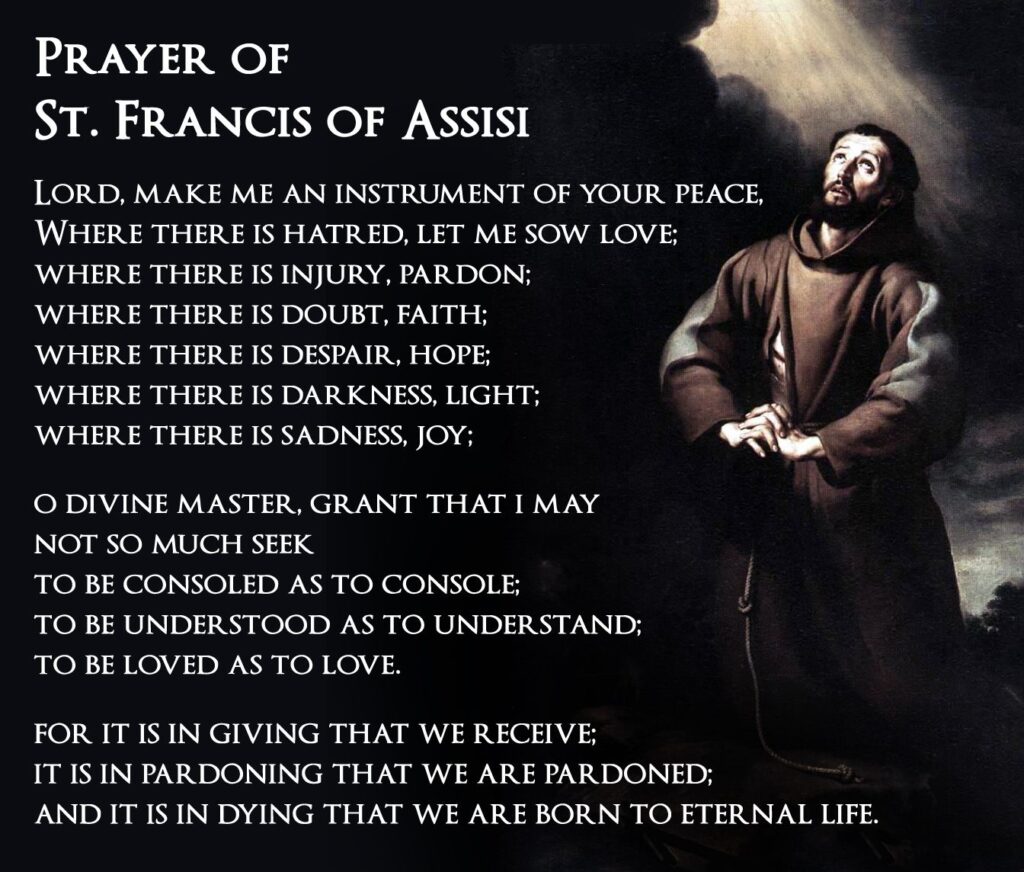
1. Lord, Make me an instrument of Thy peace. Where there is hatred, let me sow love.
4. Never be in a hurry; do everything quietly and in a calm spirit. Do not lose your inner peace for anything whatsoever, even if your whole world seems upset.
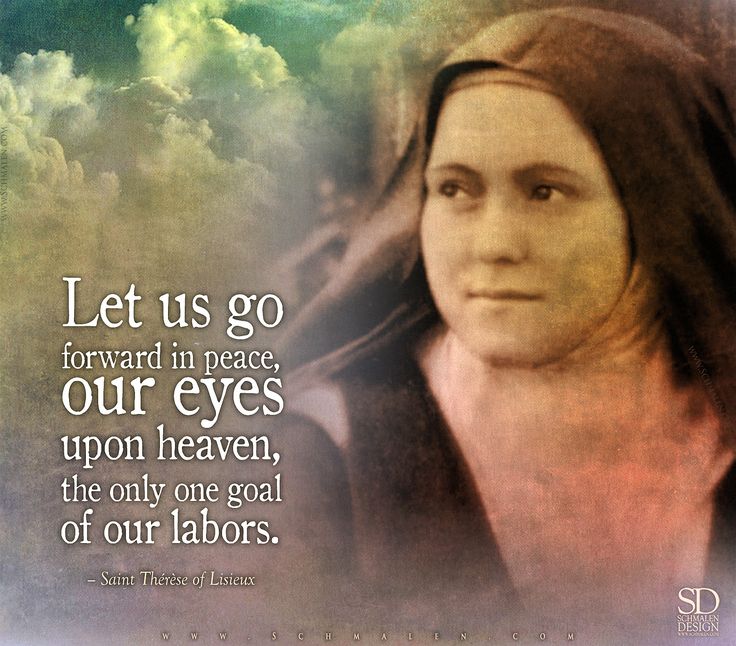
10. Go forth in peace, for you have followed the good road. Go forth without fear, for he who created you has made you holy, has always protected you, and loves you as a mother. Blessed be you, my God, for having created me.
16. Be peace loving.Peace is a precious treasure to be sought with great zeal. Live your life that you may receive the blessings of the Lord. Then the peace of God the Father will be with you always.
23. Christians must lean on the Cross of Christ, just as travelers lean on a staff when they begin a long journey. They must have the Passion of Christ deeply embedded in their minds and hearts, because only from it, can they derive peace, grace, and truth.
Do you struggle with impatience? Many of us are impulsive, wanting results right now! The saints are people who persevered and patiently waited for God’s help during good times and bad times.
The following quotes will help us to reflect before acting in small and big events of our lives.
1. Patience is power. Patience is not an absence of action; rather it is ‘timing’. It waits on the right time to act for the right principles and in the right way.
Ven. Fullton Sheen
Venerable Bishop Vulton Sheen
2. Have patience with all things, but first with yourself. Never confuse your mistakes, with your value as a human being.
4. Let us be glad and bear with patience everything the world throws at us, secure in the knowledge that it is then that we are most in the mind of God.
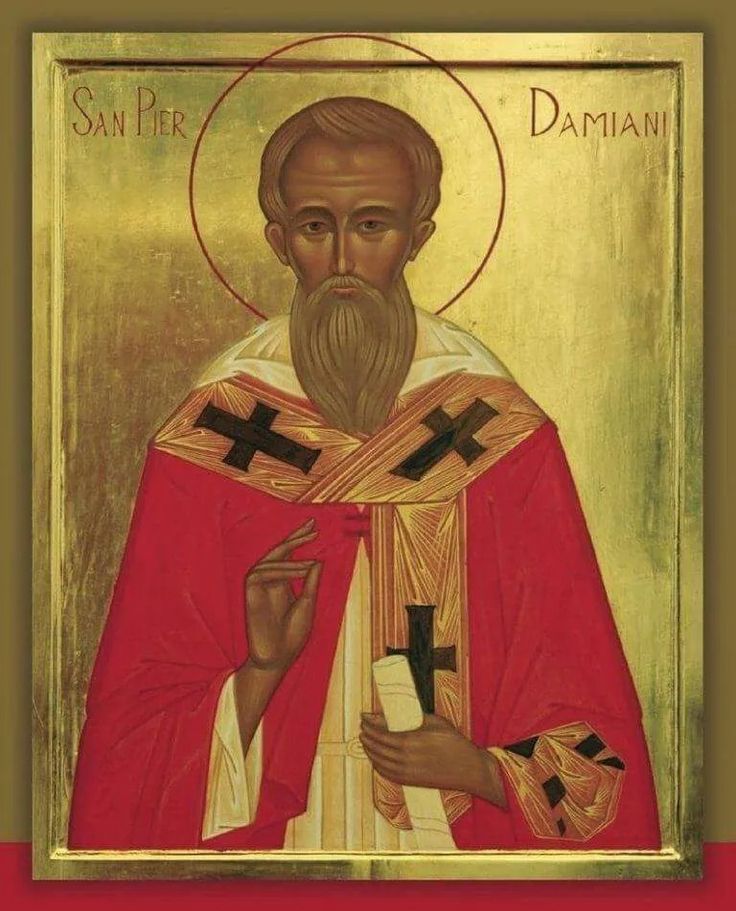
5. The best penance is to have patience with the sorrows God permits. A very good penance is to dedicate oneself to fulfill the duties of everyday with exactitude and to study and work, with all our strength.
St. Peter Damian
St. Peter Damian
6. It is patience that reveals every grace to you and it is through patience that the saints received all that was promised to them.
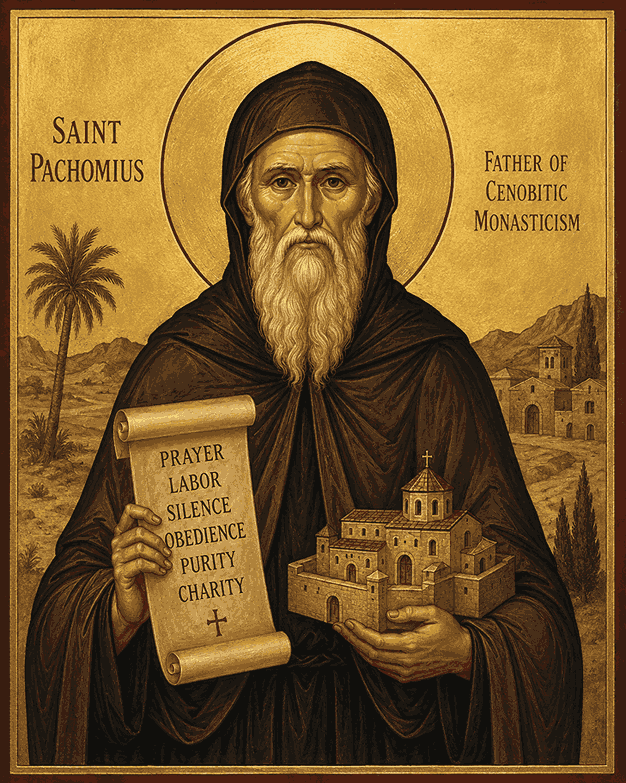
St. Pachomius the Great
St. Pachomius the Great
7. Be not perplexed. Be not afraid. Everything passes. God does not change. Patience wins all things. He who has God lacks nothing. God alone suffices.
10. What we need is a cup of understanding, a barrel of love, and an ocean of patience.
St. France de Sales
St. Francis de Sales
11. Be patient because the weaknesses of the body are given to us in this world by God for the salvation of the soul, so they are of great merit when they are borne patiently.
12. We should take as a maxim never to be surprised at current difficulties, no more than at a a passing breeze, because with a little patience we shall see them disappear. Time changes everything.
13. There is still time for endurance, time for patience, time for healing, time for change. Have you slipped? Rise up. Have you sinned? Cease. Do not stand among sinners, but leap aside.
14. For a stalk to grow or a flower to open there must be time that cannot be forced; nine months must go by for the birth of a human child; to write a book or compose music often years must be dedicated to patient research. To find the mystery there must be patience, interior purification, silence, waiting.
23. Charity is the bond which unites brothers, the cement of peace, the cross beam which gives solidity to unity…Only take patience from it, however, and it will remain desolate; take from it the sap of suffering and of resignation and it will lose its roots and its vigor.
25. Gracious and Holy Father, give us the wisdom to discover You, the intelligence to understand You, the patience to wait for You, a heart to meditate upon You, Eyes to Behold You, a life to proclaim You, through the power of the Spirit of Jesus, Our Lord. Amen
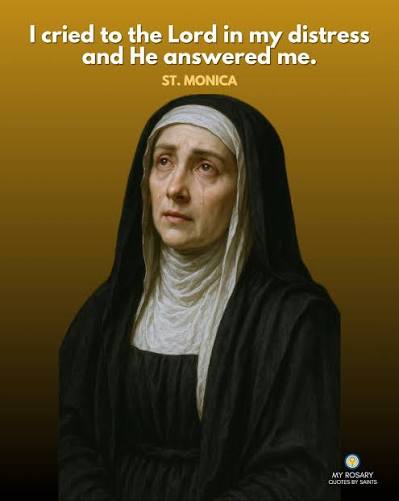
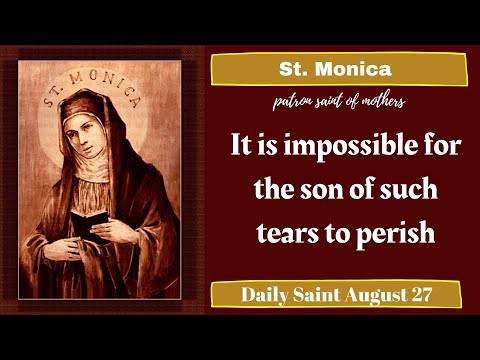
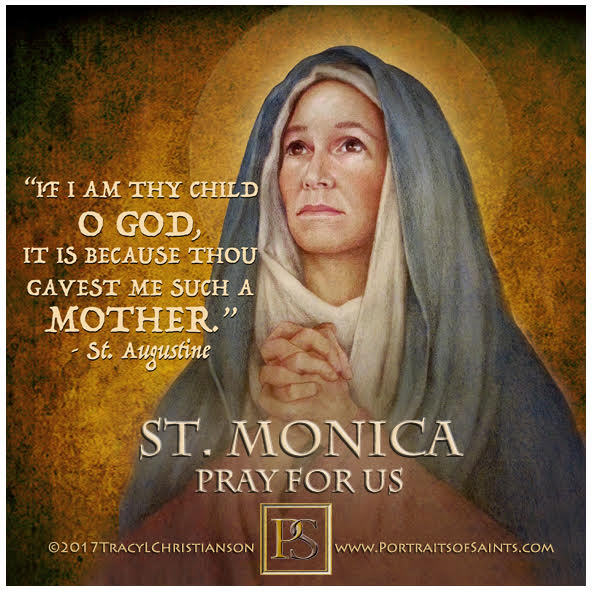
The Feast Day of St. Monica is celebrated on August 27. She is the patron saint of mothers, alcoholism and difficult marriages.
St. Monica was born of a Christian family in Tagaste in Africa in 331. She was given in marriage by her parents to a non-Christian named Patricius. He was known to have a a bad temper and alcoholism. They had three children who survived infancy. One of them was Augustine.
Monica was known for her pious nature. She prayed without ceasing for her family. A year before his death Patricius converted to Catholicism and was baptized. Augustine was 17 at the time of his father’s death. He left the faith and led an immoral life. By eighteen he had a mistress and a son. He joined a group called the Manichees. Manicheeism teaches that the material world is part of the realm of evil. There are two gods one good and one evil.
Monica never ceased praying for the return of her son to the Catholic faith. After more than 15 years of prayer, Augustine heard St. Ambrose, the bishop of Milan, preach. He decided to study the faith, and eventually returned, being baptized in 387. Eventually Augustine became a priest and then a bishop. St. Augustine is now considered a Doctor of the Church.
Monica is the patron of mothers due to her persistence in prayer.
“Nothing is far from God.”
Quote of St. Monica
August is the Month of the Immaculate Heart of Mary
Grace is a wonderful gift from God. It is not earned but given to us in love. When we become aware that God is with us, guiding us…everything changes. Grace is the present of God’ presence! God is not a distant God. He created us and loves us.
Let’s turn to the saints to find out how they felt about grace.
1. Let us not be afraid to suffer for the truth; for if we suffer for the truth, we shall find grace.
St. Hyacinth
St. Hyacinth of Poland
2. Without the burden of afflictions it is impossible to reach the height of grace. The gift of grace increases as the struggle increases.
3. How great it is to possess Divine Grace, How beautiful, how noble, how precious. How many riches it hides within itself, how many joys and delights!
5. If only we would learn how great it is to possess Divine Grace and how many riches it has within itself, how many joys and delights. We would devote all our concern to winning for ourselves pains and aflictions in order to attain the unfathomable treasure of grace.
6. I am where God wills me to be. I have found rest and security. His wisdom governs me. His grace sanctifies me. His mercy encompasses me. His joy sustains me and all will be well with me.
9. Grace is like the sun. It shines on all, but only those who open their eyes and look up receive the light. The soul must be willing and awake, or the light passes by unnoticed.
13. The greatest grace God can give someone is to send him a trial he cannot bear with his own powers…and then sustain him with His grace so he may endure to the end and be saved.
20. He who knows how to forgive, prepares for himself many graces from God. As often as I look upon the cross, so often will I forgive with all my heart.
21. Let us ask three graces of Jesus, to avoid Purgatory, to learn from Purgatory, to empty Purgatory.
Blessed James Alberione
Blessed James Alberione
22. What grace is meant to do, is to help good people, not to escape their sufferings, but to bear them with a stout heart, with a fortitude that finds it’s strength in faith.
I also understood that God’s love shows itself just as well in the simplest soul which puts up no resistance to His grace, as it does in the loftiest soul.
25. Take, O Lord and receive my liberty, my memory, my whole understanding and my whole will. All that I am and all that I possess You have given me. I surrender it all to You to be disposed acording to Your will. Give me only Your love and Your grace, with these I will be rich enough, and will desire nothing more.
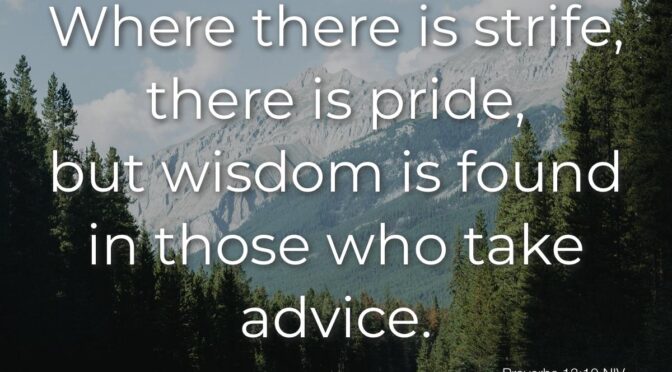
Pride often keeps us from having healthy relationships. It prevents us from asking for help when we need it. Turning to God is difficult to do when we have too much pride.
The saints can help us know when pride is detrimental and how to conquer it. The following quotes from the saints can inspire us to be humble of heart.
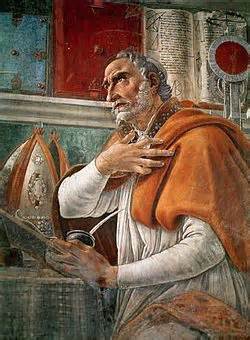
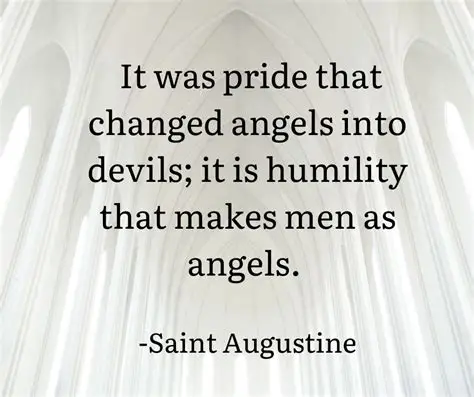
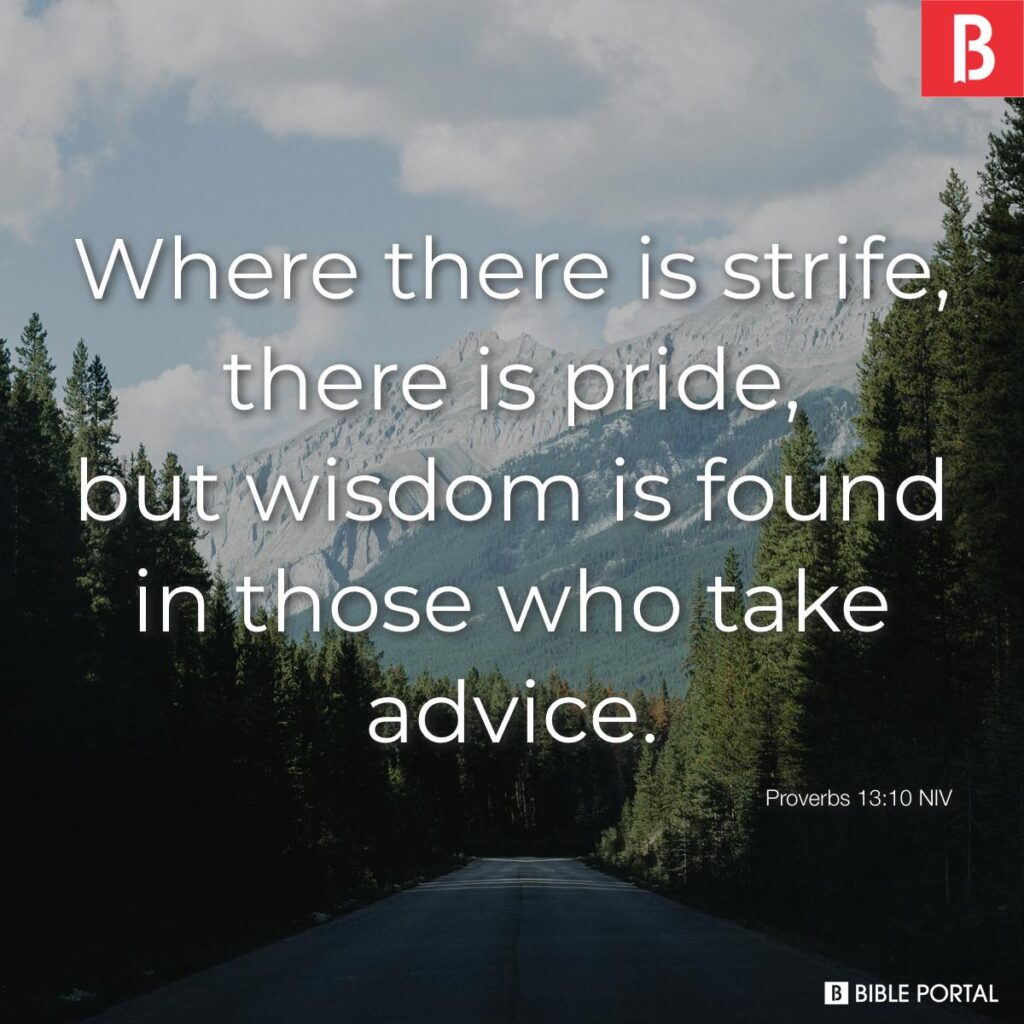
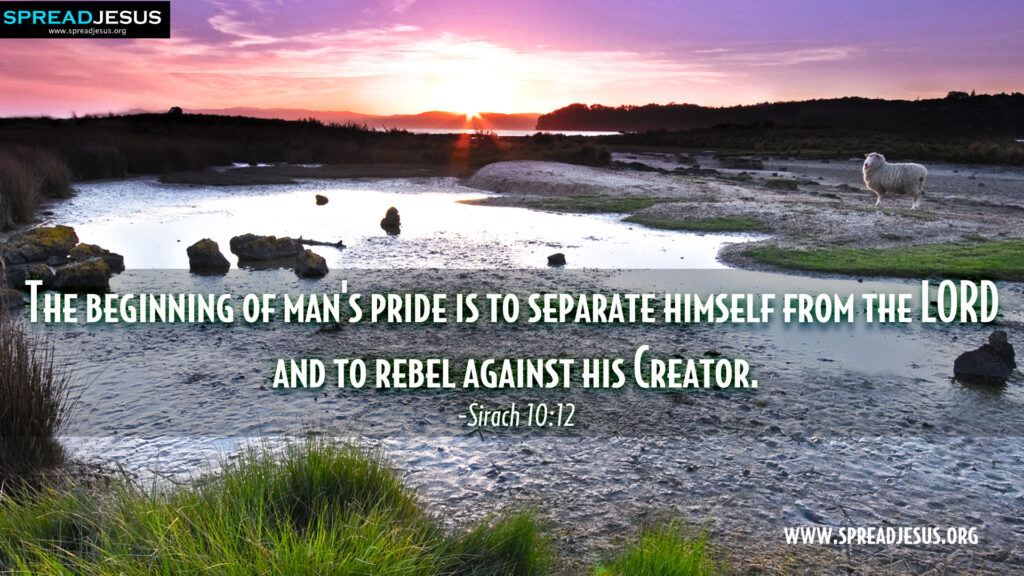
1. It was pride that changed angels into devils. It is humility that make men as angels.
3. Do you know where the tree of death is rooted? In the height of pride, which is nourished by their sensual selfishness. Its core is impatience and its offshoot is the lack of any discernment. These are the four chief vices, which together tell the souls of those I have called trees of death, since they have failed to feed on the life of grace.(Pride, selfishness, lack of discernment, impatience)
4. If the poison of pride is swelling up in you, turn to the Eucharist.
St. Cyril of Alexandria
St. Cyril of Jerusalem
5. Virtues are formed by prayer. Prayer preserves temperance. Prayer suppresses anger. Prayer prevents emotions of Pride and anger. Prayer draws into the soul the Holy Spirit and raises man to Heaven.
6. You must ask God to give you power to fight against the sin of pride which is your greatest enemy – the root of all that is evil, and the failure of all that is good… for God resists the proud.
8. As pride is the beginning of all sin, so humility is the foundation of all virtue. Learn to be really humble, and not, as the hypocrite, humble in only appearance.
11. The proud person is like a grain of wheat thrown into water – it swells, it gets big. Expose that grain to the fire – it dries up – it burns. The humble soul is like a grain of wheat, thrown into the earth – it descends, it hides itself, it disappears, it dies but to revive in heaven.
St. Mary of Jesus Crucified
St. Mary of Jesus Crucified
12. For what else is pride but, as a saint has defined it, the love of one’s own excellence.
14. If you are discouraged, it is a sign of pride because it shows you trust in your own powers. Your self-suffering, your selfishness, and your intellectual pride will inhibit His coming to live in your heart because God cannot fill what is already full. It is as simple as that.
16. We must all be on our guard against pride and empty boasting and beware of worldly or natural wisdom. A worldly spirit lives to talk a lot, but do nothing, striving for the exterior signs of holiness that people see, with no desire for true piety, and interior holiness of spirit.
19. How can one be pleasing to God when one is inflated with pride and self-love under the pretense of striving for God’s glory wile in fact one is seeking one’s own glory?
21. We put pride into everything like salt. We like to see that our good works are known. If our virtues are seen, we are pleased; if our faults are perceived, we are sad. I remark that in a great many people, if one says anything to them, it disturbs them, it annoys them. The saints were not like that- they were vexed if their virtues were known, and pleased that their imperfections should be seen.
23. We must observe also that among the heathen the names of the poor men are more likely to be known than of the rich. Now our Lord mentions the names of the poor, but not the names of the rich, because God knows and approves the humble, but not the proud.
24. Learn to love humility, for it will cover all your sins. All sins are repulsive before God, but the most repulsive of all is pride of the heart. Do not consider yourself learned and wise; otherwise, all your efforts will be destroyed, and your boat will reach the harbor empty. If you have great authority, do not threaten anyone with death. Know that, according to nature, you are susceptible to death, and that every soul sheds its body as its final garment.
25. Lord, free me from every pride, which is the source of all sins. Give me the grace to recognize sick and unbridled ambitions, that make me choose false greatness, or they cause complexes. Jesus, martyred on the cross, obedient to everything to the Father, I am asking for a humble heart like Your Heart. I am asking for humble eyes, who see themselves and others in truth. Amen
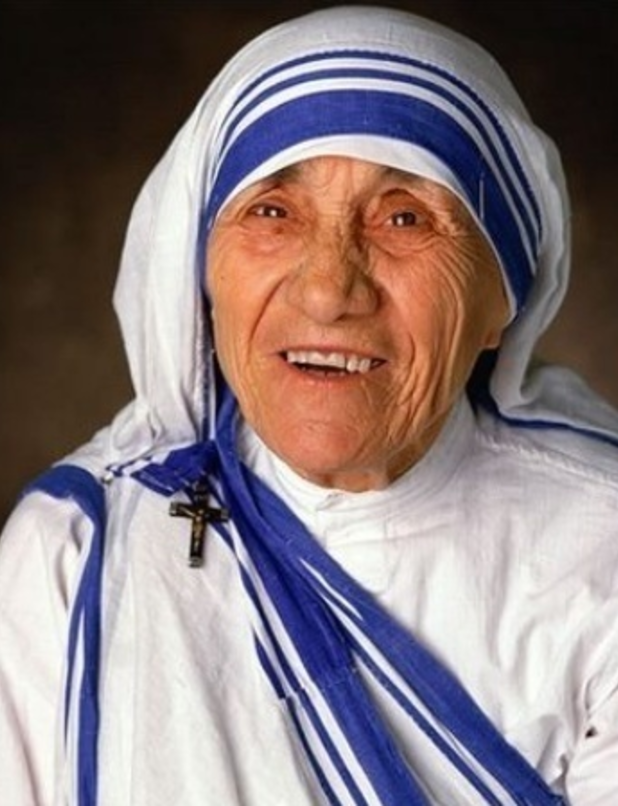
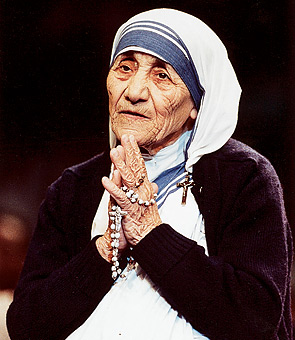
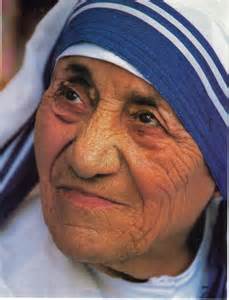
Mother Teresa will soon be officially declared a saint!
The day before the feast day of Bl. Mother Theresa Pope Francis will proclaim that she is a saint. Her feast day is celebrated on Sept. 5. The world remembers her as a “living saint”.
Bl. Teresa of Calcutta was born to parents Nikola and Drana Bojaxhiu on August 26, 1916 in Skopje of Macedonia and named Agnes Gonxha Bojaxhiu. She was baptized on August 17, 1910 in Macedonia. She was the third child in her family, following sister Aga and a brother, Lazar. Her father, Nikola died, when she was eight years old. Her father was a traveler, an extrovert, and a businessman who spoke five languages. Her mother, Drana, was extremely pious, adopting several orphans. She was known as Gonxha (pronounced gon’KHA) which means “flower bud”.
Gonxha desired early to become a missionary. At the age of eighteen, she joined the Sisters of Loreto. Here she took the name of Sister Mary Teresa after St. Therese of Lisieux. She was sent to Calcutta, India to teach at St. Mary’s High School for Girls, which was run by the Sisters of Loreto. On May 24, 1937, she took her final Profession of Vows to a life of poverty, chastity, and obedience. She then became known as Mother Teresa. In 1944, she became principal of the school.
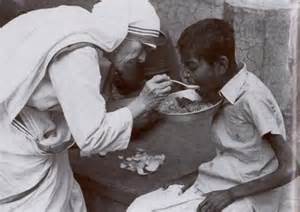
Mother Teresa received a second calling while on a train. Christ spoke to her, asking her to work in the slums of Calcutta, caring for the sickest and poorest of the people.Pursuing this calling changed her life forever. In one year, she received approval to do the work she was being called to do. After six months of basic medical training she went to the slums to aid the needy and dying. Mother Teresa founded the Missionaries of Charitywith 12 members, most of them students from St. Mary’s. She established a leper colony, an orphanage, a mission house, and several health clinics.
In 1971, Mother Teresa visited New York City, where she opened a soup kitchen and a home to care for HIV/AIDS sufferers. In 1979, she received the Nobel Peace Prize.
In 1983, Mother Teresa suffered her first heart attack. After suffering from lung, kidney and heart problems for several years, she died on Sept. 5, 1997, which is now her feast day. At the time of her death her Missionaries of Charity numbered over 4,000. She had 610 foundations in 123 countries.
Mother Teresa was beatified on October 19, 2003, after confirmation of her first miracle. The miracle was reported that a woman who had a large and very visible tumor, had stayed with the Missionaries of Charity. After she and the Sisters had prayed for Mother Teresa’s intercession, the growth, six to seven inches in length, had disappeared within several hours. Finding no other medical explanation for the sudden cure it was declared her first miracle. Over 3500 other reports are being investigated as possible miracles.
After accepting a second miracle, Pope Francis cleared the way for Mother Teresa to be declared a saint. Pope Francis signed a decree declaring that the inexplicable 2008 recovery of a Brazilian man who suddenly woke from a coma caused by a viral brain infection was due to the intercession of the Albanian nun, who died in 1997.
The Rev. Brian Kolodiejchuk, the postulator spearheading Mother Teresa’s canonization case, stated that the man fully recovered following his wife’s prayers and he has since returned to work as a mechanical engineer. The couple also have had two children.
In 2003, Mother Teresa’s private correspondence revealed she had experienced a “dark night of the soul”… feeling abandoned by God and lacking in faith. This lasted unusually long; for fifty years. Many saints have experienced such feelings, described by John of the Cross, in his book Dark Night of the Soul. She was filled with loneliness, and torture, due to this lack of consolation from God.
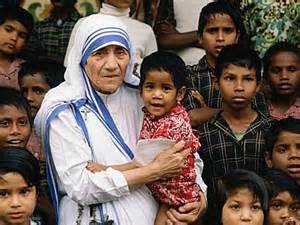
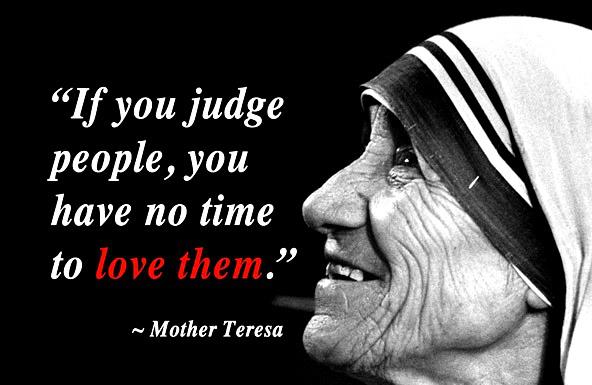
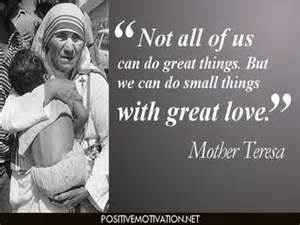
Each image in the following list is accompanied by a quote or prayer of Mother Teresa. The images are all public domain images.
As we celebrate the sainthood and feast day of St.Teresa of Calcutta on Sept. 5, let’s remember the remarkable things she did and said.
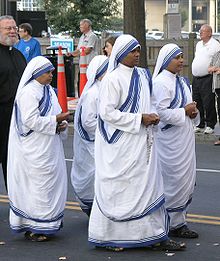
Sisters of Charity
Prayer of Mother Teresa of Calcutta
Dear Jesus, help us to spread your fragrance everywhere we go. Flood our souls with your spirit and life. Penetrate and possess our whole being so utterly that our lives may only be a radiance of yours. Shine through us and be so in us that every soul we come in contact with may feel your presence in our soul. Let them look up and see no longer us, but only Jesus. Stay with us and then we shall begin to shine as you shine, so to shine as to be light to others. The light, O Jesus, will be all from you. None of it will be ours. It will be you shining on others through us. Let us thus praise you in the way you love best by shining on those around us. Let us preach you without preaching, not by words, but by our example; by the catching force – the sympathetic influence of what we do, the evident fullness of the love our hearts bear to you.
Amen
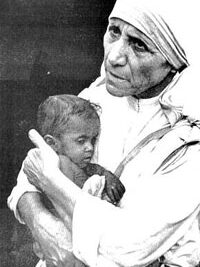
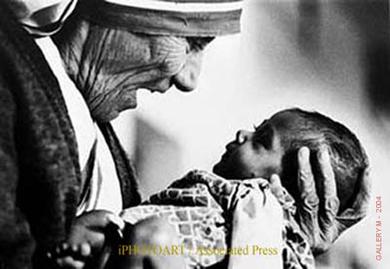
Mother Teresa with Child/Associated Press
Mother Teresa: Smile
“Let us always meet each other with a smile for the smile is the beginning of love.”
“Peace begins with a smile.”
“Every time you smile at someone it is an action of love, a gift to that person, a beautiful thing.”
Mother Teresa
Mother Teresa
Mother Teresa: God and Faith
“We are nothing without God, but if we put our lives in God’s hands miracles happen.”
“Be faithful in small things because it is in them that your strength lies.”
“Faith in action is love, and love in action is service. Byt transforming that faith into living acts of love, we put ourselves in contact with God Himself, with Jesus our Lord.”
“I know God will not give me anything I can’t handle. I just wish He didn’t trust me so much.”
Mother Teresa
Mother Teresa with Pope John Paul II
Mother Teresa: Prayer
The fruit of silence is prayer.
The fruit of prayer is faith.
The fruit of faith is love.
The fruit of love is service.
The fruit of service is peace.”
Mother Teresa
Young Mother Teresa
Agnes Gonxha Bojaxhju (Mother Teresa)
Life is an opportunity, benefit from it.
Life is beauty, admire it.
Life is a dream, realize it.
Life is a challenge, meet it.
Life is a duty, complete it.
Life is a game, play it.
Life is a promise, fulfill it.
Life is sorrow, overcome it.
Life is a song, sing it.
Life is a struggle, accept it.
Life is a tragedy, confront it.
Life is an adventure, dare it.
Life is life, fight for it.
Mother Teresa
Mother Teresa
Mother Teresa: Abortion
“Any country that accepts abortion, is not teaching its people to love but to use any violence to get what it wants.”
“It is a poverty to decide that a child must die so that you may live as you wish.”
“There are two victims in every abortion: a dead baby and a dead conscience.”
Mother Teresa
Mother Teresa
Mother Teresa: Love and Forgiveness
“It is not how much we do, but how much love we put into the doing.It is not how how much we give, but how much love we put in the giving.”
“I have found the paradox that if you love until it hurts, there can be no more hurt, only more love.”
“If we really want to love we must learn to forgive.”
Mother Teresa
Mother Teresa
Mother Teresa: Helping the Sick
“Let us touch the dying, the poor, the lonely, and the unwanted according to the graces we have received and let us not be ashamed or slow to do the humble work.”
“Yesterday is gone, tomorrow has not come, we have only today. Let us begin.”
Mother Teresa
Mother Teresa in service
Mother Teresa: Service
“If you are kind, people may accuse you of selfish ulterior motives; be kind anyway.
If you are successful, you will win some false friends and true enemies; succeed anyway.
If you are honest and frank people may cheat you; be honest and frank anyway.
If you find serenity and happiness, they may be jealous, be happy anyway.
You see, in the final analysis, it is between you and God, it was never between you and them anyway.”
Mother Teresa
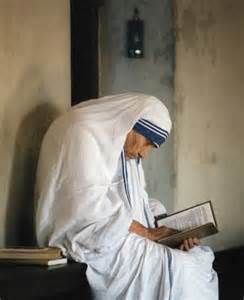
Mother Teresa Praying
Mother Teresa: Prayer
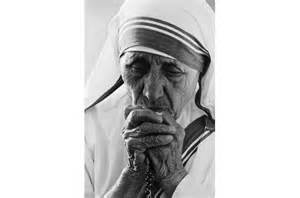
“Love to pray. Feel often during the day the need for prayer and take trouble to pray Prayer enlarges the heart until it is capable of containing God’s gift of Himself. Ask and seek, and your heart will grow big enough to receive Him and keep Him as your own.”
“Prayer is not asking. Prayer is putting oneself in the hands of God, at His disposition and listening to His voice in the depth of our hearts.”
Mother Teresa
Mother Teresa
Mother Teresa: Silence
“We need to find God and he cannot be found in noise and restlessness. God is the friend of silence. See how nature; trees, flowers, grass, grows in silence. See the stars, the moon and the sun, how they move in silence. We need silence to be able to touch souls.”
Meditating on the following quotes from the saints can lead us on our journey of faith.
It is by faith that God dwells in our hearts, in our memory, our intellect and penetrates even into our imagination. St. Bernard of Clairvaux
St. Bernard Clairvaux
2. The Lord is always near to all who call upon his help with sincerity, true faith, sure hope, and perfect love. St. Ambrose, Bishop of Milan
St. Ambrose,
3. The faith of those who live their faith is a serene faith. What you long for will be given to you, what you love, will be yours forever. St Leo the Great , Bishop of Rome
St. Leo the Great
4. Jesus saved the thief on the holy hill at Golgotha because of one hour’s faith, will he not save you too since you have believed? St. Cyril of Jerusalem, Bishop
St. Cyril of Jerusalem
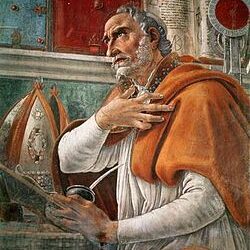
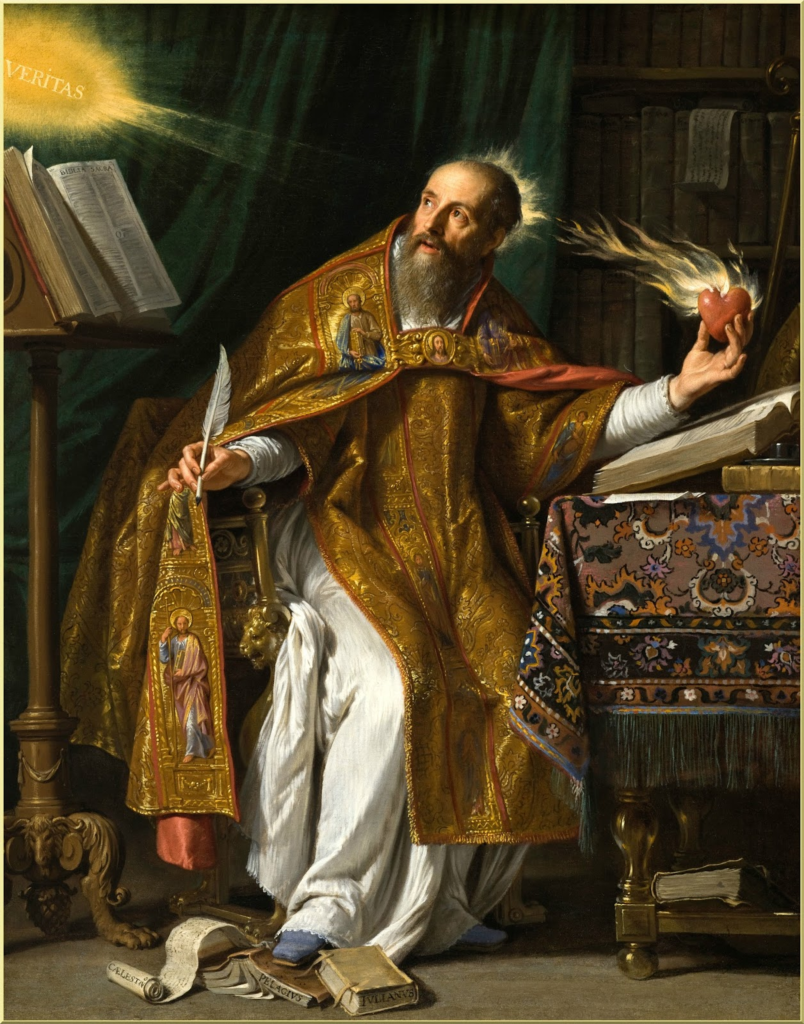
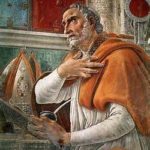
5. Faith is to believe what you do not see, the reward of this faith is to see what you believe. Augustine of Hippo
St. Augustine
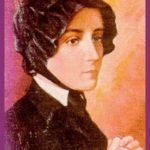
6. Faith lifts the soul. Hope supports it. Experience says it must, and love says let it be! St. Elizabeth Ann Seton
St. Elizabeth Ann Seton
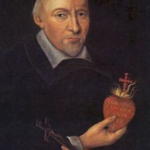
7. Faith is a beam radiating from the face of God. St. John Eudes
St. John Eudes
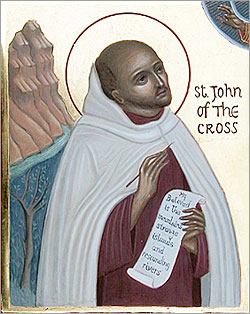
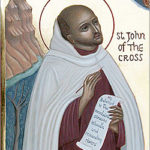
8. Live in faith and hope, though it may be in darkness, for in this darkness God protects the soul. Cast your care upon God for you are His and He will not forget you. Do not think that He is leaving you alone for that would be to wrong Him. St. John of the Cross
15. Faith is like a bright ray of sunlight. It enables us to see God in all things, as well as all things in God. St. Francis de Sales
S
t. Francis de Sales
16. Our door is faith. of it is strong enough, the entire house is safe. St. Ambrose
St. Ambrose
17. By itself, faith accomplishes nothing, for even the devil believes and trembles. No, faith must be joined to an active love which is expressed in good works. St. Maximus the Confessor
20. Faith leads us beyond ourselves. It leads us directly to God. St. John Paul II, Bishop of Rome
21. Your faith will help you realize that it is Jesus Himself who is present in the Blessed Sacrament, working working for you and calling you to spend one special hour with Hime each week. St. John Paul II, Bishop of Rome
St. John Paul II
22. If faith is lacking, it is because there is too much selfishness., too much concern for personal gain. For faith to be true, it has to be genuine and loving. Love and faith go together…they complete each other. St. Teresa of Calcutta
Mother Teresa
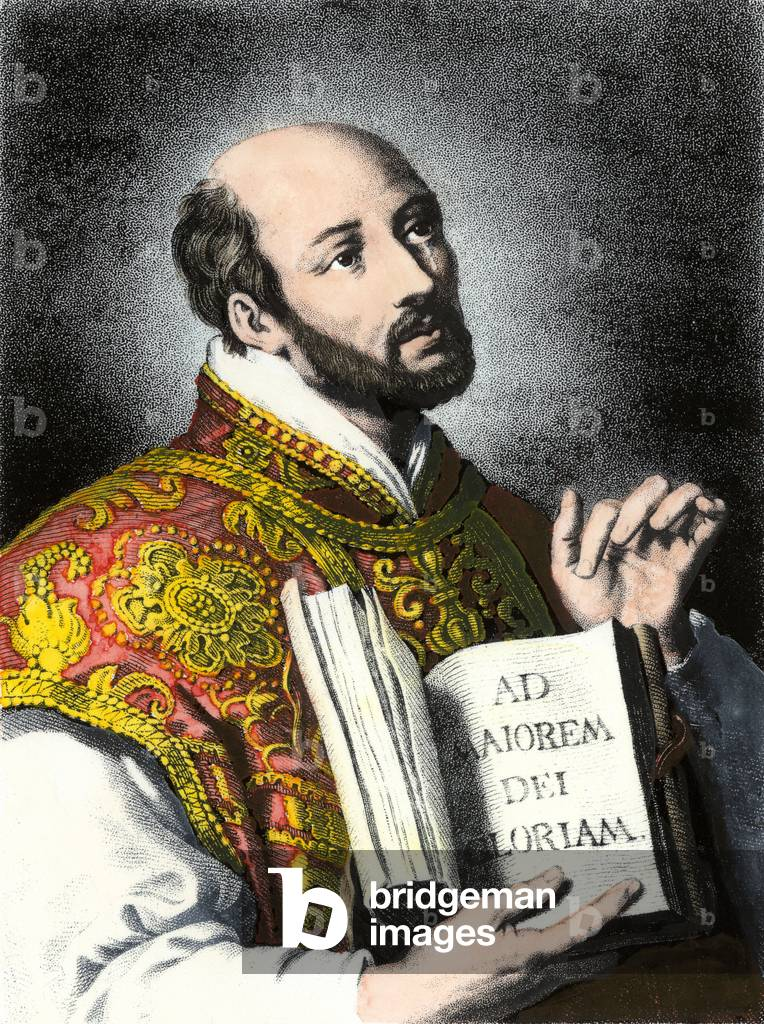
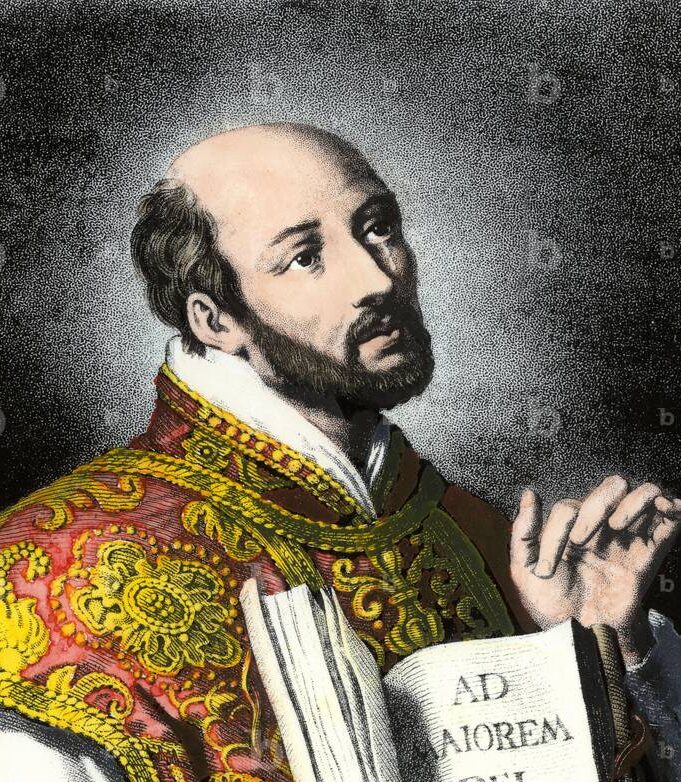
23. Among the many signs of a lively faith is the hope we have in eternal life. One of the secrets is not being overly sad at the death of those whom we dearly love in our Lord. St. Ignatius of Loyola
St. Ignatius Loyola
24. Your soul must hold fast to Him. You must follow after Him in your thoughts, you must tread His way, by faith, not in outward show. St. Ambrose
St. Ambrose
25. Faith fills a man with love for the beauty of its truth, with faith in the truth of its beauty. St. Francis de Sales
During our journey of faith, all of us at some time in our life need an extra dose of courage. To face our fears can be very daunting, requiring a decision from deep within ourselves not to run from adversity. Reflecting on the wisdom of the saints can help during those times. The following quotes are on the virtue of courage…another name for fortitude.
1. Grace and truth will in turn give rise to courage. Following Christ has always demanded courage.
2. Hope has two beautiful daughters. Their names are Anger and Courage. Anger at the way things are, and Courage to see that they do not remain as they are.
5. We shall steer safely through every storm, so long as our heart is right, our intention fervent, our courage is steadfast and our trust is fixed on God.
10. True love is love that causes us pain, that hurts and yet brings us joy. That is why we must pray to God and ask Him to give us the courage to love.
11. Many people say “I don’t have the courage to make the sacrifice.” Let them do what I did: exert a great effort. God never refuses that first grace which gives one the courage to act. Afterward the heart is strenghthened.
12. Though the path is plain and smooth for men of good will, he who walks it will not travel far, and he will do so only with difficulty, if he does not have good feet; that is courage and a persevering spirit.
14. If one is to do good, he must have a little courage, be ready for sacrifice, deal affably with all and never slight anybody. By following this method, I have always had significant success, in fact, marvelous success!
16. Remember, that when you leave this earth, you can take nothing with you, nothing that you have received – only what you have given: a full heart enriched by honest service, love, sacrifice and courage.
18. Even if I must suffer greatly, thanks be to God’s mercy, I will not lack courage.
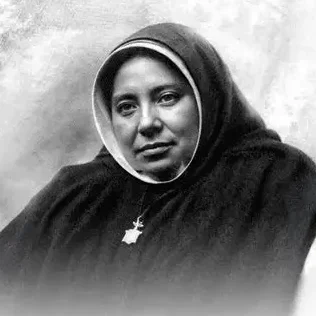
St. Genoveva Torres Morales
St. Genoveva Torres Morales
19. Courage, courage, my daughters. Remember that God does not give anyone more trials than can be suffered and that His Majesty is with the afflicted… for this is certain, there is no reason to fear God, but to hope in His mercy.
21. O my God, fill my soul with holy joy, courage and strength to serve you. Enkindle Your love in me and then walk with me along the next stretch of road before me. I do not see very far ahead, but when I have arrived, when the horizon now closes down, a new prospect will open before me and I shall meet with peace.
22. Let us never lose courage or despair of God’s mercy. We may not understand His will for us in time, but in eternity the veil will be drawn, and we shall see that He acted only for our happiness. Let us bear our cross and leave it to God to determine the length and the weight.
24. When I am weak, Help me find courage. When I am afraid of what the future holds, Help me find trust. When I cannot see God anymore in my life, Hel me find faith.
25. God of our life. There are days when the burdens we carry chafe our shoulders and weigh us down; when the road seems dreary and endless, the skies gray and threatening; when our lives have no music in them, and our hearts are lonely, and our souls have lost their courage.
Flood the path with light, turn our eyes to where the skies are full of promise; turn our hearts to brave music; give us the sense of comradeship with heroes and saints of every age; and so, quicken our spirits that we may be able to encourage the souls of all who journey with us on the road of life, to your honor and glory. Amen



























 S
S