Tag Archives: Doctor of the Church

Prayers, Quips and Quotes: St. Leo the Great; Feast Day November 10


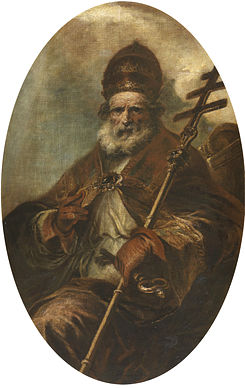
St. Leo the Great
St. Leo the Great


The Feast day of St. Leo the Great is celebrated on November the 10.

St. Leo was born in Tuscany. He lived during a time of great political chaos for the Church. Barbarian armies were ravaging the once mighty Roman Empire. Leo was an ordained a Deacon. He became the Bishop of Rome in 440. He was Bishop of Rome for 21 years, until his death in 461.

During his papacy, he was known for meeting Attila the Hun in 452 as he was preparing to invade Italy. Amazingly, he persuaded him to turn back, and avoided a war. Leo fought many heresies, including Pelagianism which teaches that grace was not necessary for salvation.

Leo is considered one of the great administrators of the Church. He also gave profound spiritual sermons. He presided over the fourth ecumenical council called the Council of Chalcedon. At this council the two natures of Christ was discussed and clarified. The faith teaches that Jesus Christ is both fully human and fully divine.

St. Leo the Great also clarified the role of the pope, persuading Emperor Valentinian to recognize the primacy of the Bishop of Rome in 445.  His teaching focused on the scripture which had Jesus telling Peter:  “I will give you the keys of the kingdom of Heaven.  What you forbid on earth shall be forbidden in Heaven.  What you allow on earth shall be allowed in heaven.’  (Matthew 16:19)

Leo was declared a Doctor of the Church by Pope Benedict XIV in the eighteenth century. The title “Great” has been given to only three Popes. The three “Great popes are St. Leo the Great, St. Gregory the Greatand St. Nicholas the Great.  St. John Paul II is unofficially considered by some to be “great”.  The title “Great” means that the Pope has exercised great leadership and contributed greatly to the theology of the church.

If indeed we are the temple of God and the Holy Spirit lives in our
hearts…we must work with much vigilance to make the chamber of our heart
not unworthy of so great a guest.
 Quote of St. Leo the Great
November is the Month of the Holy Souls

SaveSave

Save

Save

Save

Prayers, Quips and Quotes: St. Teresa of Avila, Feast Day October 15


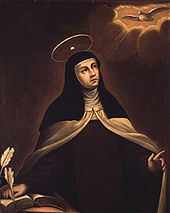
St. Teresa of Avila Public Domain Image
St. Teresa of Avila


St. Teresa of Avila’s feast day will be celebrated on October 15th. She is known as being the patron saint of writers and headache sufferers.

Born in Avila, Spain in 1515, she was sent to a convent at the age of 16, because her father believed her to be “out of control”. At first she hated it, later she came to enjoy it, in part because they were less strict than her father.

Eventually, she decided to become a Carmelite nun. She practiced meditation and mental prayer. She fell ill with malaria and almost died. She awoke paralyzed, which lasted for three years. She found it very difficult to pray during this time. However at the age of 41 a priest convinced her to go back to prayer. She suffered many distractions and found it very difficult. As she began her prayer life anew, God gave her spiritual delights including ecstasies, and the prayer of union. She eventually became known as a mystic.

At the age of 43 she decided to form a new convent which met with much resistance. Her confessor St. John of the Cross helped to begin the reformed order of the Discalced (barefoot) Carmelites.

St. Teresa was known for her honest dialogue with God.    She wanted the nuns in her order to have the proper attitude and discipline in their prayer life.  But she too could be frustrated with life.   Every moment of her life was a prayer,  even the difficult ones.  She is known for the following exclamation.

“If this is the way you treat your friends, no wonder you have so few!”

St. Teresa has written many books. These include: The Interior Castle, The Life of Teresa of Jesus, and The Way of Perfection.  Her spirituality has led many to a much deeper prayer life.  She has been proclaimed a Doctor of the Church.

St. Teresa died on October 4 at the age of 67.

The following prayer is attributed to St. Teresa of Avila:

Let nothing disturb you.
Let nothing make you afraid.
All things are passing.
God alone never changes.
Patience gains all things.
If you have God you will want for nothing.
God alone suffices.
October is the Month of the Most Holy Rosary

Save

Save

Save

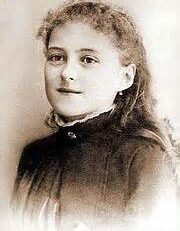
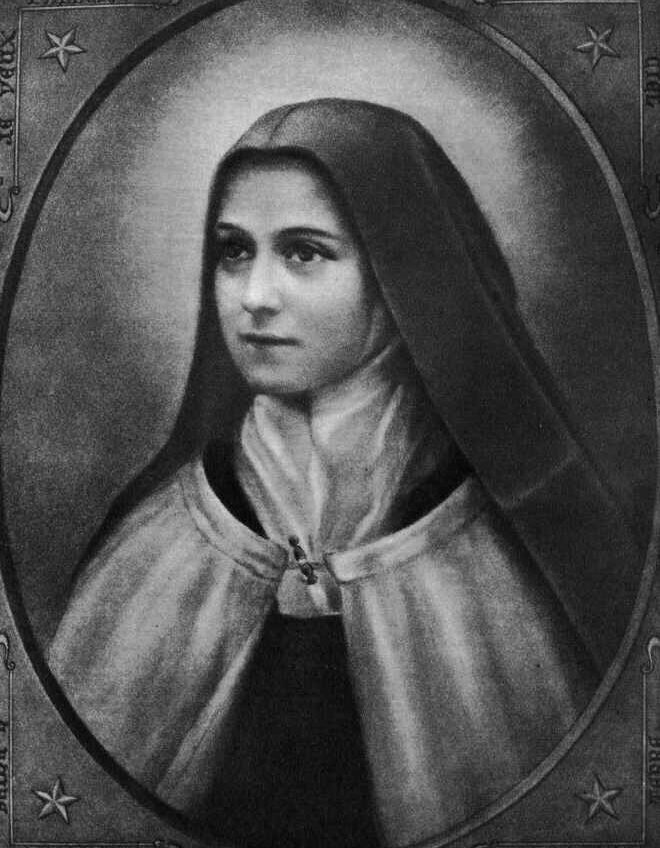
Prayers, Quips and Quotes: St Thérèse of Lisieux, Feast Day October 1


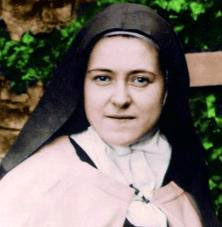
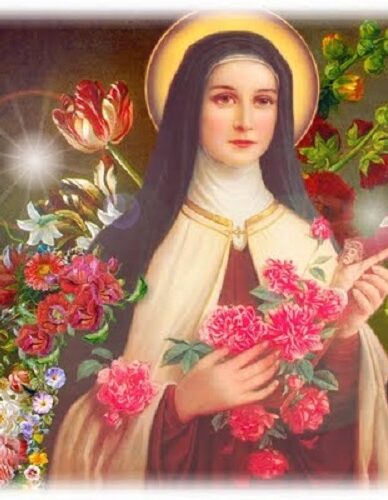
St. Therese the Little Flower Public Domain Image
St. Therese the Little Flower

Marie Therese Martin was born at Alencon, France on Jan. 2, 1873.   St Thérèse of Lisieux is the patron saint of florists, missionaries, pilots and against tuberculosis.

The father of St. Thérèse, Louis Martin, was a watchmaker.  Her Mother, Zelie was a lace maker.  She died when Thérèse was four year old.  Pope Francis canonized both Louise and Zelie as saints on Oct. 18, 2015.  All five of their daughters entered religious life.  The family attended daily Mass,  visited the elderly and the sick and helped the poor.

St. Thérèse  felt called into the religious life at the age of 15.  She asked permission to enter the Carmel of Lisieux a Carmelite convent.  She took the name of St. Thérèse  of the Child Jesus and the Holy Face.

St. Thérèse had a childlike  trust in the providence of God and in His merciful love.  Her life as contemplative Carmelite was short but it influenced many souls.  She was declared a Doctor of the Church by St. Pope St. John Paul II in 1997.

During her nine years living as a Carmelite Nun St. Thérèse  became known for her spirituality.  Her love of God was profound and she wanted to share that love with others.  She developed her “Little Way” which was her way of loving Jesus.  When asked to explain it, she replied:

“It is the way of spiritual childhood, the way of trust and absolute self-surrender.  I want to point out to souls the means that I have always found so completely successful…to tell them there is only one thing to do here below…to offer Our Lord the flowers of little sacrifices and win Him by our caresses.”

St. Thérèse’s spirituality began with scripture and the gospels.  She offered any suffering in her life to God and trusted in Him completely.  She found joy in suffering for it united her to the cross and the Passion of Our Lord.  She also had a devotion to the Sacred Heart of Jesus.

“How little known is the merciful love of the Heart of Jesus! It is true that to enjoy that treasure we must humble ourselves, must confess our nothingness . . . and here is where many a soul draws back.”

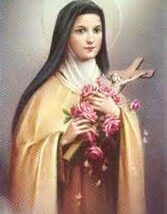
St. Thérèse liked to use the image of flowers, especially roses, in her prayers.  She considered each sacrifice a flower given to God.   She compared souls to flowers, each one unique.

St. Thérèse came down with tuberculosis  and died after several years of suffering at the age of 24  on Sept. 30, 1897.  She was canonized in 1925.

The autobiography  St. Thérèse wrote, The Story of a Soul, was published the year after her death.

“I want to suffer and even rejoice for love, for this is my way of scattering flowers.  Never a flower shall I find but its petals shall be scattered for you, and all the while I will sing, yes sing, even when gathering my roses in the midst of thorns, and the longer and sharper the thorns may be, the sweeter shall be my song!”
Quote of St. Thérèse

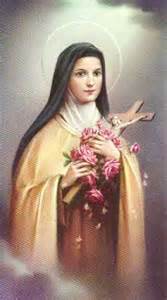
St. Thérèse in Art

  • St. Therese of Lisieux Public Domain Image
October is the Month of the Most Holy Rosary

Save

Save

SaveSave

Save

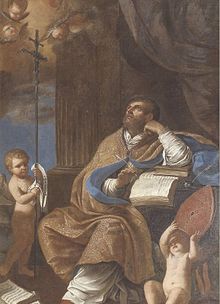
Prayers, Quips and Quotes: St. Jerome, Feast Day September 30


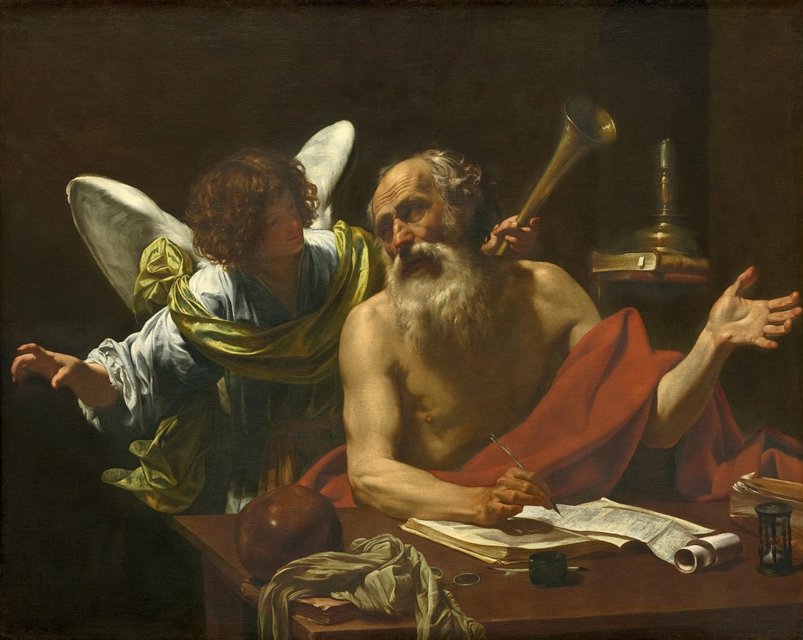
St. Jerome and the Angel by Simon Vouet Public Domain Image
St. Jerome and the Angel
by Simon Vouet


The Feast Day of St. Jerome is celebrated on September 30.  He is the patron saint of Bible scholars.  He is considered one of the four great Doctors of the Church along with St. Ambrose, St. Augustine and St. Gregory of Nazianzus.

St. Jerome was born in Dalmatia around 340-342 A.D into a wealthy family.  His father was a Christian and made sure he was well educated.  His mother was a pagan.  At the age of 20 he visited Rome.  He enjoyed visiting the tombs of the martyrs and the Apostles and converted to Christianity.  He was baptized by Pope Liberius in 360.

St. Jerome studied theology and then began life as a hermit in the Syrian desert.  He was ordained a priest in Antioch at about the age of 40.  He then went to Constantinople where he met St. Gregory of Nazianzus.  He became the secretary for Pope Darnasus who commissioned him to translate the Bible.  This project took him 30 years.

While living in Rome he was known for his personal holiness, learning and integrity.  He was, however, disliked by many for his blunt sarcasm.  He left Rome and went to Bethlehem where he established a monastery.  He lived in prayer and study until the end of his life.

In art, St. Jerome is often shown with an angel with a trumpet.  He was believed to have had a dream when he was seriously ill.  In the dream he appeared before God’s judgment seat and was condemned for not being a Christian.

St. Jerome died peacefully on September 39, 420 after suffering from an illness for two years.

“The letters of the apostles are spiritual rain for us.”
Quote of St. Jerome
September is the Month of Our Lady of Sorrows

SaveSave

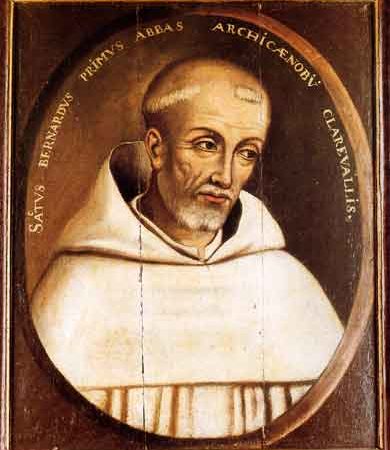
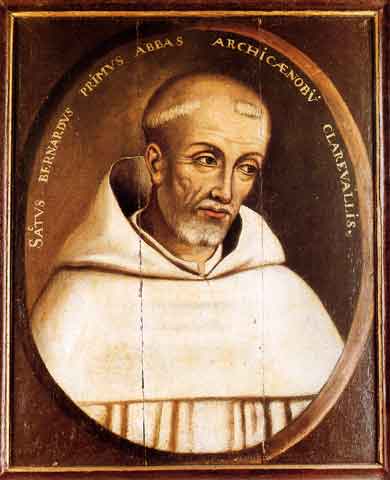
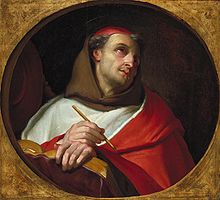
Prayers, Quips and Quotes: St. Bernard of Clairvaux, Feast Day August 20


St. Bernard of Clairvaux Public Domain Image
St. Bernard of Clairvaux


The Feast day of St. Bernard of Clairvaux is celebrated on August 20.  He was born in a family castle in Dijon, Burgundy in 1090.  The family included six sons and one daughter.  He was raised by a pious French mother.  Bernard was also pious as a child, however the death of his mother caused a prolonged depression.

St. Bernard was drawn towards the Benedictine monastery at Citeaux.  One day, at the age of 19, he knelt and asked God for guidance.  All doubts vanished and he decided to follow the Cistercian way of life.  Bernard was so persuasive that 31 nobles, including his five brothers and two uncles, were convinced to follow him to Citeaux.

When they arrived at the monastery , Stephen Harding was the abbot and they were instructed,

“If you desire to live in this house, leave your body behind; only spirits live here.”

After living a year at the monastery, he made his profession and continued living a cloistered life away from the world.

The monks lived a very simple life.  The land was poor and they ate barley bread, herbs and some vegetables.  The number of monks grew to 130.  Eventually the monastery became known as Clairvzux.

St. Bernard suffered stomach problems but never complained.  At one point he was near death because he became so ill.  He was ordered to live apart from the community to recover his strength.  He lived on a special diet under a doctor’s care and returned to the monastery with improved health.

St. Bernard received the gift of miracles.  The first witnessed miracle happened while singing at Mass.  He restored the speech to a relative named Josbert de la Forte who was near death.  Many miracles were witnessed where Bernard healed the sick by making a sign of the cross over a person and praying.

Because his health was frail, he was directed to preach and write rather than work in the field.  He was an eloquent preacher.  He fought for reform in the church clergy.  St. Bernard became well known as an arbitrator and counselor.  He settled many disputes including intervening during a church schism.

St. Bernard preached during the Second Crusade throughout Europe.  When the Crusade failed, St. Bernard attributed the failure to the sins of the Crusaders.

St. Bernard was declared a Doctor of the Church in 1830.

Remember, O most loving Virgin Mary, that never was it known that anyone who fled to your protection, implored your help, or sought your intercession was left unaided.  Inspired by this confidence, we fly unto you, O virgin of virgins, our mother.  To you we come, before you we stand, sinful and sorrowful. 
O mother of the Word Incarnate, despise not our petitions, but in your mercy, hear and answer me.
Prayer of St. Bernard of Clairvaux

August is the Month of the Immaculate Heart of Mary

Save

Save

Save

Prayers, Quips and Quotes: St. Alphonsus Liguori, Feast Day August 1


St. Alphonsus Liguori Public Domain Image
St. Alphonsus Liguori


The Feast day of St. Alphonsus Liguori is celebrated on August 1. Alphonsus was born in 1696 near Naples, Italy. His father was a captain in the Royal Navy. He is the patron saint of confessors and theologians.

At the age of 16, St. Alphonsus Liguori received a doctorate in civil an canon law. At the age of 18 he joined the Confraternity of Our Lady of Mercy which cared for the sick, devoting himself to works of mercy. He became a lawyer by the age of 20. However, the work proved to be unfulfilling. After losing an important case, Alphonsus left his career as a lawyer to enter the priesthood. He was ordained in 1726.

As a priest St. Alphonsus ministered to the poor working to the point of exhaustion. In 1732 he decided to dedicate himself completely to the poor and abandoned. He founded the Congregation of the Holy Redeemer which became known as the Redemptorists.

St. Alphonsus was a gifted preacher who reached many people.The Redemptorists led mission revivals in the countryside preaching to anyone who would listen. They traveled from town to town. St. Alphonsus focused on three images; Jesus as an infant in the crib, Jesus crucified on the cross, and Jesus vibrantly alive and filled with love for everyone in the Eucharist. He also had a great devotion to Mary, the Mother of the Redeemer.

St. Alphonsus was an artist, composer and a writer. He wrote music which he composed on a harpsichord. It spread throughput the countryside. He wrote over 100 books including “Prayer, the Great Means of Salvation.” He was given the title “Doctor of Prayer”.  St. Alphonsus believed that if you pray your salvation is secure.

St. Alphonsus was troubled by illness most of his life. His final years, he suffered from severe arthritis which kept him in a wheelchair. St. Alphonsus died at the age of 91 after a night of prayer. He was canonized in 1839 and declared a Doctor of the Church in 1871.

We must love God in a way that pleases Him,
and not just in a way that suits ourselves.
God wishes people to empty themselves
of everything and to be filled with is divine love.
Quote of St. Alphonsus Liguori
August is the Month of the Immaculate Heart of Mary.

Save

Save

Save

Prayers, Quips and Quotes: St. Peter Chrysologus, Feast Day July 30


St. Peter Chrysologus Public Domain Image
St. Peter Chrysologus


The feast day of St. Peter Chrysologus is celebrated on July 30. Peter was born around the year 400 in the small town of Imola, Italy.  He studied theology and was ordained a deacon by Bishop Cornelius. Bishop Cornelius was the local bishop of Imola and had also baptized him. Bishop Cornelius was Peter’s spiritual director teaching him the value of humility.

St. Peter embraced a simple life of prayer as a monk for many years. After the death of the Archbishop of Ravenna in 430, Peter traveled to Rome with Bishop Cornelius to see Pope Sixtus III. Tradition tells us that because of a vision the Pope overruled the choice for a new bishop and declared Peter the new Bishop of Ravenna.

Peter Chrysologus  was known as a good preacher. His sermons were short but inspirational and filled with zeal. As bishop he battled the heresy of monophysitism which denied the humanity of Christ. He insisted that Christ was both fully human and fully divine and supported the authority of the popes in teaching about the nature of Christ. He encouraged everyone to accept the mystery of the Incarnation with simple faith. He believed that learning was second only to virtue for improving the mind.

St. Peter Chrysologus died in 450 in the town of Imola. He was proclaimed a Doctor of the Church by Pope Benedict XIII in 1729.

The Good Shepherd lowered His shoulders to carry back
to the fold of salvation the sheep who had been lost.
Quote of St. Peter Chrysologus
July is the Month of the Most Precious Blood


Save

Prayers, Quips and Quotes: St. Lawrence of Brindisi, Feast Day July 21


The Feast Day of St. Lawrence of Brindisi is celebrated on July 21. He was born on July 21, 1559 in Brindisi , Italy. His baptismal name was Julius Caesar. He was adventurous as a child but knew from an early age that he had a religious calling. When his father died at the age of twelve he went to Venice where he studied with the conventual Franciscans. He was accepted into the Capuchin Order and eventually became a priest. He worked as a diplomat and as a missionary.

St. Lawrence of Brindisi was fluent in five languages. He was Master General of his Order from 1602-1605. He was known for his eloquent preaching. He reformed the monasteries and taught theology. St. Lawrence was known for many miraculous healings. He healed a blind man and cured a paralyzed woman. His sermons have been compiled into 15 volumes.

On July 22, 1619 St. Lawrence died of natural causes. He was canonized by Pope Leo XIII on Dec. 8, 1881. St Lawrence of Brindisi is a Doctor of the Church.

The crucifix alone
teaches one the worth
of a single human soul.

Quote of St. Pierre Henri Dorie;                           Feast day September 20.
July is the Month of the Most Precious Blood.

Prayers, Quips and Quotes: St. Bonaventure, Feast Day July 15


St. Bonaventure Public Domain Image
St. Bonaventure

The Feast Day of St. Bonaventure is celebrated on July 15.

St. Bonaventure was born in 1218 in Bagnorgio, Latium. His name at birth was John of Fidanza. He was the son of a doctor. When he was young, he suffered from a serious intestinal illness. His distraught mother took him to St. Francis of Assisi to ask for healing prayers. When healed, St. Francis exclaimed “O-Buono ventura!” (O good fortune!) From then on he was known as Bonaventure.

St. Bonaventure studied philosophy and theology in Paris. He entered the Franciscan order in 1243 at age 22. He later became a bishop. Pope Sixtus V inscribed him Doctor of the church in 1557.

St. Bonaventure was regarded as one of the greatest philosophers of the Middle Ages. St. Bonaventure wrote many books, including The Journey of the Mind to God. He is known as the Seraphic (Angelic) Doctor.

In 1257, St. Bonaventure was chosen as minister general of the Franciscan Order. He led the order into a deeper love of the Franciscan spirituality. At the request of his brothers he wrote a book describing St. Francis titled The life of St. Francis.

St. Bonaventure died while assisting the Second Council of Lyons on July 15, 1274.

Prayer consists in turning the mind towards God.
Quote of St. Bonaventure
July is the Month of the Most Precious Blood.

Save

Save

Save

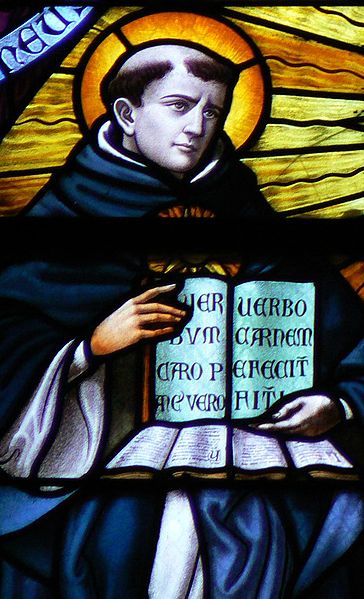
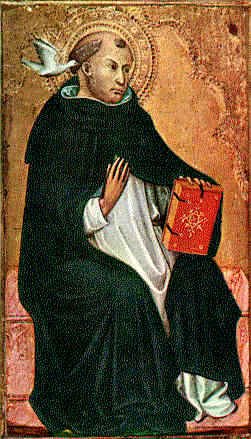
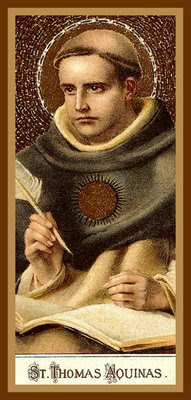
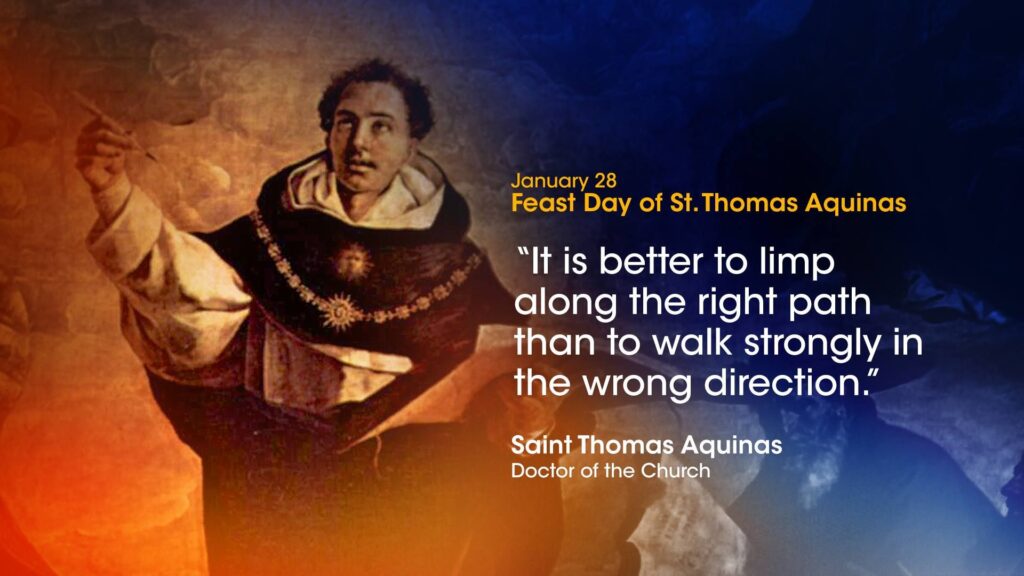
Five Famous Hymns Written by St. Thomas Aquinas


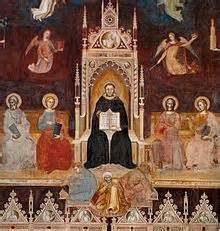
St Thmas Aquinas-cr-01 Public Domain Image

St. Thomas was was born in Sicily in the year 1225. He died in 1274. The Feast Day of St. Thomas Aquinas is celebrated on Jan. 28. He is considered the patron saint of students and universities.

At the age of five he was placed in the care of the Benedictines of Monte Casino.

He became a Dominican priest against his families wishes. His brothers followed careers in the military. In an attempt to end his desires to become a Dominican, his brothers hired a prostitute to seduce him. According to legend, two angels appeared to Thomas to strengthen him and increase his determination to remain celibate. He thus became known as the “Angelic Doctor”.

St. Thomas studied at Cologne under St. Albert the Great. He was called “the dumb-ox” because he was so shy and quiet. He was also of a very large stature. Actually, he was quite brilliant, eventually being declared a Doctor of the Church.

After becoming a priest he was sent to Paris. In Paris he became a friend of the King, St. Louis, dining with him frequently. He was asked to teach at the age of 22. He has published many writings. The most well known are Summa Theologica and Summa Contra Gentiles.  He also wrote Hymns of Adoration which are well known today.  The belief in the Real Presence of Christ in the Eucharist is very evident in his hymns of praise and adoration.

His well known hymns are the following:

1. Panis Angelicus (Bread of Angels)  sung by Andre Bocelli

2. Adore te Devote (Humbly I adore thee)…Gregorian Chant

3. O Salutaris hostia (O saving victim)   Gregorian Chant

4. Pange Lingua Corperis (Now, my tongue, the mystery telling)  Gregorian Chant

5. Tantum Ergo Sacramentum (Come Adore)…sung by Daughters of Mary


St. Thomas Aquinas Public Domain Image
St. Thomas Aquinas

Panis Angelicus (Bread of Angels)

Holy and living bread,

Wondrous food from heaven sent,

God’s sacrifice foretold,

now in our hands we hold.

Sign and reality, challenge for us to be

Humble servants to all the poor.

God, Holy Three in One,

through this off’ring of your Son

All now on earth can see what we are called to be:

Hope for a world in need, signs that love can succeed

Where true justice and peace endure.

O Salutaris Hostia ( O Saving Victim)

O saving Victim, open wide

The gate of heav’n to us below,

Our foes press on from ev’ry side;

Your aid supply your strength bestow.

To your great name be endless praise,

Immortal Godhead, One in Three;

O grant us endless length of days

In our true native land with thee.

Amen

St. Thomas Aquinas Public Domain Image
St. Thomas Aquinas

Zion, to thy Savior; singing

Zion, To Thy Savior Singing
Zion, to Thy Savior singing,

To thy Prince and Shepherd bringing,
Sweetest hymns of love and praise,
Thou wilt never reach the measure
Of His worth, by all the treasure
Of thy most ecstatic lays.

Of all wonders that can thrill thee,
And, with adoration fill thee,
What than this can greater be,
That Himself to thee He giveth?
He that eateth ever liveth,
For the Bread of Life is He.

Fill thy lips to overflowing
With sweet praise, His mercy showing
Who this heav’nly table spread:
On this day so glad and holy,
To each longing spirit lowly
Giveth He the living Bread.

Here the King hath spread His table,
Whereon eyes of faith are able
Christ our Passover to trace:
Shadows of the law are going,
Light and life and truth inflowing,
Night to day is giving place.

Lo, this angels’ food descending
Heavenly love is hither sending,
Hungry lips on earth to feed:
So the paschal lamb was given,
So the manna came from Heaven,
Isaac was His type indeed.

O Good Shepherd, Bread life giving,
Us, Thy grace and life receiving,
Feed and shelter evermore;
Thou on earth our weakness guiding,
We in Heaven with Thee abiding,
With all saints will Thee adore.


Adore te Devote (Humbly I adore thee)

Humbly I adore thee, Verity unseen,
who thy glory hiddest ‘neath these shadows mean;
low, to thee surrendered, my whole heart is bowed,
tranced as it beholds thee, shrined within the cloud.

Taste and touch and vision to discern thee fail;
faith, that comes by hearing, pierces through the veil.
I believe whate’re the Son of God hath told;
what the Truth hath spoken, that for truth I hold.

O memorial wondrous of the Lord’s own death;
living Bread that givest all thy creatures breath,
grant my spirit ever by thy life may live,
to my taste thy sweetness never failing give.

Jesus, whom now hidden, I by faith behold,
what my soul doth long for, that thy word foretold:
face to face thy splendor, I at last shall see,
in the glorious vision, blessed Lord, of thee.

St. Thomas Aquinas Public Domain Image
St. Thomas Aquinas

Tantum Ergo Sacramentum (Come Adore)

Come adore this wondrous presence,

Bow to Christ the source of grace.

Here is kept the ancient promise

of God’s earthly dwelling place.

Sight is blind before God’s glory,

Faith alone may see his face.

Glory be to God the Father,

Praise to his co-equal Son.

Adoration to the Spirit,

Bond of love, in God-head one.

Blest be God by all creation

Joyously while ages run.


Save

Save

Save

Prayers, Quips and Quotes: St. Anthony of Padua, Feast Day June 13


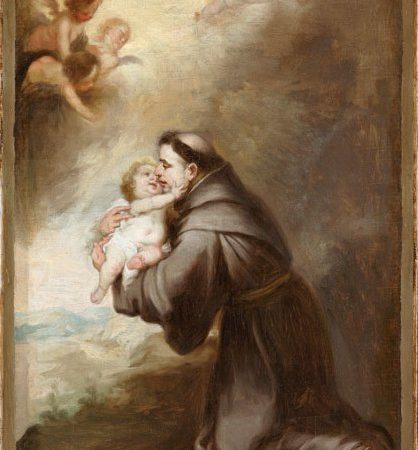
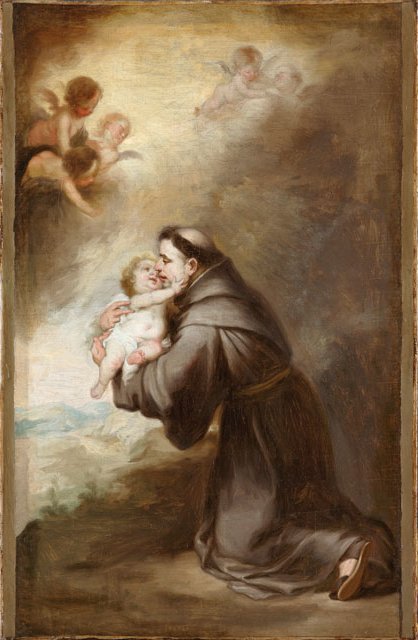
Bartolome_Esteban_Murillo_-_'The_vision_of_Saint_Anthony_of_Padua'._61_x_39.7_cm public domain image
The Vision of Saint Anthony of Padua by Bartolome Esteban Murillo

The Feast day of St. Anthony of Padua is celebrated on June 13. He is the patron saint of sailors, lost articles and fishermen.

St. Anthony was born in Lisbon, Portugal in 1195. His name at Baptism was Fernando. At the age of 15 Fernando entered the Augustinian Monastery. He did not focus on his studies and prayer, but spent time with friends and enjoyed political discussions. He was sent to Coimbra where he studied for nine years. He was ordained a priest during this time.

A turning point occurred in Fernando’s life after the massacre of five Franciscans. They had been tortured and beheaded. Their bodies were returned from Morocco and carried in a solemn procession to Fernando’s monastery. He was inspired to change orders and become a Franciscan, taking the name Anthony.

St. Anthony was sent to Morocco. but decided to return after becoming ill. He never arrived. His ship was hit by stormy weather and sent off course. He eventually landed on the East coast of Sicily. He was nursed back to health by the friars. While still ill, he attended the great Pentecost Chapter of Mats which was attended by 3000 Friars including St. Francis. Anthony was asked to give a short simple sermon. From then on he became a public preacher. The fire and knowledge with which he spoke inspired many to conversion.

St. Anthony made over 400 trips across Italy and France preaching against heresies. He presented the Christian faith in a positive light. Anthony became the teacher of sacred theology to the friars.

In 1226, St. Anthony was appointed provincial superior at the age of 31. It was in Padua that St. Anthony preached his last and most famous Lenten sermon. The crowds were near 30,000 so he preached in open fields. He was exhausted after the sermon. He knew death was near and received the last rites in the town of Arcilla singing with the friars there.

Shortly before he died he exclaimed,

“I see my Lord!”

He died in 1231 at the age of 36 after serving as a Franciscan for ten years.

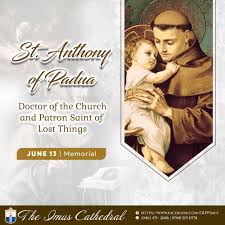
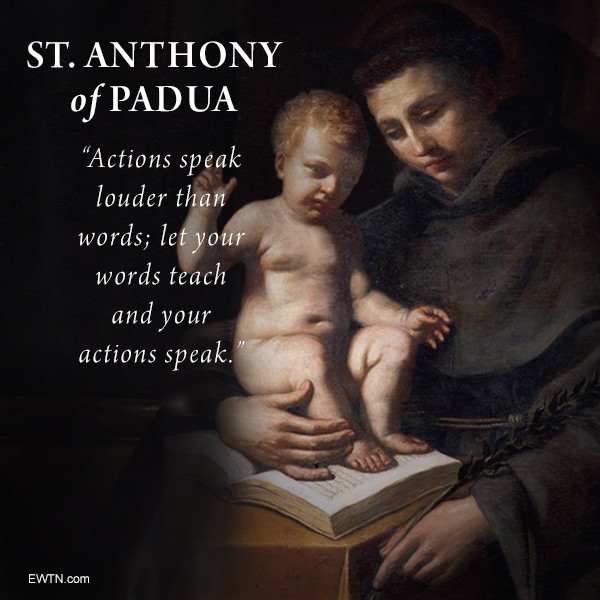
St. Anthony is often shown in art holding the child Jesus in his arms. Tradition tells us that one night as Anthony was praying the room was filled with brilliant light. Jesus appeared to St. Anthony as a little child.

St. Anthony was canonized in 1232 by Pope Gregory IX. In 1946 Pope Pius XII declared him a Doctor of the Church.


Poverty is an easy way to God…

Poverty is the mother of humility.

It is as difficult to preserve humility amid riches

as purity in the midst of delights and luxury.

Quote of St. Anthony of Padua


June is the Month of the Sacred Heart.

Save

Save