Do Evil Spirits Really Exist?


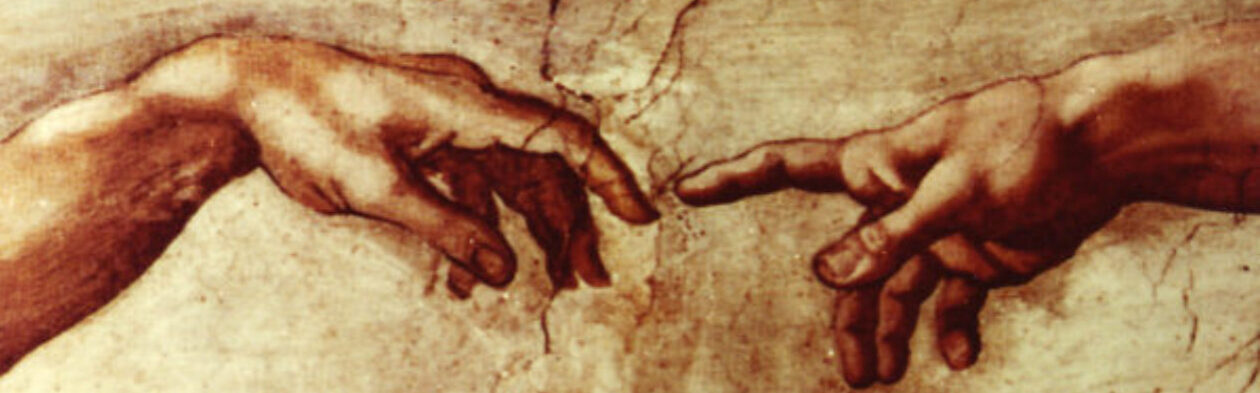
The Fall of Man Michelangelo
The Fall of Man
Michelangelo


On Halloween, we see many representations of good and evil: angels, witches, devils, monsters, princesses, gangsters, rock stars, politicians, super heroes.

While we are made in the image of God, each of us has a temptation to do evil. Society glamorizes evil.

If we take the Bible seriously, we should not doubt the existence of Satan and evil spirits. Jesus refers to Satan and angels multiple times.

Satan is actually an angel. He fell from grace when he turned from God. He has been at war with God ever since.

It is only in modern times, that people have denied the existence of evil spirits. Halloween is a time when we should reflect on the good and evil evident around us.

Halloween (All Hallows Eve) comes on the night before All Saint’s Day. Halloween is a display of both good and evil. All Saint’s Day (November 1st) is a display of people who have overcome evil for the glory of God.

Angels have existed since the beginning of creation. They are servants and messengers of God. Unlike human beings they are pure spirits. During the life of Jesus they are always present. Archangel Gabriel announces his birth, they protect Jesus in his infancy, (Mat 4) serve him in the desert, and they strengthen him in his agony in the garden,

The Feast Day of the Archangels is celebrated on September 29.  The Feast Day of the Guardian Angels is celebrated on Oct. 2.

The Church teaches that Satan, in the beginning, was a good angel, but became evil by choice.  We learn in the bible that Jesus came to conquer evil.

“Everyone who commits sin is a child of the devil; for the devil has been sinning from the beginning.  The Son of God was revealed for this purpose, to destroy the works of the devil.“  1 John 8

When Jesus is praying in the Garden before his crucifixion, he prayed for unity among Christians.  He also prayed for protection against satan.

“I do not ask You to take them out of the world, but to keep them from the evil one.”  (John 17:15)

The fallen angels have never repented for their fall from grace. Their hatred of God leads them to seduce men into choosing their evil ways.

We have free will. God did not create evil. On Halloween, we should reflect on which path we wish to follow…the path of God…or the path of evil.

Being neutral is not an option, it is evil; the sin of omission, laziness, and being lukewarm.

The devil is always trying to tempt us to do evil.  We need to turn to God with the Lord’s prayer when we need to be strengthened.

‘And do not lead us into temptation, but deliver us from evil.   (Matthew 6:13)

We need to be aware of the evil around us and the temptations which may cause us to go astray.  How else can we choose to do good rather than evil?   Pray!  Pray!  Pray!

Save

Save

Prayers, Quips and Quotes: St. Laura of Cordoba, Feast Day October 19


St. Laura of Cordoba


The feast day of St. Laura of Cordoba is celebrated on October 19.  She was a widow and martyr.

St. Laura lived in Spain in the ninth century.   It’s culture was primarily Muslim.  After her husband died she became a nun at Cuteclara .  She eventually became the abbess.

St. Laura is one of the 48 Martyrs of Cordoba.  She was captured and scalded to death by being placed in a vat of boiling lead.

It is You Jesus, stretched out on the cross, who gives me strength and are always close to the suffering soul.  Creatures will abandon a person in  his suffering, but You, O Lord, are  faithful.

Quote of St. Faustina


October is the Month of the Most Holy Rosary


Save

Prayers, Quips and Quotes: St. Margaret Mary Alacoque, Feast Day October 16


St. Margaret Mary Public Domain Image
St. Margaret Mary


The feast day of St. Margaret Mary Alacoque is celebrated on October 16.  She is known as the Apostle of the Sacred Heart.

St. Margaret Mary was born to Claude and Philiberte Lamyn on July 22, 1647 in Lhautecour, France.  She was the fifth of seven children.  She was baptized with name of Margaret and added the name of Mary when she was confirmed in the faith in 1669.   From an early age Margaret had a strong devotion to the Blessed Sacrament.   Margaret’s father died when she was eight years old.  She was sent to a school run by Urbanist Nuns at Chavolles.

Margaret became very ill and was unable to walk.  After consecrating herself to the Blessed Virgin, she promised that if cured, she would be one of her daughters.  She was immediately cured.

Thrust into poverty after her father’s death, she considered marriage, which caused her internal conflict.  Her desire to become a nun prevailed.  She joined the Visitation Order in 1671.

St. Margaret Mary began having visions on Dec. 17, 1073.  They continued until June 1675.  Jesus appeared to her giving her the task of encouraging and teaching a devotion to the Sacred Heart of Jesus.  This included a Holy Hour on Thursdays to reflect on how the Apostles abandoned Him  during the Agony in the Garden.  It also encouraged receiving communion on 1st Fridays.

After suffering many years of from doubt and despair, St. Margaret Mary died at the age of 43.    She had served two terms as assistant supervisor.    With the help of St. Claude de la Columbiere, the  feast day  became popular.  The Sacred Heart symbolizes the boundless love given by Jesus in the Eucharist and His Passion and death


I need nothing but God and to lose myself to the Heart of Jesus.

Quote of St. Margaret Mary


October is the Month of the Most Holy Rosary


SaveSave

Save

Prayers, Quips and Quotes: St.Callistus I, Feast Day October 14


St. Callistus I Pope and Martyr
St. Callistus I
Pope and Martyr


The feast day of St. Callistus I is celebrated on October I.  He is honored as a Pope and martyr of the faith.

St. Callistus was a slave for a Roman who worked for Caesar.  He was put in charge of the bank by his master.  He manged to lose the money deposited and in fear he fled.  He was caught and sent to prison.  He was released and told to try to recover the money.  This time, he was arrested after getting into a brawl in a Jewish synagogue.  He was then sent to Sardenia to work in the mines.  The mistress of the emperor was able to influence his release.

Callistus became superintendent of the cemetery of St. Callistus.  He was ordained a deacon by the Pope and became the friend and adviser of the Pope.  When the pope died, Callistus was elected to be Bishop of Rome with a majority vote.  This led to a schism with his rival St. Hippolytus who became the first anti-pope.  Hippolytus accused Pope Callistus of sympathizing with heretics.  He also disagreed with Pope Callistus’ teaching about the power of Divine Mercy in the sacrament of confession.

In the year 236, both Pope Callistus and Hyppolytus were martyred during an uprising in Rome.  They were both canonized as saints.  It is believed that Hyppolytus made peace with the church before his death.

St. Callistus is the first pope after St. Peter to be honored as a martyr.

“God loves each one of us as if there were only one of us.”

Quote of St. Augustine;  Feast Day August 28


October is the Month of the Most Holy Rosary

Save

Save

Prayers, Quips and Quotes: St. Bruno, Feast Day October 6


St. Bruno Public Domain Image
St. Bruno

The feast day of St. Bruno is celebrated on October 6.  He is the founder of the Carthusian Order.

St. Bruno was born at Cologne, Germany in 1030.  He studied in France and was ordained a priest.  For 18 years he was a professor of theology.  He then became the Chancellor  of the archdiocese.  He supported the reform of clergy by Pope Gregory VII and removed his own archbishop because of scandal.

St. Bruno had a great love of silence and solitude.  He received a vision from God showing him a hermitage where he should spend his life growing closer to God.  Along with friends, St. Bruno opened a hermitage in Chartreuse.  Their order became known as the Carthusians.  The hermitage was in a mountainous, desert region which was very isolated.  The hermits lived in private cells, coming together for Matins and Vespers each day.  The rest of their day was spent in solitude.  They ate together only on great feast days.  Their time was spent copying manuscripts.

Pope Urban II requested St. Bruno to come to Rome as an advisor.  When the pope fled Rome Bruno moved to Calabria after turning down an offer to become a bishop.

St. Bruno died of natural causes on October 6, 1101.

Although he was not formally canonized, Pope Clement X extended his feast day to the whole church in 1674.


“To pray the rosary is to hand over our burdens

to the merciful hearts of Christ and His Mother.”

Quote of St. John Paul II;  Feast Day October 22


October is the Month of the Most Holy Rosary


Save

SaveSave

Prayers, Quips and Quotes: St. Francis of Assisi, Feast Day October 4


St. Francis Embracing Crucifix

The feast day of St. Francis of Assisi will be celebrated on October 4th.  He is the patron saint of the environment, peacemakers, and animals.


St. Francis was born in 1181 in Assisi, Italy. His father was Pietro di Bernardone, a wealthy cloth salesman. Francis was indifferent to school. He enjoyed good times with his friends. He was attracted to the military and was a prisoner of war for two years. He returned home, probably ransomed by his family, returning to his old life, however he became very ill. When he recovered, he returned to the military, however, in a dream he was told to return home. He was told to “serve the Master rather that the man.” His dream changed him. He turned from his wild ways and began to serve God. While praying in a neglected chapel in San Damiano, Christ spoke to him from the crucifix, saying;

“Francis, go out and build up My house, for it is nearly falling down.”

Francis took this quite literally, and began to repair the old chapel. In need of money, he took some of his father’s cloth and sold it. His father accused Francis of theft. At the hearing before the bishop, he was told to return the money.   Francis obeyed; however, he also removed his clothes returning them to Pietro and declaring:

“I have called you father on earth, but now I say, “Our Father, who art in heaven.”

St. Francis embraced poverty. “Love of Lady Poverty” was how he described his belief that possessions were a detriment to his spirituality. After two years of living as a hermit and begging for money to repair the church, he began to attract followers to his way of living. He owned nothing, wanting to live a life of complete poverty. He lived his life caring for the poor and preaching the gospel, primarily through example. He once said;

“Preach always, and when necessary, use words.”

The heart of St. Francis message was joy, based on the love of Christ. He served primarily the poor, including the lepers of the time. He had a strong devotion to the Eucharist and the Cross.

By 1210 his group had grown to a dozen men. He received permission to form an order from Pope Innocent III. Originally it was called the Humbler Brethren, or Friars Minor. They became known for the brown robes they wore.  By 1219 they numbered 5,000.

Clare Sciffo was sixteen years old when she heard Francis preach. Against her parents will she became a nun under St. Francis care. Her order became known as the Poor Clares.

St. Francis became friends with St. Dominic, whom he met while begging. St. Dominic recognized him from a dream in which he had seen Francis. When Dominic met him he embraced him saying;

“You are my companion and must walk with me.

If we hold together, no earthly power can withstand us.”

The Franciscans and Dominicans had different spiritualities, but Francis and Dominic were lifelong friends.

Some of the Franciscans wanted to change the rule of poverty. They wanted to own books so they could study scripture like the other monasteries of the time. This was contrary to Francis’ love of Lady Poverty.  He went to see St. Dominic, who came up with a solution. The Franciscans were allowed to have a library, loaned to them by the Dominicans!

The Franciscans today have several different orders. There rule of poverty is not as strict as the original order.

Later, in his life, St. Francis received the stigmata (the wounds of Christ). These wounds were real and painful, a sign of how close he had come to the cross. He also suffered from a painful eye disease.

St. Francis composed several hymns, including Canticle of the Sun. He is also known for his love of nature. Animals and birds had no fear of him and he was known for his friendships with traditionally wild creatures. It is St. Francis who started the tradition of a Christmas Crèche which honored the animals present in the stable when Christ was born.

St. Francis died in the year 1226 at the age of 45, praying the 141st Psalm and his Canticle of the Sun.  His final prayer was:

“O Lord, I thank You for the pains which I suffer.”

Two years after his death, St. Francis was canonized on July 16, 1228 by Pope Gregory IX.

“My Lord, I am all yours.  You know I have nothing besides my tunic, cord and underpants.  And even these three things are yours.

So what can I give You?”

Quote of St. Francis of Assisi

St. Francis of Assisi in Art

October is the Month of the Most Holy Rosary


Save

Save