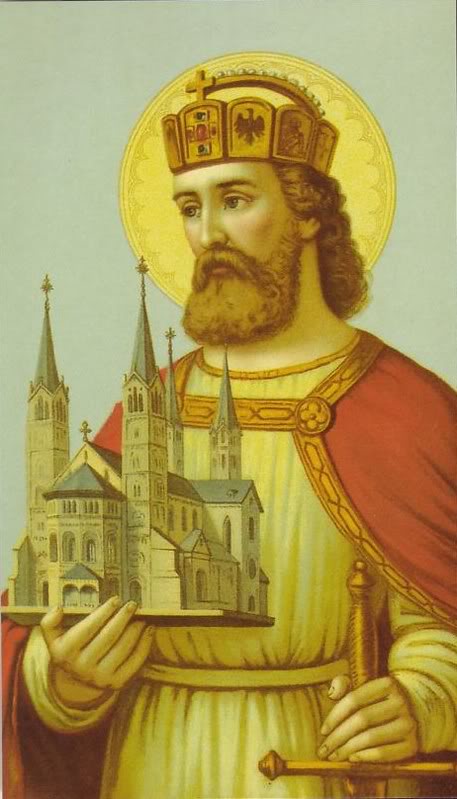
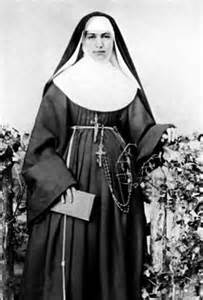
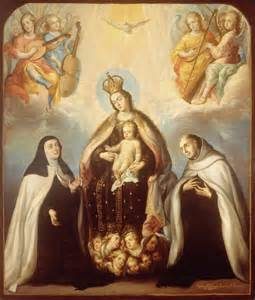
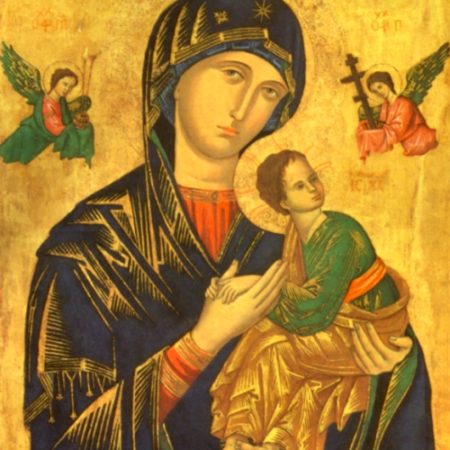
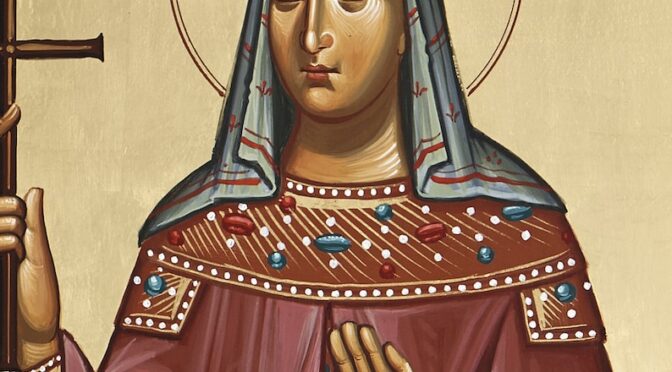
The Feast Day of St. Stephen of Hungary is celebrated on August 16.
St. Stephen was born in the year 973. His mother was the Duchess Sarolt. She had had a vision in which the first St. Stephen, the first martyr of the church had appeared to her. She was told she would bear a son who would evangelize the land.
St. Stephen’s father was the Duke Geza. Both his mother and father were converted to Christianity by Bishop St. Adalbert of Prague. The Bishop baptized St. Stephen at the age of ten. St. Stephen married Gesela who was a sister to the Duke of Bavaria in 995. Sadly, he survived all his children. Only one child lived to be an adult. This son, Emeric, died in a hunting accident in 1031.
St. Stephen use their wealth to build a monastery and encouraged the people of the land to convert to Christianity. The laws of the land which St. Stephen enacted favored Christianity over paganism. He sent a request to Pope Sylvester II to proclaim him as King of Hungary. Pope Sylvester II was happy to oblige. He sent Stephen a crown and gold processional cross.
As King, St. Stephen was generous to the poor and sick. He was devoted to the Virgin Mary, building several churches in her honor. Mary is credited with preventing both a war and the assassination of King Stephen. While he was king, St. Stephen also established a monastery in Jerusalem.
St. Stephen died on August 15, 1038, the Feast of the Assumption of Mary after suffering an illness. He was buried next to his son Emerick. They were both canonized saints in 1083.
Easter is just around the corner! Students of Catholicism are preparing for the Sacrament of Confirmation. At the Easter vigil adults coming into the Catholic faith will be baptized, receive their first communion and be confirmed.
The list below is twenty five male patron saints which men might be interested in as they choose their patron saint for confirmation.
Young Catholics will receive the sacrament during the Easter season, when the Bishop of their diocese visits their parish. The sacrament of confirmation is one of the three sacraments of initiation. First is baptism which is often received shortly after birth. Second is Communion or Eucharist, which received at age of reason, usually seven or eight years of age. The third is confirmation. The age for confirmation is decided upon by the Bishop of the Diocese and can range from age of reason to high school.
When confirmed, the person is “sealed with the Holy Spirit”. The sacrament makes the person a full member of the Catholic Church. It’s history goes back to Pentecost, the birthday of the Church. On Pentecost the Apostles were filled with the Holy Spirit and their confusion was lifted. The Apostles received gifts from the Holy Spirit. The gifts of the Holy Spiritare the following: 1.Wisdom, 2.Understanding, 3. Counsel, 4. Courage 5.Knowledge 6. Reverence, 7. Wonder and awe. Not everyone receives the same gifts.
The Fruits of the Holy Spirit come when we make use of the gifts given to us by the Holy Spirit. The fruits of the Holy Spirit are the following: 1. Charity 2. Joy 3. Peace 4. Patience 5. Kindness 6. Goodness 7. Generosity 8. Gentleness 9. Faithfulness 10. Modesty 11. Self-control 12 Chastity
The person being confirmed chooses a patron saint. The name of the saint is the name the bishop will use when he anoints him/her and lays hands in prayeron them. The saint is to be a role model and guide for the person throughout their life. In good times and bad, we ask our patron saint to pray with us and for us.
Are you searching for a patron saint?
The following twenty five saints should be considered as you choose your patron saint.
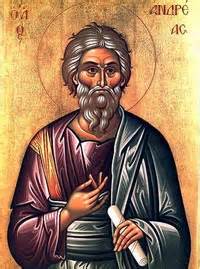
St. Andrew the Apostle
1. St. Andrew the Apostle Feast Day: Nov. 30Patron of fishermen Apostle and Martyr
St. Andrew was the brother to Simon Peter. They were both fishermen. Andrew was a disciple of John the Baptist and the first apostle to be called by Jesus. When Andrew asked Jesus where he lived Jesus responded “Come and See.” Andrew then told Simon Peter about Jesus saying “We have found the Messiah!”
After the resurrection, St. Andrew preached in Greece.
St. Andrew was martyred by crucifixion.
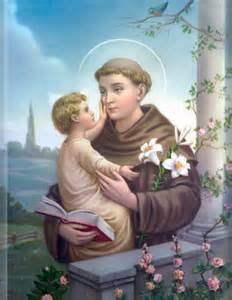
St. Anthony of Padua
2. St. Anthony of Padua Feast Day: June 13 Patron of lost items and missing persons Doctor of the Church
St. Anthony was born in Portugal in 1195. He joined the Augustinian Order. Later he joined the Franciscan Order at age 26. He is called “The hammer of the Heretics.” His preaching was simple and easy to understand. The Infant child Jesus miraculously appeared to him.
St. Anthony was canonized less than one year after his death in 1231.
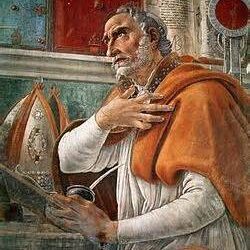
St. Augustine
3. St. Augustine of Hippo Feast Day: Aug. 2. Patron of Brewers Father of the Church
St. Augustine was the patron of brewers because of his lifestyle which included loose living and parties. His mother was St. Monica, who prayed for him for many years. He finally converted after reading a passage of scripture which said, “put away all impurity and live in imitation of Jesus.” This passage helped him to decide to return to the faith.
He was baptized by St. Ambrose. Eventually, he became the Bishop of Hippo. He is know for the poem “Too late have I loved You.”
In the year 430, he fell ill. He spent his last days in prayer, dying on Aug. 28.
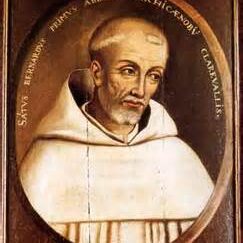
St. Bernard Clairvaux
4. St. Bernard of Clairvaux
Feast Day Aug. 22 Doctor of the Church
Patron Saint of mountaineers and The Alps
St. Bernard was born in Burgundy, France. After his mother’s death he entered the Cistercian Order. He founded a monastery known as the Abbey of Clairvaux. He was the Abbot. He refused offers to become a bishop. In 1128, he participated in the Council of Troyes. He was known for fighting against heresies.
In 1139, he assisted in the Second Council of the Lateran. He encouraged Lectio Divina and contemplation on scripture.
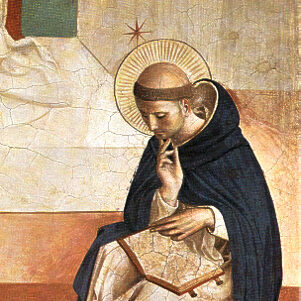
St. Dominic
St. Dominic
Feast Day: Aug 8
Patron of Astronomers
Founder of the Order of Preachers (Dominicans)
St. Dominic was born in 1170 into a wealthy family at Calaruega, Spain. As a priest he preached against the Albigensianism heresy. He also helped to reform the Cistercians.
He organized the Order of Preachers, known as the Dominican Order. They were traveling preachers who practiced a life of prayer and penance.
St. Dominic spread the Marian devotion of praying the Rosary.
St. Dominic died on Aug. 6
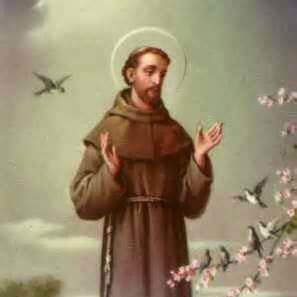
St. Francis of Assisi
6. St. Francis of Assisi Feast Day: Oct. 4 Patron of environment and animals Founder of The Franciscan Order
St. Francis was born in Assisi, Italy in 1181 into a wealthy family. He lived a wild life when young, becoming a soldier. However, God appeared to him in a dream telling him to go home.
Later, in prayer, God said “Francis, repair my church.” Francis took this literally, and began to repair the church buildings which were falling down. Eventually, it led Francis to leave his family, founding the Franciscan Order. Franciscans took a vow of poverty and served the sick and poor.
St. Francis loved animals and nature. Birds and wild animals had no fear of him. He also composed music.
St. Francis died in 1226.
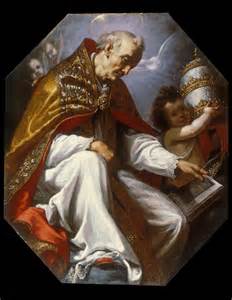
St. Gregory the Great
7. St. Gregory the Great Feast Day: Sept. 3 Patron saint of students, teachers, musicians Doctor of the Church
St. Gregorybecame a prefect of Rome before the age of 30. The pope chose him to be one of his seven deacons. At age 50 he was elected pope. He is know for reforming the liturgy. The Gregorian chant is attributed to St. Gregory.
Pope Gregory became a Benedictine monk living in his own home. He founded six monasteries after five years in office. He also re-energized the missionary work of the church.
Pope Gregory died in 604. He was declared a saint by popular acclamation.
St. Jerome
8. St. Jerome
Feast Day: Sept. 30
Patron of librarians, students, and orphans
Doctor of the Church
St. Jerome was born in 342 in Aquileia. He is the most educated of the Church Fathers. He was baptized by Pope Liberius in 360.
Wanting a religious library, he copied St. Hilary’s books. He is most famous for his translation of the Bible from Hebrew into Latin (the vulgate). He also wrote many commentaries on scripture. He was a priest, confessor, theologian and historian.
St. Jerome died near Bethlehem on Sept. 30, 420.
In art he is shown as one of the four church fathers (Augustine of Hippo, Ambrose, Pope Gregory the Great and Jerome).
St. John the Baptist
9. St. John the Baptist
Feast Day: June 24
Patron of prosperity, baptism and conversion
Cousin to Jesus
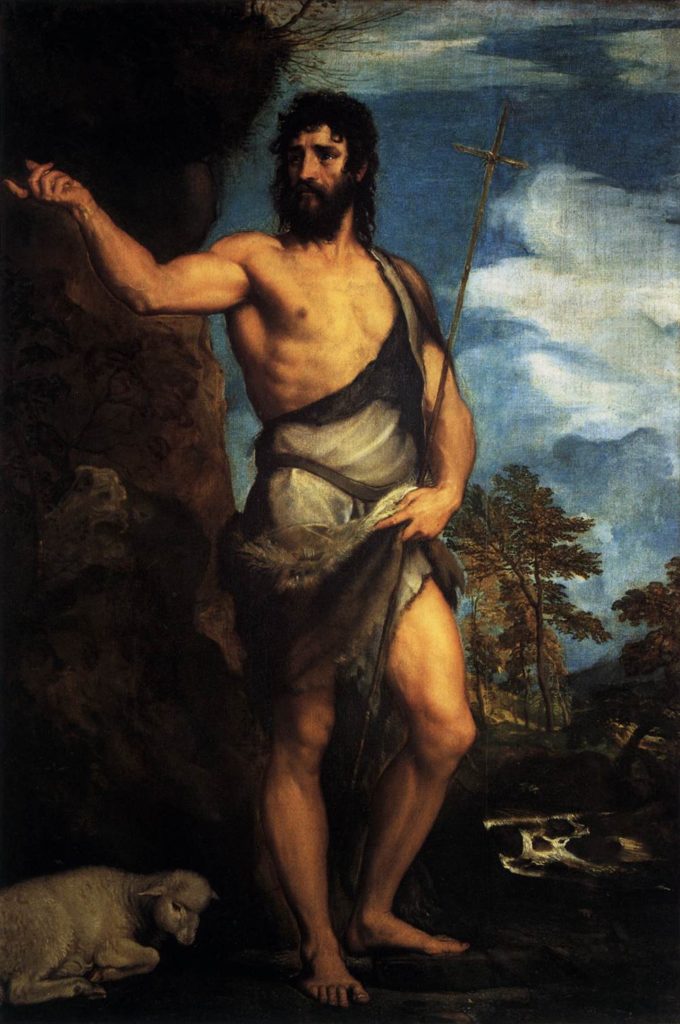
John the Baptist was the cousin to Jesus. He was the son of Elizabeth, who miraculously conceived in her old age. Zechariah was his father.
At age 30 John began to preach in Jordan against evil behavior. He called everyone to penance and baptism, saying the Kingdom of Heaven is close at hand. He baptized large crowds of people. Eventually, he baptized Jesus, saying. “It is I who need baptism from You.”
It is John who identified Jesus as “The Lamb of God”.
John the Baptist is considered the last of the Old Testament prophets.
St. John the Evangelist
10. St. John the Evangelist
Feast day: Dec. 27
Patron of Book sellers, printers, art dealers
Apostle
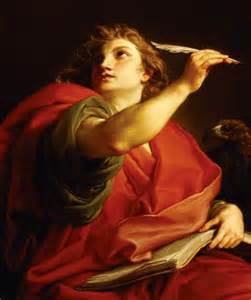
St. John was a Galilean, born to Zebedee. His mother was Salome. He was the brother to St. James the Greater. John and James were known as “the sons of thunder.” St. John is also known as “The beloved disciple” and “The Apostle of Charity”.
John was with Jesus at the marriage feast of Cana. He was given the honor of sitting next to Jesus at the Last Supper. He was also with Jesus during all of his suffering in the Garden of Gethsemane and at the crucifixion. He was the only Apostle who stood with the holy women at the foot of the cross.
Jesus spoke about him from the cross, saying “Woman, behold thy son”. John took Mary the mother of Jesus into his home after Jesus’ death and cared for her.
St. John was the first Apostle to recognize Jesus when he appeared to them on the shore.
St. John worked in Jerusalem and at Ephesus after the death of Jesus, living in Asia Minor. He wrote the fourth Gospel, three Epistles, and possibly the Book of Revelation.
St. John of the Cross
11. St. John of the Cross Feast day: Dec. 14 Patron saint of poets, mystics, and contemplatives Doctor of the Church
John of the Cross was born in Spain in 1542. After the death of his father he attended a school for orphans. His mother kept the family together inspite of being homeless. At the age of 14 he took a job caring for hospital patients who suffered mental and terminal illnesses. From poverty and suffering John found beauty and happiness not in the world but in God.
St. John joined the Carmelite Order. He met and became a friend to St. Teresa of Avila. She asked him to help him reform the order. Threatened by the change John envisioned, he was captured and imprisoned by members of his own order, being locked in a small room and beaten regularly. After nine months he escaped, taking only his mystical poetry with him. This poetry includes The Dark Night of the Soul.
St. John of the Cross died in 1591.
St. Joseph
12. St. Joseph Feast Day March 19, May 1 Patron of fathers, a happy death, workers, foster children Foster father of Jesus Husband to the Blessed Virgin
Joseph was engaged to be married to Mary, when she was found with child. He was going to divorce her quietly to avoid scandal, however an angel appeared to him in a dream, saying, “Joseph, son of David, do no be afraid to take Mary as your wife, for the child conceived in her is from the Holy Spirit. She will bear a son, and you are to name him Jesus, for he will save his people from their sins. Mat: 1: 20-21
Joseph immediately took Mary as his wife.
The angel appeared to Joseph a second time. This time he was told his family was in danger. They fled to Egypt where they stayed until the angel told him it was safe to return.
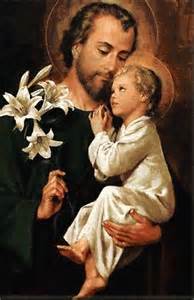
Joseph worked as a carpenter. He was the foster father of Jesus, loving him and providing for him and Mary. Jesus, Mary and Joseph are referred to as “The Holy Family”.
We celebrate two feast days for St. Joseph. The first is on March 19; Feast day of St. Joseph, husband of Mary. The second feast day is May 1; Feast day of St. Joseph the worker.
St. Josephis the patron for a happy death because tradition tells us that he died with Jesus and Mary at his side.
St. Jude Thaddius
13. St. Jude Thaddius
Feast Day: Oct. 28
Patron of desperate causes
Apostle and Martyr
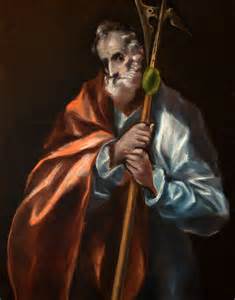
St. Jude was an apostle of Jesus. He was brother to St. James the Less. He is not the same person as Judas who betrayed our Lord.
St. Jude is the author of an epistle in the Bible. Because he stressed the need to persevere during difficult times, he is considered the patron of desperate causes.
Tradition tells us that he suffered martyrdom along with the apostle Simon the Zealot in Beirut, a province of Syria. In art he is shown with an ax which was used in his execution.
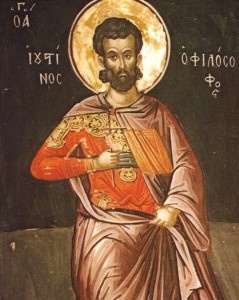
St. Justin Marty by Theophanes the Cretan
14. St. Justin Martyr Feast day: June 1 Patron of philosophers Martyr andFather of the Church
St. Justin Martyr lived from 100-165. He was born a Gentile at Flavia, Neapolis. He converted to Christianity and defended the faith in Asia Minor and Rome. He wrote two “Apologies”. These were attempts to explain the faith. His first Apology is one of the earliest records teaching the meaning of the Eucharist.
St. Justin was a student of philosophy. After his conversion, he continued to debate philosophy publicly with his fellow students. A rival philosopher turned Justin in to authorities because of his faith. He was put on trial and then executed. He was beheaded in the year 165.
St. Justin Martyr is considered a Father of the Church.
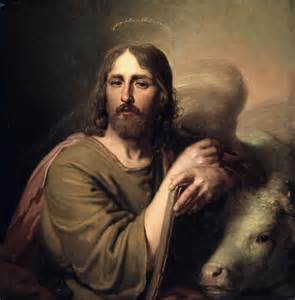
St. Luke uke
15. St. Luke
Feast Day October 18
Patron of physicians and surgeons Author of the Gospel of Luke and The Acts of the Apostles.
St. Luke was a gentile who spoke Greek. He followed Paul after the Resurrection of Jesus. He accompanied Paul to Macedonia. When Paul was imprisoned, St. Luke stayed near him.
St. Luke was born at Antioch in Spain. He is referred to as a physician by St. Paul, St. Jerome and St. Irenaeus. He is referred to as “the beloved physician” by Paul in Col. 4:14.
The Gospel of Luke focuses on God’s mercy and forgiveness of sinners. Only in the Gospel of Luke does the story of the Prodigal Son appear.
St. Mark the Evangelist
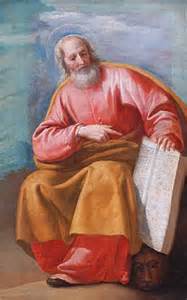
16. St. Mark the Evangelist Feast Day: April 25 Patron of attorneys, prisoners, notaries Martyr
St. Mark was a disciple of Jesus who traveled with St. Paul. He accompanied Paul and Barnabus on their missionary journey.
St. Mark wrote the second gospel when Romans requested that he write down the teachings of St. Peter. Tradition says that he was present at the Miracle of Cana when Jesus turned the water into wine.
Tradition also tells us he was martyred in the year 68 by being dragged through the street with a rope around his neck.
He is portrayed as a lion because his Gospel begins with John the Baptist crying “Make ready the way of the Lord”.
The relics of St. Mark are in Venice.
St. Matthew
17. St. Matthewthe Apostle Feast day: Sept. 21 Patron saint of bankers and accountants Martyr
St. Matthewwas one of the twelve called to be an Apostle. He was a tax collector before Jesus called him to follow him. He is also known as ‘Levi”.
The Gospel of Mathew was written in Aramaic which the Hebrew tongue. The Gospel of Mathew has the most parables of the Gospels. It also has the Beatitudes which are in the Sermon on the Mount. Tradition tells us that he worked in Ethiopia.
Tradition tells us that St. Matthew died a martyrs death, being killed with an ax.
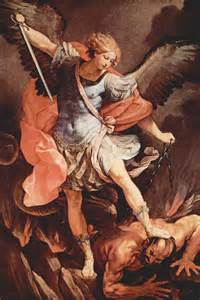
St. Michael the Archangel
18. St. Michael the Archangel
Feast day: Sept. 29
Patron of police, paratroopers, mariners, sickness
The name Michael means “Who is like God.” St. Michael is the leader of the good angels. He is considered a warrior angel. In the Book of Revelations it is St. Michael who is the leader during the final battle between good and evil at the end of time.
St. Michael the Archangel is the patron of police because of his battle against evil. St. Michael defend me in battle is a popular Catholic prayer.
St. Michael has appeared in three places: the cave of St. Michael in Italy, Mont St. Michel in France and The Grotto of St. Michael in Mexico.
St. Patrick
19. St. Patrick Feast day: March 17 Patron of slaves and Ireland
St. Patrick was born in Kilpatrick, Scotland, in 387. At age 14 he was captured by a raiding party and taken to Ireland as a slave. As a slave, he tended to the sheep. He turned to God in prayer. His prayer “The Breastplate of St. Patrick” is well known.
Patrick was a slave until the age of 20. He received guidance in a dream. He was led to sailors who took him to Britain. In another dream, the people of Ireland asked him to return.
He became a priest, then a Bishop. As Bishop he was sent back to Ireland. Many people converted under his guidance. He is known for using the shamrock to explain the Trinity.
He died in Saul, where he built his first church, on March 17, 461.
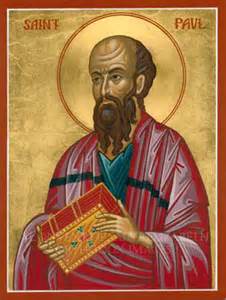
St. Paul the Apostle
20. St. Paulthe Apostle
Feast day: June 29 Apostleand Martyr Author of 14 Epistles Patron of converts, authors, writers, publishers
St. Paul is known as the Apostle of the Gentiles. He is also known as Saul of Tarsus. Before his conversion, he was persecuting Christians. In the Book of Acts his conversion story is told. Paul hears a voice saying “Saul, Saul, why do you persecute me?” Paul replies, “Who are you, Lord?” “I am Jesus, whom you are persecuting. But get up enter the city and you will be told what to do.” Acts 9: 4-6
After this experience Paul was baptized, and he began preaching that Jesus is the Christ, the Son of God. He fled Damascus returning to see Peter. Paul traveled on several missionary journeys, accompanied by Barnabus.
He was imprisoned in Caesarea and then in Rome, being kept in chains. After his release he went to Spain. He was imprisoned again and beheaded in the year 67.
St. Paul wrote 14 Epistles which have greatly influenced the Christian faith.
St. Peregrine
21. St. Peregrine Laziosi
Feast day: May 1 Patron of cancer victims
St. Peregrine was born to wealthy parents in Forli, Italy in 1260. He was active in politics when he was young, being a member of the anti-papal party. After striking St. Philip Benizi in the face at an uprising he repented and converted to Catholicism. St. Peregrine received a vision of the Virgin Mary, after which he followed her instructions to join the Servites, observing silence and solitude.
St. Peregrine was afflicted with a tumor on his leg which the doctors wanted to amputate. He spent the night before the operation in prayer. The following morning he was completely cured and the tumor was gone. The miracle became well known.
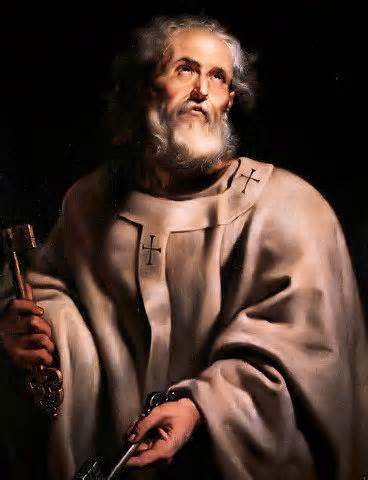
Feast day: June 29 Patron. of fishermen Apostle and martyr
Peter’s name at birth was Simon. He was from Bethsaida and the brother to St. Andrew. Both Simon and Peter were fishermen. It was Andrew who told Simon that he had found the Messiah. Jesus then called Simon to follow him.
Jesus gave Simon the name of Peter which means “rock”. When Peter acknowledged that Jesus was the Messiah, the son of the living God, Jesus said to him, “You are Peter and upon this rock I will build my church. I will give you the keys of the kingdom of heaven. Whatever you bind on earth shall be bound in heaven and whatever you loose on earth shall be loosed in heaven.
St. Peteris always listed as the first of the Apostles in all of the New Testament accounts. Peter, along with James and John were present at the transfiguration, the raising of Jairus’ daughhter and the Agony in the Garden.
At the crucifixion Peter denied Jesus three times.
When Jesus appeared to Peter after the Resurrection, he told Peter three times “feed my sheep”.
After the Resurrection, Peter appointed the replacement of Judas. He preached to the Gentiles.
Peter died in Rome during the reign of Nero. He was crucified upside down because he declared himself unworthy to die in the same manner as. the Lord.
St. Sebastian
23. St. Sebastian
Feast Day January 20
Patron of archers, athletes and soldiers
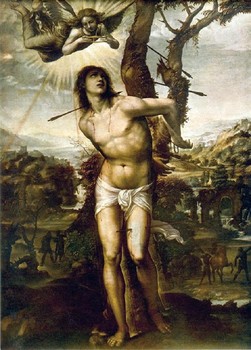
St. Sebastian was born in Gaul. He became a soldier in the Roman army. Sebastian converted many people to the christian faith. He is also known for curing a deaf mute.
St. Sebastian was named captain of the guards. When they learned he was Christian, he was ordered executed. He was shot with arrows and left to die. The widow of St. Castulas found him still alive and nursed him back to health. Soon after, he was beaten to death on the Emperors orders.
St. Sebastian is considered the patron saint of athletes because of his physical endurance and energetic way of defending the faith.
Doubting Thomas by Caravaggio Apostle and Martyr
24. St. Thomas the Apostle
Feast Day: July 3
Patron of architects
Apostle and Martyr
St. Thomas was born into a Jewish family. Jesus called him to be one of the twelve disciples.
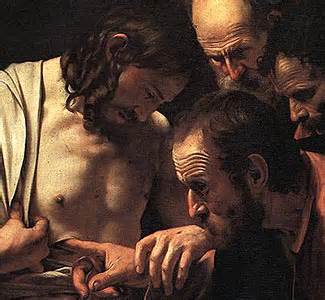
He is most remembered for not believing that Jesus had risen from the dead, saying “Unless I see the mark of the nails in his hands and put my finger in his side I will not believe. John 20: 25
Jesus appeared to Thomas a week later saying “Peace be with you. Put your finger here and see my side. Do not doubt but believe.” Thomas answered “My Lord and my God!”
St. Thomas is remembered as Doubting Thomas.
After Pentecost, Thomas was sent to evangelize the Parthians, Medes, Persians, and India.
St. Thomas was speared to death at Calamine.
St. Vincent de Paul
25. St. Vincent de Paul
Feast Day : September 27
Patron of Charitable Societies
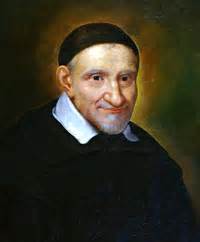
St. Vincent was born in 1581 to poor parents in Gascony, France. His first school was led by Franciscans. He was ordained a priest in 1600 after studying at the University of Toulouse.
St. Vincent was captured by pirates while he was at sea. They held him prisoner for two years. He escaped, going to Rome and then returning to France.
St. Vincent founded the Sister of Charity who served the poor through corporal and spiritual works of mercy. He then founded the Vincentians. Their mission was to serve the poor in smaller towns and villages. He also conducted retreats for clergy and established seminaries.
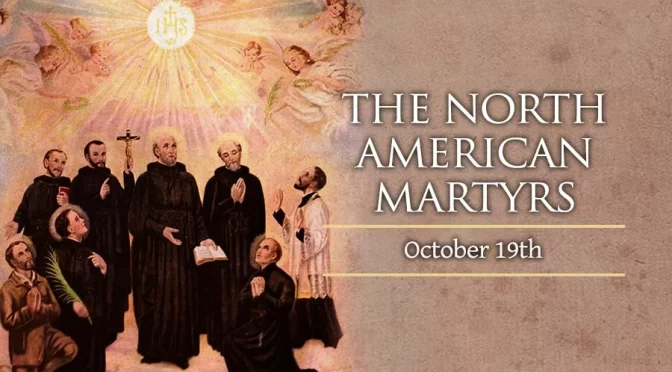
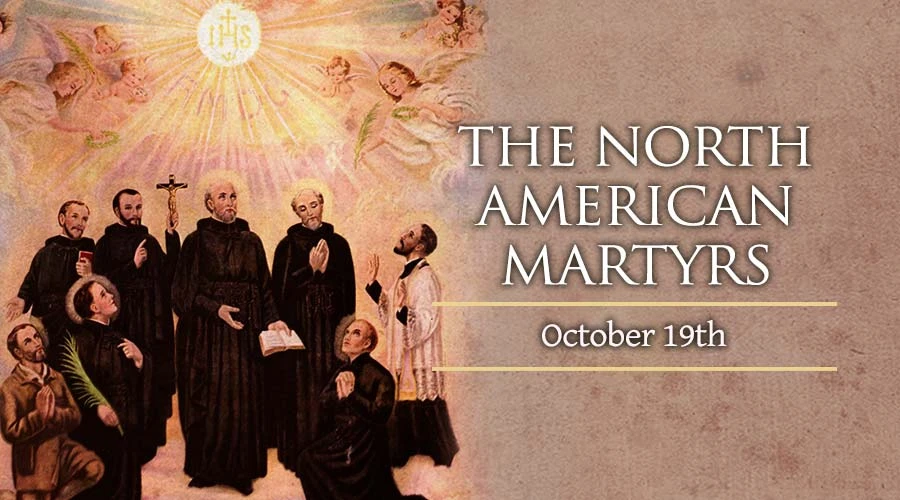
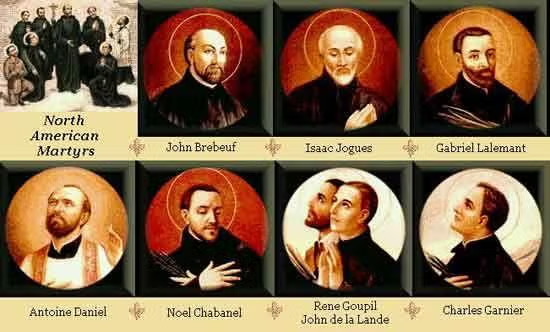
The Feast Day of the North American Martyrs is celebrated on October 19 in the United States. In Canada it is celebrated on September26th.
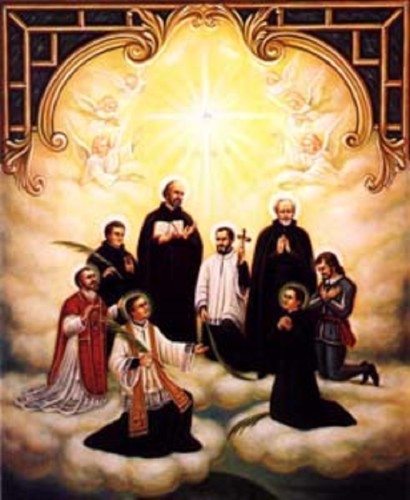
In the 1600’s, eight French Jesuit missionaries lost their lives while trying to spread the news of the gospel to the Huron, Iroquois, and Mohawk Indians. Three of them died in what is now New York State, five of them died in what is now Canada.
Isaac Jogues, René Goupil and Jean La Laude died in New York.
John DeBrebeuf, Gabriel Lalemant, Charles Garnier, Anthony Daniel, and Noel Chabanel died in Canada.
St. René Goupit was a Jesuit Lay brother. He was the first to be martyred. He was killed by tomahawk at Osermenon, (Auriesville, NY)) in 1942.
Father Isaac Jogues, a Jesuit priest, was held captive by the Mohawks for thirteen months. He had several fingers cut off his hand. He escaped and returned to France. He later returned to the mission. He was killed by tomahawk by a Mohawk brave in 1946.
St. Jean de La Lande, a Jesuit donné (not a member of the Society, but at their service) tried to retrieve Father Isaac Jogues’ body, but was killed also.
These martyrs were the first saints of North America.
The martyrs were canonized by Pope Pius XI on June 29, 1930.
The Feast day of St. Denis and Companions is celebrated on October 9. St. Denis is the patron saint of France and against headaches.
St. Denis was born and raised in Italy. He is also known as St. Dionysius. He was sent to Gaul by Pope St. Clement. He is probably the first Bishop of Paris. St. Denis was martyred along with two companions according to the writings of St. Gregory of Tours. His companions are believed to be St. Rustreus and St. Eleutherius, a priest and deacon. They were beheaded with a sword under the persecution of Emperor Valerius in 258. The head of St. Denis was carried into the nearby village before their bodies were thrown into the Seine River. St. Denis body was recovered and a chapel was built over his tomb.
St. Denis is one of the 14 helperswho were invoked in the middle ages against the Black Plaque. It is for this reason he became the patron saint against headaches.
Remember that this life is short, and that eternity is very long.
During colonial times, Catholic immigrants coming to the U.S.from Europe settled primarily in the colonies of Maryland, Pennsylvania and New York. Laws protecting religious freedom had not yet been written. Intolerance between religious groups was a common occurrence.
After over fifty years without a bishop, Father John Carroll, a Jesuit, was consecrated bishop and served the Archdiocese of Baltimore. Catholics were a distinct minority at the time. Bishop Carroll estimated the Catholic population in the colonies to be 25,000, or less than one percent of the total population. The church grew rapidly under his guidance.
Today, according to Pew Research there are 75 million Catholics in the United States, approximately 24 percent of the total population.
The colonial Catholics were served by missionaries, both Jesuits and Franciscans.
The following men and women in the U.S. have been proclaimed saints by the Pope. They are considered role models in holiness for Catholics today to turn to for guidance.
There are four steps to becoming a saint in the Catholic Church.
Servant of God…….Formal investigation has begun…………………….82 investigations ongoing
Venerable……………Heroic virtue has been decreed by Pope……….16 from U.S.A.
Blessed……………….First miracle has been confirmed……………………7 from U.S.A.
Saint..………………….Second miracle has been confirmed……………..12 from U.S.A.
The following saints have lived in the United States. Most are immigrants, however two were born in the United States; Kateri Tekakwitha is the first Native American saint and Elizabeth Ann Seton is the first saint from the United States to be canonized.
The Catholic Church teaches that everyone in heaven is a saint. The Church declares certain people to be saints when their holiness is obvious, if they were martyred for the faith and after miracles attributed to them have been investigated.
While there are thousands of declared saints, only the following Americans have received the official title of Saint.
North America Jesuit Martyrs
North American Martyrs
In the 1600’s, eight French Jesuit missionaries lost their lives while trying to spread the news of the gospel to the Huron, Iroquois, and Mohawk Indians. Three of them died in what is now New York State, five of them died in what is now Canada.
Isaac Jogues, René Goupil and Jean La Laude died in New York.
John DeBrebeuf, Gabriel Lalemant, Charles Garnier, Anthony Daniel, and Noel Chabanel died in Canada.
St. René Goupit was a Jesuit Lay brother. He was the first to be martyred. He was killed by tomahawk at Osermenon, (Auriesville, NY)) in 1942.
Father Isaac Jogues, a Jesuit priest, was held captive by the Mohawks for thirteen months. He had several fingers cut off his hand. He escaped and returned to France. He later returned to the mission. He was killed by tomahawk by a Mohawk brave in 1946.
St. Jean de La Lande, a Jesuit donné (not a member of the Society, but at their service) tried to retrieve Father Isaac Jogues’ body, but was killed also.
These martyrs were the first saints of North America. The martyrs were canonized by Pope Pius XI on June 29, 1930.
The memorial in the U.S.A is celebrated on Oct. 19. The memorial in Canada is celebrated on September 26.
The martyrs are patron saints of America
St. Frances Xavier Cabrini
St. Francis Xavier Cabrini
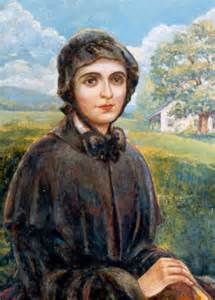
St. Frances Xavier Cabrini. Francesco Cabrini was born in Lombardi, Italy in 1850. She was one of 13 children, raised on a farm. She attended school in a convent. She wanted to become a nun but was hindered by poor health. She became a teacher, teaching at a girl’s school for six years.
Frances took religious vows in 1877, adding Xavier to her name to honor St. Francis Xavier.
At the urging of Pope Leo XIII, she immigrated to the Unites States with six nuns to work with Italian immigrants. She crossed the Atlantic ocean in spite of her great fear of water.
She founded many schools, hospitals, and orphanages in the United States, England, France, Spain and South America. In New York City, St. Frances Cabrini founded Columbus Hospital and Italian Hospital. In the 1980’s they merged into Cabrini Hospital.
In 1909 St. Frances Xavier Cabrini became a naturalized United States citizen. She died from malaria at the age of 67, on December 22, 1917, at Columbus Hospital in Chicago, IL.
In 1931, her body was exhumed, found partially incorrupt, and is now enshrined under glass in the altar at St. Frances Cabrini Shrine in Manhattan.
The feast day of St. Frances Cabrini is celebrated on November 13th.
St. Frances Cabrini was beatified on Nov. 13, by Pope Pius XI. St. Frances Cabrini was canonized on July 7, 1946 by Pope Pius XII.
St. Frances Cabrini is the patron saint of immigrants. orphans and against malaria.
St. Elizabeth Ann Seton
St. Elizabeth Ann Seton
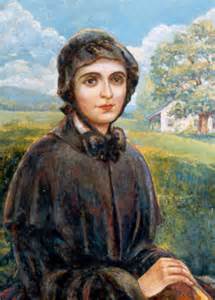
St. Elizabeth Ann Seton is the first native born American to be canonized a saint.
Elizabeth was born on Aug. 28, 1774 in New York City. She was raised in the Episcopal Church. At the early age of 3 her mother died. At the age of 19 she married William Seton, a wealthy businessman.
Within four years, she suffered the death of her father in-law which left William in charge, not only of his father’s business but the seven half-brothers and sisters as well. The business failed, forcing bankruptcy.
William became ill with tuberculosis. In an attempt to find a cure they moved to Italy. He died while living in Italy. Elizabeth grew very close to God. She accepted and embraced the will of God. Elizabeth eventually was led into the Catholic church. She had a strong devotion to the Virgin Mary.
St. Elizabeth Ann Seton established the first free Catholic school in America. On March 25, 1809 she took a vow of poverty, chastity, and obedience. She became the founder of the Sisters of Charity, which followed the rules written by St. Vincent de Paul for the Daughters of Charity in France. She became Mother Seton.
Her final years were spent leading and developing the new congregation. The sisters opened free schools and orphanages along the East Coast.
Elizabeth. died in 1821 of tuberculosis at age 46.
Pope John XXIII canonized her as St. Elizabeth Ann Seton on Sept. 14, 1975. He stated, “In a house that was very small, but with ample space for charity, she sowed a seed in America.”
The feast day of St. Elizabeth Ann Seton is celebrated on Jan. 4.
St. John Neumann was born in Bohemia in 1811. Due to the shortage of priests in the colonies, he traveled to New York to be ordained a priest and worked in an isolated parish.
Father John eventually joined the Redemptorists who were dedicated to helping the poor and abandoned. In 1852, he was appointed Bishop of Philadelphia. He increased the number of Catholic schools from two to a hundred.
His desire to hear confessions led him to learn at least six languages. He knew Spanish, English, French, Italian, Dutch and Gaelic.
Bishop Neumann died at the age of 48 on Jan. 5, 1860.
After his death the National Shrine of St. John Neumann was constructed at the Parish of St. Peter the Apostle in Philadelphia. Our Lady of the Angels College, founded by the Congregation of Franciscan Sisters he had founded renamed the College Neumann College. It was later given University status.
St. John Neumann was beatified on Oct. 13, 1963 by Pope Paul VI.
St. John Neumann was canonized on June 19, 1977 by Pope Paul VI.
The feast day of St. John Neumann is celebrated on Jan. 5, the day of his death.
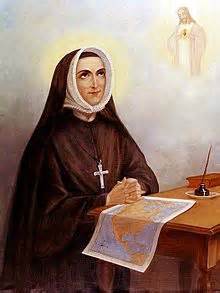
St. Rose was born in Grenoble, France in 1769. She was drawn to the contemplative life. During the French revolution she spent her time nursing prisoners. She soon joined the Society of the Sacred Heart of Jesus.
During Eucharistic Adoration she experienced a vision where she was serving God in the New World. Twelve years later , at the age of 49, she moved to the United States. She was sent to the Louisiana Territory.
In Louisiana, she opened the first free school west of the Missouri River. By 1828 she had founded six houses. She worked among the Potawatomie Indians who named her Quah-kak-ka-num-ad, “Woman-Who-Prays-Always”.
St. Rose died at the age of 83 at St. Charles, Missouri on November 18, 1852.
St. Rose was Beatified by Pope Pius XII in 1940.
St. Rose was canonized by Pope John Paul II in 1988.
The Feast Day of St. Rose is celebrated on November 18.
St. Rose is the patron saint of the Diocese of Springfield-Cape Girardeau, Missouri
St. Theodore Guerin
St. Theodore Guerin
St. Theodore Guérin’s birth name was Anne Thérése. She was born on Oct. 2, 1798 in Etables, France. Her father served in Napoleon’s navy. At the young age of 15 her father was murdered by bandits while traveling home for a visit.
Anne Thérése turned to God in the difficult years following his death. At the age of 25 she entered the Sisters of Providence to serve the poor, sick and dying. Anne Thérése became Sister Theodore. She was asked to lead a small missionary band of Sisters to the United States in Indiana.
Mother Théodore accepted the mission in spite of her fragile health. She could only consume soft, bland food and liquid. She traveled to the Unites States with five other sisters. After surviving a violent storm at sea in the trip Mother Théodore wrote the following:
“What strength the soul draws from prayer! In the midst of a storm, how sweet is the calm it finds in the heart of Jesus. But what comfort is there for those who do not pray?”
Mother Théodore established schools in Indiana and Illinois. She is described as saintly by people who knew her.
Sixteen years after coming to the United States she died. She is buried in the Church of the Immaculate Conception in St. Mary of the Woods, Indiana.
St. Théodore Guérin was beatified on Oct. 25, 1998 by Pope John Paul II.
St. Théodore Guérin was canonized on Oct. 15, 2006 by Pope Benedict XVI.
The feast day of Théodore Guérin is celebrated on October 3.
St. Théodore Guérin is the patron saint of the Diocese of Lafayette, Indiana.
St. Katharine Drexel
St. Katherine Drexel
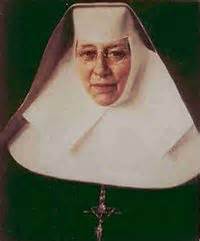
St. Katerine Drexel was born in Philadelphia, Pennsylvania on Nov. 26, 1858. She was the child of wealthy parents who taught her to be generous.
Katherine became a Sister in 1889 at the age of 31. She founded the Sisters of the Blessed Sacrament for Black and Native American people. She dedicated her life and great wealth to this work.
She helped to open the first mission school for Indians in Santa Fe, New Mexico. Other schools soon followed. She then founded Xavier University in New Orleans.
St. Katherine Drexel is the second recognized American born saint.
Katherine Drexel was beatified on Nov. 2, 1988 by Pope John Paul II.
St. Katherine Drexel was canonized on Oct. 1, 2000 by Pope John Paul II.
We celebrate the feast day of St. Katherine Drexel on March 3.
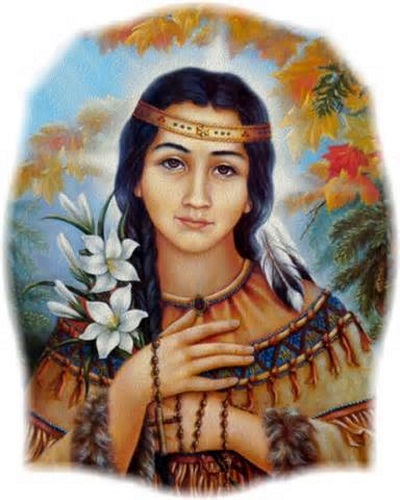
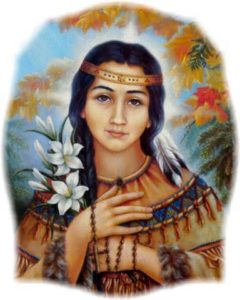
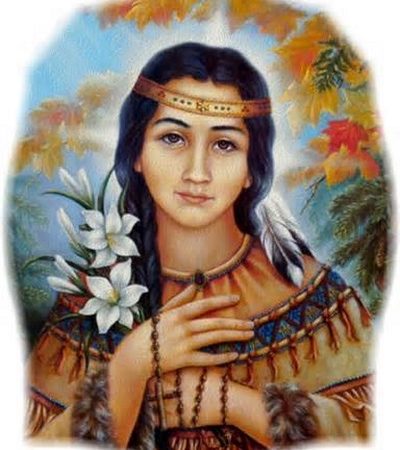
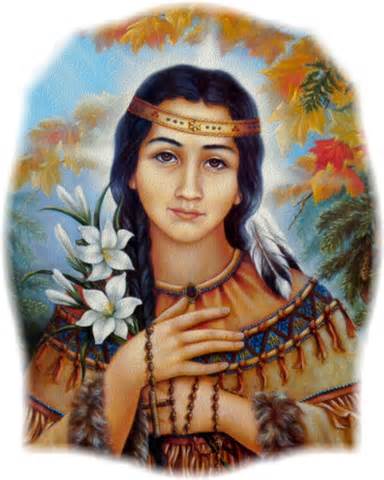
St. Kateri is the first Native American saint. She was born in 1656 to the daughter of a Mohawk warrior and a Catholic Alqonquin.
When Kateri was four years old smallpox attacked her family. Her mother and little brother died from the disease. Kateri’s face was scarred by the disease and she became partially blind. Her two Aunts and an Uncle adopted her.
On Easter, 1676, Kateri was baptized by Jesuit missionary Father Jacques de Lambertville at the age of 20. She was devoted to prayer, penitential practices and the care of the sick and aged in Caughnawaga near Montreal. Her relics are now enshrined in Caughnawaga..
Because of her conversion, she incurred hostility from her tribe. She went to a new Christian colony in Indianan, Canada. She was devoted to the Eucharist and to “Christ crucified.” She spent much time praying before the Blessed Sacrament. Her motto was…
“Who can tell me what is most pleasing to God that I may do it?”
At the age of 23 Kateri died on Wednesday of Holy Week, at approximately 3 p.m. Within fifteen minutes after her death, her face, which was marked by smallpox, was healed and became beautiful. Father Cholone called others to see what had happened.
Miraculous cures at the Sault Mission were frequent that year (1682) and attributed to Kateri. She appeared to many people after her death, always carrying a cross.
She was beatified (declared Blessed) by Pope John Paul II in 1980 and canonized by Pope Benedict XVI at Saint Peter’s Basilica on October 21, 2012.
We celebrate St. Kateri‘s feast day on July 14. She was known as “the Lily of the Mohawks”.
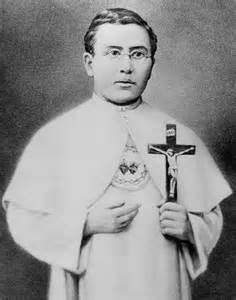
Damien was still in minor orders when he volunteered to go to Hawaii. Two months after his arrival in Hawaii, he was ordained a priest on May 24, 1864.
The Hawaiin King Kamehameha IV created an isolated settlement on the island of Molakai to deal with the public health crisis. Many people were dying of influenza, syphilis and leprosy. Father Damien wished to minister to the sick so he asked his Bishop to send him to Molokai knowing the risk of death.
When he arrived in Molokai, there were 600 lepers for him to minister to. He built the Parish Church of St. Philomena for the people to learn the Catholic faith. He restored personal pride and dignity to people who needed hope. He provided care and comfort for sixteen years. working as a priest, doctor and builder. He built houses, a school and an orphanage. Not only did he dress their ulcers, he also built over 600 coffins and dug graves.
Father Damien said ” My greatest pleasure is to go there (the cemetery) to say my beads, and meditate on that unending happiness which so may of them are already enjoying.”.
In 1885, Father Damien contracted leprosy. In his final years, he enlarged his orphanages and sought help. St. Marianne Cope came with her sisters to help him while he was ill. She reassured him she would carry on his work.
Father Damien died at the age of 49 on April 15, 1889.
The feast day of Father Damien is celebrated on May 10.
Father Damien was beatified by Pope John Paul II on June 4, 1195.
St. Damien was canonized by Pope Benedict XVI on Oct. 11, 2009.
St. Damien is known as “The Apostle of the Lepers.”
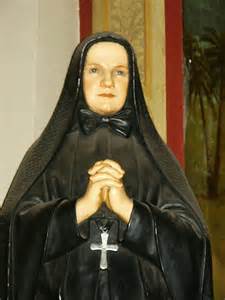
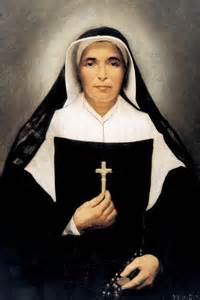
St. Marianne Cope was the first Franciscan woman from North America to become a saint.
The birth name of St. Marianne Cope was Barbara Koob (now officially Cope) She was born on Jan 23, 1838 in SE Hessen, West Germany. She was one of ten children. Her father was a farmer. The family moved to the United States one year after her birth.
Her vocation to the religious life was delayed by the necessity to support her family when her father became ill. At the age of 25, Barbara entered the Sisters of St. Francis in Syracuse, New York. She received her religious habit and the name of Sister Marianne. She served as a teacher and principal in several elementary schools in New York. She also helped establish two of the first hospitals in central NY. In 1870, she became a nurse administrator at St. Joseph’s in Syracuse, NY.
In 1882, a priest requested help managing hospitals and schools in Hawaii; primarily working with leprosy patients. She responded to his letter with the following words.
“I am hungry for the work and I wish with all my heart to be one of the chosen ones, whose privilege it will be to sacrifice themselves for the salvation of the souls of the poor Islanders…I am not afraid of any disease, hence, It would be my greatest delight to minister to the abandoned lepers.”
Along with six other sisters of St. Francis, she arrived in Honolulu in Nov. 1833. Mother Marianne was the supervisor as they managed Kakóako Branch Hospital on Oahu which treated 200 leprosy patients. They began by thoroughly cleaning the hospital. They also opened a home for the healthy daughters of the patients who were ill.
Mother Marianne met Fr. Damien (now St. Damien…the Apostle to Lepers) in January 1884 while he was still healthy.
In 1887 the new government in charge of Hawaii closed the Hospital. In 1888, she went to Kalaupapa several months before the death of St. Damien. She reassured him she would provide care for the patients at the Boy’s Home at Kalawao on the Island of Molokai.
Three Sisters ran the Bishop Home for boys and girls.
Mother Marianne died in Hawaii of natural cause on August 9, 1918 and is buried on the grounds of Bishop Home.
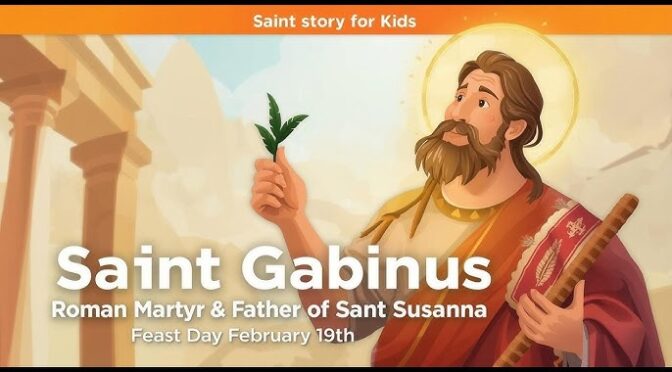
St. Gabinus was born into a noble family in Rome. His brother St. Caius became the 29th Bishop of Rome, serving as Pope for 12 years.
St. Gabinus was a priest and the father of St. Susanna whose original feast day was celebrated on August 11. Due to lack of information the feast day was removed. Her story is considered a legend, however her death is recorded in Roman Martyrology. She is believed to have been beheaded in her father’s house in the year 295 after refusing to marry Maximilian, the son in law of the pagan Emperor Diocletian. She was believed to have converted the court officers sent to convince her to marry, however, she had taken a vow of virginity.
One year later St. Gabinus was also beheaded, making him a martyr, in the year 296. He is believed to have been a missionary priest. His feast day is celebrated on Feb. 19. The Basilica San Gavino was built to honor him and local martyrs in Porte Torres, Italy.
Confirmation season is here! During the Easter season Catholics and students preparing to come into the church will receive the sacrament of confirmation. They are searching for the patron saint who will be their role model and guide during their pilgrimage on earth.
When we receive the Rite of Confirmation, we are sealed with the gift of the Holy Spirit. The symbols of the Holy Spiritare tongues of fire, a dove, and the wind.
The Catholic Church believes in the Communion of Saints. Each baptized person is a member of this communion, the living and the dead. The saints are considered the Church Triumphant. The pilgrims on earth are considered the Church Militant (still defending the faith). We ask our patron saint to pray with us and for us as we face the trials on earth. The more prayer to God on our behalf the better!
During the rite of Confirmation, the Bishop prays over the candidate calling them by the name they have chosen as their confirmation name.He also anoints them with the oil of chrism. When a person is confirmed they receive the grace of the Holy Spirit. Come Holy Spirit, Come!
Are you searching for a patron saint?
The following twenty five popular female patron saints should be considered as you search for your role model and patron saint.
St. Agatha
St. Agatha
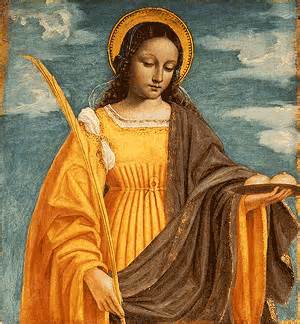
St. Agatha was born in Sicily, She is the patron saint of breast cancer. She was imprisoned and then tortured for her faith. During the torture, her breasts were amputated. In an apparition of St. Peter, she was healed. St. Agatha was a martyr for the faith. The feast day of St. Agatha is celebrated on Feb. 5.
St. Anne
St. Anne
The feast day of St. Anne is July 26. She is the grandmother of Jesus and the mother of the Blessed Virgin Mary. She is the patron saint of mothers and grandmothers. St. Anne was married to St. Joachim. Tradition tells us they were both wealthy and pious.
St. Bernadette
St. Bernadette
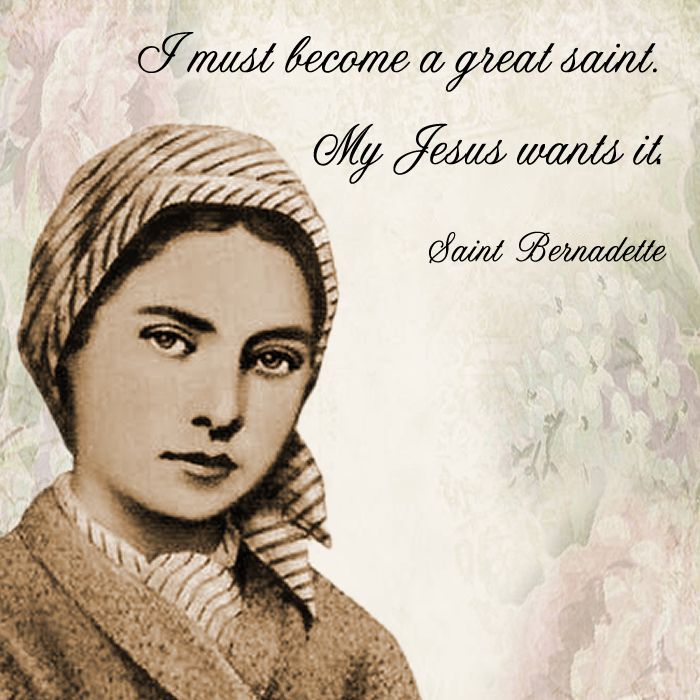
The feast day of St. Bernadette is April 16. She is the patron saint of bodily ills and orphans. While young, Bernadette suffered from digestive problems and asthma. Because of ill health Bernadette received the sacrament of the sick at least three times. St. Bernadette had a vision of the Virgin Mary when very young. At Lourdes France, she was told to dig in the mud by Our Lady. A spring appeared which resulted in many healings.
St. Catherine Laboure
St. Catherine Laboure’
St. Catherine Laboure’ is a visionary and the patron saint of the Miraculous Medal. She was born on May 2, 1806 in France. The Virgin Mary appeared to her three times instructing her to have the medal made. The medal was eventually made and credited with many miracles. The medal became known as The Miraculous Medal. St. Catherine Leboure’s feast day is celebrated on Nov. 28.
St. Catherine of Siena
St. Catherine of Siena
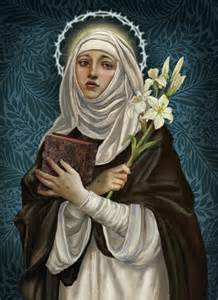
St. Catherine of Sienais the patron of firefighters. She was born in Siena, Italy in 1347. At the age of six she began having mystical experiences. She often saw gaurdian angels. She became a Dominican tertiary at the age of 16 after having visions of Christ, Mary and the saints. She is considered a great writer. Some of her ecstasies included falling into fire unharmed. This is why she is the patron of firefighters. She received the stigmata (the wounds of Christ) and her body was found to be in-corrupt. St. Catherine’s feast day is celebrated on April 29.
St. Cecelia
St. Cecelia
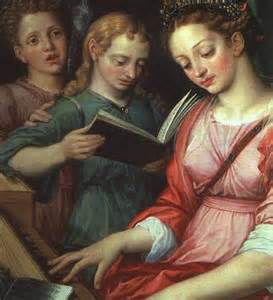
St. Ceceliais the patron saint of musicians. She was born in Rome. After seeing an angel praying at the side of his wife, Cecelia’s husband converted to the faith. St. Cecelia was arrested and martyred for her faith. An attempt to suffocate her failed after which she was beheaded. She is the patron of musicians because she heard music in her heart on her wedding day. St. Cecelia’s feast day is celebrated on Nov. 22.
St. Clare of Assisi
St. Clare of Assisi
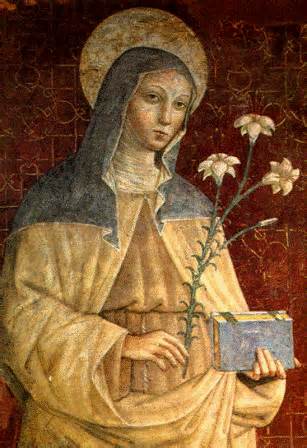
St. Clareis the patron saint of eye disease and communications. She was born in Assisi, Italy in 1194. After hearing St. Francis of Assisi preach on Palm Sunday, she joined the Franciscans. The women following St. Francis became known as “The Poor Clares”. They lived an enclosed life of prayer, away from the world and serving the sick. St. Clare’s feast day is Aug. 11.
St. Edith Stein
St. Edith Stein
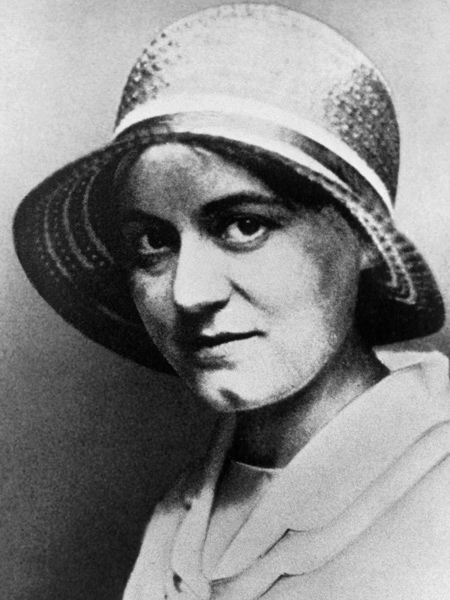
St. Edith Steinwas also known as St. Teresa Benedicta of the Cross. She is the patron saint of loss of parents and converts.. She was the youngest of a large Jewish family. In 1922 she was baptized into the Catholic Faith. When the Nazis conquered Holland she was arrested along with her sister and sent to Auschwitz. St. Edith Stein was sent to the gas chambers and died a martyr at the age of 51 in 1942. Her feast day is celebrated on Aug. 9.
St. Elizabeth Ann Seton
St. Elizabeth Ann Seton
St. Elizabeth Ann Seton is the patron saint of in-law troubles and loss of children. She grew up in New York City and married William Seton. Within four years, she suffered the death of her father in-law which left William in charge. His business failed forcing bankruptcy. They moved to Italy to help his health. He died of tuberculosis in Italy. Elizabeth grew close to God. She became Catholic and had a devotion to the Virgin Mary. She established the first Catholic school in America. On March 25, 1809 she took a vow of poverty, chastity, and obedience. She became Mother Seton. Elizabeth. died in 1821 of tuberculosis at age 46. The feast day of St. Elizabeth Ann Seton is celebrated on Jan. 4.
St. Elizabeth of Hungary
St. Elizabeth of Hungary
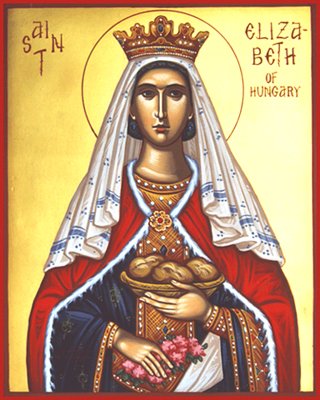
St. Elizabeth of Hungaryis the patron saint of widows , the homeless and young brides.
She was the daughter of the King of Hungary and married at age 14 to Louis of Thuring. Deeply in love, her husband died in the crusades after six years of marriage. Her in-laws disliked her generosity and threw her out of the palace. St. Elizabeth of Hungary served the poor and the sick. In 1218 she joined the Secular Franciscan Order and worked in a hospital she founded in honor of St. Francis. She died at the age of 23 in 123l. The feast day of St.Elizabeth of Hungary is celebrated on Nov. 17.
St. Faustina
St. Faustina
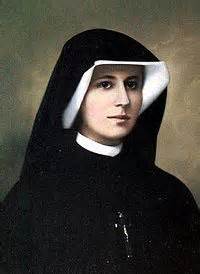
St. Faustinais the patron saint of Divine Mercy. She was born in Poland in 1905. She entered the Congregation of the Sisters of Our Lady of Mercy whose mission is the poor and education. She took the name Sister Maria Faustina. She received a message from our Lord to spread the message of his mercy to the world. She wrote about the mercy of God in her Diary which is now published. Divine Mercy is now celebrated on the Sunday after Easter. Sister Faustina died in Oct. 1938. The feast day of St. Faustina is celebrated on Oct. 5.
St. Jane Frances de Chantal
St. Jane Frances de Chantal
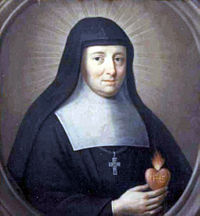
St. Jane Frances de Chantal is the patron saint of forgotten people and widows. She was born in Dijon, France in 1572. She married the Baron de Chantal (Christophe) at the age of 20. They had four children before he was killed in a hunting accident. With the aid of St. Frances de Sales, Jane founded the Visitation Order. She wrote many letters of spiritual direction. She died in 1641 at 69 years old. We celebrate the feast day of St. Jane Frances de Chantal on Aug. 12.
St. Joan of Arc
St. Joan of Arc
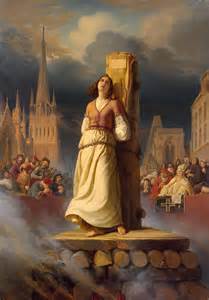
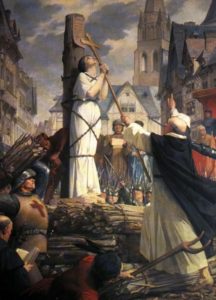
St. Joan of Arc was born in 1412 in France. She is the patron saint of soldiers and France. While very young she heard messages from St. Michael, St. Catherine and St. Margaret. They told her to go to the King of France and help him reconquer his kingdom. The 17 year old girl was given a small army with which she achieved success. She was captured and sold to the English. Joan of Arc was burned at the stake on May 30, 1431. We celebrate her feast day on May 30.
St. Kateri Takakwitha
St. Kateri Tekakwitha
St. Kateri Takakwitha is the patron saint of the environment. She is the first Native American saint. She was born in 1656 to the daughter of a Mohawk warrior and a Catholic Alqonquin. Father Jacques de Lambertville, a Jesuit missionary baptized her. She was devoted to prayer and penitenial practices. She also cared for the sick and aged. At the age of four her mother and brother died of smallpox. Kateri’s face was scarred by the disease and she became almost blind. St. Kateri died during Holy Week. Within 15 minutes of death her face was healed of its scars. She appeared to many people after her death, always carrying a cross. We celebrate St. Kateri’s feast day on July 14.
St. Margaret Mary
St. Margaret Mary
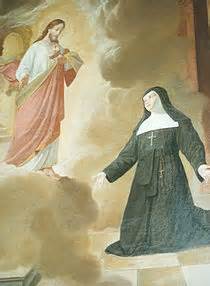
St. Margaret Mary is the patron saint of polio victims. She was born in 1647 in Burgundy, France. She was bedridden for five years as a child with rheumatic fever. She had a devotion to the Eucharist. Refusing marriage, she entered the Visitation convent. St. Margaret Mary was a visionary. She had visions of Christ which instructed her to spread the devotion to the Sacred Heart of Jesus. Eventually the devotion was officially approved. We celebrate the feast day of St. Margaret Mary on Oct. 17.
St. Maria Goretti
St. Maria Goretti
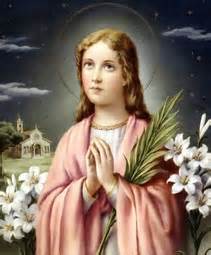
St. Maria Goretti is the patron saint of rape victims, youth and purity. She was born in Italy on Oct. 16, 1890 to a farm worker. Her father died of malaria leaving her mother struggling to feed her children. At the age of 12 she was attacked by an 18 year old neighbor who tried to rape her. When she resisted he stabbed her. Before she died a martyr in the hospital, she forgave him. However, he was sentenced to 30 years. He was unrepentant until he had a dream. Maria appeared to him and gave him flowers. It changed him forever. When he left prison, he attended the canonization of St. Maria Goretti in St. Peter’s Square. St. Maria Goretti’s feast day is celebrated on July 6.
St. Martha
St. Martha
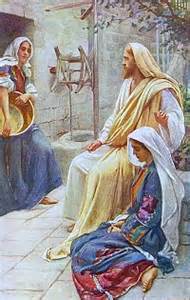
St. Marthais the patron saint of housewives, domestic workers and cooks. She lived in Bethany at the time of Jesus. She was a devoted follower and had a sister named Mary. Martha is most known for the story in the gospel Luke 10:38-42 which tells us the story of Jesus being a guest in their home. She is busy in the kitchen while Mary is sitting listening to Jesus. When Martha goes to Jesus complaining “Lord, do you not care that my sister has left me to do all the work by myself? Tell her then to help me.” Jesus responded by saying “Martha, Martha, you are worried and distracted by many things; there is need of only one thing. Mary has chosen the better part, which will not be taken away from her.” We celebrate the feast day of St. Martha on July 29.
St. Mary Magdalene
St. Mary Magdalene
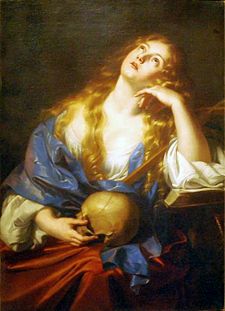
St. Mary Magdalene is the patron saint of penitent women. She was a devoted disciple of Jesus. Jesus cast out seven demons from her. Because of the sorrow she had for her sins she anointed Christ with her tears and dried His feet with her hair. Mary Magdalene was present at the crucifixion of Jesus. She is the one who discovered His body missing from the tomb. She is honored by being the first person to whom Christ appeared to after His Resurrection. She reported seeing Him by exclaiming to the other disciples. “I have seen the Lord!”
The feast day of St. Mary Magdalene is celebrated on July 22.
Mary, Mother of God
Mary, Mother of God
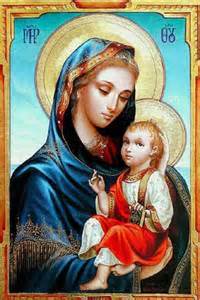
Mary is the Mother of God. She is also considered the Queen of Saints because Jesus is our King.. She is the spiritual mother of all of us. Mary is the patron saint of all of humanity, mothers, the suffering and families.
The Archangel Gabrielappeared to Mary telling her she would have a child. He said, “Hail, full of grace, the Lord is with you.” He continued saying, “Fear not, Mary for you have found grace with God. Behold you shall conceive in your womb and shall bring forth a son and you shall call his name Jesus. He will be great and will be called the Son of the Most High and the Lord God will give to him the throne of his ancestor David. He will reign over the house of Jacob forever and of his kingdom there will be no end. Mary responded, “How can this be?” The angel answered “The Holy Spirit will come upon you and the power of the Most High will overshadow you. Therefore the child will be holy. He will be called Son of God and now your relative Elizabeth in her old age has conceived a son and is in her sixth month for her who was said to be barren. For nothing is impossible. with God.” Mary responded, “Behold the handmaid of the Lord, be it done to me according to thy word.” Then the angel departed.
We celebrate many feast days to honor Mary. The feast day of Mary, the Mother of God is celebrated on January 1st.
St. Monica
St. Monica
St. Monicais the patron saint of mothers, alcoholism and troubled marriages. She was born in Africa in 331. Married to an abusive alcoholic pagan, they had three children. St. Augustine was her son. He left the church when young to live a wild life. Monica prayed constantly for his return to the faith. Eventually, he returned to the faith becoming a priest, then a Bishop. St. Monica’s husband converted to the faith before he died. St. Monica’s feast day is celebrated on Aug 27,celebrated on Aug 27,
St. Rita
St. Rita
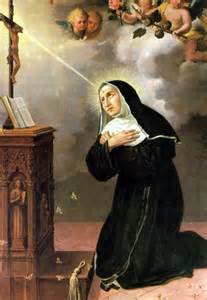
St. Rita is the patron saint of impossible cases. When she was young she desired to enter the convent. However a marriage was arranged. Her husband was violent and abusive. After twenty years of marriage her husband was stabbed to death. Her two sons also died leaving Rita alone in the world. She joined an Augustinian convent at Cacia Umbria. After praying, “Please let me suffer like you Divine Savior.” Rita was wounded by a thorn on her forehead. It would not heal and caused her to suffer until her death on May 22, 1457.
The feast day of St. Rita is May 22.
St. Teresa of Avila
St. Teresa of Avila
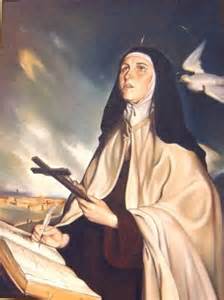
St. Teresa of Avila is the patron saint of headache sufferers. She was born in Spain in 1515. Her mother died when she was 14. Her father placed her in a convent to protect her from the world. She struggled to balance her love of God with her need for friends and fun. She eventually joined the Carmelite Order. She was a mystic and a poet and an author. She is considered a Doctor of the Church Her feast day is celebrated on Oct. 15.
Bl. Teresa of Calcutta Public Domain Image
St. Teresa of Calcutta
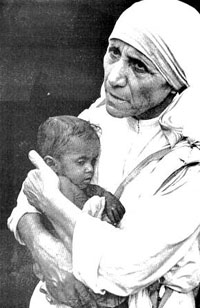
St. Teresa of Calcuttais the patron saint of World Youth Day, the poorest of the poor, and the dying. She joined the Institute of the Blessed Virgin Mary, known as the Sisters of Loreto. Born in Skopje, her birth name was Agnes Ganxha Bojaxhiu. She became Sister Mary Teresa after St. Therese of Lisieux. In 1946, she had a “call within a call”. She heard Jesus say “Come be My light”. She formed the Missionaries of Charity and served the sick and dying in Calcutta, India. Mother Teresa became known to the world as a living saint. She died on Sept. 5, which is the day we celebrate her feast day.
St. Therese of Lisieux
St. Thérèse of Lisiuex
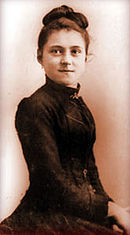
St. Thérèse of Lisiuex is the patron saint of missions. She is also a Doctor of the Church. She was born in 1873 in France. St. Thérèse became known as the “Little Flower” because of her statement, “The only way I can prove my love is by scattering flowers and these flowers are every little sacrifice, every glance and word and the doing of the least action for love.” Her spirituality is known as “The little way”. She believed in trusting Jesus to make her holy and relying on small sacrifices instead of great deeds to find holiness. She is the author of “The Story of a Soul”. The feast day of St. Thérèse is celebrated on Oct. 1.
St. Veronica
St. Veronica
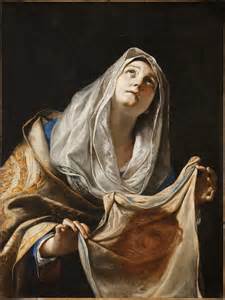
St. Veronica is the patron saint of photographers. Little is known about Veronica. She was a follower of Jesus and present during his crucifixion. While Jesus carried the cross, she was moved with compassion. She knelt in front of Jesus and used her veil to wipe his face clean. Her kindness is commemorated on the sixth station of the cross prayed by the church. The soldiers pushed Veronica away and she later discovered the imprint of Christ’s face on her veil. It is believed that Veronica left her veil in the care of Pope Clement I, the successor to St. Peter. St. Veronica’s feast day is celebrated on July 12
St. Joan of Arc was born in Domremy, France in 1412 on the Feast of the Epiphany on Jan. 6. Her parents, Jacques and Isabelle were peasants. She was the youngest of four children, having three older brothers. She helped her mother with spinning and helped shepherd the animals. She was very devout as a child enjoying her religious faith and spending her free time in church.
St. Joan grew up during the “Hundred Years War”, which never seemed to end. The French were losing the war while she was young. England was invading the country of France causing much suffering. Joan prayed with great devotion and fervor for the suffering people.
At the age of thirteen, Joan began to have visions and hear voices which counseled her. She claimed to hear the Voice of God, Michael the Archangel,St. Catherine of Alexandria and St. Margaret of Antioch. In 1428, the voices told her to go tho the King of France and help him reconquer his kingdom. She was told to accompany Prince Charles to his coronation. St. Joan went to the town of Vaucouleurs seeking help from the military commander. After three trips he decided to listen to her.
She was given an escort of six which included two knights. They left on Feb. 23, 1429. The journey was 400 miles, taking eleven days in the winter to travel. She was given permission to meet with Prince Charles VII. However, he concealed himself in the crowd to test Joan. Joan, however, recognized him. St. Joan spoke to him, saying:
“I am Joan the Maid and to you is sent word by me from the King of Heaven that you will be anointed and crowned in Reims and you will be Lieutenant to the King of Heaven who is King of France.”
After being questioned by clerics who asked for a sign Joan was eventually given a sword, armor and a banner with the names of Jesus and Maria to lead the French Army to Tours in 1429. She was only 17 years old.
St. Joan led French troops against the English and recaptured the cities of Orleans and Troyes. Prince Charles was then anointed King with St. Joan at his side holding the banner in 1429.
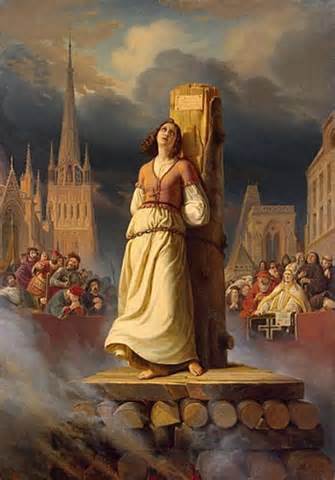
St. Joan of Arc Burning at Stake
St. Joan was later captured and then sold to the English. Joan spent six months in prison before she was put on trial for heresy and witchcraft. After being found guilty she was burned at the stake in 1431. Her ashes were scattered in the Seine River. A second trial was held 25 years later which overturned the first verdict because it was politically motivated. Joan was declared a martyr.
St. Joan was beatified by Pope Pius X and canonize by Pope Benedict XV in 1920 who said that she is a “most brilliantly shining light of God.”
I know this now,
Every man gives his life for what he believes.
Every woman gives her life for what she believes.
Sometimes people believe in little or nothing.
One life is all we have and we live it as we believe in living it and then it’s gone.
But to surrender what you are and to live without belief
is more terrible than dying…even more terrible than dying young.
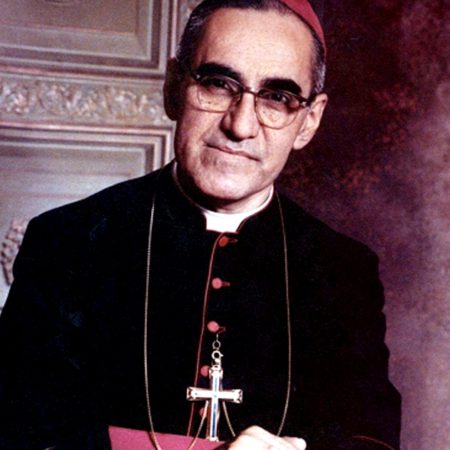
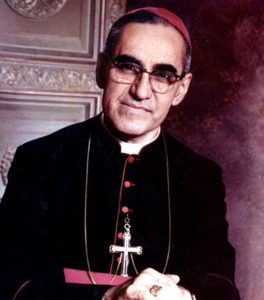
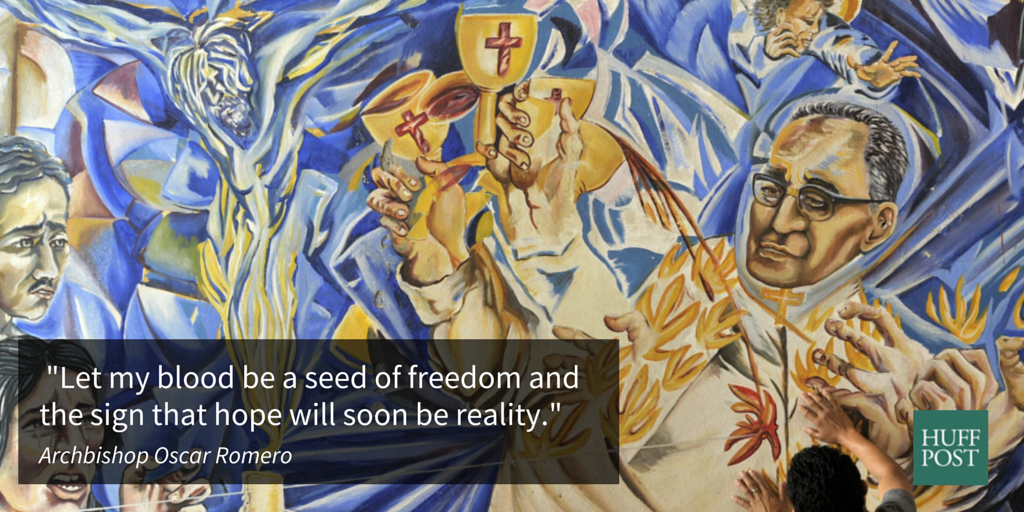
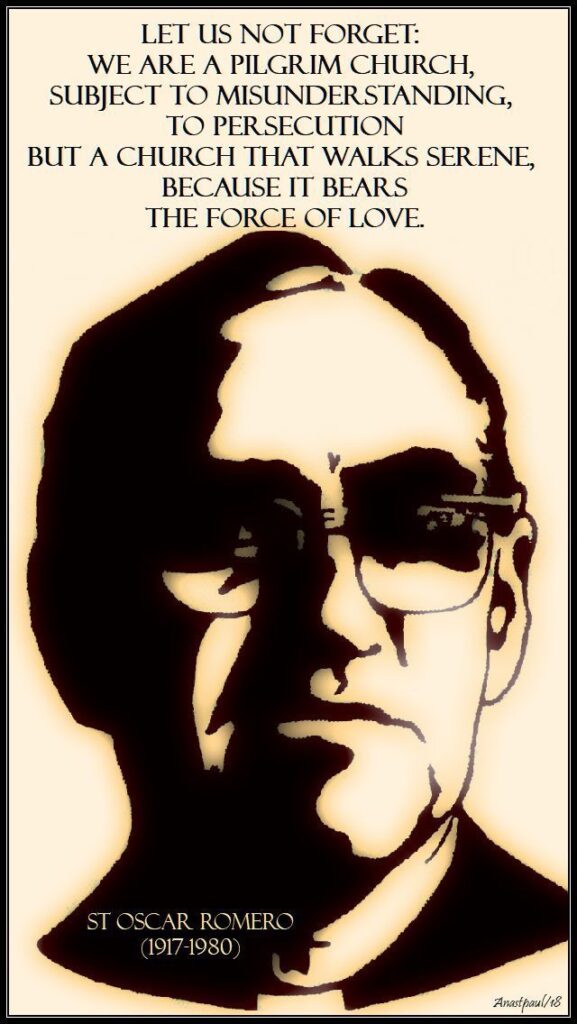
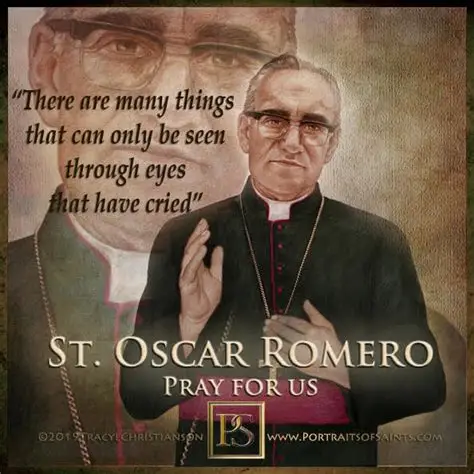
The feast day of St. Oscar Romero is celebrated on March 24.
St. Oscar Romero was born on August 15, 1917 in Ciudad, Barrios. He had six brothers and sisters. At the age of 13 he entered a seminary run by Claretians. He studied under the Jesuits in the national seminary and finished his studies in Rome in the Gregorian University. He was ordained on April 4, 1931 remaining in Rome to further his studies.
His first parish when he returned home was in Anamoras. He then worked for twenty years in San Miguel. In 1970 he was appointed auxiliary bishop; becoming archbishop in 1977. Because of his conservative beliefs his appointment was opposed by some. On March 12 a progressive Jesuit priest and friend to Oscar Romero was assassinated. Romero urged an investigation but was ignored.
Bishop Romero spoke out against poverty, social injustice, assassinations and torture which was taking place in his country. In 1979 the government was taken over by a radical group which resulted in civil war. Over 75,000 El Salvadorians were murdered. Bishop Romero was nominated for the Nobel Peace Prize in 1979. Bishop Romero said it was a problem to support the government in El Salvador because it legitimized the terror and assassinations. Bishop Romero warned U.S. President Jimmy Carter in Feb. 1978 that increased military aid would “sharpen the injustice and the repression inflicted on the organized people, whose struggle has often been for their most basic human rights.” President Carter ignored Bishop Romero’s warning.
Archbishop Romero denounced the persecution of the Church. There had been over six priests martyred in three years while he was bishop.
On March 13, 1980, Archbishop Romero was shot to death while celebrating mass in the chapel near his cathedral. The day before the assassination, he had called for soldiers to obey God and to stop carrying out government repression and violations of human rights. It is believed the assassination was carried out by members of Salvadorian death squads.
Over 250,000 mourners attended his funeral. During the funeral a bomb exploded resulting in mass panic. Between 30-50 people died during the following chaos.
Pope Francis has recognized the martyrdom of Archbishop Romero, paving the way for his beatification which was held on May 23, 2015.
Pope Francis canonized St. Oscar Romero on October 14, 2018.
“Beautiful is the moment in which we understand that we are no more than an instrument of God; we live only as long as God wants us to live; we can only do as much as God makes us able to do; we are only as intelligent as God would have us be.”
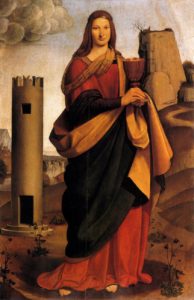
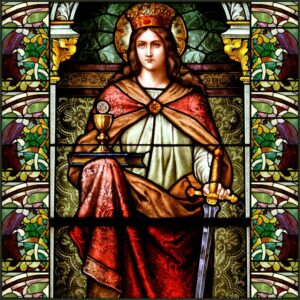
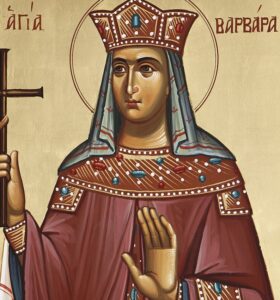
The Feast Day of St. Barbara is celebrated on December 4. She is one of the Holy Helperswho are known for the healing power of prayer. She is invoked to prevent sudden death.
St. Barbara was a virgin and a martyr. She lived in Sicily in the third century. Her father was a wealthy Syrian. When his wife died he devoted himself to his only daughter. Because Barbara was so beautiful, her father (Dioscorus) decided he needed to protect her from strangers and built her a tower. She was educated by pagan tutors.
From the tower, Barbara had a wonderful view of the meadows, hills and river. She developed a spirituality which focused on the beauty of creation by our creator. She also decided to devote herself to God and to remain a virgin. Because of her beauty she had many suitors, but she refused to marry.
Barbara’s father wanted her to marry, so he decided to let her come down from the tower and socialize. Barbara became friends with some Christians. While her father was away she was baptized after being instructed in the faith by a priest.
At the time, a bathhouse was being built on their property. It had two windows. Barbara requested a third window to create a trinity of light. Barbara traced the sign of the cross on one of the walls and it left an imprint on the marble. The water in the bathhouse became known for its healing power.
When her father returned from his traveling, he was furious to learn Barbara had converted to Christianity. He became enraged and almost struck her with a sword. Barbara fled into the hills and hid in a cave. She was eventually found and severely beaten. She was then turned over to the city prefect. Barbara was then tortured and had her wounds rubbed with a hair cloth. During the night, after praying for relief, Jesus appeared to her and healed them. The next day she was beaten again. A woman in the crown named Juliana denounced the torturers and she was also seized and tortured.
Barbara and Juliana were both tortured and paraded through town naked. An angel appeared after hearing Barbara’s prayers and gave them splendid robes. Both Barbara and Juliana were beheaded. St. Barbara was beheaded by her own father. Immediately, after the execution, he was struck by lightning.
The relics of St. Barbara were moved in the sixth century to Constantinople. Six hundred years later they were moved to Kiev.
St. Barbara is known for protecting against sudden death.
“Keep a clear eye toward life’s end. Do not forget your purpose and destiny as God’s creature. What you are in his sight is what you are and nothing more. Remember that when you leave this earth, you can take nothing that you have received…but only what you have given; a full heart enriched by honest service, love, sacrifice, and courage.”