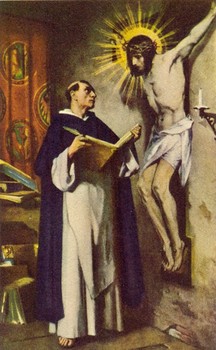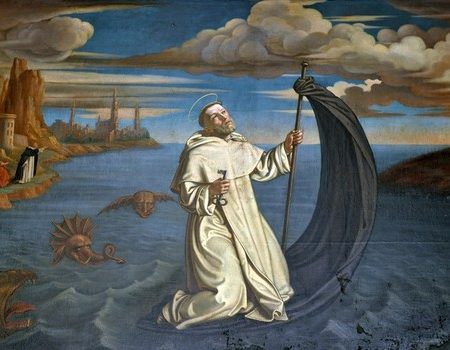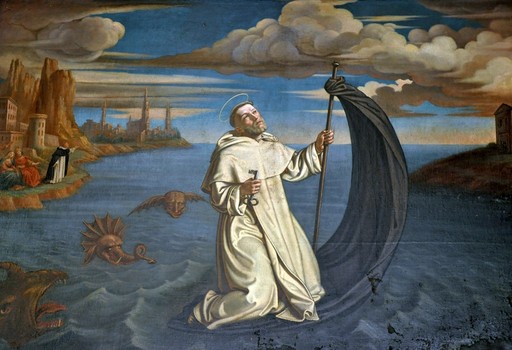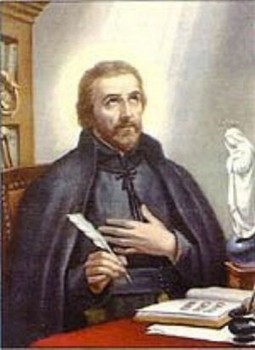
The Feast Day of St. Raymond is celebrated on January 7. He is the patron saint of canon lawyers.
St. Raymond was born in Spain in 1174. He was related to the King of Aragon. After becoming a well-known teacher, he decided to join the Order of Preachers, also known as the Dominicans.
Thousands of Muslims are believed to have been converted to Christianity by his influence. St. Raymond had a great devotion to the Blessed Virgin. He founded the Order of Our Lady of Ransom. The order devoted itself to helping Christians who had been captured by the Moors during the crusades.
St. Raymond compiled Church decisions and decrees for the Pope. His collection filled five books. He is the patron saint of canon lawyers. For two years Raymond was the leader of the Dominicans. After he resigned the position, he devoted himself to what he loved most; praising God and preaching about him to the people.
St. Raymond died in the year 1275 at the age of 100.
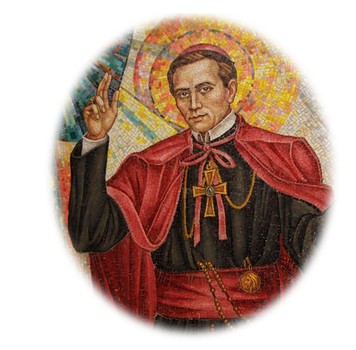
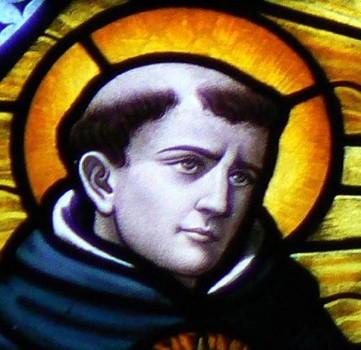
The Feast Day of St. John N. Neumann is celebrated on January 5. He was a Redemptorist priest and bishop. He is the patron of sick children and of immigrants and Catholic education.
St. John Neumann was born in Bohemia in 1811. Due to the shortage of priests in the colonies, he traveled to New York to be ordained a priest and worked in an isolated parish. Father John eventually joined the Redemptorists who were dedicated to helping the poor and abandoned. In 1852, he was appointed Bishop of Philadelphia. He increased the number of Catholic schools from two to a hundred.
The desire to hear confessions led St. John Neumann to learn at least six languages. He knew Spanish, English, French, Italian, Dutch and Gaelic.
While doing errands on January 5, 1860, Neumann collapsed and died on a Philadelphia street. He was 48 years old. After his death the National Shrine of St. John Neumann was constructed at the Parish of St. Peter the Apostle in Philadelphia. Our Lady of the Angels College, founded by the Congregation of Franciscan Sisters which he had founded was renamed. It became known as the Neumann College. It was later given University status.
St. John Neumann was beatified on Oct. 13, 1963 by Pope Paul VI. He was canonized on June 19, 1977 by Pope Paul VI.
“A man must always be ready for death, for death comes when and where God wills it.”
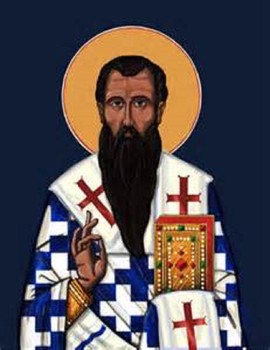
The Feast Day of St. Basil the Great is celebrated on January 2. He is the patron saint of hospital administrators and a Doctor of the Church. He was the Bishop of Caesarea
St. Basil was born in 330 at Caesarea of Cappadocia. He was born into a family of ten children. He studied at Constantinople and Athens where he met St. Gregory Nazianzen.
Before deciding to become a monk, he practiced law and opened a school. He directed the monastery in Pontus for five years. He eventually was ordained a priest. St. Basil became bishop in 370. He fought against Arianism ( the belief that Jesus was not divine in nature) at the Council of Constantinople. He also fought for reform of the clergy. He was known for his holiness and was tireless in caring for his people. He was known for preaching twice a day to huge crowds. The hospital that he built was a hospital that was called a wonder of the world.
Basil was best known for his preaching. Because of his writings he is considered a one of the great teachers of the Church.
Sickly since youth, the work of teaching, his life of abstinence, and the responsibilities and sorrows of pastoral service took their toll on him. Saint Basil died on January 1, 379 at age 49.
St. Basil is considered a Doctor of the Church. He is the patron saint of hospital administrators.
“Troubles are usually the brooms and shovels that
smooths the road to a good man’s fortune;
and many a man curses the rain that falls upon his head,
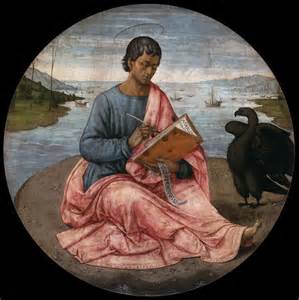
December 27 is the Feast Day of St. John the Evangelist. He is the patron of writers, editors, and publishers. This honor is due to his writing of the fourth gospel, three epistles and the Book of Revelations.
John was the son of Zebedee. He and his brother James the Greater were called by Jesus to follow him as his Apostles. James and John were known as the “sons of thunder”.
John is referred to as the “beloved disciple”. At the Last Supper, it is John who sat next to Jesus. He is the only apostle not to die a martyr’s death.
In the gospels, John with Peter and James were the only witnesses to Jesus raising of the daughter of Jairus. (Luke 8.40) They were also at the transfiguration and the Agony in the Garden. Jesus sent only John and Peter into the city for the preparation of the final Passover meat. ( Last Supper).
The writings of John have been very important in the life of the church. It was the last gospel written. John did not focus on the parables of Jesus. He focused on the divinity of Jesus and the major themes of Jesus teaching. The first chapter of John especially focuses on the divinity of Jesus.
“In the beginning was the Word and the Word was with God and the Word was God. He was in the beginning with God. All things came into being through him and without him not one thing came into being. What has come into being in him was life, and the life was the light of all people. The light shines in the darkness and the darkness did not overcome it.”(John 1.1)
The gospel of John contains the “I am” sayings of Jesus. These sayings teach us a a great deal about Jesus. They are:
I am the bread of life (6.35)
I am the light of the world (8.12)
I am the gate for the sheep (10.7)
I am the good shepherd (10.11)
I am the way, and the truth, and the life (14.6)
I am the vine, you are the branches (15.5)
Reflecting on these gospel readings can help us to know Jesus in a much deeper way. John also shares with us his vision of the “end times” in the Book of Revelation. This book is probably the most misunderstood book in the bible. One of the things it teaches is the Christian belief that good will be victorious over evil. The book of Revelation also gives us the image of Jesus as “The Lamb of God”.
St. John was the only apostle who did not flee during the death of Jesus. He stood courageously at the foot of the cross with Mary and the other women. It is during the crucifixion that Jesus says,
“Woman, here is your son.” Then he said to the disciple. “Here is your mother.“ And from that hour the disciple took her into his own home. (John 19.26)
This is why Catholics consider Mary to be their spiritual mother.
The home John and Mary lived in is believed to be in Ephesus. After its discovery, it became a shrine for pilgrims. Tradition states that Joseph had died earlier in the life of Jesus. John lived primarily in Jerusalem and Ephesus after the crucifixion. He founded churches in Asia Minor.
Popular legend tells us Roman officers attempted to poison him. However, when John blessed the chalice the poison was turned into a snake. He was then ordered cast into boiling oil but because he was uninjured he was banished to the island of Patnos for a year. He lived to an old age, dying around the year 100.
Prayer to St. John the Evangelist
Shed upon your Church, O Lord, the brightness of your light, that we, being illuminated by the teaching of your apostle and evangelist John, may walk in the light of your truth, that at length we may attain to the fullness of eternal life, through Jesus Christ Our Lord, who lives and reigns with your and the Holy Spirit one God for ever and ever. Amen
The Feast Day of St. Peter Canisius is celebrated on December 21. He is the patron saint of the Catholic Press, a Jesuit priest and a Doctor of the Church.
St. Peter Canistius was born in Holland in 1521. He received his masters degree at the age of 19 from the University of Cologne. He studied art, law, and theology. He met Peter Faber, the first disciple of Ignatius, at a retreat. Soon after, he decided to become a member of the Society of Jesus, (the Jesuits). He was ordained in 1546. During the Council of Trent he was a delegate. St. Peter taught at several universities and established colleges and seminaries. He also wrote a catechism for lay people which was easy to understand. It was translated into twelve languages. He was an eloquent preacher, leading the counter reformation and renewing the faith in southern Germany. He also led reform in Austria, Bavaria and Bohemia.
After Mass one day, he received a vision of the Sacred Heart. Afterward, he offered his work to the Sacred Heart of Jesus.
Prior to his death he suffered from a paralytic seizure. He continued preaching and writing until his death on Dec. 21, 1597.
“Anyone who wishes to frolic with the devil cannot rejoice with Christ.”
The Feast Day of St. Dominic of Silos is celebrated on December 20. He is the patron saint of pregnant women, shepherds and prisoners. He was a Benedictine monk and priest.
St. Dominic of Silos was born in Navarre, Spain. around the year 1000. He was a peasant, shepherding his father’s flock. His love of solitude led him to become a Benedictine monk. He was ordained a priest becoming the Master of novices and prior. Because of his opposition to the annexation of the monastery land he was driven into exile.
St. Dominic turned to King Ferdinand I of Leon for aid. King Ferdinand found him refuge in the town of Silos in a decaying Abbey occupied by six monks. Dominic became the abbot of the community. He rebuilt the monastery both physically and spiritually. The monastery became a center of book design and scholarship Its proceeds were used for charity. St. Dominic raised funds to ransom Christians taken prisoner by the Moors. The membership in the monastery increased to 40 monks.
St. Dominic died on Dec. 20. Many healings were reported at the monastery, especially regarding pregnancy. Almost one hundred hears after his death, Blessed Joan de Aza de Guzmán prayed at his shrine to conceive the child she named Dominic.
“Is it not reward enough to know that one is doing the will of God?”
Quote of St. Just Bretenie’res; Feast day September 20
The Feast Day of St. Adelaide is celebrated on December 16. She is the patron saint of abuse victims and brides.
St. Adelaide was born in 931 in Burgundy. Her marriage, at the age of 15 or 16 to Lothair, heir of King Hugh of Italy. was arranged by her father. Their union was unhappy but short due to his death three years later. Adelaide refused to marry the son of his successor, Berengar. She was imprisoned in an attempt to force a marriage. Adelaide escaped and requested aid from the Emperor Otto. She eventually married him. They had four children; the future Otto II and three daughters (two became nuns). Otto and Adelaide received the imperial crown from John XII.
After the death of Otto, her son Otto II succeeded him. He also died. Otto III, still a minor was entrusted the joint registry of his mother and grandmother. After he took full power, Adelaide devoted herself to pious works establishing many churches and monasteries.
St. John of the CrossPrayers, Quips and Quotes: St. John of the Cross, Feast Day December 14
The Feast Day of St. John of the Cross is celebrated on December 14. Because of his mystical writing, he is called the Mystical Doctor. He is one of the 35 Doctors of the Church. He is the patron of mystics.
Juan de Yepes Alvarez was born in Spain in 1542. His father was disowned by the family when he married a weavers’ daughter. His father died soon after his birth. Most of Juan’s childhood was spent in poverty. As a teenager, Juan worked in a hospital caring for the terminally ill and mental patients.
At the age of 21, Juan became a brother in the Carmelite Order. He went for higher studies in Slamanca and was ordained a priest, taking the name of John of the Cross at age 25. He soon met St. Teresa of Avila, a Carmelite nun, who convinced him to help her in the work of reforming the Carmelite Order. There was great resistance to the reforming of the order to a more prayerful life. Those against the reform actually kidnapped him. They held him prisoner for over nine months in a small cell, six by ten feet wide. He was beaten often. During this time of trial, St. John of the Cross became very close to God, spending his time writing his mystical poetry. He eventually escaped using a rope made of strips of blankets to climb out the window. The only thing he took with him was his writings. John hid in a convent infirmary where he read his poetry to the nuns. From this period on he shared his experience of God’s love.
St. John of the Cross wrote many books including:
St. John of the Cross
Ascent of Mount Carmel,
Dark Night of the Soul
A Spiritual Canticle
Living Flame of Love
In 1579, he became Rector of Colegio de San Basilio, continuing his writing ministry. He is known for a spirituality which believes in the prayer of detachment. His spirituality also focused on joining our suffering to the Paschal Mystery (the death and suffering of Jesus Christ). He taught that the Cross leads to resurrection, agony to ecstasy, darkness to light, abandonment to possession, denial of self to union with God.
St. John of the Cross died of fever caused by cellulitus. He was canonized by Pope Benedict XIII in 1726. His feast day is Dec. 14, the day of his death and entry into heaven.
The Feast day of St. Lucy is celebrated on December 13. She is the patron saint of the blind and visually impaired. She is also a martyr.
St. Lucy was born in 283 in Syracuse (Sicily). The name Lucy means “Light”. Her feast day is celebrated on Dec. 13, the day she was executed.
Lucy was born into a wealthy family of Greek ancestry. She vowed her life to Christ. Her Roman father died when she was young. Her mother tried against her will to arrange a marriage for her. After Lucy prayed at the tomb of St. Agatha, her mother’s illness (probably a hemorrhage), was cured. Her mother then agreed to let Lucy consecrate herself to Christ and to remain a virgin.
The rejected suitor of Lucy denounced her and reported her Christianity to the authorities. The magistrate Paschasius was known for his persecution and torture of Christians. He ordered her to burn a sacrifice to the emperor’s image. When she refused, she was ordered to be executed, in the year 304, at the age of 21. The attempt to burn her to death failed, so she was executed by a sword to the throat. Before the execution, she was tortured, having her eyes gouged. This is why she is the patron of the blind and visually impaired. In art St. Lucy is frequently shown holding a golden plate with her eyes on it.
Legend concludes that God restored her sight before her death.
While some of the history of St. Lucy is legend, her name is mentioned in several different places, including the canon of St. Gregory, indicating that she is a real person. By the sixth century, devotion to St. Lucy was widespread.
The Feast Day of Our Lady of Guadalupe is celebrated on Dec. 12. She has been named the patron of the Americas.
Our Lady appeared to a peasant near Mexico City named Juan Diego in 1529. She appeared to him as an Aztec Princess, and spoke in his native tongue. She requested he tell the bishop to build a church on the site. Initially the bishop was skeptical, demanding proof of the vision. Juan Diego returned to the site of the vision to find Castillo Roses blooming in the frozen earth. He collected them and returned to the bishop. When he opened his cloak, the flowers fell to the ground and an image of Our Lady of Guadalupe was imprinted on his cloak. (The miracle of the roses) His cloak is under glass, on display, in the Basilica of Our Lady of Guadalupe in Mexico City.
The Basilica of Our Lady of Guadalupe was soon built. Over six million soon converted to the faith because of the apparition.
There have been many apparitions of Mary over time. Not all of them have been approved by the Church. While belief in the apparitions is not a requirement, devotion to the approved apparitions are encouraged. Before an apparition can be approved it is thoroughly investigated by the Vatican.
The church teaches us that Mary always leads us to her Son, Jesus. Jesus is both human and divine; Mary is human only, but the mother of Our Lord. We consider her our spiritual mother, to whom we can always turn to for intercessory prayer. (To Jesus, Thru Mary)
Anyone who is questioning the reverence held for Mary should ask themselves several questions.
Do the commandments require us to honor our father and mother?
Did Jesus honor Mary?
Are we not called to imitate Jesus?
Why then, should we not honor Mary, His mother?
The following prayer to Mary is a sample of intercessory prayer. In this type of prayer, we ask a saint, or another person, to pray for us and with us.
BeautifulVirgin of Guadalupe, I ask you on behalf of all my brothers and sisters of the world that you bless us and protect us. Give us proof of your love and kindness. Oh pure Virgin of Guadalupe, give me through your Son, forgiveness for my sins, blessings for my job, cure for my diseases and needs, and all that you deem necessary. I ask for my family, Oh Mother of God, do not disdain the pleas we present to you in our needs. Amen
The Feast day of the Immaculate Conception is celebrated on Dec. 8 during the season of Advent. The feast day celebrates the belief that Mary was conceived without the stain of original sin. It is often misunderstood as the celebration of the conception of Jesus.
Mary under the title of the Immaculate Conception is the Patron Saint of Brazil and the United States.
The feast day became a celebration for the universal church in the 18th century. Pope Pius IX declare;
“The most Blessed Virgin Mary, in the first instant of her conception, by a singular grace and privilege granted by Almighty God, in view of the merits of Jesus Christ, the savior of the human race, was preserved free from all stain of original sin.”
Mary herself confirmed her title to St. Bernadettesaying to her;
The Feast Day of St. Ambrose is celebrated on December 7. He was the Bishop of Milan and proclaimed a Doctor and Father of the Church. St. Ambrose is the patron saint of bee keepers and students.
St. Ambrose was born in the year 339. He studied in Rome, Italy becoming a lawyer. He was in the process of converting to Catholicism when a great dispute arose after the death of the Bishop of Milan. It was Ambrose who intervened and maintained order. Everyone was so impressed that they requested him as their next bishop even though he he was only a cathecumen (student) and not yet baptized. Resisting at first, eventually Ambrose agreed. He was baptized and eight days later on Dec. 7, 374 he was consecrated the Bishop of Milan at the age of 35.
As bishop he immediately gave his money to the poor. He was known for his fight against paganism and Arianism ( the belief that Jesus Christ did not have a divine nature). He was instrumental in the conversion and baptism of St. Augustine. The title “Honey tongued Doctor” was given to him because of his speaking skills. Because of his title he became the patron saint of bee keepers.
St. Ambrose died of natural causes on April 14, 397.