Tag Archives: September Feast Days

Prayers, Quips and Quotes: The Korean Martyrs, Feast Day September 20


Korean Martyrs Public Domain Image
Korean Martyrs

The martyrdom of 103 Koreans is celebrated on September 20.

For over 100 years the Christians in Korea practiced their faith in secret.  The government of Korea was based on Confucianism and believed that Christians were a threat to the government.

The first known martyrs are Paul Youn and James Kouen.  They were martyred after refusing to offer sacrifice on the death of a relative.

  Over the next 100 years over 10, 000 Korean Christians were tortured and executed.

On May 6, 1984, in Seoul, Pope John Paul II canonized 103 of the martyrs.  Their feast day is celebrated on September 20.

Martyrdom is the heroic act of love.
Quote of St. Just Bretenie’res……Korean Martyr; Feast Day March 7
September is the Month of Our Lady of Sorrows

Save

Save

Save

Prayers, Quips and Quotes: Our Lady of La Salette, Feast Day September 19


Our Lady La Salette Public Domain Image
Our Lady La Salette

On Saturday, Sept. 19, a globe of light opened to reveal a beautiful woman seated on a stone.  The woman appeared to two shepherd children in Salette, France.  The apparition was approved and is celebrated on September 19.

The children’s names were Melanie Calvat, age 15,  and Maiximin Graud, age 11.  The woman was gently crying and asking for the people and the priests to repent of their sins.   She called for penance.

Our Lady was tall, wearing a pearl studded dress and white shawl with a tiara on her head.  A crucifix was hanging from her neck.  She seemed to be made of light.  As she talked to the children she warned of coming war and famine.

Our Lady asked the children to pray day and night for the salvation of the world.

Our Lady of La Salette warned of chastisements that would fall upon humanity if they didn’t change their ways. Before ascending into heaven she urged the children to pray more and gave each of them a secret that was revealed to Pope Pius IX in 1851 concerning threats to the church and to the world.

While Our Lady’s message focused on conversion and penance she also gave the children a message of hope regarding the power of prayer saying:

“if they are converted, the stones and rocks will change into mounds of wheat, and the potatoes will be self-sown in the land”,

After the apparition many people made amends for the wrongs they had done.  Miracles began occurring at the site, as people were cured over various ailments from water from the spring there within weeks of Our Lady’s appearance. The Church officially approved of this apparition (deeming it worthy of belief) after much investigation and debate in 1851. Construction of a church at La Salette began in 1852 and was completed in 1865.  It was designated as the Basilica of Our Lady of La Salette in 1879.

Pope John Paul II made the following comment on the Apparition of La Salette:

“In this place, Mary, the loving Mother appeared manifesting her pain for the moral evil caused by humanity.  Her tears help us to understand the seriousness of sin and the rejection of God, and at the same time it is a manifestation of the passionate fidelity that her Son has for each person, even though His redemptive love is marked by the wounds of treason and abandonment by men.”
  Of all the virtues of the Virgin Mary, the most admirable is her great humility;  it is a virtue of which we ourselves have a great need.
Quote of Bl. Alphonsus de Orozco;  Feast Day September 19
September is the Month of Our Lady of Sorrows


Save

Save

Save

Save

Prayers, Quips and Quotes: St. Joseph of Cupertino, Feast Day September 18


St. Joseph of Cupertino Public Domain Image
St. Joseph of Cupertino

The Feast Day  of St. Joseph of Cupertino is celebrated on September 18.  St. Joseph of Cupertino is the patron saint of air travelers, pilots, astronauts, and those with learning disabilities.

St. Joseph of Cupertino was born on June 17, 1603 in Puglia, Italy.  His father died before he was born leaving his mother destitute.  He was born in a stable.  As a child he was a slow learner, probably having a learning disability.  When he was 17 he was denied acceptance to the Order of the Friars Minor Conventuals due to lack of an education.  He was however, accepted into the Capuchins at Martino near Cupertino.  He gardened, tended the animals and worked in the kitchen.

Because of his learning disabilities St. Joseph could only study small amounts of material at a time.  He then prayed to remember the material for the test.  St. Joseph was ordained in 1628.

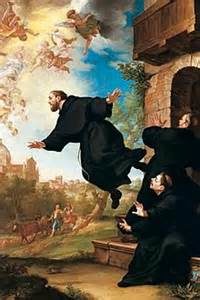
St. Joseph was a mystic with the gift of miraculous levitation and visions.  Anything religious could cause him to levitate.  During prayer he was known for his ecstasies and  suddenly levitating.  The first time levitation occurred was on the feast of St. Francis of Assisi, October 4 1630.  During the procession he suddenly rose into the sky and hovered over the crowd.  He was so embarrassed he fled and hid.  The levitation happened so often he earned the title “The Flying Saint”.   

The most famous act of levitation occurred while he was in the presence of Pope Urban VIII.  He was filled with reverence and immediately was lifted into the air.  During the Inquisition he was confined for several weeks but released.  Crowds tried to meet him until he was place in seclusion…unable to speak to anyone other than the bishop the vicar general of the Order, his fellow friars and a doctor if needed.

After his death on Sept. 18, 1663, great crowds of people attended his funeral.  Pope Clement XIII canonized St. Joseph of Cupertino on July 16, 1767.

A movie has been made of his life named A Reluctant Saint.  St. Joseph of Cupertino is the patron saint of air travelers, pilots, astronauts, and those with learning disabilities.

“The fullness of joy is to behold God in everything.”
Quote of St. Catherine of Genoa;  Feast day September 15
September is the Month of Our Lady of Sorrows
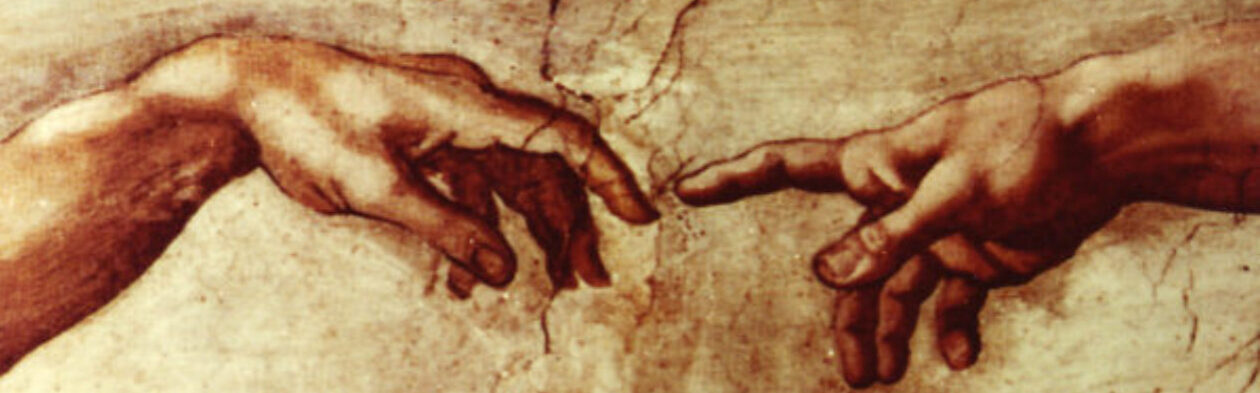
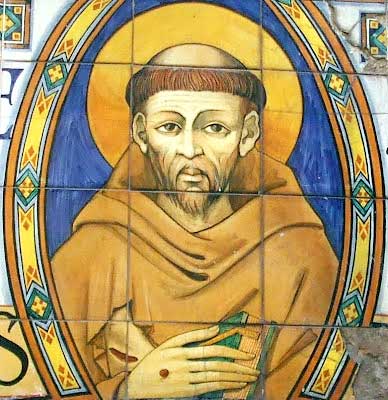
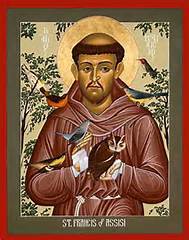
Prayers, Quips and Quotes: Stigmata of St. Francis, Feast Day September 17


Shrine of St. Francis of Assisi Public Domain Image
Shrine of St. Francis of Assisi

The Feast Day of the Stigmata of St. Francis is celebrated on September 17.

What is a stigmata?  A stigmata is the spontaneous appearance of the wound marks of Jesus Christ on a person’s body.  St. Francis is the first known saint to receive the stigmata.

St. Francis was born in 1181 in Assisi, Italy. His father was Pietro di Bernardone, a wealthy cloth salesman. Francis was indifferent to school. He enjoyed good times with his friends. He was attracted to the military and was a prisoner of war for two years.  After returning home he experienced a profound conversion after having a dream.   Christ appeared and spoke to St. Francis in a vision in the chapel at San Damiano.  He  said

“Francis go out and build up My house, for it is nearly falling down.”

St. Francis took these words literally and began to repair the old chapel.  St. Francis embraced poverty, founding the Order of St. Francis after living for a time as a hermit.  He had a strong devotion to the cross and to the Eucharist.  He served the poor and the sick, caring for the lepers who were suffering at that time.

On Sept. 14, 1224, St. Francis was just beginning the second month of a retreat in honor of St. Michael the Archangel.  He was fasting for 40 days.  Near the Feast of the Exaltation of the Cross, St. Francis experienced a vision in which a seraph with six wings appeared.  The figure not had wings but also showed signs of being crucified.  While contemplating the crucifixion of Christ, St. Francis experienced joy mingled with pain.  The vision of Christ nailed to a cross touch his soul with compassion.   The vision vanished but St. Francis was left with marks on his own body as if had been crucified.  His hands and feet now had nail wounds.  His right side had a wound as if it had been pierced and frequently it bled.

At first St. Francis tried to conceal the wounds which were real and painful.  Eventually he revealed them publicly, saying;

“Nothing gives me so much consolation as to think of the life and passion of our Lord.”

While St. Francis of Assisi was the first saint to receive the stigmata, currently 62 Saints and Blesseds have been known to receive the stigmata.  St. Catherine of Siena (1380) and Padre Pio (1918) are only two of the many who have received this grace.

The stigmata is a considered a supernatural sign that a person has united their suffering with that of Christ.   The suffering of Christ during His Passion is called redemptive suffering.  When we join our suffering to His (no matter how small our suffering is in comparison) we are participating in the Passion of Our Lord.  Our suffering can be beneficial to the salvation of others.   The sign of the stigmata shows us that our suffering has a purpose.  It unites us to Our Lord Jesus Christ.

May I feel in my soul and in my body, as much as possible, that pain which You, dear Jesus, sustained in the hour of Your most bitter Passion.  May I feel in my heart, as much as possible, that excessive love with which You, O Son of God, were inflamed in, willingly enduring such suffering for us sinners.
Quote of St. Francis of Assisi
September is the Month of Our Lady of Sorrows
St. Francis of Assisi

Save

Save

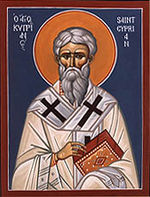
Prayers, Quips and Quotes: St. Cyprian, Feast Day September 16


St. Cyprian Public Domain Image
St. Cyprian


The Feast Day of St. Cyprian is celebrated on September 16.  Cyprian was born in North Africa in the 3rd century.  He is an important Christian writer.

At the age of 35, Cyprian converted to Christianity.   Soon after his baptism he was ordained, later becoming the Bishop of Carthage.  After his baptism he gave away his possessions.

When the persecutions of Christians began in Carthage,  Cyprian went into hiding rather than give sacrifices to pagan gods or face execution.  Fourteen months later he returned.  He called a council to determine the fate of those who had lapsed and denied their faith.  The council agreed with Cyprian who disagreed with both extreme answers.  He was against allowing anyone to return with little or no penance.  He was also against not allowing the lapsed Christians back at all.

Persecutions began again in 256.  St. Cyprian proclaimed his faith in Christ and refuesed to sacrifice to pagan gods.  He was banished to Curubis.  On September 13, 258, St. Cyprian was imprisoned and sentenced to die by the sword.

The execution of St. Cyprian happened in public very quickly.  He removed his clothing, knelt down, prayed and then blind folded himself.  He was then beheaded with a sword.

To him who still remains in this world, no repentance is too late.  The approach to God’s mercy is open.
Quote of St. Cyprian
September is the Month of Our Lady of Sorrows

Save

SaveSave

Save

Save

Prayers, Quips and Quotes: Our Lady of Sorrows, Feast Day September 15


Baciccio Pieta 1667 Public Domain Image
Baciccio Pieta 1667
Public Domain Image

The Feast Day of Our Lady of Sorrows is celebrated on September 15.  It dates back to the 12th century when it was promoted by the Cistercians and the Servites.

The focus of the devotion to Our Lady of Sorrows is the grief Mary felt during the suffering of her Son, Jesus.  As His mother, her heart felt intense pain and sorrow.

Below are the seven sorrows of Mary:

  1. The prophecy of Simeon (Luke 2:25-35)
  2. The flight into Egypt (Matthew 2:13-15)
  3. Loss of the Child Jesus for three days (Luke 2:41-50)
  4. Mary meets Jesus on his way to Calvary (Luke 23:27-31; John 19:17)
  5. Crucifixion and Death of Jesus (John 19:25-30)
  6. The body of Jesus being taken from the Cross (Psalm 130; Luke 23:50-54; John 19:31-37)
  7. The burial of Jesus (Isaiah 53:8; Luke 23:50-56; John 19:38-42; Mark 15:40-47)

As we reflect on the sorrows and suffering Mary experienced as the Mother of God, we can remind ourselves of the human nature of both Jesus and Mary.  They felt pain.  They felt grief.  They felt loss.  They wept.

Jesus has two natures:  Human and Divine.  Mary is not Divine.  She is human like you and me.  We can only wonder at her strength and holiness as she drank from the bitter cup of suffering.

Giovanni bellini pieta martinengo Public Domain Image
Giovanni bellini pieta martinengo
Public Domain Image
Whoever you are who love the Mother of God, take note and reflect with all your innermost feelings upon her who wept for the Only Begotten as He died…The grief she felt in the Passion of her son goes beyond all understanding.
Quote of St. Amadeus of Lausanne;  Feast Day January 28
La Pieta Michelangelo Public Domain Image
La Pieta Michelangelo
Public Domain Image
September is the Month of Our Lady of Sorrows
Save

Save

Save

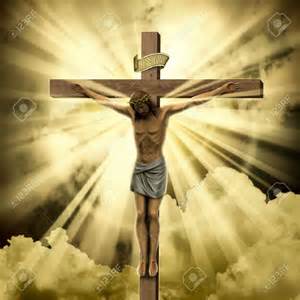
Prayers, Quips and Quotes: The Exaltation of the Cross, Feast Day September 14


Crucifixion of Jesus Public Domain Image
Crucifixion of Jesus

The Feast of the Exaltation of the Cross is celebrated on September 14.

This feast day actually celebrated two events.

In the year 320, the actual cross on which Jesus was crucified was discovered by St. Helena, the mother of Emperor Constantine.  Constantine then had a shrine and basilica built in 335.  The Basilica, named Martyrium and the shrine named The Calverium were destroyed by the Persians in the year 614.

On a more personal level, we celebrate how we are saved by the cross.  It is the suffering and crucifixion of Jesus which redeems us.  As Christians, we must be willing to suffer for the faith, looking to Jesus in moments of weakness.

The suffering of Jesus on the cross is called Redemptive Suffering.  In today’s world it is hard to understand the meaning of suffering.  Does anything good come from suffering?

Our salvation came from the suffering of Jesus who died for our sins.

One way that helps me to understand suffering is to think about the meaning of love.  When two people love each other and promise to be there for each other they believe they are in love.  The test of true love is what happens when the going gets tough?  It is only when we are willing to suffer for another that we know we are loving them.

Willingness to suffer defines love!  Jesus is not the only one who is capable of redemptive suffering.  We too, can offer our suffering for the good of another.  Think of all the times you have suffered in silence because to complain would not help the situation.  Give your suffering to God.  You will grow in virtue and love.

Remember… God is Love.  He showed us he loved us by suffering and dying on the cross for us.

On this feast day reflect on the suffering in your life.  Can you name the cross you are carrying?  Give all your suffering to God and you will come closer to Him who is called Love.

Suffering is a sign that we have come so close to Jesus on the cross that He can kiss us;  that He can show that He is in love with us by giving us an opportunity to share in His Passion.
Quote of St. Teresa of Calcutta;  Feast Day September 5
September is the Month of Our Lady of Sorrows

Save

Save

Prayers, Quips and Quotes: Feast Day of the Most Holy Name of the Blessed Virgin Mary

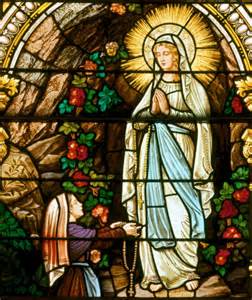
Our Lady of Lourdes Public Domain Image
Our Lady of Lourdes

The Feast Day of the Most Holy Name of the Blessed Virgin Mary is celebrated on September 12.

On this day we reflect on the titles given to Mary.  Why has she become known by so many names?  Which name touches you the most when you think about the Blessed Virgin Mary?  Mary, Mother of God?  Mary, Queen of Saints?  The Immaculate Heart of Mary?

Each name tells us something about Mary, who loved and gave birth to Jesus.  Our Sorrowful Mother helps us to reflect on the suffering Mary experienced.    Some of her titles refer to the place in which she appeared to someone:  Our Lady of Lourdes, Our Lady of Mt. Carmel, and Our Lady of Guadalupe.

Other titles refer to her spirituality:  Our Lady of the Rosary,  Our Lady of Grace,  Mystical Rose, Star of the Sea.

The name we are given at birth is important.  We are called by that name throughout our life.  Each of us has been called to do something specific for God.  Perhaps it is prayer.  Perhaps it is raising a family with love.  Perhaps it is a profession like teaching or medicine, or farming.

Mary was called by God  for a very special purpose.  She was asked to love and raise Jesus, the Son of God.  She became the Mother of God and loved him in a way none of us can.

Today is a day to reflect on the role of Mary in the life of Jesus.  We can also reflect on our role in the world.  If we honor and imitate the mother of Jesus, we can be certain that we will come to know Jesus better.

Mary  is called Queen of Martyrs, for her martyrdom was the lengthiest, most intense, and most loving.
Quote of Bl. James Alberione

September is the Month of Our Lady of Sorrows

Save

Prayers, Quips and Quotes: St. John Gabriel Perboyre, Feast Day September 11


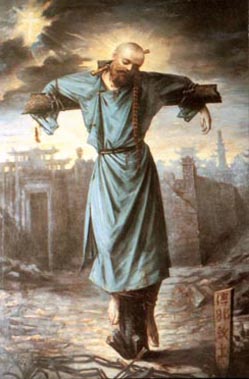
st-john-gabriel-perboyre

The Feast day of St. John Gabriel Peboyre is celebrated on September 11.

St. John was the oldest son  of a farmer in Le Puech, France.  He had seven younger siblings. Three of the brothers joined the Vincentian Fathers and two of the Daughter became Daughters of Charity.

When his younger brother was accepted into the Vincentian Seminary, his parents asked him to accompany the brother until he was settled.  He was surprised to find that he was also drawn to join the Vincentians.  His parents supported his decision to join the order rather than return home to farm.

In 1820, St. John was ordained a Vincentian priest.  He hoped to become a missionary and travel to China, however he was assigned to be a supervisor of the mother-house in Paris.

In 1835, he began his journey to China as a missionary.  It took five months to arrive.  He served the poor in Ho Nan  China before being transferred to Hubei.

Persecution began in 1839 and St. John Gabriel was arrested.  After being tortured,  he was found guilty of preaching Christianity and condemned to death.  He was tied to a stake and strangled.  His body wa retrieved and buried in the mission cemetery.

Pope John Paul II canonized St. John Gabriel Perboyre in 1996.

O my Divine Savior,
Transform me into Yourself.
May my hands be the hands of Jesus.
Grant that every faculty of my body
May serve only to glorify You.

Above all,
Transform my soul and all its powers
So that my memory, will and affection
May be the memory, will and affections
Of Jesus.
I pray You
To destroy in me all that is not of You.
Grant that I may live but in You, by You and for You,
So that I may truly say, with Saint Paul,
“I live – now not I – But Christ lives in me.
Prayer composed by St. John G. Perboyre
September is the Month of Our Sorrowful Mother


Save

Prayers, Quips and Quotes: St. Nicholas of Tolentino, Feast Day September 10


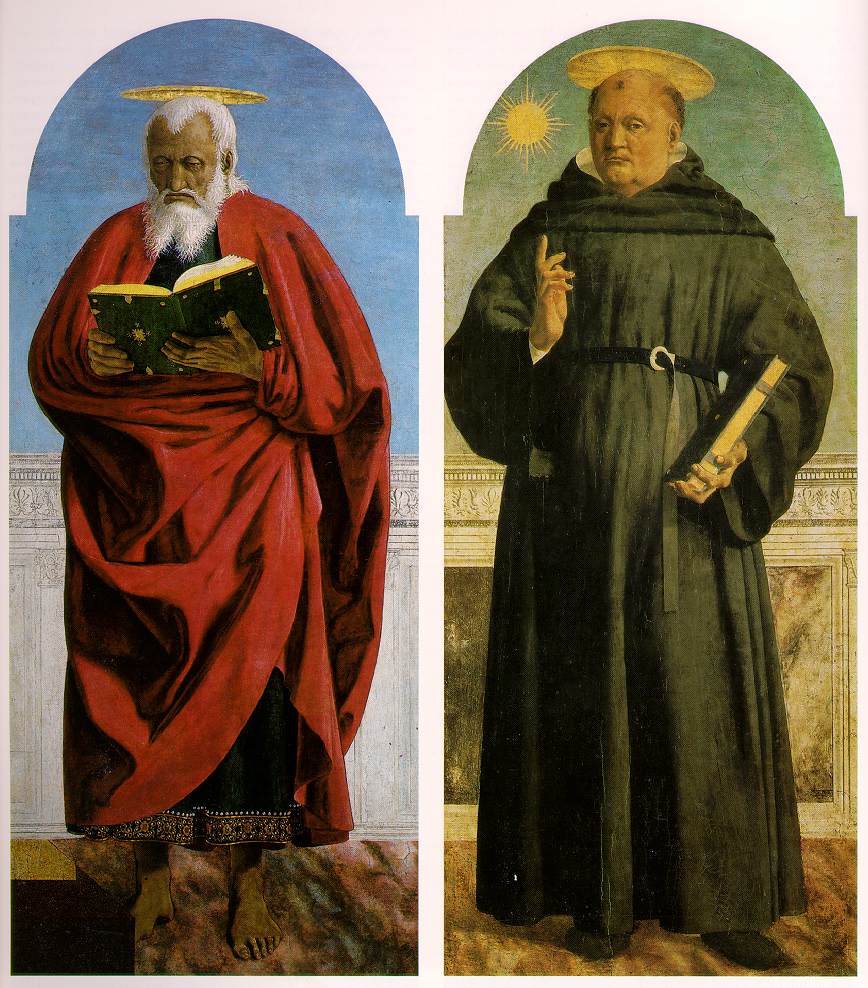
St. Nicholas of Tolentino


The Feast Day of St. Nicholas of Tolentino is celebrated on September 10.  He is the patron saint of the souls in purgatory and the dying.

The parents of St. Nicholas were childless when they visited the Shrine of St. Nicholas of Myrna at Bari, Italy.  The year after praying for a child they became parents.  They named their child Nicholas in gratitude for their prayer being answered.

At the age of 18, Nicholas became an Augustinian monk.  He was ordained a priest at 25.  St. Nicholas was known for his visions and gift of miracles.  He received a vision of angels reciting the phrase “to Tolentino”.  He decided to move to Tolentino in 1274 where he lived the rest of his life.

St. Nicholas was a peacemaker during a time of war.   He was also a miracle worker and healer.  He often visited prisoners and was known for his kindness.

Once after becoming ill, he had a vision in which the Virgin Mary, St. Augustine and St. Monica appeared to him.  They told him to eat a certain type of roll dipped in water.  He was healed after doing so.  He then began healing others by giving bread  to them and reciting Marian prayers.  The rolls become known as St. Nicholas Bread.

Many legends and miracles are credited to St. Nicholas.  Over 300 miracles have been recognized.

After a long illness in which he became bedridden and suffered greatly, St. Nicholas died in 1245, surrounded by his community.

St. Nicholas of Tolentino was canonized by Pope Eugene  IV in 1446.

There is no sin or wrong that gives a man a foretast of hell in this life as anger and impatience.
Quote of St. Catherine of Sienna;  Feast day April 29
September is the Month of Our Lady of Sorrows

Save

Save

Save

Save

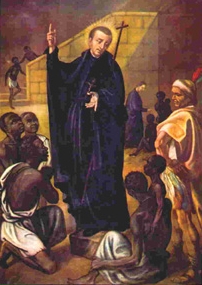
Prayers, Quips and Quotes: St. Peter Claver, Feast Day September 9


St. Peter Claver Public Domain Image
St. Peter Claver

The Feast Day of St. Peter Claver is celebrated on September 9.  He is the patron saint of African missions.

St. Peter Claver was born at Verdu, Catalonia, Spain in 1580. He entered the Jesuit college of Barcelona, becoming a Jesuit novitiate, taking his final vows on Aug 8, 1604.
St. Peter Claver left his homeland to become a missionary in the colonies of the new world. He ministered to the slaves arriving daily in Cartagena (now Columbia). Over a thousand slaves arrived in Cartagena every month. He brought them food, ministered to their medical needs and prayed with them. He followed them to the plantation they were taken to.  St. Peter Claver declared himself to be the “slave of the Negroes forever.”

After instructing them in the faith, he baptized them. By 1651 he had baptized over 300,000 slaves into the faith.

After suffering from illness for four years, St. Peter Claver died on Sept. 8, 1654.
St. Peter Claver has been declared the patron saint of African Missions.

“Seek God in all things and you shall find God by your side.”

Quote of St. Peter Claver

September is the Month of Our Lady of Sorrows

Prayers, Quips and Quotes: Nativity of Virgin Mary, Feast Day September 8


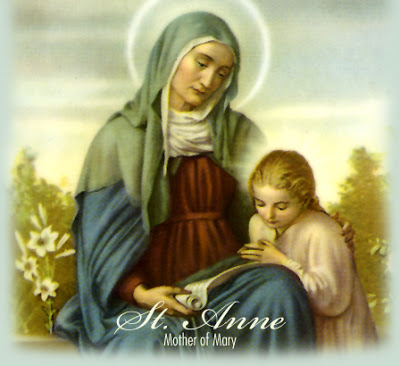
St. Anne with the Virgin Mary


The Feast Day of the Nativity of the Virgin Mary is celebrated on September 8.  On this day the church reflects on the birth of Mary and her role in salvation.

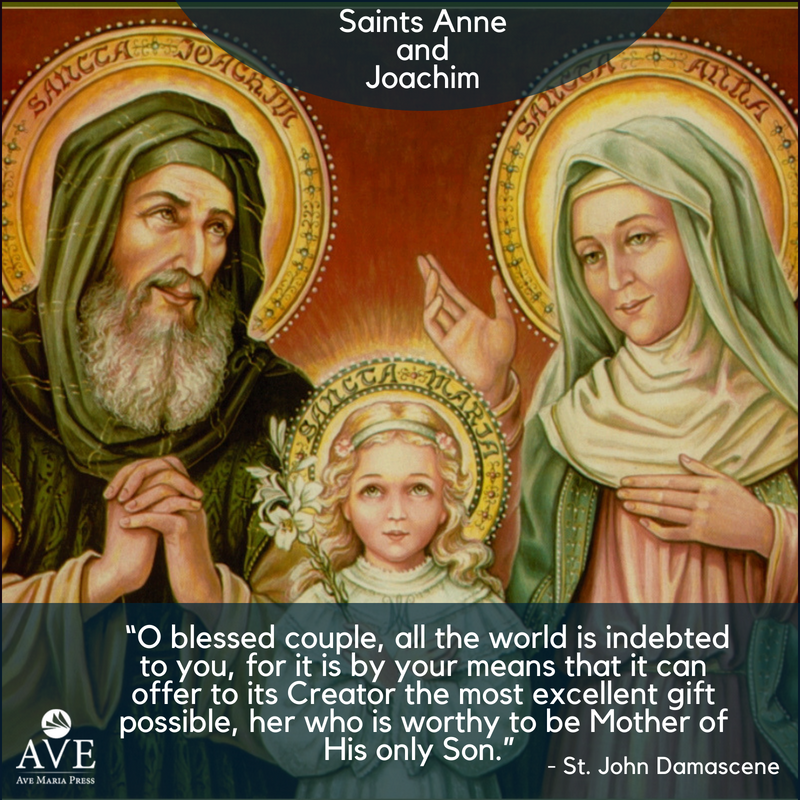
Mary was the only child of St. Anne and St. Joachim.  They had been praying for a child and it seemed as if they would be unable to conceive.  However, although St. Anne was not young, she conceived and became the mother of the mother of God!

The feast day is celebrated nine months after the celebration of the Feast of the Immaculate Conception on December 8.  The Immaculate Conception celebrates the belief that Mary was born without the stain of original sin.  She was the “second Eve”.  Eve, also was born without original sin but she chose to disobey God.  Mary, however, always said “yes” to God.

Reflecting on the life of Mary can take us in many directions.  How is it possible to become the Mother of God?  How is it possible to become the Grandmother of God as St. Anne did?   We know that Mary was chosen for the title of Mother of God.  St. Anne and St. Joachim were also chosen…to be the parents of Mary.

We too have been chosen.  Where is God leading you?  Is your family life holy?  What needs to improve in your life to help you grow closer to God?  Is your prayer life healthy?  Learning to communicate with God leads us to know his will in our life.    Just as Mary said “yes”, we too must try to do the will of God.

Each of us is unique in the way we communicate with God.  Exploring the different prayer styles can help us to find the type of prayer that suits us best.  To understand what God’s will is, we must discover how God is “present” in our life.  Making time for prayer is the first step.  Admitting that we need guidance (humility)  will help us to take the time to listen for the whisper that comes from God.

The Virgin Mother’s heart remained perpetually inflamed with the holy love which she received of her Son.
Quote of St. Francis de Sales;  Feast Day January 24

September is the Month of Our Lady of Sorrows

Save

Save

Save

Save

Fb-Button