Prayers, Quips and Quotes: St. Norbet, Feast Day June 6


St. Norbet
St. Norbet

The Feast Day of St. Norbet is celebrated on June 6.

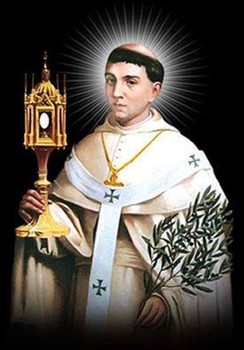
St. Norbet was born at Xanten in the Rhineland around 1080. He was born into a noble family and enjoyed luxury. While a young man he pursued worldly pleasures. He accepted orders as a sub deaconate to ensure his success at court, but he hesitated at becoming a priest.

This all ended after a near fatal accident during a thunderstorm. While riding in the rain, the thunder and lightning spooked his horse and he was thrown to the ground. He lay unconscious for about an hour. When he awoke he asked the Lord, “Lord, What do you want me to do?”  These were the same words of Saul before his conversion. God’s response to Norbet was:

“turn from evil and do good. Seek peace and pursue it.”

St. Norbet embraced a life of prayer and penance. He now wanted to become a priest. he was ordained in 1115 at the age of 35. He gave everything he owned to the poor. After receiving permission from the pope he traveled throughout Europe preaching the gospel. He was known for his intense devotion to the Real Presence in the Blessed Sacrament. The bishop of Laon requested his aid in reforming the canons, which he willingly did.

At the request of Pope Calictus II Norbet founded a religious order in France, called Canons Regular of Premontre. They followed the Rule of St. Augustine. He continued to preach in France, Belgium and Germany.

St. Norbet eventually became the archbishop of Magdebury however he died on June 6, 1134 soon after his election.

Oh, how good and pleasant a thing it is to dwell in the Heart of Jesus!
Who is there that does not love a heart so wounded?
Who can refuse a return of love to a heart so loving?
Quote of St. Bernard; Feast day August 20
June is the Month of the Sacred Heart.

Prayers, Quips and Quotes: St. Francis Caracciolo, Feast Day June 4.


St. Francis Caracciolo

The Feast Day of St. Francis Caracciolo is celebrated on June 4.

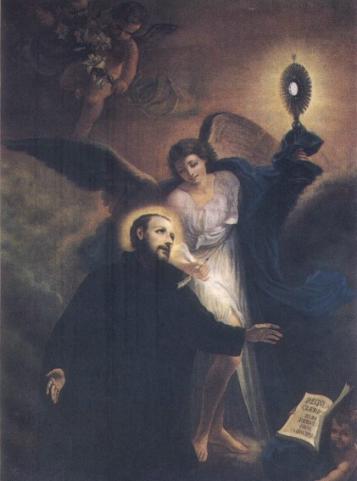
St. Francis Caracciolo was born at Villa Santa Maria, Italy in 673. He was born into a noble family. While still young he came down with a skin disease that resembled leprosy. Already a very pious child, he vowed to devote his life to God if he was cured. After making the vow the skin disease was cured. At the age of 22, he began studying for the priesthood at Naples. He had a great devotion to the Blessed Sacrament spending many hours in prayer before Our Lord. He also visited those in prisons and hospitals.

St. Francis was ordained in 1587. He soon joined a confraternity known as “The White Robes of Justice”. They visited the criminals sentenced to die. Together with two other devout men he started a religious order called the Minor Clerks Regular. They were very strict. They fasted and did penitential acts. Two years later Francis became the Superior of the Order.

St. Francis spent many hours in the confession. He was known for his gift of discerning hearts and prophecy, foretelling the date of his own death. St. Francis died surrounded by his community on the Vigil of Corpus Christi, June 4, 1608 after coming down with a fever.

The Sacred Heart of Jesus is not only the temple and the altar,
but also the censer of divine love….In that precious censer
all the worship, praise, prayers, desires, and affections
of all the saints are placed, like so many grains of incense
to be offered to God.
Quote of St. John Eudes; Feast day August 19
June is the Month of the Sacred Heart.
Prayers, Quips and Quotes: St. Charles Lwanga, Feast Day June 3


St. Charles Lwanga Public Domain Image
St. Charles Lwanga

The Feast Day of St. Charles Lwanga is celebrated on June 3.

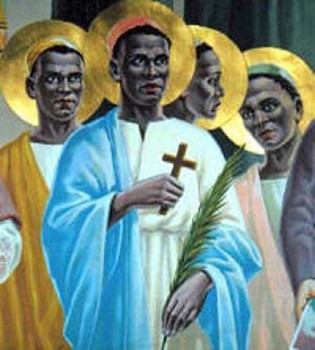
The Society of Missionaries attracted many converts in Uganda. The converts soon became teachers of the faith also. Uganda was ruled by King Mwanga who was violent and a pedophile. The Christians who lived and taught at King Mwanga’s court tried to protect the pages from the King. The leader of the 200 Christians was Joseph Mkassa. He confronted the King after a Protestant missionary and his companions were killed. Mwanga ordered his execution. Before he was beheaded and burned on Nov. 15, 1885 Joseph forgave Mwanga, but asked for repentance.

St. Charles, who was 18 when he converted, became the new leader of the Christian group. For six months the persecution lessened. Then, however, King Mwanga became angry and killed another student of Christianity with a spear. He ordered the royal compound sealed so no one could escape. Charles baptized four catecheumens (students) that night. The next day the king ordered the 15 boys and men to be executed because they refused to give up being Christians. They were ordered to walk 37 miles to be executed in Namugongo. Three died on the journey. After seven days in prison, they were burned to death. Thirteen Catholics and eleven Protestant’s died.

The Catholic faith was practiced in secret without clergy. After the death of King Mwanga, there were 500 Christians and 1000 catecheumans waiting to receive the sacraments again.

The 22 Catholic Martyrs of Uganda were canonized.

Do not be ashamed to confess the cross, for angels glory in it.
Quote of St. Cyril of Jerusalem;                                                                                                                                          Feast day March 18
June is the Month of the Sacred Heart.