The Crucifixion of St. Andrew the Apostle by Mattia Preti
The Feast Day of St. Andrew the Apostle is celebrated on November 30. He is the patron saint of fishermen. St. Andrew was the first of the twelve Apostles to be called by Jesus.
Mark 1:16-20 As Jesus walked beside the Sea of Galilee, he saw Simon and his brother Andrew casting a net into the lake, for they were fishermen.
“Come, follow me,” Jesus said, “and I will make you fishers of men.”
At once they left their nets and followed him. When he had gone a little further, he saw James son of Zebedee and his brother John in a boat, preparing their nets. Without delay he called them, and they left their father Zebedee in the boat with the hired men and followed him.
St. Andrew was the brother of Simon Peter. He was a fisherman and a follower of St. John the Baptist. When he heard the call of Jesus, he immediately left everything and followed Him.
After the ascension of Jesus to heaven, Andrew went to Greece to preach the gospel. In the year 70 he became a martyr. He was put to death on a cross to which he was tied, not nailed. It was a cross in the form of an X, which is now called “St. Andrew’s Cross”. He lived for two days, suffering, yet still preaching the gospel.
Three countries have chosen St. Andrew as their patron: Russia, Scotland and Greece. He is also the patron of fishermen.
St. Andrew’s relics are kept at the Basilica of St. Andrew in Patras, Greece.
“How blind man is when he refuses to open his heart to the light of faith!”
The creche’ or nativity which is evident in many holiday displays actually began with a living nativity organized by St. Francis.
Before the time of St. Francis, Christmas was celebrated with a Christmas Mass which was prayed and sung in Latin, a language few people understood. It was St. Francis who decided it was time to bring exuberant joy to the celebration. Three years before he died, St. Francis was visiting the town of Grecio. After receiving permission from the pope, he arranged a living nativity. Knowing that the hermitage would be too small for midnight mass, he found a niche in the rock near town square and set up the altar.
According to St. Bonaventure who tells the story in his book The Life of St. Francis of Assisi, he prepared a manger, brought hay, an ox and an ass to the appointed place. The brethren were summoned and that venerable night was made glorious by many lights and sonorous psalms and praise. St Francis, a deacon, stood before the manger full of devotion and piety, bathed in tears and radiant with joy; the Holy Gospel was chanted by Francis. Then he preached to the people gathered around the nativity of the poor King. St. Francis, filled with much joy, referred to Jesus as the Babe of Bethlehem.
The tradition of the nativity has been carried on to this day. The nativity scene is a visible reminder of the night our savior was born.
St. Francis is also responsible for the tradition of the Christmas Carol. He decided to add religious lyrics to popular tunes of his time, which became known as Christmas Carols. The first Christmas Carol was Psalmus in Nativitate. It was written in Latin so it could be sung at Mass but sung to a popular tune all the people knew. As living nativity scenes became popular, the people began singing the carols that have become familiar to us today.
In keeping with Franciscan Spirituality, perhaps we can create new Christmas Carols using familiar tunes of our day. The following Christmas Carol is an example.
An Ode to Jesus on Christmas
By Vicki Scheenstra
(Sung to melody of Angels from the Realms of Glory)
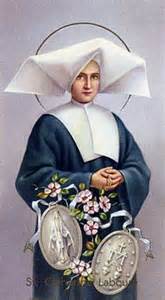
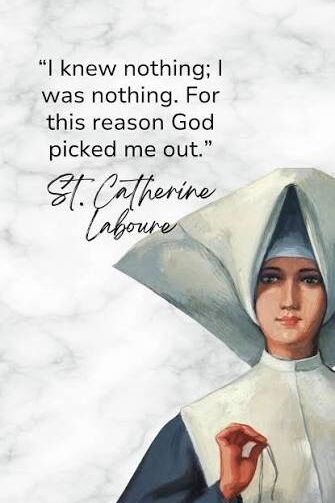
The Feast day of St. Catherine Laboure is celebrated on November 28. She is the visionary who began the devotion to the miraculous medal.
Catherine Laboure was born on May 2, 1806 in Paris, France. Her father was a successful farmer. She was the ninth of eleven children. Her mother died when she was only nine years old. After the funeral service, Catherine went to her room and gave a kiss to a statue of Mary, saying;
“Now, dear Lady, you are my mother.”
Catherine was called “Zoe” by those who knew her, because her birthday was on the feast day of St. Zoe.
After having a dream about St. Vincent de Paul, at a young age, she joined the Daughters of Charity founded by him. She is known as a Marian visionary because of the apparitions which she reported of Mary appearing to her.
On July 18, the first apparition occurred. Catherine saw a lady seated in the sanctuary. She approached her and was instructed how she was to act during times of trial, pointing to the altar for consolation. Mary told her,
“”Sorrows will come upon France; the throne will be overthrown.”
A week later the French revolution began in Paris.
On Nov. 27, the lady showed St. Catherine the Medal of the Immaculate Conception, now known as the “Miraculous Medal” She gave Catherine the mission of having the medal made and to spread devotion to it.
Catherine reported the visions to her spiritual director, Father Aladal. Forty-five years later, she spoke fully to her supervisors about the apparitions.
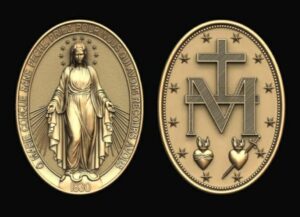
The miraculous medal which Mary showed to Catherine was oval showing Mary standing on a globe crushing the head of the serpent. (the devil). Around the image of Mary were the words:
“O Mary, conceived without sin, pray for us who have recourse to thee.”
Mary’s hands were showering a cascade of brilliant rays upon the world.
On the reverse side of the medal was a cross, the symbol of Christ’s redeeming Sacrifice on Mount Calvary for the salvation of the world. The cross was intertwined with the letter “M”.
The “M” stands for both Mary and for Mother and was to be surrounded by twelve stars. The two hearts are the Sacred Heart of Jesus encircled by a crown of thorns and the Immaculate of Mary, pierce by a sword. The Flames symbolize the burning love of Jesus and Mother Mary.
Mary told Catherine,
“All who wear them will receive great graces.”
After two years of investigation Father Aladal went to the archbishop with the request. The request was approved.
St. Catherine served humbly, not wishing to be known as a visionary. It was only after 46 years of service that she informed her Sister Superior that she was the Sister Mary had appeared to. At Catherine’s death, on December 31, 1876, at the age of 70, few people knew of her visions. She preferred a silent life, spending her time caring for the aged and sick.
Stories of many miracles and cures caused the devotion to spread rapidly.
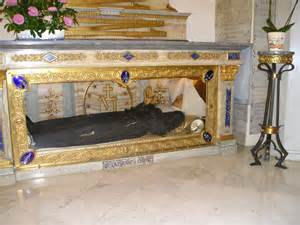
In 1922 the body of St. Catherine was exhumed. It was found to be incorrupt. Her body is encased in glass in the chapel in Paris near where Our Lady appeared to her.
St. Catherine’s feast day is celebrated on Nov. 28, the day after the apparition. She is the patron saint of seniors and sick people.
St. Catherine Laboure
Lord, I am here. Tell me what you would have me do.
If He gives me some task I am content and I thank Him.
If he gives me nothing, I still thank Him
Since I do not deserve to receive anything more than that,
and then I tell God everything that is in my heart.
I tell him about my pains and my joys, and then I listen.
If you listen, God will also speak to you.
For with the good Lord, you have to both speak and listen.
God always speaks to you when you approach him plainly and simply.
The Feast Day of Our Lady of the Miraculous Medal is celebrated on November 27.
The Miraculous Medal was the result of visions which occurred to St. Catherine Laboure’. She was born in 1806 in Paris, France. After having a dream about St. Vincent de Paul, she joined the Daughters of Charity which was founded by him. She is known as a Marian visionary because of the apparitions which she reported appearing to her.
On July 18, the first apparition occurred. Catherine saw a lady seated in the sanctuary. She approached her and was instructed how she was to act during times of trial, pointing to the altar for consolation. Mary told her,
“Sorrows will come upon France; the throne will be overthrown.”
A week later the French revolution began in Paris.
On Nov. 27, the lady showed St. Catherine the Medal of the Immaculate Conception, now known as the “Miraculous Medal” . She gave Catherine the mission of having the medal made and to spread devotion to it.
Catherine reported the visions to her spiritual director, Father Aladal. Forty five years later, she spoke fully to her supervisors about the apparitions.
The miraculous medal which Mary showed to Catherine was oval showing Mary standing on a globe crushing the head of the serpent. (the devil). Around the image of Mary were the words
“O Mary, conceived without sin, pray for us who have recourse to thee.”
Mary’s hands were showering a cascade of brilliant rays upon the world.
On the reverse side of the medal was a cross, the symbol of Christ’s redeeming Sacrifice on Mount Calvary for the salvation of the world. The cross was intertwined with the letter “M”.
The “M” stands for both Mary and for Mother and was to be surrounded by twelve stars. The two hearts are the Sacred Heart of Jesus encircled by a crown of thorns and the Immaculate Heart of Mary, pierced by a sword. The Flames symbolize the burning love of Jesus and Mother Mary.
Mary told Catherine,
“All who wear them will receive great graces.”
After two years of investigation Father Aladal went to the archbishop with the request. The request was approved.
At Catherine’s death, on December 31, 1876, at the age of 70, few people knew of her visions. She preferred a silent life, spending her time caring for the aged and sick.
The first two-thousand medals were delivered on June 30, 1832. The spread of the Medal was almost like a miracle in itself. The first supply disappeared quickly. Pope Gregory XVI put one of them at the foot of the crucifix on his desk. By 1836 several million medals had been made. The stories of the cures and wonders of the medal helped to spread its use far and wide.
The Miraculous Medal is considered a sacramental. Sacramentals lead a person to prayer which opens the person to the gifts of the Holy Spirit. Sacramentals can be material things such as blessed objects, such as scapulars, rosaries, crucifixes, medals, or Holy Water. It can also be actions such as the Sign of the Cross, genuflection, and prayer.
The following explanation of sacramentals is from the Catholic Catechism.
1667 “Holy Mother Church has, moreover, instituted sacramentals. These are sacred signs which bear a resemblance to the sacraments. They signify effects, particularly of a spiritual nature, which are obtained through the intercession of the Church. By them men are disposed to receive the chief effect of the sacraments, and various occasions in life are rendered holy.”17
1670 Sacramentals do not confer the grace of the Holy Spirit in the way that the sacraments do, but by the Church’s prayer, they prepare us to receive grace and dispose us to cooperate with it. “For well-disposed members of the faithful, the liturgy of the sacraments and sacramentals sanctifies almost every event of their lives with the divine grace which flows from the Paschal mystery of the Passion, Death, and Resurrection of Christ. From this source all sacraments and sacramentals draw their power. There is scarcely any proper use of material things which cannot be thus directed toward the sanctification of men and the praise of God.”176
Most Holy Virgin Mary…
Sanctuary of the Holy Spirit,
Lily of purity, Rose of patience,
Paradise of delight, Mirror of chastity,
Model of innocence…intercede
for this poor banished pilgrim.
Quote of St. Peter of Alcantara; Feast Day October 19
The Feast Day of St. Andrew Dung and companions is celebrated on November 24. St. Andrew Dung was a priest and martyr of Vietnam.
St. Andrew Dung represents the 117 martyrs of Vietnam; 97 of the martyrs were Vietnamese and 21 were foreign missionaries. The missionaries included 11 Spaniards and, 10 French; 8 were bishops, 50 were priests and 59 were lay people. They were martyred during a period of persecution between 1625 and 1886.
St. Andrew was the born in 1795 to a poor pagan family in North Vietnam. He moved to Hanoi when he was twelve. He was educated by a Christian and after three years was baptized. He became a catechist and continued to study theology.
In 1823, he was ordained a priest. He was imprisoned under Emperor Minh Mang. His congregation made donations to free him. He changed his name to Andrew Lac to avoid persecution and changed locations. He was arrested a second time along with Father Peter Thi another Vietnamese Priest. Again his freedom was bought. They were soon arrested a third time and beheaded after being brutally tortured.
The 117 martyrs were beatified by Pope John Paul IIon May 27, 1900. The memorial celebrates all the Vietnamese Martyrs of the 17th, 18th and 9th centuries.
The hottest places in hell are reserved for those who,
in a period of moral crisis, maintain their neutrality.
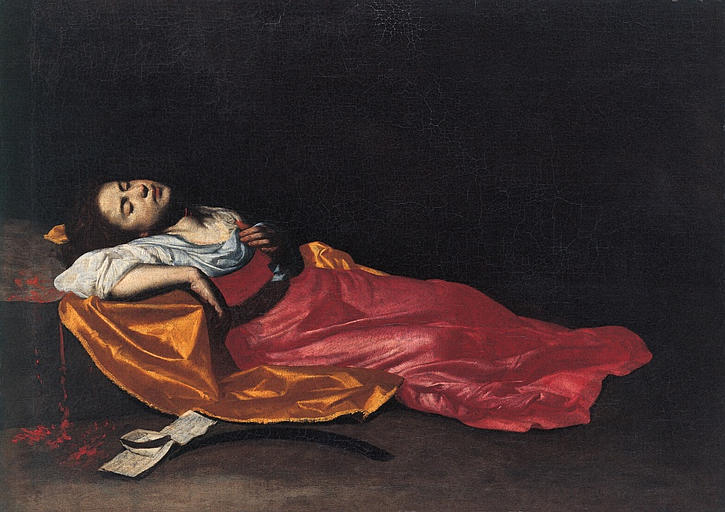
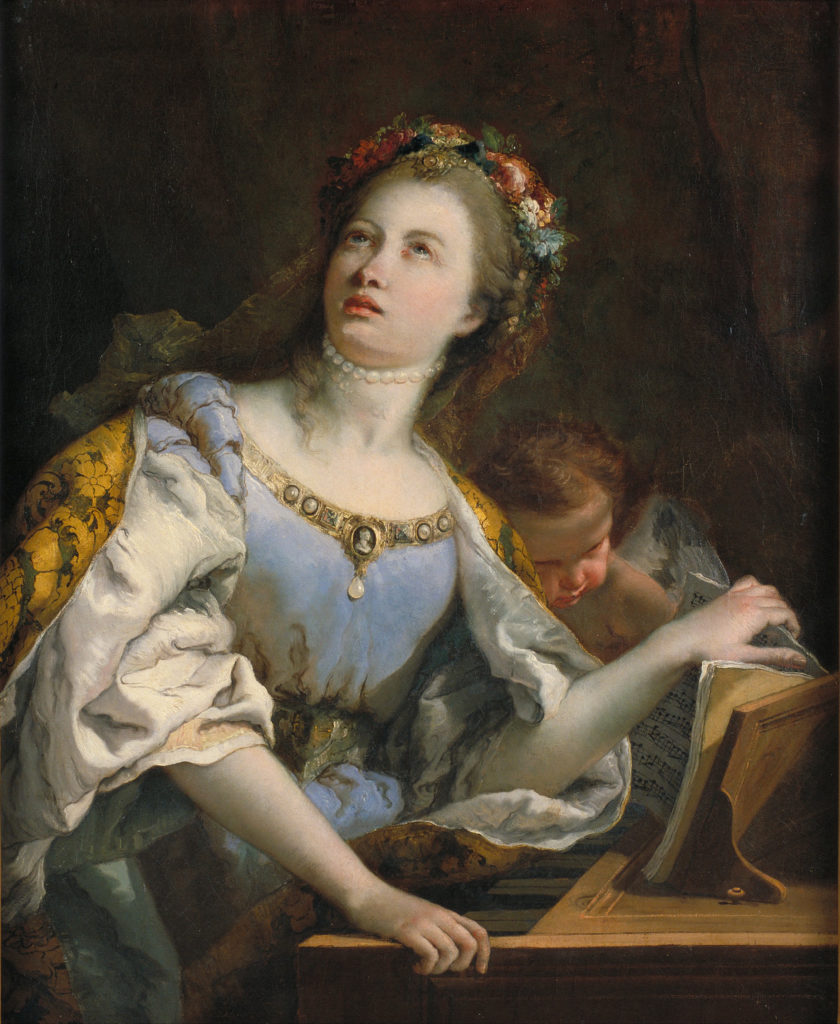
The Feast Day of St. Cecelia is celebrated on November 22. She is a martyr and the patron saint of musicians.
St. Cecelia by Guarino
St. Cecelia was born in Rome to an esteemed family late in the first century. She lived a life of prayer. She was given in marriage to a young pagan named Valerian. Cecelia shared her promise of celibacy and consecration to God with her husband. During the wedding, it is said that she sat apart, singing to God in her heart with thanksgiving.
Valerian converted to Christianity and he honored her desire to remain a virgin. He helped Cecilia in her charity toward the poor. Because of this, he was arrested and put to death.
Almachius, the Prefect of Rome, feared her nobility and charity to the poor. He had her imprisoned in the steam bath of her own home, trying to suffocate her. After a full day and night in stifling steam, Cecilia survived without harm. This resulted in Almachius sending an executioner to behead her. She was struck three times, but she was not beheaded. She fell to the floor. After several days of bleeding in her own bath, Christians rushed in to help her. On the third morning the venerable Bishop Urban visited Cecilia. As she lay dying, she requested that her palace be made into a church for the poor. She died praying, after receiving the Eucharist. Her body was buried in the Catacomb of Saint Callistus. The year of her death is unknown bu it is believed her martyrdom took place during the pontificate of Urban I (222-230).
In 817, her tomb was discovered by Pope Paschal I. Her body was one of the first of over a hundred saints whose bodies were discovered to be incorrupt. Her body remained as it was when she died. Her relics were put into the crypt in the Church of Santa Cecilia in Trasrevere. When her tomb was opened in 1599, her body was perfectly incorrupt. Her neck still had marks of being struck with a sword.
St. Cecelia is the patron saint of musicians, because of the zeal with which she sang the divine praises of thanksgiving. Her spirituality included a love of music. St. Cecilia is often venerated in poetry and music.
I try to make the serenity prayer a daily prayer. Often, it helps me to get through the most difficult moments of my life. When life is out of control, this prayer reminds me that I am not supposed to be in control of everything, only God is! I am a very visual person. When I say a prayer I often have pictures to meditate on in my mind. One day as I was praying the serenity prayer I realized my definition of serenity was wrong!
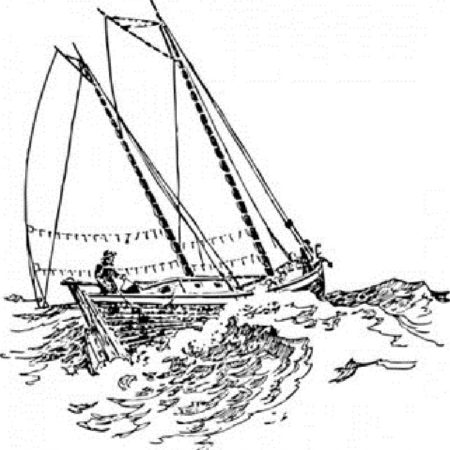
I have always considered serenity as complete calm. While praying this prayer I was picturing a calm lake on a sunny day. It was so calm there were no whitecaps on the water. It was so calm if I was on a sailboat, I would not be able to sail due to lack of wind. I was stuck! This is not serenity! We need movement in our lives! Without progress we stagnate and then we seem to go backwards or become lost.
When I am the opposite of serene, I am frantic and in a panic. This frame of mind makes it impossible to make rational decisions. I finally realized that serenity is being able to make decisions while we are in the eye of a storm! While I prefer a sunny day on the lake, I always want there to be a breeze so the sailboat I am in will actually go where I direct it.
Serenity is being calm enough during the storm to know which ropes to pull to keep the boat from turning over!
Serenity Prayer
God, grant me the serenity To accept the things I cannot change Courage to change the things I can, And the wisdom to know the difference.
Living one day at a time, Accepting hardships as the pathway to peace Taking, as He did, this world as it is, Not as I would have it.
Trusting that He will make all things right If I surrender to His will. That I may be reasonably happy in this life, And supremely happy with Him, Forever in the next.
The feast day of Bl. Raphael Kalnowski is celebrated on Nov. 19.
The name at baptism given to Bl. Raphael Kalnowski was Joseph. He was born to Polish parents in Vilnius in 1835. After military service he studied engineering at St. Petersburg. He helped design the Kursk-Kiev-Odessa railway.
During the Polish insurrection against Russia, he accepted the post of Minister of War. He was arrested on March 24, 1864 and condemned to death. The sentence was changed to ten years hard labor in Siberia.
After his release, he became a tutor for Prince Augusto Czarteryski in Paris. Augusto was inspired to become a priest, becoming a member of the Salesians. Through his travels, Joseph met St. Teresa of Avilaand St. John of the Cross, both Carmelites. Two years later he decided to join the Carmelite Order taking the name of Brother Raphael of St. Joseph. H studied theology in Hungary and was ordained a priest on Jan. 15, 1882.
He served as a priest with apostolic zeal. He was known as a good confessor and a spiritual director. He worked for church unity and was known for his holiness.
Bl. Raphael died of natural causes on Nov. 15, 1907. Miraculous healings which were attributed to him led to his canonization by Pope John Paul II in 1991.
I like to find at least a few moments each day spent in doing good for others out of love for God. These few moments, almost unnoticeably used, bring something like rays of peace and comfort behind them; they unite us with people and God by a pure feeling of tender sweetness.
The feast day of St. Elizabeth of Hungary is celebrated on November 17. Elizabeth was a Princess born in 1207 to King Andrew II of Hungary. St. Elizabeth of Hungary is the patron saint of widows, charities, bakers and young brides.
St. Elizabeth of Hungary was born in 1207 in Hungary. She was the daughter of Alexander II who was the King of Hungary. She was betrothed at the age of four to be married to Louis of Thuringa (a German principality). At the age of 14 she married Louis who was 21.
Elizabeth was very pious from a young age. Louis, also was quite religious. Their marriage was a happy and fruitful union. They had three children. Louis was a brave soldier. While he was away Elizabeth devoted herself to charity. She helped to build a hospital which had 12 beds.
He encouraged her works of charity. After six years of marriage Louis was killed during the crusades while she was pregnant with their third child at the age of 20. Elizabeth’s relatives resented how generous she was with the family’s money. They mistrusted her and eventually threw her out of the palace.
Upon hearing the news of her husband’s death, Elizabeth cried out,
“The world with all its joys is now dead to me.”
After finding care for her children, Elizabeth left the castle and became a Third Order Franciscan, joining them on Good Friday. She devoted herself entirely to helping the sick and poor. A Franciscan hospital was built in which she was able to care for the sick and suffering.
St. Elizabeth died at the age of 24 in 1231. Soon after her death miracles of healing were reported at her grave site
A legend exists that her husband met her unexpectedly as she went secretly on an errand to help the poor. The bread she was carrying was turned into roses. Pictures of St. Elizabeth often show her carrying bread or roses.
St. Elizabeth of Hungary died at the age of 24 in 1231 at Marburg, Germany of natural causes. She was canonized on May 27, 1235 by Pope Gregory IX.
The Feast Day of St. Albert the Great is celebrated on November 15. He is the patron saint of scientists and philosophers.
St. Albert the Great was born in Germany. After experiencing an encounter with the Virgin Mary he was inspired to join the Dominican Order also known as the Order of Preachers.
St. Albert was well educated and respected for his knowledge of science and theology, He received his doctorate from the University of Paris in 1245. He studied and commented on the works of Aristotle. Eventually, he became a professor of theology the the University of Paris. He became bishop of Regenburg in 1260. Because he refused to ride a horse and traveled entirely by foot he became known as “boots the bishop”). St. Thomas Aquinas was one of his students, later becoming a good friend.
St. Albert was a prolific writer. His writings are compiled in 38 volumes. He wrote about many subjects including philosophy, geography, astronomy, law and love.
St. Albert became well known as a mediator of disputes. He became ill and died on November 15, 1280.
St. Albert was canonized by Pope Pius XI in 1931 and declared a Doctor of the Church.
Three years after his death his body was discovered to be incorrupt. However, when his grave was opened centuries later, only a skeleton was found. His relics are found in St. Andreas Church in Cologne.
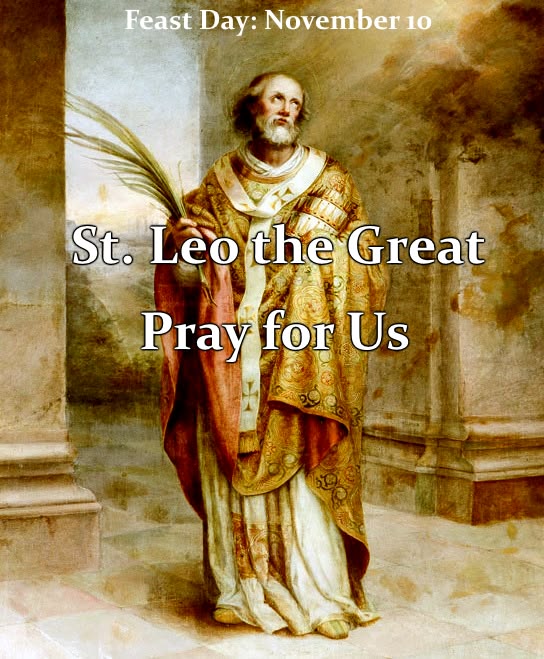
The Feast Day of St. Leo the Great is celebrated on November the 10.
St. Leo was born in Tuscany. He lived during a time of great political chaos for the Church. Barbarian armies were ravaging the once mighty Roman Empire. Leo was an ordained a Deacon. He became the Bishop of Rome in 440. He was Bishop of Rome for 21 years, until his death in 461.
During his papacy, he was known for meeting Attila the Hun in 452 as he was preparing to invade Italy. Amazingly, he persuaded him to turn back, and avoided a war. Leo fought many heresies, including Pelagianism which teaches that grace was not necessary for salvation.
Leo is considered one of the great administrators of the Church. He also gave profound spiritual sermons. He presided over the fourth ecumenical council called the Council of Chalcedon. At this council the two natures of Christ was discussed and clarified. The faith teaches that Jesus Christ is both fully human and fully divine.
St. Leo the Great also clarified the role of the pope, persuading Emperor Valentinian to recognize the primacy of the Bishop of Rome in 445. His teaching focused on the scripture which had Jesus telling Peter: “I will give you the keys of the kingdom of Heaven. What you forbid on earth shall be forbidden in Heaven. What you allow on earth shall be allowed in heaven.’ (Matthew 16:19)
Leo was declared a Doctor of the Church by Pope Benedict XIV in the eighteenth century. The title “Great” has been given to only three Popes. The three “Great popes are St. Leo the Great, St. Gregory the Great and St. Nicholas the Great. St. John Paul II is unofficially considered by some to be “great”. The title “Great” means that the Pope has exercised great leadership and contributed greatly to the theology of the church.
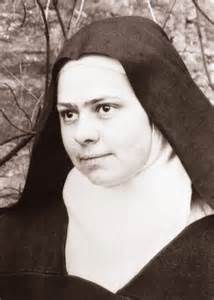
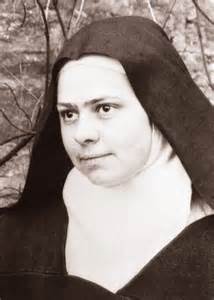
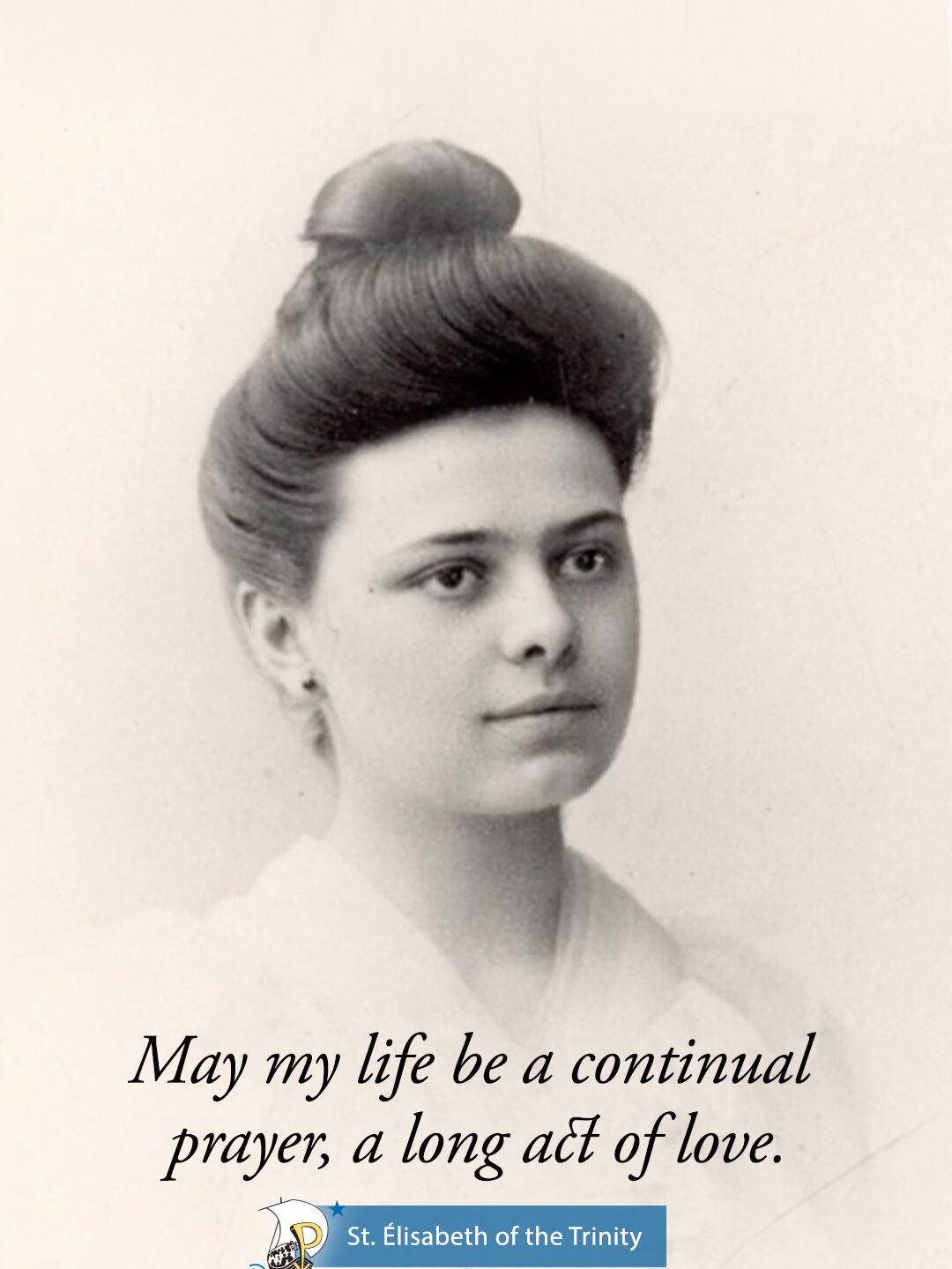
The Feast day of St. Elizabeth of the Trinity is celebrated on Nov. 8. She is the patron saint of the sick and the loss of parents. St. Elizabeth was born into a military family in 1880. She was strong willed and exuberant. When seven, her father died and her family moved to Dijon.
From her bedroom window, she could see the monastery of the Discalced Carmelite Nuns. After the death of her father she experienced outbursts of anger. She experienced both conversion and peace from the sacrament of confession.
At the age of 14 she received her first communion. From that time on she was no longer angry. She developed a great devotion to the Eucharist. It was on her first communion day that she met the prioress of the monastery for the first time. The prioress explained to her that the meaning of the name Elizabeth is “house of God”.
While Elizabeth had an early desire to become a Carmelitenun, she was delayed by her mother’s objections until she was 21. Until then, she sang in two choirs and helped students prepare for their first communion.
In 1901, she finally entered the Carmel monastery taking the name Sister Elizabeth of the Trinity. She had a great devotion to the Carmelite saints but was also drawn to the teachings of St. Paul. She believed the core of his teaching was the love of Christ. St. Elizabeth was a contemplative who wrote many poems and prayers including her famous Prayer to the Trinity.
St. Elizabeth died from Addison’s Disease in 1906 (kidney disease) at the age of 26. Elizabeth viewed suffering as a gift; a way to share in the redemptive sufferingof Jesus.
St. Elizabeth of the Trinity was canonized by Pope Francis on October 16, 2016.
“Jesus gives His cross to His true friends so he can come even closer to them.”