Category Archives: Incorruptible

Prayers, Quips and Quotes: St. Mary Magdalene de’ Pazzi, Feast Day May 25

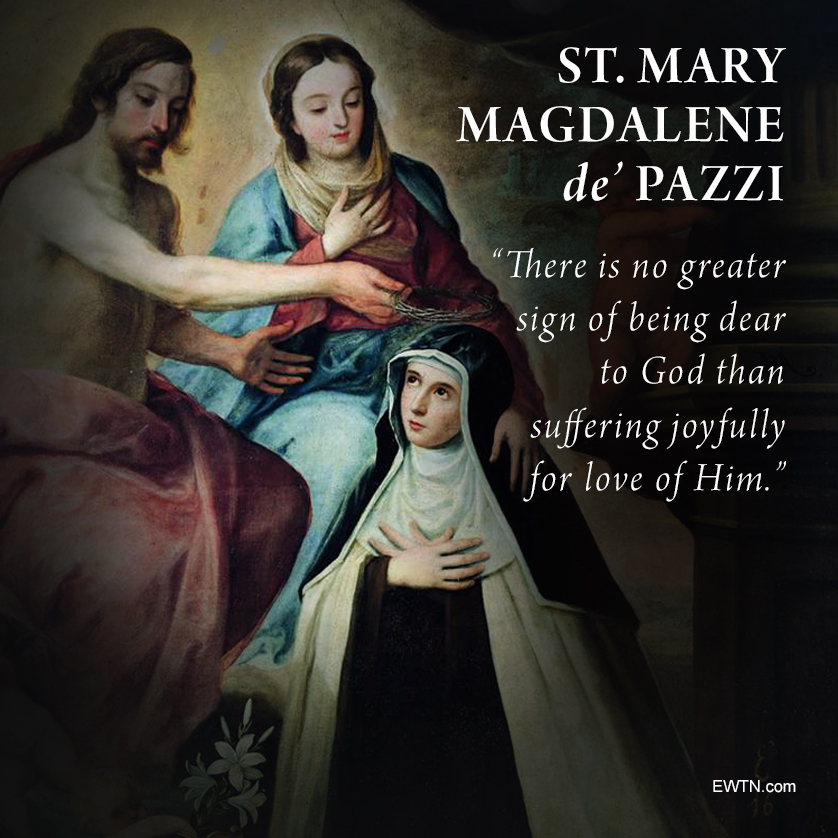
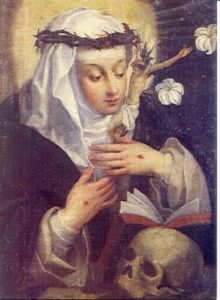
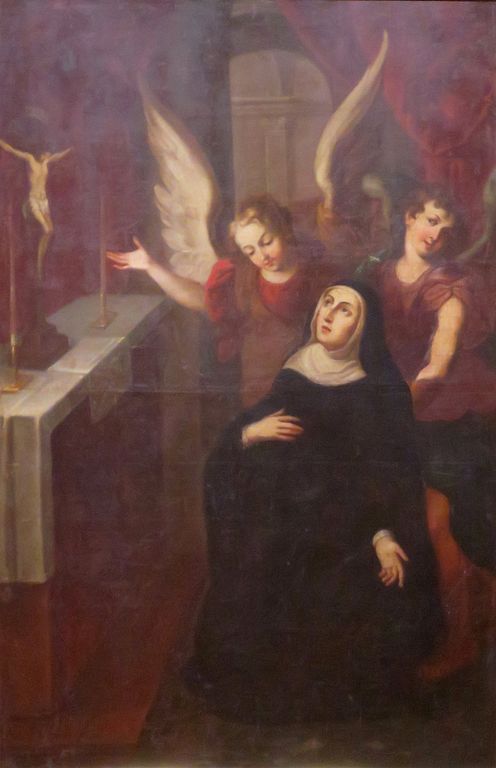
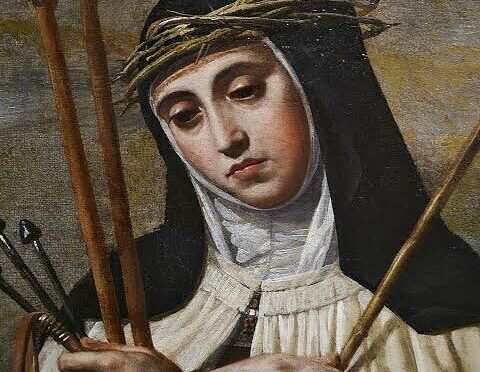
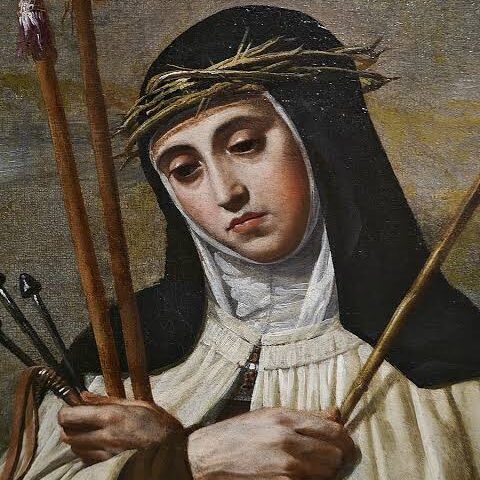
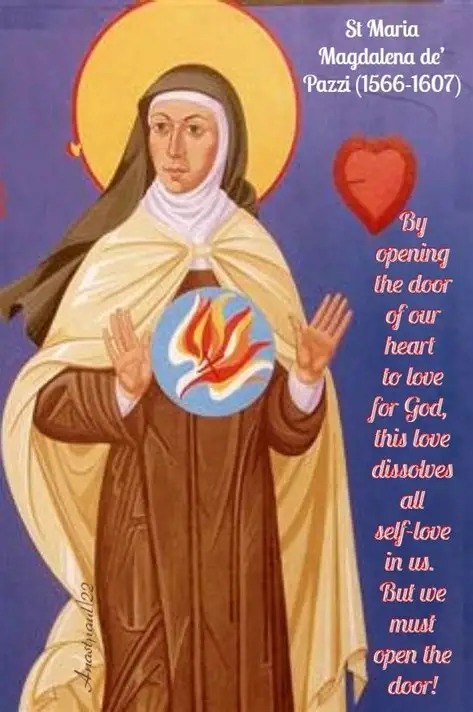
St. Mary Magdalene de’ Pazzi

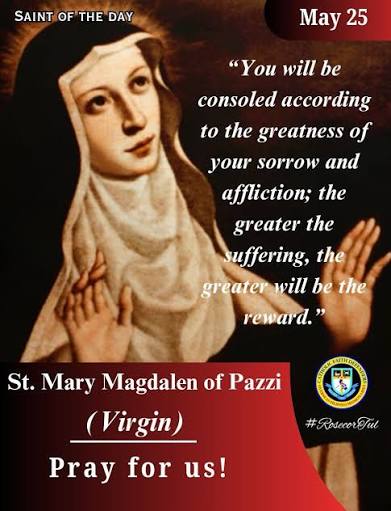
The Feast Day of St. Mary Magdalene de’ Pazi is celebrated on May 25. She is the patron saint of the sick and against sexual temptation. She was a Carmelite nun, virgin, mystic and incorruptible

St. Mary Magdalene was born on April 2, 1607 into a noble family in Florence, Italy. She was baptized with the name Catrina Lucrezia de’ Pazzi.

At the age of 8, Catrina became a student at San Giovannia. The nuns prepared her for her first communion which she received when she was 10 years old. Soon…she made a vow of virginity, knowing she did not desire to marry.

Catrina enjoyed a life of prayer and penance. She especially enjoyed the meditations of St. Augustine and the Lord ‘s Passion by Loarto.
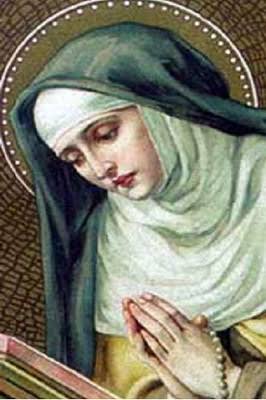
When Catrina was 16, she chose to enter the Carmelite Community of Santa Maria. She was led to this decision because they offerred daily Holy Communion, which was rare during this time.

As a novice, Catrina took the name Mary Magdalene de Pazzi. After a year, she became very ill and was near death. On the Feast of the Trinity, she was allowed to make her profession of vows in the chapel. Immediately, she experienced an ecstasy which lasted two hours. For the following 40 days she experienced ecstasy after receiving communion. She was given a sense of union with God and many insights about divine teachings. During the ecstacies the nuns recorded what she said and did. This resulted in five volumes of books about her life. They are referred to as The Life and Works of St. Mary Magdalene de’ Pazzi.

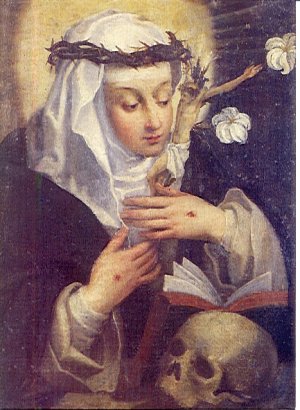
Mary Magdalene experienced both spiritual ecstasies and dryness with internal suffering. Throughout her life she had a strong devotion to the crown of thorns which Jesus wore during the crucifixion. She joyfully offered her suffering to God.

Mary Magdalene became the novice mistress and the the superior of the Community. She died on May 25, 1607 of natural causes after suffering a painfull illness for three years. Many miracles occurred following her death.

St. Mary Magdalene was beatified on 1626 by Pope Urban III. She was canonized by Pope Clement X on April 28, 1669.

The incorruptable body of St. Mary Magdalene de’ Pazzi lies preserved in a glass coffin within the Carmelite Monastery of Santa Maria degli. Angel in Florence.
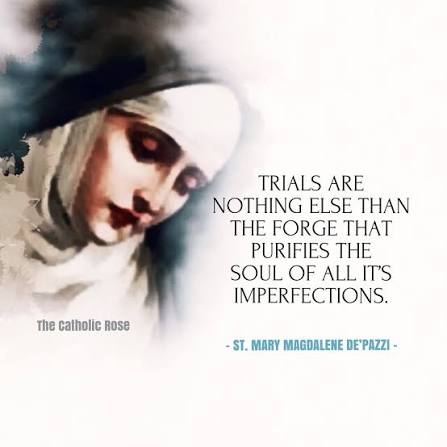
Prayer of Mary Magdalene de’ Pazzi

Come, Holy Spirit. May the union of the Father and the will of the Son…Come to us. You, Spirit of truth, are the reward of the saints, the refreshment of souls, light in darkness, the riches of the poor, the treasures of lovers, the satisfaction of the hungry, the consolation of the pilgrim Church; You are he whom all treasures are contained.

Come, You who, desending into Mary, caused the Word to take flesh; effect in us by grace what you accomplished in her by grace and nature.

Come, You who are the nourishment of all chaste thoughts, the fountain of all clemency, the summit of all purity.

Come, and take away from us all that hinders us from being absorbed in You.
Prayers, Quips and Quotes: St. Catherine of Siena, Feast Day April 29


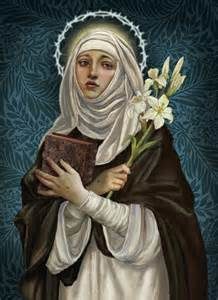
St. Catherine of Siena Public Domain Image
St. Catherine of Siena

The Feast Day of St. Catherine of Siena is celebrated by the Catholic Church on April 29.  St. Catherine is the patron saint against fire, illness and miscarriage.

                                                                                                             St. Catherine was the 25th child to Giacomo and Lapa Benincase. She was born in 1347. Her father was a          wealthy wool dyer in Northern Italy. She began having   mystical experiences at the age of six, seeing guardian angels clearly. She also had visions of Heaven, hell and purgatory. She consecrated herself to Christ at the age of seven.

                                                                                                              At the age of 16, Catherine became a Dominican tertiary (lay Dominican), continuing to have visions of Christ, Mary and the saints. In many of her ecstasies, Catherine fell into fire; however, she was untouched by the flames. This is why she is the patron saint against fire.

                                                                                                                St. Catherine received a divine call to enter the public life . She began writing letters to princes and republics of Italy. She was consulted by papal legates. She persuaded Pope Gregory XI to return to Rome from Avignon and reform the clergy and the Papal States. She referred to the pope as “sweet Christ on earth”. St. Catherine also cared for the sick (working among lepers) , served the poor and worked tirelessly to convert sinners. St. Catherine’s reputation for holiness grew.

                                                                                                            On the 4th Sunday of Lent, 1375, she received the Stigmata, (the wounds of Christ). They were only visible after her death.

                                                                                                              St. Catherine’s writings are considered historical in the Church. They include: “The Dialogue, Letters of Catherine Siena and Little Talks with God.

                                                                                                             At the age of 33, on April 29, 1380, Catherine died of a mysterious and painful illness which came on without notice. It was not diagnosed. Her body was discovered to be in-corrupt in the year 1430. In 1970, Pope Paul VI declared St. Catherine of Siena to be a Doctor of the Church.

                                                                                                    Enough of all this soft soap!  All it does is cause the members of Christ’s Spouse to stink!
Quote of St. Catherine of Siena
St. Catherine of Siena in Art
St. Catherine of Siena


St. Catherine of Siena

April is the Month of the Eucharist.

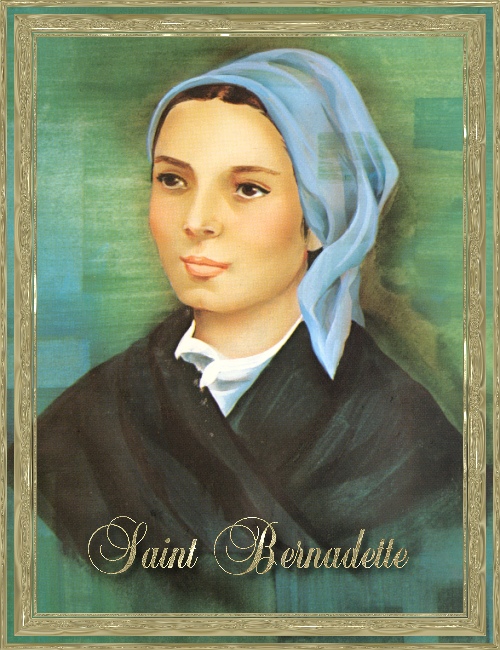
Prayers, Quips and Quotes; St. Bernadette of Lourdes, Feast Day April 16

The Feast day of St. Bernadette of Lourdes is celebrated on April 16.

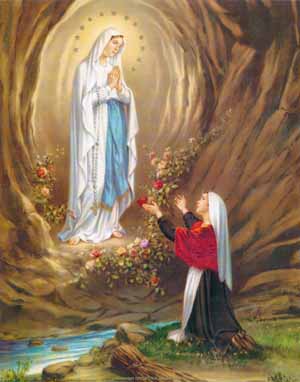
St. Bernadetta was born in 1833 in France. Our Lady first appeared to St. Bernadette in Lourdes.
France on Feb. 11, 1858. Bernadette was a poor shepherdess who was only 14 years old. Our Lady actually appeared to her eighteen times.

During the first vision Bernadette saw a bright light and a beautiful lady dressed in a brilliant white dress adorned with a blue ribbon. A long veil covered her body from her head to her feet. Her hands were clasped as if praying and she carried a white and gold rosary with a gold cross in her hands. Bernadette took her rosary out of her pocket and guided by Our Lady they prayed the rosary. After praying, the vision ended.

St.Bernadette of Lourdes

Bernadette asked the girls with her if they had seen anything and they said no. She told them not to say anything, but her sister told their mother who did not believe the story.

On Feb. 14, Bernadette returned to the Grotto where the vision had happened. She asked those with her to pray the rosary. When Our Lady appeared again, Bernadette’s face was transfigured. She sprinkled the holy water which had been given her and said, “If you come from God, come near us.” The holy water touched Our Lady, and she smiled and came closer. They began to pray the rosary together.

On Feb. 18, after Mass she was accompanied by a lady and a religious. When she began praying, Our Lady appeared again and they all prayed the rosary. Our Lady asked Bernadette to return for 15 consecutive days. Benadette promised she would do so. Our Lady said;

Bernadette went to the Grotto with a lit candle for the next 15 days. Hundreds of people began coming with her. On Feb. 21, Bernadette observed that Our Lady seemed sad. She asked her, “What is wrong? What can I do?” Our Lady said,

“Pray for sinners.”

“I also promise to make you happy, not in this world, but in the next.”

A doctor examined Bernadette and concluded there was northing wrong with her. Bernadette was ridiculed nonetheless.

On Feb. 23, Our Lady requested that a Sanctuary be built on the site. She told Bernadette to talk to the priest. When the priest asked her the name of the lady, Bernadeete did not know. The priest told her he needed a miracle and she shoul ask the lady for the rose bush to blossom.

On Feb 26, Our Lady revealed to Bernadette her name saying:

“I am the Immaculate Conception”

During one apparition people witnessed Bernadette praying for fifteen minutes with the candle flame burning through her fingers. She remained unharmed. The last apparition occurred on the Feast of Our Lady of Mt. Carmel. Many miracles of healing have been attributed to the healing waters of Lourdes.

St. Bernadette joined the Sisters of Charity seeking God in the silence of the convent. St. Bernadette died on April 16, 1879.

The message of Our Lady Of Lourdes is timeless.

Pray for Sinners!

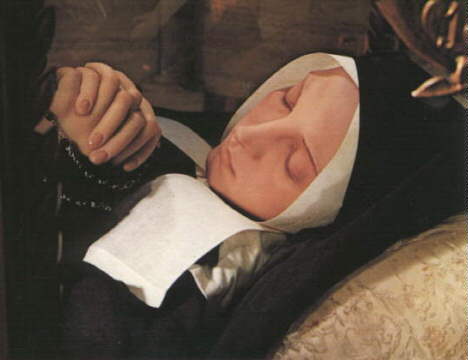
The incorrupt body of St. Bernadette of Lourdes may be viewed at St. Gildard Convent where it is kept uner glass. This is the Conven St. Bernadette spent the last nine years of her life in prayer with God.

Always stay very close to our Lord, present in the tabernacle. Be completely absorbed by devotion to Him there and never let go.

Quote of St. Bernadette

April is the Month of the Eucharist

Prayers, Quips and Quotes: St. Rita of Cascia, Feast Day May 22

St. Rita De Cascia Public Domain Image

The feast day of St. Rita of Cascia is celebrated on May 22. She is the patron saint of impossible causes, abuse victims and widows.

St. Rita was born in 1386 in Cascia, Italy. She was known to be very spiritual even as a young child. She enjoyed visiting shrines and wished to become a nun. Her parents were opposed to the idea and arranged for her to be married. Her husband turned out to have a bad temper and was very difficult for her to live with. She dealt with his abuse with prayer, patience and kindness. They had twin sons. Their difficult marriage lasted 22 years.

St. Rita De Cascia public domain image

One day while returning home from work her husband was ambushed and killed. St. Rita’s sons were now teenagers and began to talk of revenging their father’s death. St. Rita turned to prayer. She prayed that her sons would not be able to go through with the revenge. Her prayer was soon answered. Both her sons died from a deadly illness soon after without taking revenge on their father’s killer.

After the death of her husband and sons, Rita applied to enter the Augustinian Convent. Her first attempt was denied because of the ongoing feud. Rita persisted however. She convinced her husband’s family to put aside their hostility. The two rival families embraced peace. Rita turned to St. John the Baptist, St. Nicholas of Tolentino and St. Augustine, requesting their intercession. The convent changed their decision and allowed her entry. She was 36 when she entered the monastery.

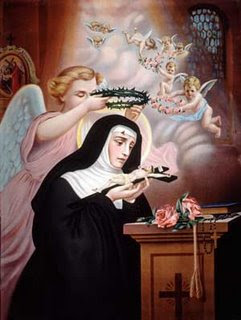
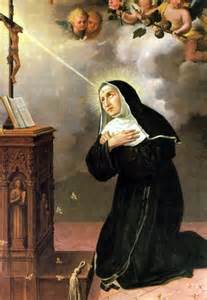
St. Rita had a great devotion for the passion of Christ. She meditated often on the crucifix. On Good Friday, 1442, St. Rita meditated on the suffering of Jesus on the crucifix. She offered to relieve Christ’s suffering by sharing even the smallest part of his pain. As she was meditating, a small wound on her forehead appeared. It appeared to be a thorn from the crown that Jesus wore. St. Rita had this stigmata  for 15 years.

'Saint_Rita_of_Cascia'_by_Antonio_de_Torres,_c._1720

St. Rita was confined to bed for the last four years of her life. She ate very little. The Eucharist sustained her and she remained joyful during her suffering. Before her death St. Rita requested a rose be brought to her from her parents’ garden even though it was January. Surprisingly, a rose was discovered to be blooming on the rosebush and it was presented to her. St. Rita gave thanks to God for this sign of God’s love.

Because this impossible request of St. Rita for a rose in January was answered she became the patron of impossible causes. It was also known that her prayers were known to obtain remarkable cures.

St. Rita died on May 29, 1456. Many miracles were recorded after her death . She was canonized by Pope Leo XIII in 1900.

St. Rita’s incorrupt body is venerated today in the National Shrine of Cascia.

St. Rita public domain image

Be at peace with your own soul, then heaven and earth will be at peace with you.
Quote of St. Jerome; Feast Day September 30


May is the Month of Our Lady 

[love]

Prayers, Quips and Quotes: St. Vincent Palliotti, Feast Day January 22


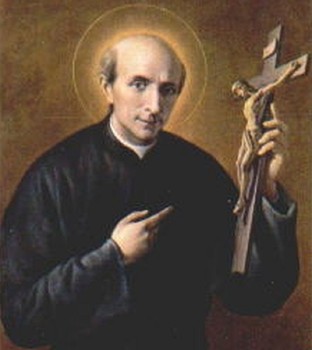
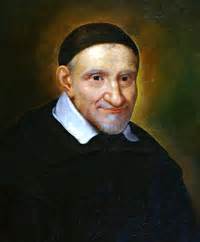
St. Vincent Palliotti

The Feast Day of St. Vincent Palliotti is celebrated on Jan. 22. St. Vincent Palliotti was born in Rome in 1795.

St. Vincent Palliotti  had a devotion to the Bl. Virgin from an early age. He also had a devotion to St. Francis of Assisi. He became a Franciscan Tertiary in 1816. After finishing his studies he was ordained a Franciscan priest in 1818. He was known for his zeal and was tireless in his work for the needy. He founded guilds for workers, agriculture schools, loan associations, orphanages, and homes for girls. This led to the foundation of the Society of Catholic Action. He founded the Pallottine Fathers and Pallottine Missionary sisters.

St. Vincent Palliotti died at the age of 55 in 1850 after coming down with a severe cold.

1906 the body of St. Vincent was exhumed and found to be incorrupt.

“Humility is nothing but truth,
while pride is nothing but lying.”
Quote of St. Vincent de Paul; Feast day Sept. 27
January is the Month of the Holy Name.Save

Save

Prayers, Quips and Quotes: St. Francis Xavier, Feast Day Dec. 3


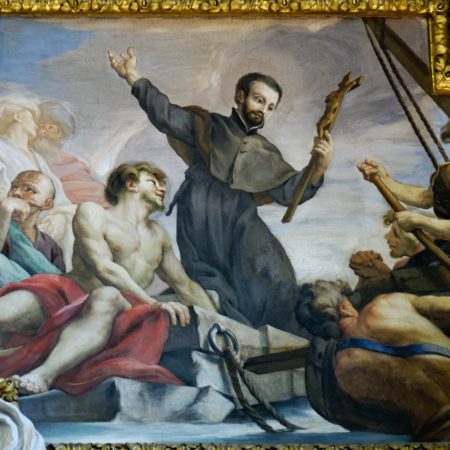
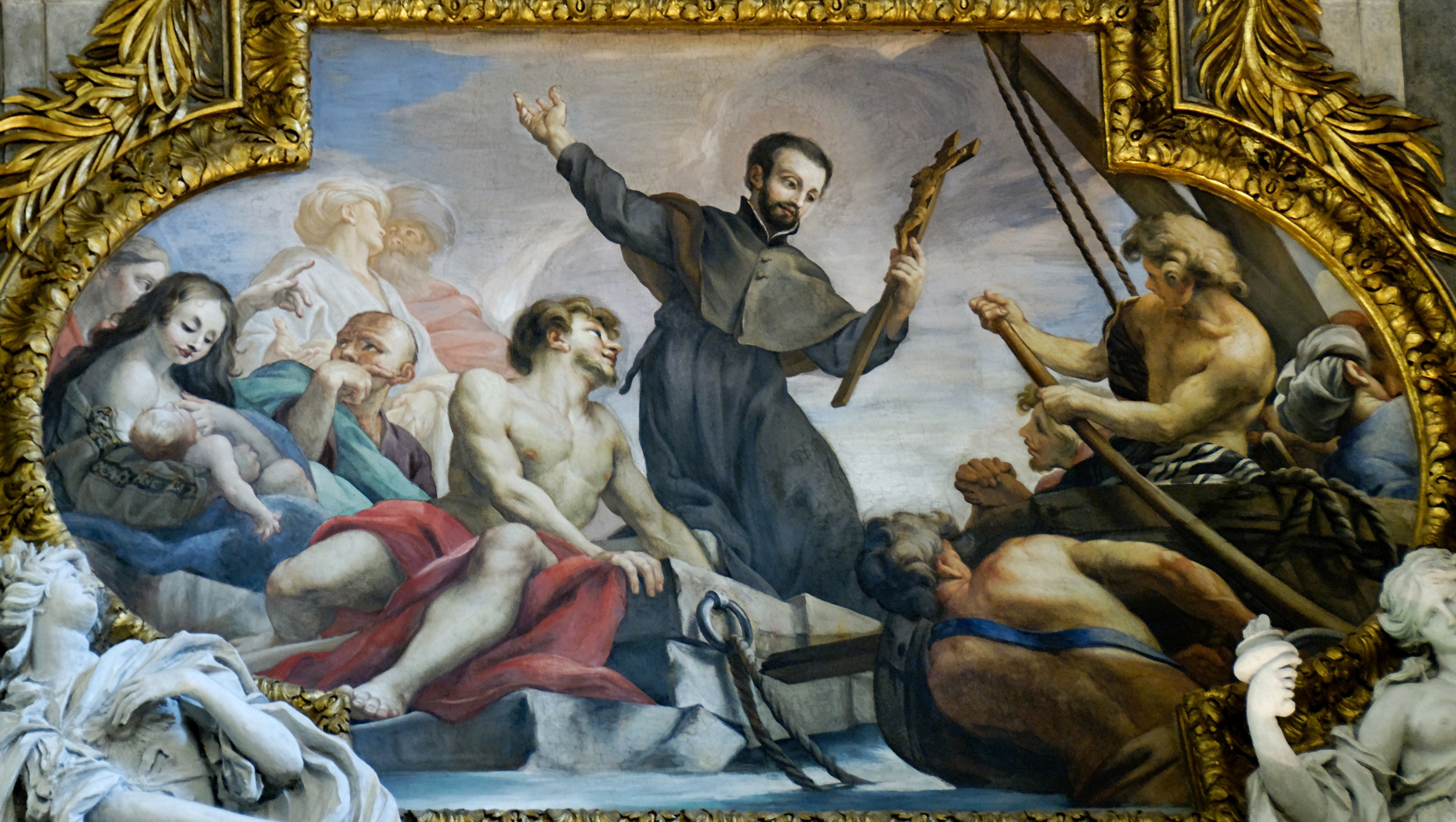
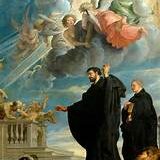
Preaching St. Francis Xavier By Carlone Gesu Public Domain Image
Preaching St. Francis Xavier
By Carlone Gesu


The Feast Day of St. Francis Xavier is celebrated on December 3.  He is the patron saint of foreign missions and the co-founder of the Society of Jesus, also known as the Jesuits.

St. Francis Xavier was born in the Kingdom of Navarre (now part of Spain). He was born in the Basque area, on April 7, 1506. He studied at the University of Paris.

When he met Ignatius of Loyola, they became friends and Francis became a student of St. Ignatius. He then became a co- founder of the Society of Jesus (the Jesuits), with Ignatius. With St. Ignatius, he was ordained a priest in 1537. In 1956 Francis left Paris to join Ignatius in Venice. The Society was recognized by the Pope in 1540.

Francis preached in India, Japan, Borneo, and Moluccas. Over a period of ten years, he baptized roughly 30,000 people to Christianity. He is said to have converted more people to Christianity than anyone other than St. Paul.

In 1552 he set out for China landing on the Island of Shangchuan.. He died from a fever before he reached the mainland while waiting to be taken to China. He was first buried on a beach at Shangchuan Island. His incorrupt body was taken from the island in 1553 and temporarily buried in St. Paul’s Church in Portuguese, Malacca.

St. Francis Xavier was known as the “Apostle of the Indias.”

The Novena of Grace was a popular devotion to Francis Xavier and typically prayed for nine days before Dec. 3.


“I love You, not because You have the power to give heaven or hell,
but simply because You are You…my kin and my God.”
Quote of St. Francis Xavier]
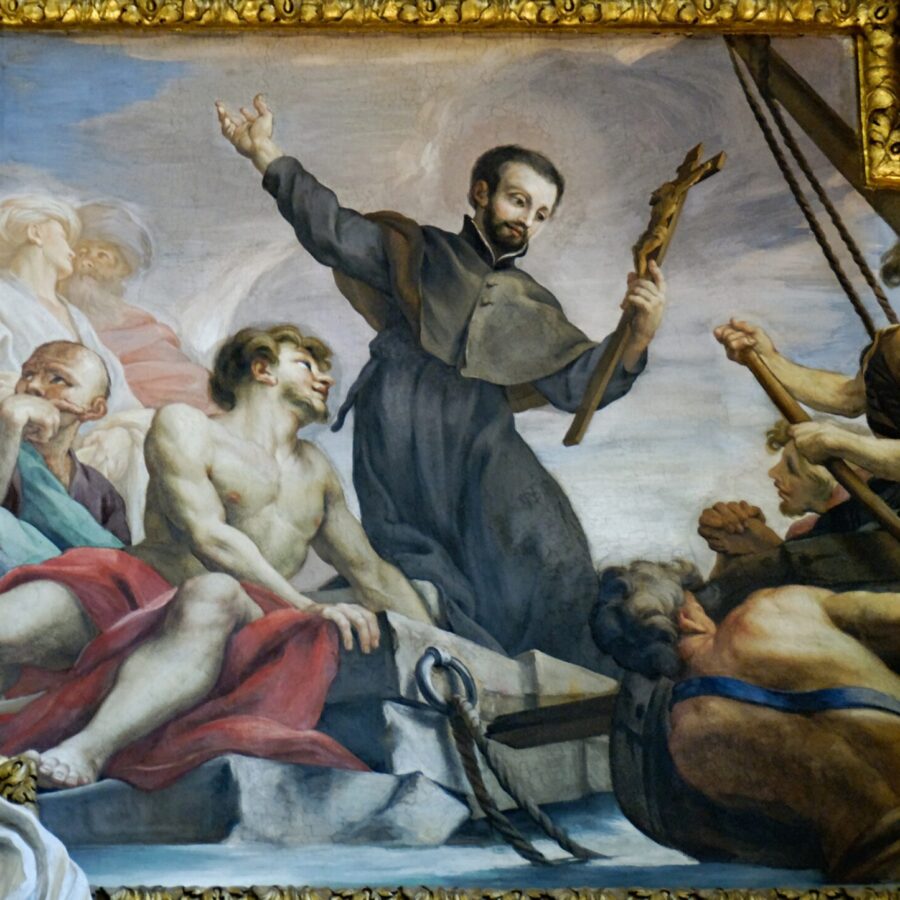
St. Francis Xavier in Art 
December is the Month of the Divine Infancy

Save

Save

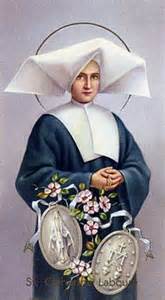
Prayers, Quips and Quotes: St. Catherine Laboure, Feast Day November 28


St. Catherine Laboure

 The Feast day of St. Catherine Laboure is celebrated on November 28.  She is the visionary who began the devotion to the miraculous medal.

Catherine Laboure was born on May 2, 1806 in Paris, France. Her father was a successful farmer. She was the ninth of eleven children. Her mother died when she was only nine years old.   After the funeral service, Catherine went to her room and gave a kiss to a statue of Mary, saying;

“Now, dear Lady, you are my mother.”

Catherine was called “Zoe” by those who knew her, because her birthday was on the feast day of St. Zoe.

After having a dream about St. Vincent de Paul, at a young age, she joined the Daughters of Charity founded by him. She is known as a Marian visionary because of the apparitions which she reported of Mary appearing to her.

On July 18, the first apparition occurred. Catherine saw a lady seated in the sanctuary. She approached her and was instructed how she was to act during times of trial, pointing to the altar for consolation. Mary told her,

“”Sorrows will come upon France; the throne will be overthrown.”

A week later the French revolution began in Paris.

On Nov. 27, the lady showed St. Catherine the Medal of the Immaculate Conception, now known as the “Miraculous Medal” She gave Catherine the mission of having the medal made and to spread devotion to it.

Catherine reported the visions to her spiritual director, Father Aladal. Forty five years later, she spoke fully to her supervisors about the apparitions.

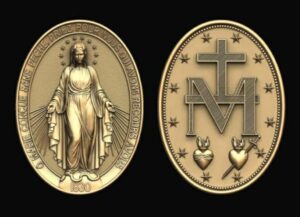
The miraculous medal which Mary showed to Catherine was oval showing Mary standing on a globe crushing the head of the serpent. (the devil). Around the image of Mary were the words:

“O Mary, conceived without sin, pray for us who have recourse to thee.”

Mary’s hands were showering a cascade of brilliant rays upon the world.

On the reverse side of the medal was a cross, the symbol of Christ’s redeeming Sacrifice on Mount Calvary for the salvation of the world. The cross was intertwined with the letter “M”.

The “M” stands for both Mary and for Mother and was to be surrounded by twelve stars. The two hearts are the Sacred Heart of Jesus encircled by a crown of thorns and the Immaculate of Mary, pierce by a sword. The Flames symbolize the burning love of Jesus and Mother Mary.

Mary told Catherine,

“All who wear them will receive great graces.”

After two years of investigation Father Aladal went to the archbishop with the request. The request was approved.

St. Catherine served humbly, not wishing to be known as a visionary.  It was only after 46 years of service that she informed her Sister Superior that she was the Sister Mary had appeared to.  At Catherine’s death, on December 31, 1876, at the age of 70, few people knew of her visions. She preferred a silent life, spending her time caring for the aged and sick.

Stories of many miracles and cures caused the devotion to spread rapidly.

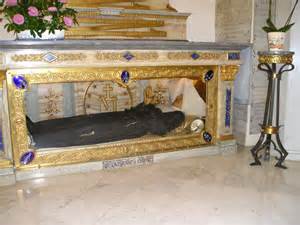
In 1922 the body of St. Catherine was exhumed.  It was found to be incorrupt.  Her body is encased in glass in the chapel in Paris near where Our Lady appeared to her.

St. Catherine’s feast day is celebrated on Nov. 27, the day of the apparition.

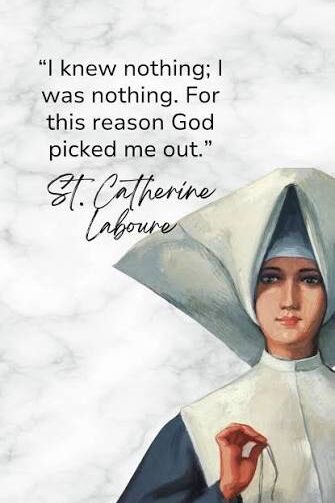
St. Catherine Laboure
Lord, I am here.  Tell me what you would have me do.
If He gives me some task I am content and I thank Him.
If he gives me nothing, I still thank Him
Since I do not deserve to receive anything more than that,
and then I tell God everything that is in my heart.
I tell him about my pains and my joys, and then I listen.
If you listen, God will also speak to you.
For with the good Lord, you have to both speak and listen.
God always speaks to you when you approach him plainly and simply.
Quote of St. Catherine Laboure


November is the Month of the Holy Souls

Save

Save

Save

Save

Prayers, Quips and Quotes: St. Cecelia, Feast Day November 22


The Feast Day of St. Cecelia is celebrated on November 22.  She is a martyr and the patron saint of musicians.

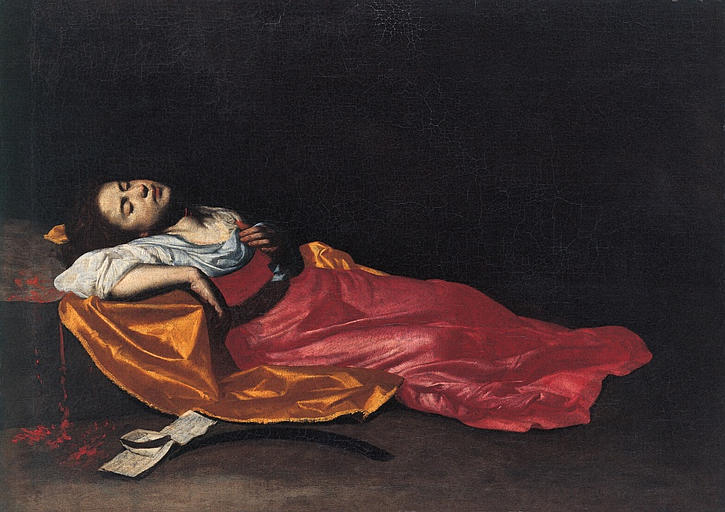
St. Cecelia by Guarino
St. Cecelia
by Guarino


St. Cecelia was born in Rome to an esteemed family late in the first century. She lived a life of prayer. She was given in marriage to a young pagan named Valerian. Cecelia shared her promise of celibacy and consecration to God with her husband. During the wedding, it is said that she sat apart, singing to God in her heart with thanksgiving.

Valerian converted to Christianity and he honored her desire to remain a virgin. He helped Cecilia in her charity toward the poor. Because of this, he was arrested and put to death.

Almachius, the Prefect of Rome, feared her nobility and charity to the poor. He had her imprisoned in the steam bath of her own home, trying to suffocate her. After a full day and night in stifling steam, Cecilia survived without harm. This resulted in Almachius sending an executioner to behead her. She was struck three times, but she was not beheaded. She fell to the floor. After several days of bleeding in her own bath, Christians rushed in to help her. On the third morning the venerable Bishop Urban visited Cecilia. As she lay dying, she requested that her palace be made into a church for the poor. She died praying, after receiving the Eucharist. Her body was buried in the Catacomb of Saint Callistus.  The year of her death is unknown bu it is believed  her martyrdom took place during  the pontificate of Urban I (222-230).

In 817, her tomb was discovered by Pope Paschal I. Her body was one of the first of over a hundred saints whose bodies were discovered to be incorrupt. Her body remained as it was when she died. Her relics were put into the crypt in the Church of Santa Cecilia in Trasrevere. When her tomb was opened in 1599, her body was perfectly incorrupt. Her neck still had marks of being struck with a sword.

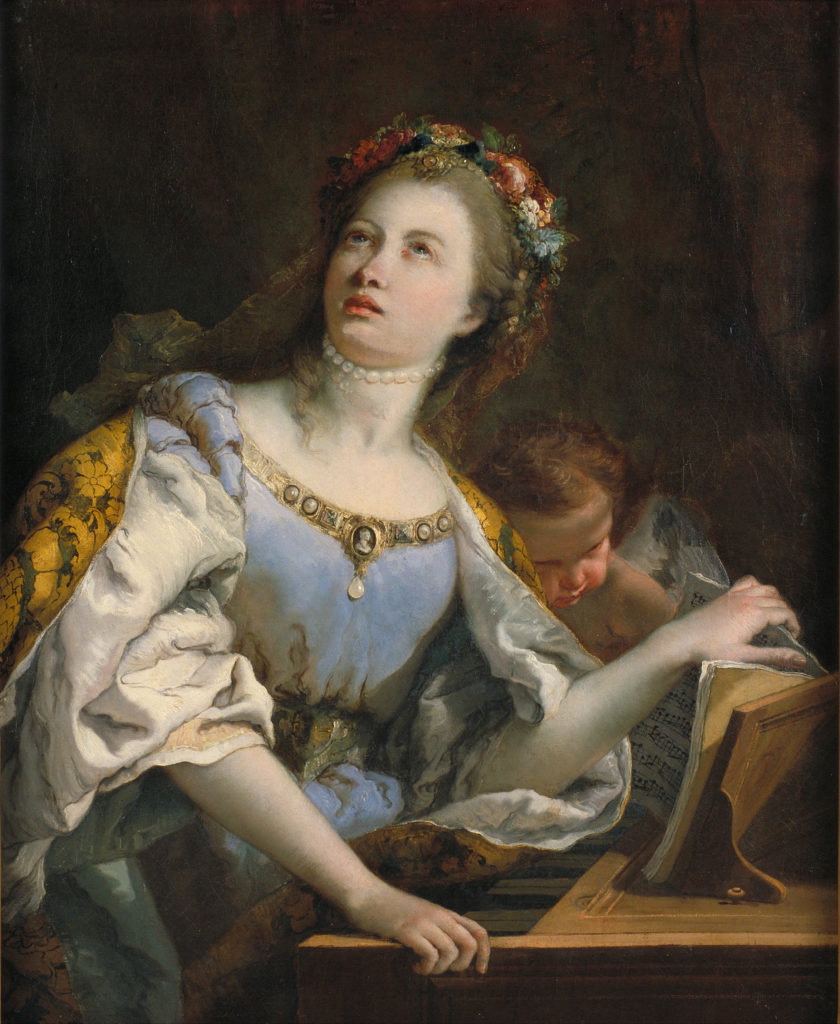
St. Cecelia is the patron saint of musicians, because of the zeal with which she sang the divine praises of thanksgiving. Her spirituality included a love of music. St. Cecilia is often venerated in poetry and music.

“To sing is to pray twice.”

St. Augustine; Feast Day August 28

St. Cecelia in Art

November is the Month of the Holy Souls

Save

Save

Prayers, Quips and Quotes: St. Vincent de Paul, Feast Day September 27


St. Vincent de Paul Public Domain Image
St. Vincent de Paul
Public Domain Image

The Feast Day of St. Vincent de Paul is celebrated on September 27.  He is the patron saint of charities, hospitals and volunteers.

St. Vincent was born at Pouy, Gascony in Southern France in 1581 into a large peasant family.  At the age of 15, he entered a Franciscan seminary.   He tutored children until he was ordained a priest in 1600.

In `1605, St. Vincent was traveling on a ship from Marseilles to Narborne when he was captured by Moorish pirates!  He was sold as a slave in Africa.  After two years as a slave, he escaped and returned to France.

At Avignon St. Vincent continued to study.  He became the chaplain to the Count of Goigny and was placed in charge of the charities for the poor.   This inspired him to preach missions to provide relief for the poor.  St. Vincent founded a missionary group known as the  Vincentians. The priests in the Order served people primarily in small towns and villages.  They had a devotion to helping the poor.

Next, St. Vincent along with the help of St. Louise de Marillac, founded the Sisters of Charity.  He organized the rich women in Paris to collect money for his missionary projects, including several hospitals.  He also collected money for victims of war and ransomed over 1200 slaves from N. Africa.

The motto of St. Vincent was “God sees you”.  He became known as the Apostle of Charity and the Father of the Poor.

St. Vincent died at the age of 80.  His heart remains incorrupt and can be found in the Convent of the Sisters of Charity in Paris.  He is credited with two miracles.  The first was the curing of a nun with ulcers.  The second was a laywoman cured of paralysis.

St. Vincent de Paul was canonized by Pope Clement XII on June 16, 1737.

St. Vincent’s bones and heart are perfectly incorrupt and have been placed inside a wax figure of his body. His relics can be seen in the Church of St. Vincent de Paul in Paris.

Do not feel that all is lost because of the revolt you feel inside.  It has rained hard.  The thunder has crashed.  Is the weather any less beautiful because of that?  Be assured you are not, for all that, any less dear to our Lord.
Quote of St. Vincent de Paul
September is the Month of Our Sorrowful Mother

Save

Save

Save

Prayers, Quips and Quotes: Bl. Bertrand of Garrigua, Feast Day September 6


Blessed Bertrand
Blessed Bertrand

The Feast Day of Bl. Bertrand of Garrigua is celebrated on September 6.  He was born in Garrigua, France in 1195. Bl. Bertrand was ordained a secular priest preaching with the Cistercians against the Albigenses.  In the year 1216 he met St. Dominic.  He soon joined St. Dominic helping him to found the Order of Preachers.

While St. Dominic was in Rome seeking approval of his new order he left Bertrand in charge.  He was an important part in the founding of the Order of Preachers, becoming known as the “second Dominic”.  He was known to be a traveling companion with St. Dominic.

Bl. Bertrand was known for continually weeping for his sins.  St. Dominic convinced him that it would be better to pray for ht sins of others instead.  Bertrand continued weeping, however, he was weeping for others sins instead of his own.  After having a vision he also began to pray for the souls in purgatory.

Bl. Bertrand fell sick while preaching a mission in 1230 and died at the age of 35.

The body of Bl. Bertrand was found to be incorrupt in 1881, 23 years after his death.

Bl. Bertrand was beatified by Pope Leo XIII in 1881.

A person who governs his passions is master of the world.  We must either rule them or be ruled by them.  It is better to be the hammer than the anvil.
Quote of St. Dominic;  Feast Day August 8

September is the Month of Our Lady of Sorrows

Save

Prayers, Quips and Quotes: St. Rose of Viterbo, Feast Day September 4


St. Rose of Viterbo Public Domain Image
St. Rose of Viterbo

The Feast Day of St. Rose of Viterbo is celebrated on September 4.  Rose was born in Viterbo, Italy in 1234.  The city was in revolt against the pope.  Her family was exiled for supporting the Pope.  After the Pope won the dispute, Rose returned to the city.

St. Rose was pious from a very young age.  She practiced contemplative prayer by age 7.  She had the gift of miracles and visions.   While still a child she is credited with the healing of her Aunt who was believed to be dead.  At the age of ten, Mary instructed her to join the 3rd Order of St. Francis.  Shortly after, Our Lord appeared to her on a cross wearing a crown of thorns.  When Rose asked him why this had happened he told her his deep love for men was the reason.  Rose persisted asking him who had pierced him.  He told her:

The sins of men have done it.

This vision inspired young Rose to take to the streets preaching penance.  St. Rose tried and failed to join the Order of Poor Clare’s due to lack of a dowry.  She tried to  found a religious community of her own but it was not approved.    She lived a life of prayer and penance in her father’s home.  She died in 1251 at the age of 18.

The body of St. Rose was discovered to be incorrupt and lies in the monastery of St. Mary of the Roses which refused her entry.  St. Rose was canonized in 1457.

Rose’s dying words to her parents were:

“I die with joy, for I desire to be united to my God. Live so as not to fear death. For those who live well in the world, death is not frightening, but sweet and precious.
Quote of St. Rose of Viterbo
September is the Month of Our Sorrowful Mother

Save

Prayers, Quips and Quotes: St. Pius X, Feast Day August 21


St. Pius X Public Domain Image St. Pius X


The Feast Day of St. Pius X is celebrated on August 21.

The birth name of St. Pius X was Giuseppe Melchiorre Sarto.    He was born in Riese, Italy into a family of ten children.  His father was a poor parish clerk and hi mother was a seamstress.

At the age of 15, Giuseppe entered the seminary at Padua, Italy.  His father died before he had graduated.  His Mother would not let him return home to help the family, insisting he stay in school.  He was ordained a priest in 1858 and worked as a parish priest for 17 years.  Because of his many works of mercy, many were converted to the faith.

Father Sarto wished to work with the poor, however, he was named spiritual director of a major seminary and later became a bishop and then a cardinal.  In 1903, he was elected the Pope, the Bishop of Rome.  As Pope, he took the name of Pius X.  He emphasized the importance of the Eucharist becoming known as the Pope of the Holy Eucharist.  He allowed the Eucharist to be received at the age of seven.  He also encouraged the use of Gregorian Chant in the liturgy.

Pope Pius X sheltered refugees with his own resources and tried to prevent World War 1.  He died within two months after the war began on August 20, 1914.

The body of St. Pius X was exhumed 30 years after his death and discovered to be incorruptible.  His limbs were still flexible.  His body can be viewed at St. Peter’s Basilica.


I was born poor.  I lived poor.  I will die poor.
Quote of St. Pius X
August is the Month of the Immaculate Heart of Mary


Save

Save

Save