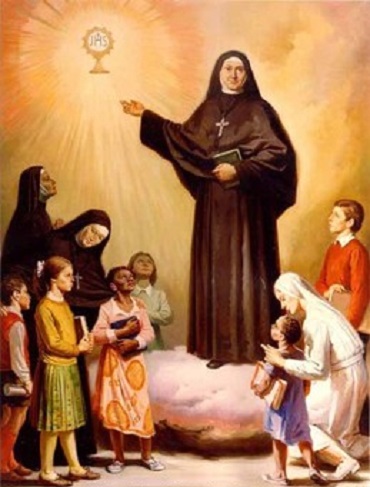
The Feast Day of St. Gertrude Caterina Comensoli is celebrated on Feb. 18.
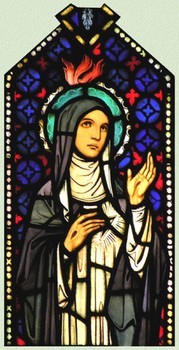
St. Gertrude was born in Biennio Brescia, Italy in 1837 into a large family. From early childhood she was always aware of the presence of God, especially in the Eucharist. She was drawn to prayer in the presence of the tabernacle. At the age of 15, Gertrude wanted to join the convent. Because of illness she was forced to wait. She worked as a domestic worker for a priest.
St. Gertrude was concerned about the transition of Italy’s rural society into an industrial one. She gained a private audience with Pope Leo XIII who encouraged her to do something which focused on the education of young women.
On Dec. 15, 1882 she founded the Congregation of the Sacramentine Sisters of Bergamo. It’s focus was on adoration of the Blessed Sacrament and education. The sisters committed their lives to prayer and helping those who were most in need.
St. Gertrude died of natural causes while praying in adoration of the Blessed Sacramentin 1903.
Arm yourself with prayer rather than a sword, wear humility rather than fine clothes.
The Feast Day of the Seven Founders of the Order of Servites is celebrated on Feb. 17. St. Peregrine was a member of the Servite Order. He is the patron saint of cancer patients.
On the feast of the Assumption of Mary, the Virgin Mary surrounded by Angels appeared to seven men in Florence, Italy. She said,
“I would like you to leave the world and later I will tell you what I want you to do.”
They built a simple church and lived as hermits. Many years later, Mary appeared again, directing them to be called “Servants of Mary”.
“I have chosen you to be my first Servants and under this name you are to till my Son’s Vineyard.”
They followed the Rule of St. Augustine and dedicated themselves to spread the devotion to the Passion of Jesus and the Sorrows of Mary.
St. Peregrine is one of the most well know Servite saints. He was born in Forli, Italy. While still young he was active in politics and was a member of the anti-papal party. During a protest in which St. Philip Benzi was mediating, Peregrine, who was just 18 years old, repented when he saw the humility of St. Philip. He converted to the catholic faith and after receiving a vision from Our Lady he went to Siena and joined the Servites. As a priest he was a good preacher and known as an excellent confessor. He brought many people back to the faith through the sacramentof confession.
In his sixties, he developed a tumor on his leg which continued to worsen until the doctors decided it must be amputated. He prayed throughout the night, experiencing a vision of Jesus descending from the cross to heal his leg. When he awoke he was completely cured. The news of this miracle spread quickly. St. Peregrine died at the age of 85 in 1345. The feast day of St. Peregrine is celebrated on May 1.
Loving God, in spite of all that you give us, we still find suffering in our lives. You generously offered healing to our Servite Brother Peregrine. Following his example, we turn to you with our troubles. Strengthen those who suffer from cancer and other serious diseases. Look kindly upon us all and heal us. Give us comfort in the troublesome moments of our personal lives. Heal us of hurt and resentment. Give grace and joy to our spirit, that we might continue to praise you. We ask these things through Christ our Lord. Amen
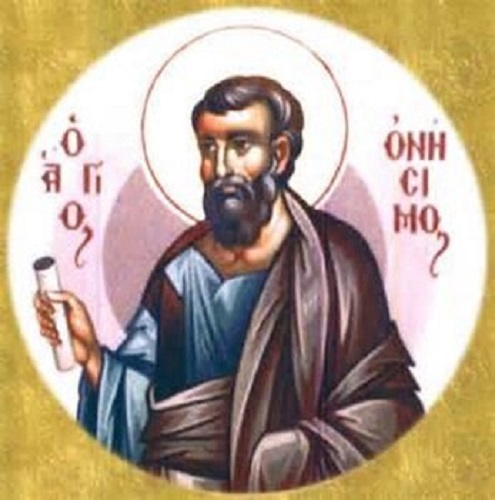
The feast day of St. Onesimus is celebrated on Feb. 16. We learn about St. Onesimus in St. Paul’s letter to Philemon. He had fled from his master, Philemon, after robbing him. St. Onesimus met St. Paul, who was a prisoner in Rome at the time. After meeting St. Paul, Onesimus converted to Christianity.
St. Paul sends him back to Philemon armed with the letter we read in the Bible. In the letter St. Paul pleads for love and forgiveness. Philemon is persuaded to pardon Onesimus who then returns to help St. Paul.
Under the instruction of St. Paul, Onesimus is believed to become a priest and then a bishop. St. Paul has him deliver his Epistle to the Colossians and St. Onesius helps St. Paul to spread the Good News!
It is believed that Onesimus is arrested during the persecutions, brought to Rome in chains and stoned to death in the year 95.
I know of one means only by which to attain perfection: Love! Let us love, since our heart is made for nothing else.
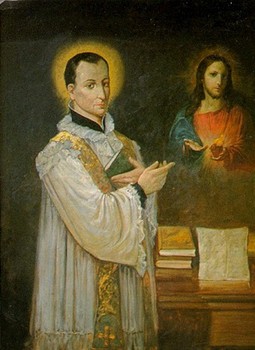
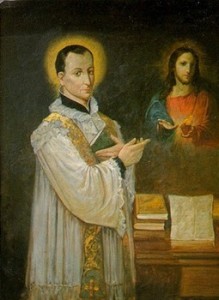
The Feast Day of St. Claude de la Columbiere is celebrated on Feb. 15.
St. Claude de la Columbiere was born near Lyon France in 1641. He was educated in a Jesuit school and later joined the Society of Jesus, also known as the Jesuits. Early in his priesthood he was named preacher of the Avignon School. He was a powerful preacher and his sermons were published. He fought against the Jansenism heresy which believed in predestination. Jansenism also believed that Christ died only for the elect, not for all of mankind.
While serving as Superior for the Parayle Monail School he met St. Margaret Mary Alacoque. She had received visions of the Sacred Heart of Jesus and sought his spiritual direction. He became her spiritual director and confessor. Father Claude advised her to receive the gifts of God with faith and humility. He considered the devotion to the Sacred Heart a remedy for the heresy of Jansenism.
St. Claude was arrested for converting Protestants. He was imprisoned and then banished to England. When he returned to France he was terminally ill with kidney disease. he was sent to Lyon and Paray to recover his health. He died on Feb. 15, 1682.
No one can penetrate the mysteries of the Sacred Heart without tasting the cup of bitterness that Jesus drank from so deeply.
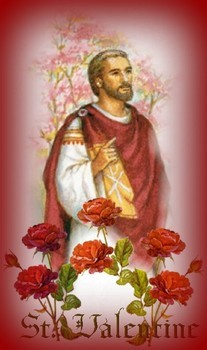
The Feast Day of St. Valentine is celebrated on Feb. 14. St. Valentine is an actual saint. His relics are claimed by three churches in Rome. What we know about him has been passed down orally, so it is considered part legend. St. Valentine is the patron saint of happy marriages and lovers because of his devotion to the Sacrament of Marriage.
St. Valentine was a Roman priest during the time of Emperor Claudias II, who persecuted the church. He actually prohibited the marriage of young people because he believed unmarried men were better soldiers. During the time of St. Valentine polygamy (multiple wives) was very common. St. Valentine encouraged couples to marry in the church in spite of the edict. He held the marriage ceremonies in secret.
Eventually Valentine was caught, imprisoned and tortured. One of his jailers had a daughter who was blind. After Valentine prayed with her, her sight was restored. This resulted in the jailer converting to the Christian faith. In 269 Valentine was sentenced to death .
The last words of St. Valentine were in a note to the girl he had healed signing it “from your Valentine”.
“Let your religion be less of a theory and more of a love affair.”
The Feast Day of St. Catherine dei Ricci is celebrated on Feb. 13. She is the patron saint of the sick.
St. Catherine was born in 1522 in Italy. Her baptismal name was Alexandria, however she took the name Catherine when she joined the Dominican Order. As an infant her mother died and she was raised by her godmother. As a child she was known for her love of praying in solitude. She also talked to her guardian angel and learned to pray the rosary. At the age of six her father placed her in a convent in Florence, Italy, where her aunt was the Abbess.
Alexandria joined the Dominican nuns at Prat in Tuscany when she was 14 taking the name of Catherine. By he age of 25 she was the perpetual prioress. She had a great reputation for sanctity. Although they never met, she corresponded to St. Philip Neri, also known as the Apostle of Joy.
St. Catherine had a great devotion to the Passion of Christ. In 1541 she had a heartbreaking vision of the crucifixion which confined her to bed for three weeks finally recovering on Holy Saturday by a vision of St. Mary Magdaleneand the risen Jesus. For 12 years she experienced ecstasy every Thursday from noon until Friday at 4 p.m. During the visions she received the stigmata, the wound in the left side and the crown of thorns. She offered her suffering for the Holy souls in Purgatory.
Many people came to witness her ecstasy, even though she did not like the attention it caused. One of her visions was of receiving a ring from the lord as a sign of her espousal to him.
Three popes were known to have asked her for her prayers; Pope Marcellus II, Pope Leo XI and Pope Clement VIII.
St. Catherine is the patron saint of sick people because she cared for the sick while living in the convent. She died after a long illness at the age of 68 in 1590.
“If we really want to love,we must learn how to forgive.”
The Feast Day of St. Scholastica is celebrated on Feb. 10. St. Scholastica was born in central Italy. She was the twin sister to St. Benedict who founded the Benedictine Order. Their parents were affluent. After Benedict left for the monastery, Scholastica founded a monastery for nuns within five miles of St. Benedict’s monastery. St. Benedict was the spiritual director for her monastery.
Benedict and Scholastica were only able to visit with each other once a year. Because she was not allowed in his monastery, they met in a farmhouse where they visited and discussed spiritual matters. According to the Dialogues of St. Gregory the Great the two saints spent their last day together in prayer and visiting. Benedict refused her request to stay another day, however a thunderstorm arose preventing him from returning home. St. Scholastica claimed the storm was a result of her prayers. He stayed another day visiting through the night, returning to the monastery the next day. St. Scholastica died three days later in 543. St. Benedict’s brethren brought her body to his monastery. She was buried in the tomb he had prepared for himself.
St. Benedict had a vision of her soul ascending to heaven in the form of a dove. St. Scholastica is the patron saint against storms.
Eternal praise and honor be to you, Lord Jesus Christ, for each and every hour that you endured such great bitterness and anguish on the cross for us sinners.
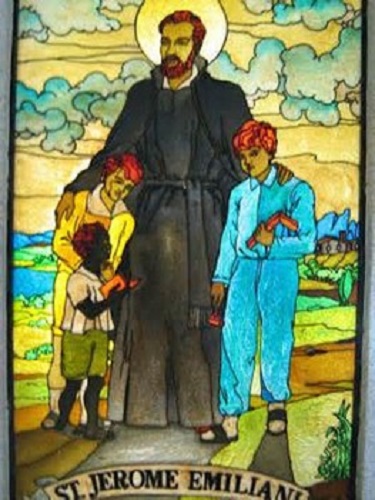
The Feast Day of St. Jerome Emiliani is celebrated on Feb. 9. St. Jerome was born in Venice in 1486.
St. Jerome had an adventurous youth and became a soldier. Spending time in a dungeon after being captured he turned to a life of prayer and began studying for the priesthood. After his ordination, he devoted his time to works of mercy caring for orphans and the sick. He built three orphanages, a shelter for prostitutes and a hospital. His supporters formed a group which eventually became a religious order called the Clerks Regular of Samasca.
St. Jerome was also entrusted with the organization of the Hospital of the Incurables. Jerome died in Samasca on Feb. 8, 1537 from the plague after caring for the ill during the epidemic.
God did not tell us to follow Him because He needed our help, but because He knew that loving Him would make us whole.
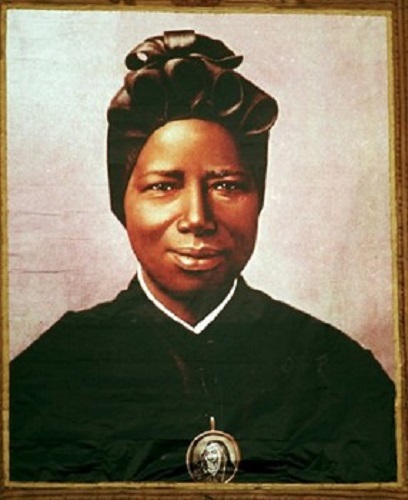
The Feast Day of St. Josephine Bakhita is celebrated on Feb. 8.
St. Josephine was born to a wealthy Sudanese family in southern Sudan in 1869. At the young age of seven she was kidnapped and sold into slavery. Josephine was given the name ‘Bakhita’ which means ‘fortunate’. She suffered greatly, being beaten and sold multiple times. Eventually, an Italian consul named Callisto Legnani bought her. He treated her kindly, but after two years he took her with him to Italy and gave her to a friend, named Augusto Michieli. She worked as a nanny for him and met the Canossian sisters who taught at his daughter’s school. She was drawn to the Catholic faith and was baptized in 1890 taking the name Josephine.
When the Michieli’s wished to return to Africa, Josephine refused to go with them. The case went to court where it was determined that because slavery was illegal in Italy, Josephine was a free woman. Free to do as she wanted after years of slavery, Josephine entered the Institute of St. Magdalene of Canossa in 1893, making her profession 3 years later. For 45 years she supported the community by cooking, sewing, embroidery and being the doorkeeper.
When it became apparent that Bakhita had a great heart for the missions of Africa, her Superior asked her to visit convents to speak about her experiences, to prepare young sisters for missionary work in Africa, and raise funds for the missions. In her later years, she was confined to a wheelchair due to arthritis. She also suffered from bronchitis and pneumonia, however, she was always known for her holiness and cheerful spirit. One of her quotes is:
“The suffering caused by illness is more meritorious than any self inflicted mortification.”
St. Josephine Bakhita died in 1947. She was canonized on Oct. 1, 2000 by Pope John Paul II.
Be good, love the Lord, pray for those who do not know Him. What a grace it is to know God!
The Feast Day of St. Luke the Younger is celebrated on Feb. 7.
St. Luke the Younger was born on the Greek Island of Aegina. He was the third of seven children. His father was a farmer.
As a child St. Luke was very generous, often giving his own food to the hungry. After the death of his father he decided to be a hermit. His mother objected and he left home to find a monastery. Mistaken as a runaway slave he was captured and imprisoned.
After his release from prison, St. Luke joined a monastery in Athens only to be sent home after he claimed to have had a vision in which his mother was asking for help. His mother no longer objected to his desire to live the life of a religious. He built his own hermitage in Thessaly, Greece. It was known as the Soterion, the place of healing.
St. Luke was known for his holiness and the many miracles attributed to him
Beside each believer stands an angel as protector and shepherd leading him to life.
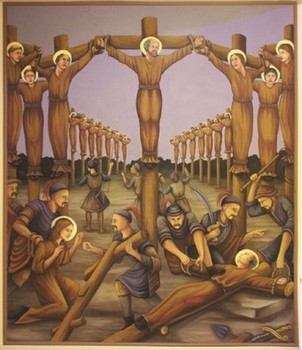
The Feast Day of St. Paul Miki & Companions is celebrated on Feb. 6. Paul Miki’s family converted to the Catholic faith when he was five years old. He was educated by the Jesuits, joining their order when he was 22.
St. Paul Miki helped to educate the Buddhists about Christianity. St. Francis Xavier led a group of Jesuit missionaries into Japan during the 16 century. Over 200, 000 Japanese natives converted to the faith. Religious persecution began as a result. Many churches were destroyed forcing secrecy. In spite of the persecution 100,000 more converted to Christianity.
In 1593 Franciscan missionaries joined the Jesuits in their missionary work. During this tense time, a Spanish ship was seized off the Japanese coast and found to have artillery on it. The imperial minister Toyotomi Hideyoshi responded by sentencing 26 Catholics to death. Six were foreign Franciscans, several were lay Catholics and several were children. The most well known missionaries were associated with the Jesuits; Paul Miki, who was studying to be a priest, John of Goto, a catechist preparing to enter the Jesuits and James Kesai who was a lay Jesuit brother. They were sentenced to die by crucifixion and lancing after being marched 600 miles to the city of Nagasaki.
Pope Pius IV canonized the Martyrs of Nagasaki in 1862.
After Christ’s example, I forgive my persecutors. I do not hate them. I ask God to have pity on all and I hope my blood will fall on my fellow man as a fruitful rain.
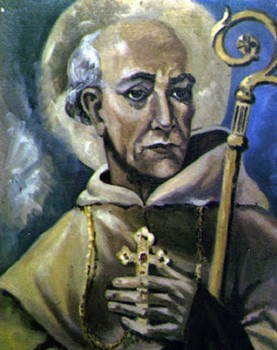
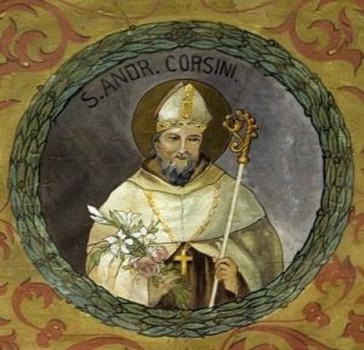
The Feast Day of St. Andrew Corsini is celebrated on Feb. 4. St. Andrew Corsini is the patron saint against riots and disorder.
St. Andrew Corsini was one of twelve children. He was born in Florence, Italy on Nov. 30, 1302 to a powerful family. Although he lived a wild life, his mother influenced his conversion. He decided to become a Carmelite priest. In 1349 he was named Bishop of Fiesole. It was a position he resisted at first but served for twelve hears. Pope Urban V sent him to Bologna to settle disputes between the nobles and common people. It was a successful mission.
Bishop Corsini served the poor with compassion. He preached love and harmony. As much as was possible he lived the life of a Carmelite. He was known for reforming the clergy, stressing the need for the priest to be educated properly. He also insisted that the priest reside in their parish. Many church buildings were restored by the Bishop including the cathedral.
St. Andrew Corsini died on Jan. 6, 1374. There were reports of many miracles of healing and conversion during his lifetime. He was canonized by Pope Urban VIII on April 29, 1629.
Prayer is … a mine which is never exhausted … It is the root, the fountain, the mother of a thousand blessings.