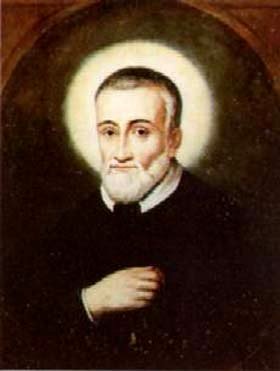
The Feast Day of St. Dominic of Silos is celebrated on December 20. He is the patron saint of pregnant women, shepherds and prisoners. He was a Benedictine monk and priest.
St. Dominic of Silos was born in Navarre, Spain. around the year 1000. He was a peasant, shepherding his father’s flock. His love of solitude led him to become a Benedictine monk. He was ordained a priest becoming the Master of novices and prior. Because of his opposition to the annexation of the monastery land he was driven into exile.
St. Dominic turned to King Ferdinand I of Leon for aid. King Ferdinand found him refuge in the town of Silos in a decaying Abbey occupied by six monks. Dominic became the abbot of the community. He rebuilt the monastery both physically and spiritually. The monastery became a center of book design and scholarship Its proceeds were used for charity. St. Dominic raised funds to ransom Christians taken prisoner by the Moors. The membership in the monastery increased to 40 monks.
St. Dominic died on Dec. 20. Many healings were reported at the monastery, especially regarding pregnancy. Almost one hundred hears after his death, Blessed Joan de Aza de Guzmán prayed at his shrine to conceive the child she named Dominic.
“Is it not reward enough to know that
one is doing the will of God?”
Quote of St. Just Bretenie’res; Feast day September 20
The Feast Day of St. Thomas De and Companions is celebrated on December 19.
St. Thomas was a tailor in Vietnam who entered the Dominican Orderas a tertiary. He was arrested and charged with giving aid and shelter to foreign missionaries. He was strangled at the age of 26.
The companions of St. Thomas De were Dominic Uy, Augustine Moi, Xavier May and Francis Man.
Augustine was also a Dominican tertiary. He was a day laborer. He refused to trample a crucifix when he was ordered to do so. He was strangled.
Francis Xavier was a native catechist and was also strangled.
Francis Man was a Dominican Tertiary working as a catechist when arrested.
St. Thomas De and Companions were among the 117 Vietnamese martyrs canonized by Pope John Paul II in 1988.
The Feast Day of Bl. Anthony Grassi is celebrated on December 18. He was an Oratian priest and confessor.
Bl. Anthony Grassi was born in Ferma, Italy in 1592. His father died when he was only ten years old. From his father he received a devotion to Our Lady of Loreto. At the age of 17 he joined the Oratorian Fathers. Because of his impressive memory he was known as a “walking dictionary”.
Before he was ordained, Bl. Anthony suffered for a time from scruples, (fear of committing sin). However, while celebrating his first Mass this fear was lifted and replaced with serenity.
At the age of 29, while on a pilgrimage to Our Lady of Loreto, he was struck by lightning and it was believed he would die. He was temporarily paralyzed. When he recovered after several days, he realized he had been cured of his acute indigestion. In thanksgiving for his new life he made a yearly pilgrimage to Our Lady of Loreto, which was only twenty miles from the Oratory.
As a priest, his spiritual father was St. Philip Neri. They both had the gift of healing, and Bl. Anthony was credited with many healings before and after his death. Father Anthony became known as a good confessor, hearing confessions for 5-6 hours daily. Father Antony exercised his priestly ministry in instructing the ignorant, comforting the weak, visiting the sick and imprisoned, helping the troubled and encouraging youth in the ways of holiness.
Bl. Anthony died in1671. Antony was beatified by Pope Leo XIII on 30th September 1900.
“Where there is no love, put love and you will find love.”
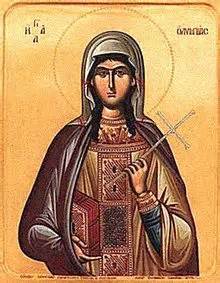
The Feast Day of St. Olympias is celebrated on December 17. She was a widow and deaconess from Constantinople.
St. Olympius was born in Constatinople in 368 into a wealthy family. She was left orphaned and raised by her sister Theodosia who was quite pious. She married at a young age to Nebridias who was the treasurer of the Emperor Theodosius the Great. He died only 20 days after their marriage.
Turning down several offers of marriage Olympius insisted on remaining single. She was consecrated a deaconess by the Bishop of Constantinople. With several other women she founded a community. They established a hospital and an orphanage. They also sheltered expelled monks from Nitria.
St. Olympius became a friend and disciple of St. John Chrysostom. When he was expelled in 404 from Constantinople she continued to support him. When she refused to support Arsacius and his successor Atticus, she was fined and persecuted. Her community disbanded, bringing to an end her charitable works.
St. Olympius died in exile in Nicodemia on July 25.
You will be consoled according to the greatness of your sorrow and affliction; the greater the suffering, the greater will be the reward.
Quote of St. Mary Magdalen dei Pazzi; Feast day May 25
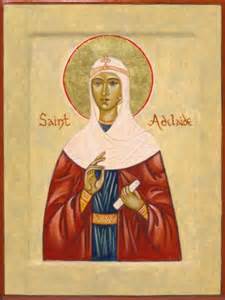
The Feast Day of St. Adelaide is celebrated on December 16. She is the patron saint of abuse victims and brides.
St. Adelaide was born in 931 in Burgundy. Her marriage, at the age of 15 or 16 to Lothair, heir of King Hugh of Italy. was arranged by her father. Their union was unhappy but short due to his death three years later. Adelaide refused to marry the son of his successor, Berengar. She was imprisoned in an attempt to force a marriage. Adelaide escaped and requested aid from the Emperor Otto. She eventually married him. They had four children; the future Otto II and three daughters (two became nuns). Otto and Adelaide received the imperial crown from John XII.
After the death of Otto, her son Otto II succeeded him. He also died. Otto III, still a minor was entrusted the joint registry of his mother and grandmother. After he took full power, Adelaide devoted herself to pious works establishing many churches and monasteries.
The Feast Day of St. Mary di Rosa is celebrated on December 15. She founded the Handmaids of Charity of Brescia.
Paula Frances Mary di Rosa was born on Nov. 6, 1813 at Brescia, Italy into a wealthy family. Her mother died when she was eleven years old.
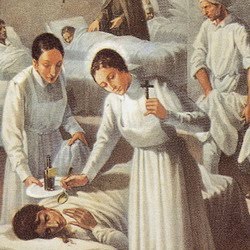
After being educated by Visitation Nuns, she returned home to manage her father’s estate. Having a great desire to enter the convent, she was inspired to volunteer at the Brescia hospital during the cholera outbreak in 1836. She also helped care for the spiritual needs of the girls working at her father’s mills and arranged retreats.
St. Mary di Rosa founded a home for girls and a school for deaf mutes. She founded a religious order called the Handmaids of Charity of Brescia. It was also known as the Servants of Charity. It began with four members and grew to twenty two. At this time, Paula took the religious name of Mary Crucifixa because of her devotion to the passion and crucifixion and suffering of Christ.
The Sisters ministered to the wounded on the battlefields of Northern Italy and in hospitals.
St. Mary di Rosa died peacefully at the age of 42 on December 15, 1855. She was canonized by Pope Pius XII in 1954.
“I can’t go to bed with a quiet conscience if during the day I’ve missed any chance, however slight, of preventing wrongdoing or of helping to bring about some good.”
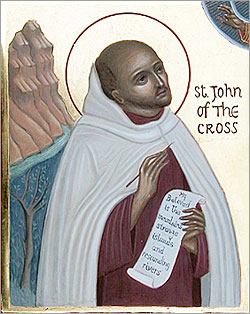
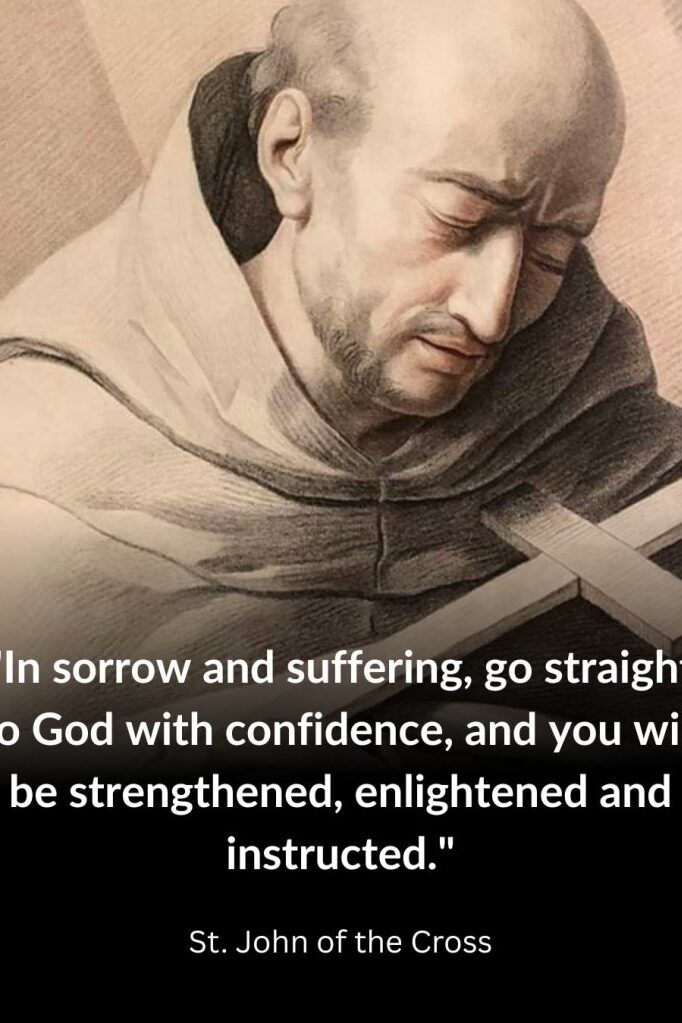
St. John of the CrossPrayers, Quips and Quotes: St. John of the Cross, Feast Day December 14
The Feast Day of St. John of the Cross is celebrated on December 14. Because of his mystical writing, he is called the Mystical Doctor. He is one of the 35 Doctors of the Church. He is the patron of mystics.
Juan de Yepes Alvarez was born in Spain in 1542. His father was disowned by the family when he married a weavers’ daughter. His father died soon after his birth. Most of Juan’s childhood was spent in poverty. As a teenager, Juan worked in a hospital caring for the terminally ill and mental patients.
At the age of 21, Juan became a brother in the Carmelite Order. He went for higher studies in Slamanca and was ordained a priest, taking the name of John of the Cross at age 25. He soon met St. Teresa of Avila, a Carmelite nun, who convinced him to help her in the work of reforming the Carmelite Order. There was great resistance to the reforming of the order to a more prayerful life. Those against the reform actually kidnapped him. They held him prisoner for over nine months in a small cell, six by ten feet wide. He was beaten often. During this time of trial, St. John of the Cross became very close to God, spending his time writing his mystical poetry. He eventually escaped using a rope made of strips of blankets to climb out the window. The only thing he took with him was his writings. John hid in a convent infirmary where he read his poetry to the nuns. From this period on he shared his experience of God’s love.
St. John of the Cross wrote many books including:
St. John of the Cross
Ascent of Mount Carmel,
Dark Night of the Soul
A Spiritual Canticle
Living Flame of Love
In 1579, he became Rector of Colegio de San Basilio, continuing his writing ministry. He is known for a spirituality which believes in the prayer of detachment. His spirituality also focused on joining our suffering to the Paschal Mystery (the death and suffering of Jesus Christ). He taught that the Cross leads to resurrection, agony to ecstasy, darkness to light, abandonment to possession, denial of self to union with God.
St. John of the Cross died of fever caused by cellulitus. He was canonized by Pope Benedict XIII in 1726. His feast day is Dec. 14, the day of his death and entry into heaven.
The Feast Day of St. Lucy is celebrated on December 13. She is the patron saint of the blind and visually impaired. She is also a martyr.
St. Lucy was born in 283 in Syracuse (Sicily). The name Lucy means “Light”. Her feast day is celebrated on Dec. 13, the day she was executed.
Lucy was born into a wealthy family of Greek ancestry. She vowed her life to Christ. Her Roman father died when she was young. Her mother tried against her will to arrange a marriage for her. After Lucy prayed at the tomb of St. Agatha, her mother’s illness (probably a hemorrhage), was cured. Her mother then agreed to let Lucy consecrate herself to Christ and to remain a virgin.
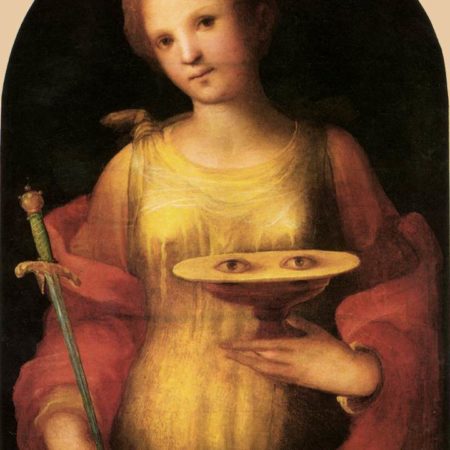
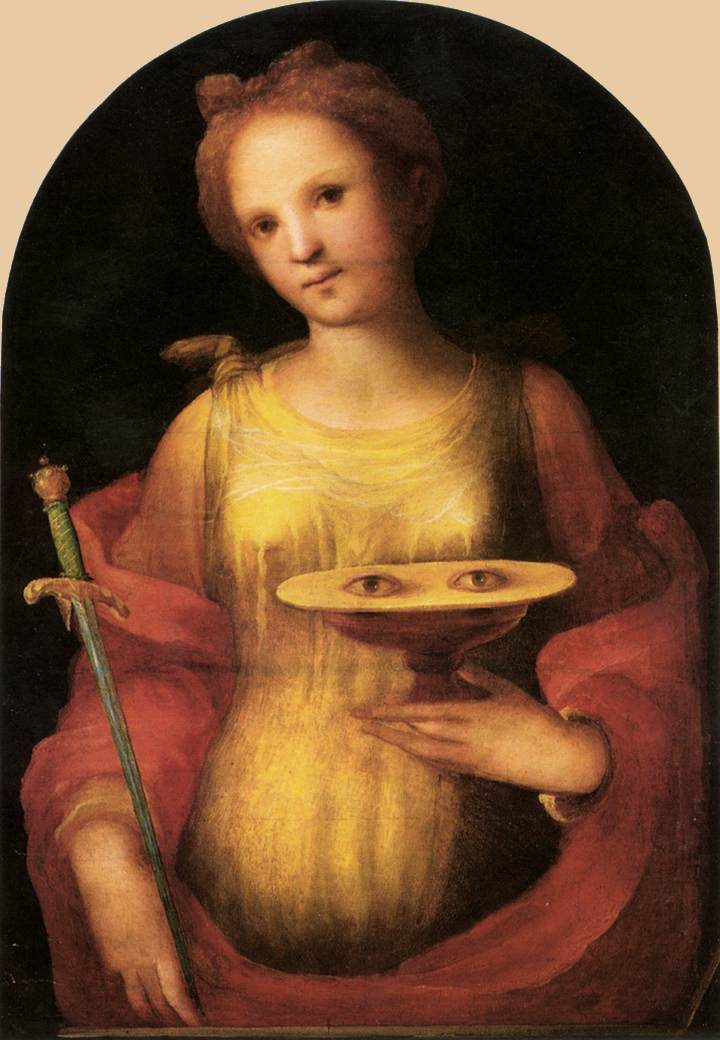
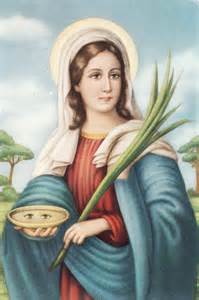
The rejected suitor of Lucy denounced her and reported her Christianity to the authorities. The magistrate Paschasius was known for his persecution and torture of Christians. He ordered her to burn a sacrifice to the emperor’s image. When she refused, she was ordered to be executed, in the year 304, at the age of 21. The attempt to burn her to death failed, so she was executed by a sword to the throat. Before the execution, she was tortured, having her eyes gouged. This is why she is the patron of the blind and visually impaired. In art St. Lucy is frequently shown holding a golden plate with her eyes on it.
Legend concludes that God restored her sight before her death.
While some of the history of St. Lucy is legend, her name is mentioned in several different places, including the canon of St. Gregory, indicating that she is a real person. By the sixth century, devotion to St. Lucy was widespread.
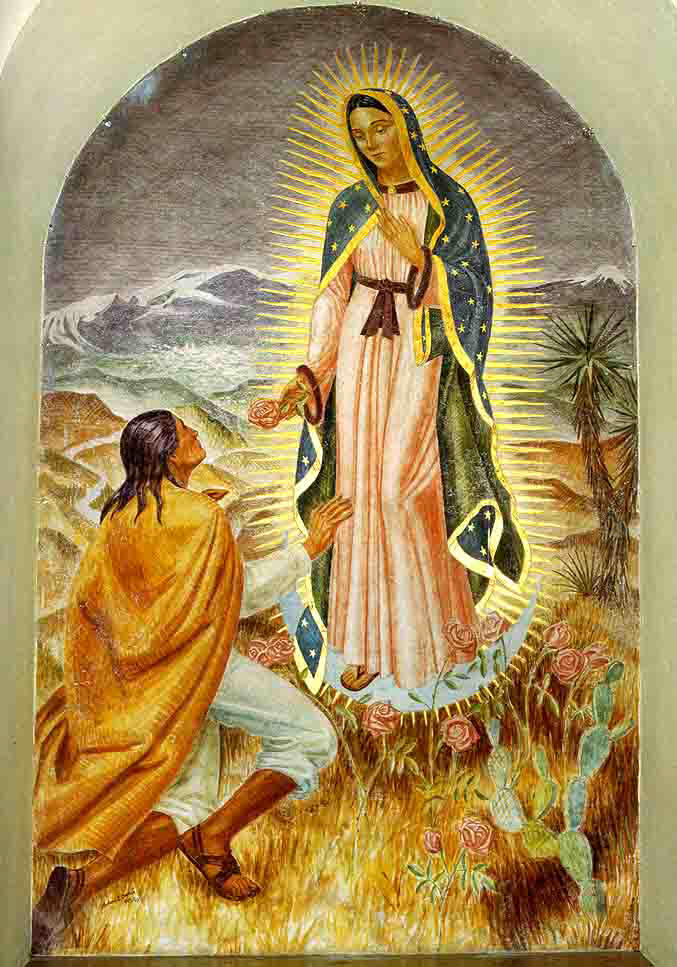
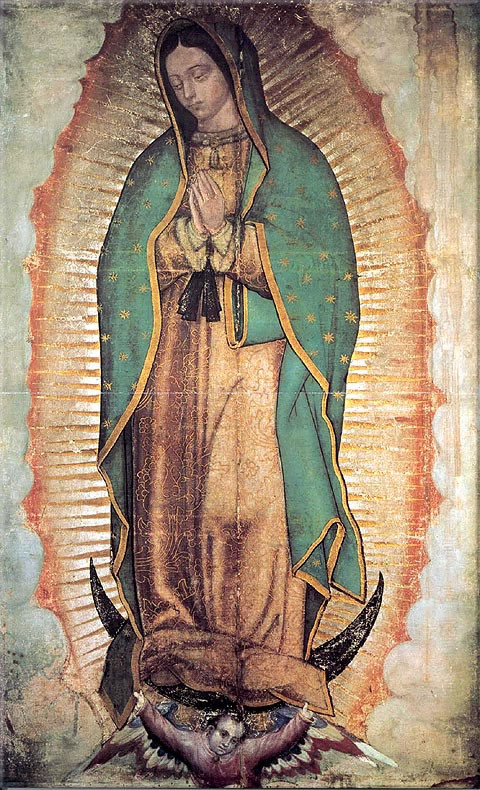
The Feast Day of Our Lady of Guadalupe is celebrated on Dec. 12. She has been named the patron of the Americas.
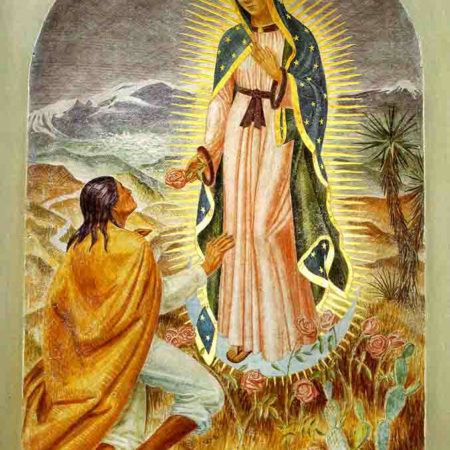
Our Lady appeared to a peasant near Mexico City named Juan Diego in 1529. She appeared to him as an Aztec Princess, and spoke in his native tongue. She requested he tell the bishop to build a church on the site. Initially the bishop was skeptical, demanding proof of the vision. Juan Diego returned to the site of the vision to find Castillo Roses blooming in the frozen earth. He collected them and returned to the bishop. When he opened his cloak, the flowers fell to the ground and an image of Our Lady of Guadalupe was imprinted on his cloak. (The miracle of the roses) His cloak is under glass, on display, in the Basilica of Our Lady of Guadalupe in Mexico City.
The Basilica of Our Lady of Guadalupe was soon built. Over six million soon converted to the faith because of the apparition.
There have been many apparitions of Mary over time. Not all of them have been approved by the Church. While belief in the apparitions is not a requirement, devotion to the approved apparitions are encouraged. Before an apparition can be approved it is thoroughly investigated by the Vatican.
The church teaches us that Mary always leads us to her Son, Jesus. Jesus is both human and divine; Mary is human only, but the mother of Our Lord. We consider her our spiritual mother, to whom we can always turn to for intercessory prayer. (To Jesus, Thru Mary)
Anyone who is questioning the reverence held for Mary should ask themselves several questions.
Do the commandments require us to honor our father and mother?
Did Jesus honor Mary?
Are we not called to imitate Jesus?
Why then, should we not honor Mary, His mother?
The following prayer to Mary is a sample of intercessory prayer. In this type of prayer, we ask a saint, or another person, to pray for us and with us.
BeautifulVirgin of Guadalupe, I ask you on behalf of all my brothers and sisters of the world that you bless us and protect us. Give us proof of your love and kindness. Oh pure Virgin of Guadalupe, give me through your Son, forgiveness for my sins, blessings for my job, cure for my diseases and needs, and all that you deem necessary. I ask for my family, Oh Mother of God, do not disdain the pleas we present to you in our needs. Amen
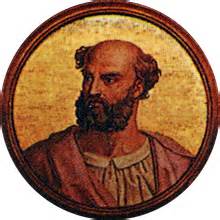
The Feast Day of St. Damasus is celebrated on December 11. He was the Bishop of Rome.
Damasus was born in 306. His father was a Roman priest. Following his father’s footsteps, he began as a deacon. He served in the Basilica of San Lorenzo. He also served Pope Liberius following him into exile. When Pope Liberius died he was elected Pope. At the same time a minority elected Ursinus as the Pope. Ursinus was considered the anti-pope. Unrest and discord were constant during the reign of Pope Damasus.
Pope Damasus commissioned his secretary St.Jerome to translate the scripture into Latin, the Vulgate version of the Bible. He also changed the liturgical language of the Church from Greek to Latin. He worked to preserve the catacombs and the graves of the martyrs, and relics. During his reign, Christianity was declared the official religion of the Roman state.
Pope Damasus I died of natural causes in Rome on Dec. 11, 384.
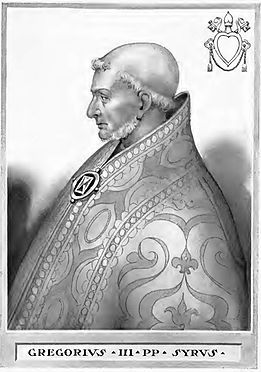
The Feast day of St. Gregory III is celebrated on December 10. He was the Bishop of Rome.
St. Gregory III was born in Syria. His father’s name was John. Little is known about his childhood. He became a Syrian priest. He was proclaimed pope immediately after the death of Pope Gregory II. The most pressing problem was defending the veneration of holy images. Emperor Leo III considered it idolatry.
Pope Gregory called a synod during which he approved measures against anyone who destroyed images of Jesus, Mary or the saints. He taught that icons and images promote worship rather than being the object of worship themselves. He repaired many beautiful churches and promoted monasticism. Pope Gregory was known for his virtue and knowledge.
Pope Gregory III died of natural causes on November 28, 741.
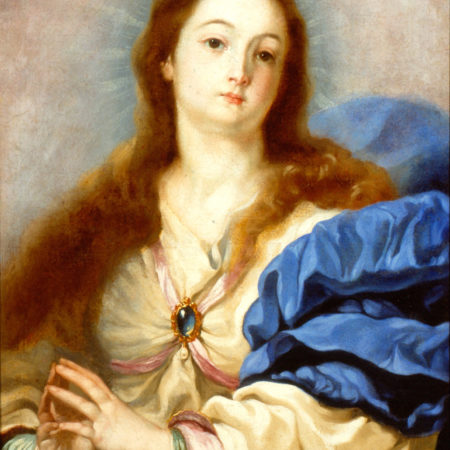
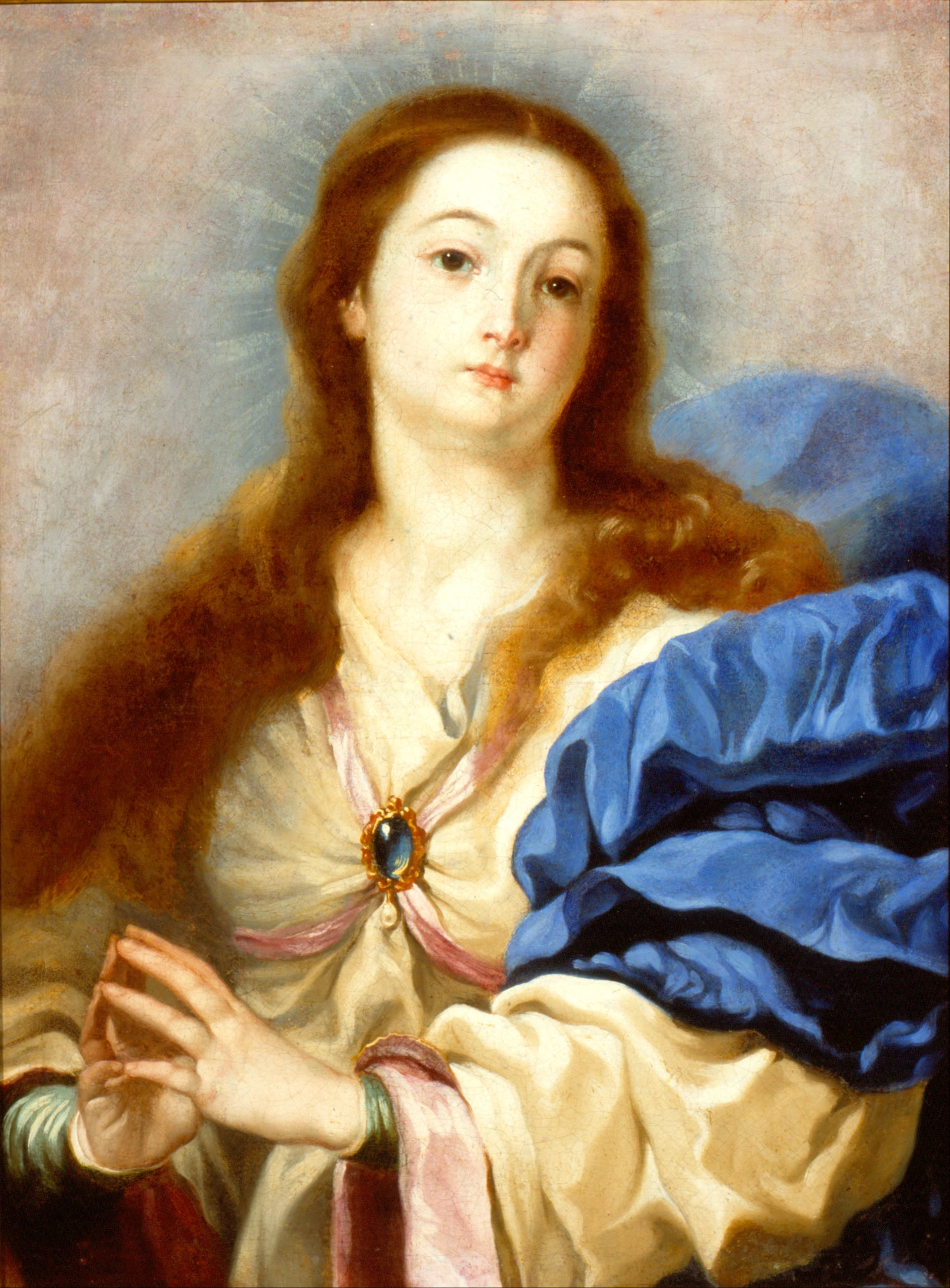
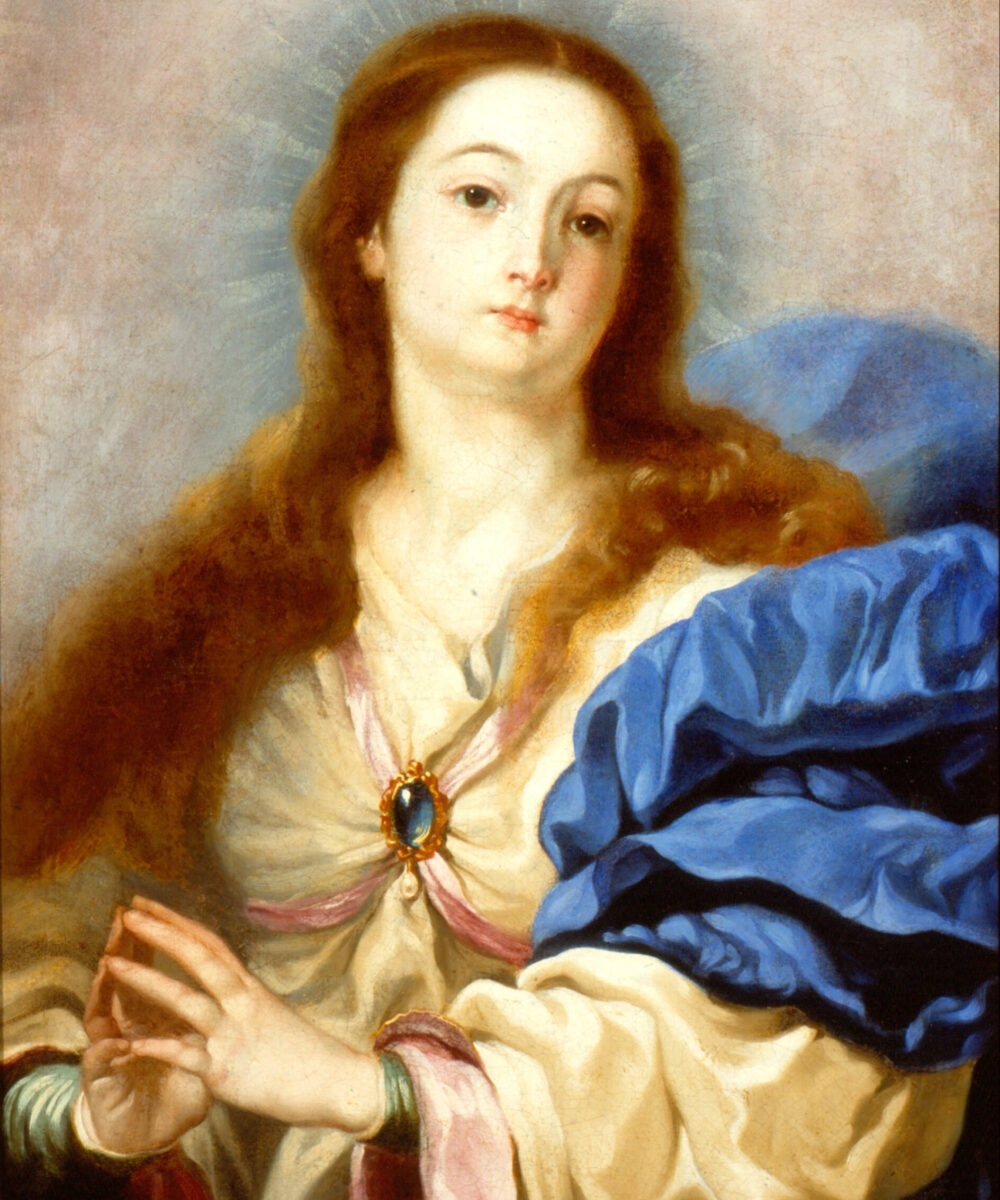
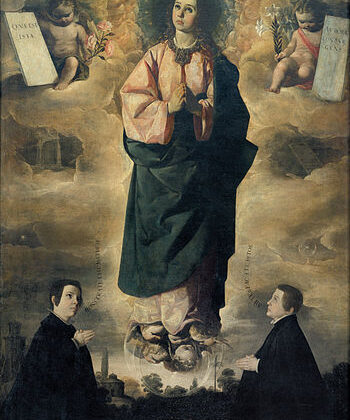
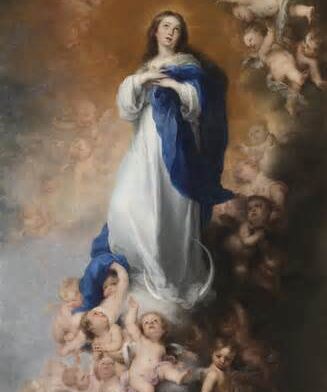
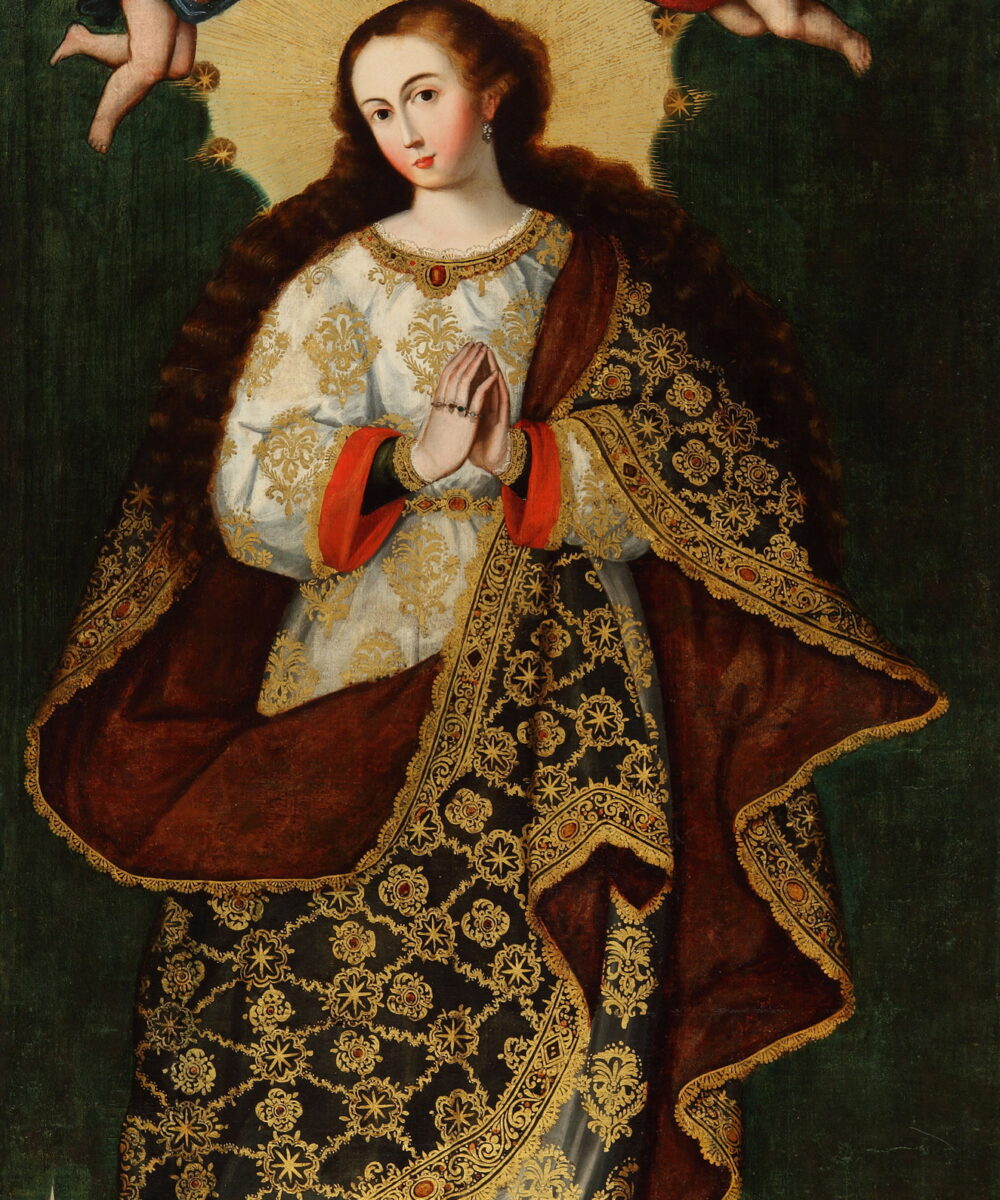
The Feast day of the Immaculate Conception is celebrated on Dec. 8 during the season of Advent. The feast day celebrates the belief that Mary was conceived without the stain of original sin. It is often misunderstood as the celebration of the conception of Jesus.
Mary under the title of the Immaculate Conception is the Patron Saint of Brazil and the United States.
The feast day became a celebration for the universal church in the 18th century. Pope Pius IX declare;
“The most Blessed Virgin Mary, in the first instant of her conception, by a singular grace and privilege granted by Almighty God, in view of the merits of Jesus Christ, the savior of the human race, was preserved free from all stain of original sin.”
Mary herself confirmed her title to St. Bernadettesaying to her;