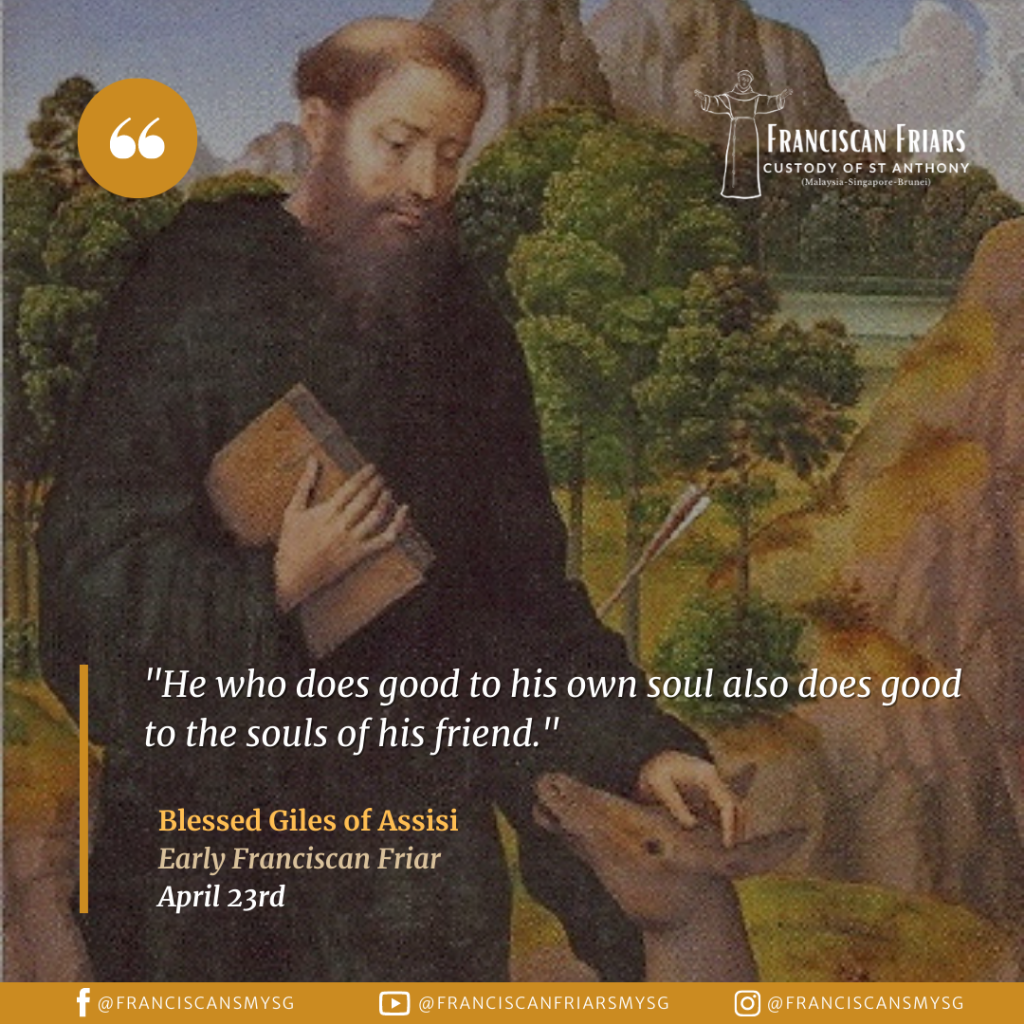
The Feast Day of Bl. Giles of Assisi is celebrated on April 23.
Bl. Giles was born in Assisi, Italy in 1190. He became one of the earliest followers of St. Francis of Assisi. He accompanied St. Francis on many missions. He visited the Tomb of the Apostle James in Spain and the holy city of Jerusalem. He also visited the sanctuary of the Holy Archangel Michael in Italy. During his travels, St. Giles earned his room and board by chopping firewood, sweeping rooms, washing dishes and other manual labor. He considered labor an opportunity for joy and purification Bl. Giles encouraged penance and love of God.
Bl. Giles was known for his spiritual advice. His Franciscan spirituality is reflected in the many sayings that are collected in a book titled “The Golden Sayings”. St. Giles is referred to as one of the Little Flowers of St. Francis.
St. Francis also referred to him as his “Knight of the Round Table.” The life of St. Giles showed his spirituality. As St. Giles once said:
“The word of God does not belong to him who hears or speak it, but to him who puts it into practice.”
At the great chapter of 4,000 brothers, St. Francis sent Giles to Africa in 1219 with companions to preach the gospel. It never succeeded. As soon as they arrived in Africa, the Christians there led them to a different ship which returned them to Italy. After his return he lived in the convent in Perugia until his death by natural causes in 1262.
“Whoever gives up prayer because of difficulties is like a man who runs away from battle.”
The Feast Day of Bl. Maria Gabriella is celebrated on April 22.
Bl. Maria Gabriella was born in 1914 in Sardinia, Italy. She was the fifth child of eight children. Her father was a shepherd. As a child she was strong willed and rebellious. At the age of 18 her temper calmed down. After the death of her younger sister, she joined the “Azione Cattolic” which was a Catholic youth movement.
At the age of 21 she entered the Trappestine Monastery of Grottaferrata. She offered her prayers to heal divisions and prayed for Christian unity. She is credited with the beginning of the ecumenical movement in Italy.
Bl. Maria came down with tuberculosis and 15 months later died in 1930 at the age of 25. She was beatified on Jan. 15, 1982 by Pope John Paul IIon the Feast of the Conversion of St. Paul.
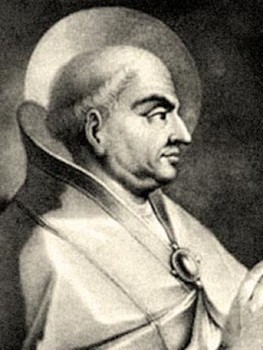
The Feast Day of St. Anselm is celebrated on April 21.
St. Anselm was born in 1033 near Aosta . At the age of 15 Anselm wanted to enter a monastery but his father opposed the idea. For a time, he lost interest in religion, but at the age of 27 he finally entered the Monastery of Bec in Normandy. Fifteen years later he became the abbot of the Benedictine monastery.
In 1093 he became the Archbishop of Canterbury. England’s King William Rufus refused to cooperate with his efforts to reform the Church. When the king became very ill St. Anselm became his confessor. However, after he recovered his health matters worsened and St. Anselm went into exile until the death of the King in 1100. The successor, King Henry I, recalled Anselm. St. Anselm fearlessly disagreed with King Henry over the King’s insistence on investing England’s bishops. St. Anselm went into exile for three more years.
St. Anselm opposed the slave trade and worked for the poorest people. He persuaded the national council of Westminster to prohibit the sale of human beings. He was admired for his patience and his teaching ability. St. Anselm published theological works. The most well known is Cur Deus Humo (Why God became Man).
St. Anselm died in the year 1109. St. Anselm was proclaimed a Doctor of the Church in 1720 by Pope Clement XI.
For I do not seek to understand that I may believe, but I believe in order to understand. For this also I believe…that unless I believed, I should not understand.
The Feast Day of St. Agnes is celebrated on April 20.
St. Agnes was born into a noble family in Gracciano, Italy in 1268. On the day of her birth burning torches appeared around her crib indicating that she was to live a special calling. At the age of 4 she began seeking solitude to pray to Jesus whom she loved. She decided at the age of nine that she wished to become a Dominican and join the monastery at Montepulciano. Her parents were opposed so she asked God to change their minds. Soon after she joined the convent, living under the rule of St. Augustine.
St. Agnes lived an austere life. She slept on the ground with a stone for a pillow and fasted on bread and water. She worked without complaint. Agnes reached a high degree of contemplative prayer and was favored with many visions. She was observed levitating while in prayer two feet above the ground. Violet, lilies or roses often were found growing up through the stones where St. Agnes had just prayed. Many miracles were recorded while Agnes lived in the monastery including the multiplication of loaves.
The Blessed Virgin Mary appeared to Agnes several times. In the first vision Mary said that she would one day found a large monastery based on faith in God and the Trinity. An angel instructed her to build the convent in 1300. On the night of the Feast of the Assumption the Blessed Virgin Mary placed the Infant Jesus in St. Agnes’ arms. She encouraged Agnes to continue suffering for the love of Christ. Agnes had been sick most of her life. When the vision ended Agnes was holding the gold cross that the Infant Jesus had been wearing on a chain. Mary also appeared to Agnes on the Feast of the Purification while Agnes was at Mass. She again let Agnes hold the Infant Jesus.
Shortly before her death, Agnes bathed in a spring thought to have healing powers. Although it did not cure her a new spring appeared which healed many. It was named “the Water of St. Agnes.” While there Agnes prayed over a child who had just drowned, bringing the child back to life.
St. Agnes died at the monastery in 1317 at the age of 43. Many miracles occurred at her tomb. Her body is incorrupt. St. Agnes was canonized by Pope Benedict XIII in 1726.
The life of Christ has furnished me with a pattern for living;
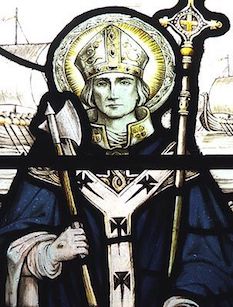
The Feast Day of St. Elphege is celebrated on April 19.
St. Elphege was born in 954 to a noble Saxon family. He became a Benedictine monk at Deerhurst Monastery in Gloucestershire, England. After several years he left to become a hermit at Bath where he became abbot. His rule was strict, requiring diligent prayer and service. In 984 he became the Bishop of Winchester. He worked tirelessly to help the poor trying to eliminate poverty in his diocese. In 1006, he was appointed archbishop of Canterbury.
Persecutions by the Danes were taking place at this time. When Canterbury was sacked and burned St. Elphege was taken captive. Because he refused to cooperate in there ransom demands they became angry and drunk. They pelted him with oxen bones and stones and then killed him with an axe in the year1012. As he died he prayed for his attackers.
Just look how these days, when “Alleluia” is ringing in our ears, our spirit soars!…If these days fill us with such tremendous joy, what will that day be like when we are told “Come, you blessed of my Father, receive the kingdom.” when all the saints are gathered together?
The Feast Day of Bl. Marie of the Incarnation is celebrated on April 18.
Bl. Marie of the Incarnation was born in 1566 in France. Her name at birth was Barbe Aurillot. She was the daughter of a French government official and educated at the Poor Clare Abbey at Longchamp. She married Pierre Acarie at the age of 16. They had six children; three became Carmelites and one became a priest.
Her husband supported the Catholic League which opposed Henry IV. Barbe suffered greatly after their estate was seized when Henry became King. Barbe went to court reclaiming part of the family fortune. Barbe had a devotion to the writings of St. Teresa of Avila. She was instrumental in bringing the Discalced Carmelites into France.
Widowed at 47, Barbe became a Carmelite lay sister in 1613 taking the name Mary of the Incarnation. Her spiritual advisor was St. Francis de Salesand she was a friend to St. Vincent de Paul. She was known to have visions, ecstasies and the gift of reading hearts.
At the age of 27 Bl. Marie received the stigmata. Bl. Marie died on April 18, 1618, of natural causes. Many miracles were reported after her death.
Put away all worry and anxiety and receive the holy Body and Blood of
The Feast Day of St. Stephen Harding is celebrated on April 17.
St. Stephen was born in the eleventh century in Dorset, England. He studied in Paris and Rome. He decided to join the Monastery of Molesme which was Benedictine. Stephen and two other established the Monastery in Citeaux which became the home of twenty monks.
St. Stephen Harding is considered the father of the Cistercian Order. The Cistercian Order sought an effective balance between prayer and serious work. St. Stephen wrote the Charter of Charity which became the guide for the Cistercian monasticism. When St. Bernard joined the order, Stephen installed him as the abbot of the monastery in Clairvaux. With the help of St. Bernard the order flourished.
By the time of St. Stephen’s death thirteen monasteries had been established.
St. Stephen died in 1134. He was canonized in 1623.
O Jesus, make the fount of Your mercy gush forth more abundantly, for mankind is seriously ill and thus has more need than ever of Your compassion.
Quote of St. Faustina Kowalska; Feast day October 5
The Feast Day of St. Paternus is celebrated on April 15.
St. Paternus was born around 482 at Poetiers. His father died in Ireland as a holy recluse. Paternus decided to join the monks at the abbey of Ansion. Several years after joining the Abbey a monk named Scubilion joined him to live in a remote area where many Druids lived. There they were able to convert many of the people in the area. Paternus was able to convince the people there to tear down a pagan temple, which had been held in great veneration by the ancient Gauls.
St. Paternus founded a monastery called Lian-petern-vaur. He was chosen as bishop of the area and served for thirteen years before dying in 550.
If I have achieved anything in my life….it is because I have not been embarrassed to talk about God.
The Feast Day of St. Lydwina is celebrated on April 14. St. Lydwina is the patron saint of ice skaters and the chronically ill.
St. Lydwina was born in Schiedam, Holland into a family of nine children in 1380. While still young she developed a devotion to Our Lady of Schiedam. While ice skating one day she injured herself, breaking several ribs. Gangrene set into the wounds she had received and spread throughout her body. She was bedridden for the rest of her life suffering from various illnesses.
St. Lydwina offered all of her suffering to Jesus on the cross. She experience mystical gifts including vision of heaven, hell and purgatory. She received apparitions of Christ and bore the stigmata. Many miracles occurred at her bedside.
In one vision she saw a rosebush with the words
“When this shall be in bloom your suffering will be at an end.”
In the spring of 1433 she exclaimed,
“I see the rose bush in full bloom!”
Easter morning, 1433, she had a vision of Christ giving her the Last Rites.
St. Lydwina died on April 14, 1433. Her grave became a site for pilgrims to visit and a chapel was built there. She was canonized by Pope Leo XIII in 1890.
“I commend myself to the prayers of yourself and your friends, so that Christ, the source of all pity, may design to wash me clean in the water of His mercy.”
The Feast Day of St. Martin I is celebrated on April 13.
St. Martin was born in Tuscany, Italy in 316. He became a deacon serving in Rome. In the year 649 he was chosen as the 74th pope.
Pope Martin called the Lateran Council which condemned the heresy of Monothelitism, which claims Christ had no human will. The Lateran Council explained the two natures of Christ: both human and divine. This position put him in opposition to Paul the Patriarch of Constantinople.
Pope Martin was kidnapped while he was sick from the Lateran Basilica. He was tortured and imprisoned. He was condemned to death but at the last moment he was saved from execution by the repentance of the Patriarch. He was imprisoned instead and then exiled to an island which was suffering from a famine.
Pope Martin soon died in 655 from the effects of the torture and imprisonment. Pope Martin I is last martyred Pope.
“The trees stand as though dead, but these, though lifeless in the winter, are green in the spring, for God, knowing your disbelief, each year effects a resurrection in these visible things, that seeing what occurs in inanimate creatures, you may believe concerning the animate rational beings.”
The Feast Day of St. Teresa of Los Andes is celebrated on April 12.
St. Teresa of Los Andes was born in Santiago, Chile in 1900. Her name at birth was Juana Enriqueta Josephina. She had three brothers and two sisters. As a child she was proud and strong willed. However, at the age of ten as she studied for her first communion she was transformed into a pious child.She acquired Apostolic zeal speaking out about her love of Christ.
At the age of 14, St. Teresa decided to become a Carmelite nun. She entered into the Monastery of the Holy Spirit in Los Andes on May 7, 1919, taking the name Teresa of Jesus. She was inspired by St. Therese of Lisieux.
The Lord revealed to her that she would die at a young age. One month before her death she told her confessor that she would soon die. She contracted typhus at the age of twenty before taking her final vows. During her life she wrote many letters sharing her spiritual life with people. St. Theresa died in 1920 during Holy Week at the age of 10. She is Chile’s first saint.
St. Teresa was beatified by Pope John Paul II in 1987.
“We live for Jesus alone. Just as the angels in heaven incessantly sing His praises, so does a Carmelite echo those praises here on earth, whether near to the tabernacle where God who is Love lives imprisoned, or in the intimate depths of her soul’s heaven, where faith tells her God dwells. Our vocation’s objective is love, the greatest thing a human heart can possess. This love is a bonfire where the soul is consumed and made one with her God. That blazing fire permits nothing to stand in its path……..How beautiful our vocation is!”
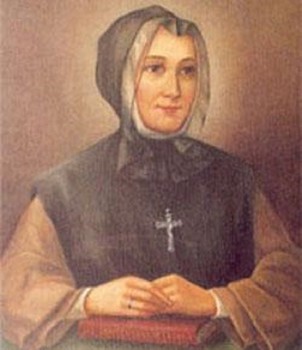
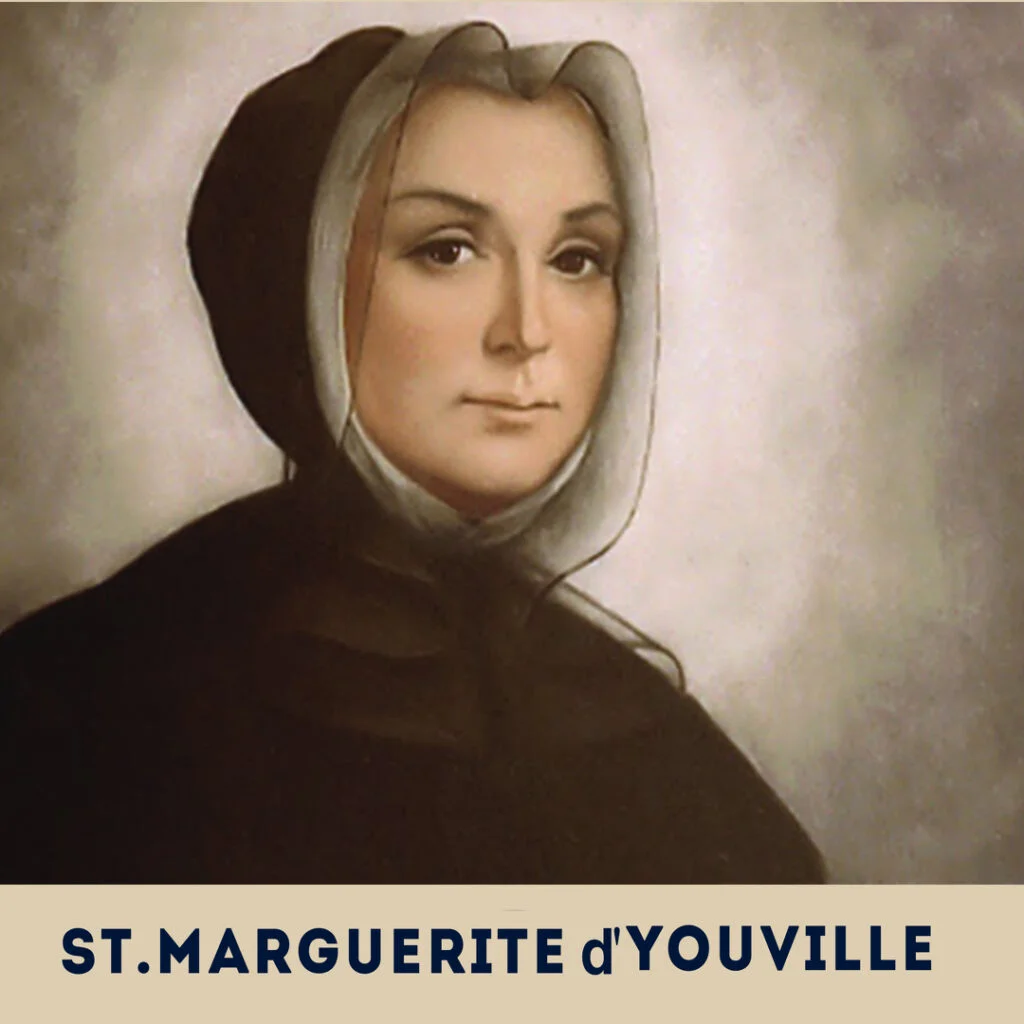
The Feast Day of St. Marguerite d’Youville is celebrated on April 11. In Canada it is celebrated on October 16.
St. Marguerite d’Youville was born in Quebec on October 15, 1701. She studied under the Ursulines and married Francois d’Youville in 1722. Her husband died in 1730 leaving her poor with six children. Four of her six children died in infancy. She educated her two sons to become priests. To pay off the debt her husband had left she opened a dry goods store.
In 1727, she and three other women founded the Sisters of Charity becoming known as the Grey Nuns. They fought for the rights of the poor, caring for the homeless, sick and destitute. She also became the Directress of General Hospital in Montreal.
St. Marguerite d’Youville died on Dec. 23. 1771. Pope John Paul II canonized her on Dec. 9, 1990 calling her the Mother of Universal Charity. Over 3000 women belong to the Grey Nuns today.