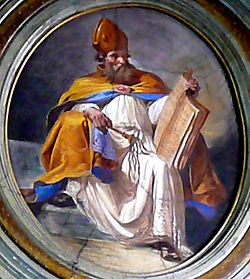
The Feast Day of St. John Damascene is celebrated on December 4. He was a monk and priest. St. John Damascene has been given the title Doctor of the Church.
St. John grew up under Muslim rule in Damascus, born to Christian parents in 690 . He is known for his arguments defending sacred art, especially icons.
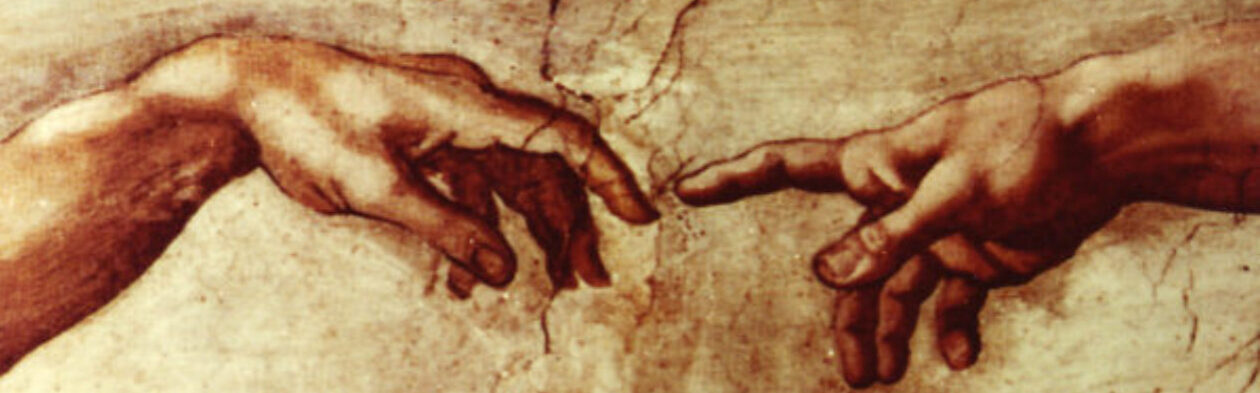
During the 720’s religious art became very controversial and was forbidden by Emperor Leo. John argued in favor of religious art, stating that Christians did not worship images but through them they worshiped God and honored the memory of the Saint. His arguments made him an enemy of the emperor who had a letter forged in John’s name offering to betray the Muslim government of Damascus. Because of the forgery, John’s hand was cut off. However, the saints biography states that through the intervention of the Virgin Mary his hand was miraculously healed. After convincing the ruler of his innocence, John decided to become a monk. Eventually he was ordained a priest.
St. John is also known for his poetry and his devotion to the Blessed Virgin Mary.
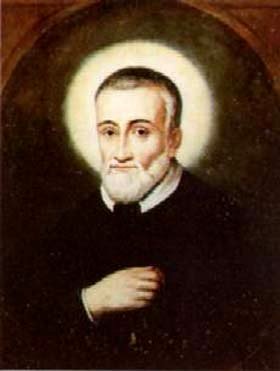
The Feast Day of St. Francis Xavier is celebrated on December 3. He is the patron saint of foreign missions and the co-founder of the Society of Jesus, also known as the Jesuits.
St. Francis Xavier was born in the Kingdom of Navarre (now part of Spain). He was born in the Basque area, on April 7, 1506. He studied at the University of Paris.
When he met Ignatius of Loyola, they became friends and Francis became a student of St. Ignatius. He then became a co- founder of the Society of Jesus (the Jesuits), with Ignatius. With St. Ignatius, he was ordained a priest in 1537. In 1956 Francis left Paris to join Ignatius in Venice. The Society was recognized by the Pope in 1540.
Francis preached in India, Japan, Borneo, and Moluccas. Over a period of ten years, he baptized roughly 30,000 people to Christianity. He is said to have converted more people to Christianity than anyone other than St. Paul.
In 1552 he set out for China landing on the Island of Shangchuan.. He died from a fever before he reached the mainland while waiting to be taken to China. He was first buried on a beach at Shangchuan Island. His incorrupt body was taken from the island in 1553 and temporarily buried in St. Paul’s Church in Portuguese, Malacca.
St. Francis Xavier was known as the “Apostle of the Indias.”
The Novena of Grace was a popular devotion to Francis Xavier and typically prayed for nine days before Dec. 3.
“I love You, not because You have the power to give heaven or hell,
but simply because You are You…my kin and my God.”
The Feast Day of St. Bibiana is celebrated on December 2. She was a virgin and a martyr in the year 361.
St. Bibiana was born in Rome. Her father was a knight, whose name was Flavian. Her mother’s name was Dafrosa. When Apronianus was named the Governor of Rome he persecuted the Christians mercilessly. Flavian was arrested and tortured. He fled into exile where he died from his wounds. Bibiana’s mother, Dafrosa, was beheaded.
Bibiana and her sister Demetria were robbed of all their possessions leaving them in poverty. They did however, stay in their house, spending much time in prayer.
They were summoned by Apronianus. Demetria confessed her Faith and then fell dead at the governors feet. Bibiana was given to a woman named Rufina who tortured her unsuccessfully. Apronianus ordered her to be tied to a pillar and beaten with scourges laden with lead plummets until she died. St. Bibiana endured the torture with joy until her death.
Two days later, a priest buried her next to her mother and sister. A church was built over her grave.
The Feast Day of St. Charles de Foucauld is celebrated on December 1. He is the patron saint of diocesan priests. He was a hermit, priest and martyr.
St. Charles de Foucauld was born in Strasbourg, France on Sept. 25, 1858. His father was in the military. Orphaned at the age of six, he and his sister Marie were raised by their grandfather. Charles joined the military, becoming an officer. When his grandfather died, Charles lost his faith. During his period of doubt he repeatedly prayed,
“My God, if you exist, let me come to know you.”
Charles was discharged from the military for misconduct. At the age of 28, he regained his faith. After a pilgrimage to the Holy Land, he decided to become a Trappist monk. He spent seven years as a Trappist monk, first in France and then in Syria. After deciding this was no longer God’s will, he was released from his vows. He became a servant for a convent of Poor Clares and began studying for the priesthood. He was ordained in 1901 at the age of 43. He wished to work with the poor and abandoned. In an attempt to begin a religious order he wrote a Rule for it to follow. However, he found few followers.
On Dec. 1, 1916, he was killed by a band of marauders who surrounded his house. Twenty years after his death religious orders began to form following his rule. The Little Brothers of Jesus, Little Sisters of the Sacred Heart and the Little Sisters of Jesus all follow the Rule written by Bl. Charles de Foucauld. An Association of diocesan priest known as Jesus Caritas also follow the spirituality of Bl. Charles de Foucauld.
St. Charles de Foucauld was beatified by Pope Benedict XVI in 2005. He was cannonized on May 15, by Pope Francis. St. Charles de Foucauld is the patron saint of diocesan priests.
Let us pray a great deal for the conversion of sinners,
since it was above all for them that Our Lord worked
The Feast day of St. Catherine Laboure is celebrated on November 28. She is the visionary who began the devotion to the miraculous medal.
Catherine Laboure was born on May 2, 1806 in Paris, France. Her father was a successful farmer. She was the ninth of eleven children. Her mother died when she was only nine years old. After the funeral service, Catherine went to her room and gave a kiss to a statue of Mary, saying;
“Now, dear Lady, you are my mother.”
Catherine was called “Zoe” by those who knew her, because her birthday was on the feast day of St. Zoe.
After having a dream about St. Vincent de Paul, at a young age, she joined the Daughters of Charity founded by him. She is known as a Marian visionary because of the apparitions which she reported of Mary appearing to her.
On July 18, the first apparition occurred. Catherine saw a lady seated in the sanctuary. She approached her and was instructed how she was to act during times of trial, pointing to the altar for consolation. Mary told her,
“”Sorrows will come upon France; the throne will be overthrown.”
A week later the French revolution began in Paris.
On Nov. 27, the lady showed St. Catherine the Medal of the Immaculate Conception, now known as the “Miraculous Medal” She gave Catherine the mission of having the medal made and to spread devotion to it.
Catherine reported the visions to her spiritual director, Father Aladal. Forty five years later, she spoke fully to her supervisors about the apparitions.
The miraculous medal which Mary showed to Catherine was oval showing Mary standing on a globe crushing the head of the serpent. (the devil). Around the image of Mary were the words:
“O Mary, conceived without sin, pray for us who have recourse to thee.”
Mary’s hands were showering a cascade of brilliant rays upon the world.
On the reverse side of the medal was a cross, the symbol of Christ’s redeeming Sacrifice on Mount Calvary for the salvation of the world. The cross was intertwined with the letter “M”.
The “M” stands for both Mary and for Mother and was to be surrounded by twelve stars. The two hearts are the Sacred Heart of Jesus encircled by a crown of thorns and the Immaculate of Mary, pierce by a sword. The Flames symbolize the burning love of Jesus and Mother Mary.
Mary told Catherine,
“All who wear them will receive great graces.”
After two years of investigation Father Aladal went to the archbishop with the request. The request was approved.
St. Catherine served humbly, not wishing to be known as a visionary. It was only after 46 years of service that she informed her Sister Superior that she was the Sister Mary had appeared to. At Catherine’s death, on December 31, 1876, at the age of 70, few people knew of her visions. She preferred a silent life, spending her time caring for the aged and sick.
Stories of many miracles and cures caused the devotion to spread rapidly.
In 1922 the body of St. Catherine was exhumed. It was found to be incorrupt. Her body is encased in glass in the chapel in Paris near where Our Lady appeared to her.
St. Catherine’s feast day is celebrated on Nov. 27, the day of the apparition.
St. Catherine Laboure
Lord, I am here. Tell me what you would have me do.
If He gives me some task I am content and I thank Him.
If he gives me nothing, I still thank Him
Since I do not deserve to receive anything more than that,
and then I tell God everything that is in my heart.
I tell him about my pains and my joys, and then I listen.
If you listen, God will also speak to you.
For with the good Lord, you have to both speak and listen.
God always speaks to you when you approach him plainly and simply.
The Feast Day of St. John Berchmans is celebrated on November 26. He is the patron saint of altar boys.
St. John Berchmans was born in 1599 at Diest, Belgium. His father was a shoemaker. At a very young age he wanted to become a priest. After his mother’s death, in 1615 he entered the JesuitCollege At Melines. He journeyed to Rome where he continued to study. He was known for his holiness and his desire for perfection in small things. In 1621, at the age of 22, he died after becoming ill, possibly from dysentery.
Many miracles were attributed to him after his death. He had a strong devotion to the Blessed Sacrament and to Our Lady. He composed a Chaplet in honor of her Immaculate Conception. He also composed a poem called ‘To an Altar Boy’.
“Our true worth does not consist in what human beings think of us.
What we really are consists in what God knows us to be.”
The Feast Day of St. Catherine Alexandria is celebrated on November 25. She is the patron saint of Christian philosophers, teachers and librarians. She is considered a virgin and martyr.
While there is no historical evidence regarding St. Catherine of Alexandria there is a strong tradition about her martyrdom. St. Catherine was born around 287 in Alexandria, Egypt. She was the daughter of a wealthy pagan couple. She had a love of learning and studied philosophy and religion. After studying Christianity, she converted.
Legend tells us that she was imprisoned and tortured by Emperero Maxentius after she refused to marry him. He forced her to debate the most learned pagan philosophers hoping she would commit apostasy, however the debates resulted in many conversions to the Christian faith.
St. Catherine was tortured by being placed on a wheel full of spikes in an attempt to kill her. The wheel broke into two pieces and fell apart. She was then beheaded.
“Strength for a person who desires to acquire virtues,
consists in not losing heart when one happens to fall,
The Feast Day of St. Andrew Dung and companions is celebrated on November 24. St. Andrew Dung was a priest and martyr of Vietnam.
St. Andrew Dung represents the 117 martyrs of Vietnam; 97 of the martyrs were Vietnamese and 21 were foreign missionaries. The missionaries included 11 Spaniards and, 10 French; 8 were bishops, 50 were priests and 59 were lay people. They were martyred during a period of persecution between 1625 and 1886.
St. Andrew was the born in 1795 to a poor pagan family in North Vietnam. He moved to Hanoi when he was twelve. He was educated by a Christian and after three years was baptized. He became a catechist and continued to study theology.
In 1823, he was ordained a priest. He was imprisoned under Emperor Minh Mang. His congregation made donations to free him. He changed his name to Andrew Lac to avoid persecution and changed locations. He was arrested a second time along with Father Peter Thi another Vietnamese Priest. Again his freedom was bought. They were soon arrested a third time and beheaded after being brutally tortured.
The 117 martyrs were beatified by Pope John Paul IIon May 27, 1900. The memorial celebrates all the Vietnamese Martyrs of the 17th, 18th and 9th centuries.
The hottest places in hell are reserved for those who,
in a period of moral crisis, maintain their neutrality.
St. Clement of Rome was the third successor of St. Peter and the fourth pope of the Catholic Church. He is the patron saint of mariners.
St. Clement was Jewish by birth. He converted to Christianity and became a follower of St. Paul and St. Peter. He was ordained a priest by St. Peter. Because he knew the Apostles he is considered one of the five Apostolic Fathers.
As Pope, St. Clement wrote a letter to the Corinthian Church. The Corinthian Church was in turmoil. He urged charity and obedience. His letter brought peace and order to the Church.
St. Clement lived during a time of persecution. He was banished and sentenced to work with other prisoners in a stone quarry. He continued to successfully convert people. Because of the success he had in converting people, he was sentenced to death. He was put to death by being tied to an anchor and thrown into the sea.
“Follow the saints, because those who follow them will become saints.”
The Feast Day of St. Cecelia is celebrated on November 22. She is a martyr and the patron saint of musicians.
St. Cecelia by Guarino
St. Cecelia was born in Rome to an esteemed family late in the first century. She lived a life of prayer. She was given in marriage to a young pagan named Valerian. Cecelia shared her promise of celibacy and consecration to God with her husband. During the wedding, it is said that she sat apart, singing to God in her heart with thanksgiving.
Valerian converted to Christianity and he honored her desire to remain a virgin. He helped Cecilia in her charity toward the poor. Because of this, he was arrested and put to death.
Almachius, the Prefect of Rome, feared her nobility and charity to the poor. He had her imprisoned in the steam bath of her own home, trying to suffocate her. After a full day and night in stifling steam, Cecilia survived without harm. This resulted in Almachius sending an executioner to behead her. She was struck three times, but she was not beheaded. She fell to the floor. After several days of bleeding in her own bath, Christians rushed in to help her. On the third morning the venerable Bishop Urban visited Cecilia. As she lay dying, she requested that her palace be made into a church for the poor. She died praying, after receiving the Eucharist. Her body was buried in the Catacomb of Saint Callistus. The year of her death is unknown bu it is believed her martyrdom took place during the pontificate of Urban I (222-230).
In 817, her tomb was discovered by Pope Paschal I. Her body was one of the first of over a hundred saints whose bodies were discovered to be incorrupt. Her body remained as it was when she died. Her relics were put into the crypt in the Church of Santa Cecilia in Trasrevere. When her tomb was opened in 1599, her body was perfectly incorrupt. Her neck still had marks of being struck with a sword.
St. Cecelia is the patron saint of musicians, because of the zeal with which she sang the divine praises of thanksgiving. Her spirituality included a love of music. St. Cecilia is often venerated in poetry and music.
The Feast Day of St. Edmund is celebrated on November 20. He is the patron saint of kings and against plaque and torture. St. Edmund is honored as a martyr of the church.
St. Edmund was crowned King of East Angles on Christmas Day in 855. He was only fourteen years old. He modeled himself after King David in the Old Testament. He tried to serve God in a way similar to King David. He memorized the psalms written by David and was known for his piety.
Kind Edmund was a wise ruler. He was a kind king who believed in justice. He cared for and served all in his kingdom, including the poor, orphans and widows.
When the Danish attacked, he fought back valiantly. However, he was outnumbered and eventually captured. The king was offered freedom in exchange for the Christian people. King Edmund refused, saying he would never offend God and his people in this way. He was then executed.
St. Edmund was tied to a tree and whipped. King Edmund called on Jesus for strength. He was then shot with arrows into all parts of his body. Finally, he was beheaded.
King Edmund died in 870. Many miracles were attributed to him after his death.
Faith furnishes prayer with wings, without which it cannot soar to heaven.
The feast day of Bl. Raphael Kalnowski is celebrated on Nov. 19.
The name at baptism given to Bl. Raphael Kalnowski was Joseph. He was born to Polish parents in Vilnius in 1835. After military service he studied engineering at St. Petersburg. He helped design the Kursk-Kiev-Odessa railway.
During the Polish insurrection against Russia, he accepted the post of Minister of War. He was arrested on March 24, 1864 and condemned to death. The sentence was changed to ten years hard labor in Siberia.
After his release, he became a tutor for Prince Augusto Czarteryski in Paris. Augusto was inspired to become a priest, becoming a member of the Salesians. Through his travels, Joseph met St. Teresa of Avilaand St. John of the Cross, both Carmelites. Two years later he decided to join the Carmelite Order taking the name of Brother Raphael of St. Joseph. H studied theology in Hungary and was ordained a priest on Jan. 15, 1882.
He served as a priest with apostolic zeal. He was known as a good confessor and a spiritual director. He worked for church unity and was known for his holiness.
Bl. Raphael died of natural causes on Nov. 15, 1907. Miraculous healings which were attributed to him led to his canonization by Pope John Paul II in 1991.
I like to find at least a few moments each day spent in doing good for others out of love for God. These few moments, almost unnoticeably used, bring something like rays of peace and comfort behind them; they unite us with people and God by a pure feeling of tender sweetness.